
Copyright © 2026 Innrox, Inc., an Innrox Group company. All rights reserved.

InnRox
Travel Experts
June 17, 2026
19 min read
Vancouver is one of those cities where a hotel address can sound close until rain, a suitcase, and a harbor get involved. On a map, the city looks compact. In real life, Burrard Inlet, False Creek, Stanley Park, bridge traffic, and mountain-bound day trips shape every hotel decision. That is why the best cheap hotel rooms Vancouver travelers remember fondly are not always the absolute lowest nightly rates. They are the rooms that keep the city easy.
For 2026 trips, this matters even more because Vancouver continues to attract cruise passengers, business travelers, outdoor weekenders, and short-notice city breakers at the same time. A room that looks like a bargain during checkout can feel overpriced by the second morning if every plan requires a long transfer, expensive parking, or an inconvenient return across town.
I learned this on a gray evening near Vancouver City Centre station, watching travelers split into two groups. One group rolled bags toward Robson Street, already close to dinner, transit, and the seawall. The other waited for rides across town to save money on the room. By morning, the cheaper booking had bought them a longer commute, a parking bill, and less time under the cedars of Stanley Park.
Value in Vancouver still feels central when your hotel lets you step into the day without renegotiating your plan. The trick is knowing which parts of central Vancouver are worth paying for, which cheaper districts quietly work, and which discounts disappear once taxes, parking, breakfasts, and transportation are added.
In some cities, central means one old square. Vancouver is different. Its center is a small peninsula with several personalities. Downtown is practical and transit-rich. The West End feels residential and leafy. Yaletown is polished and restaurant-heavy. Coal Harbour is scenic but often priced for views and cruise convenience. Stadium-Chinatown can be surprisingly useful if your plans involve concerts, sports, or the train.
This is why searching only by nightly rate is risky. A room in Richmond or near the airport may look dramatically cheaper, and for an early flight it can be the smartest booking in the city. But if your actual trip is built around Gastown, Stanley Park, Granville Island, Canada Place, or downtown meetings, that discount may shrink as soon as you add transit time, ride costs, and lost flexibility.
If you are still comparing districts, InnRox has a broader guide to where Vancouver hotels stay cheap without losing value that pairs well with this more central-focused approach.
The first question is not, Where is the cheapest room? It is, What do I need to reach twice a day? If your answer is a convention, a cruise terminal, a hospital visit, a concert venue, or a morning walk by the water, centrality has real financial value. If your answer is one evening downtown and then a road trip to Whistler or Vancouver Island, paying for the tightest downtown location may be unnecessary.
Vancouver's most useful hotel zones are close enough to overlap, yet different enough that a few blocks can change the whole stay. The best area depends less on prestige and more on how you want the city to feel when you open the hotel door.
| Area | Best for | Why it can be good value | Where travelers overpay |
|---|---|---|---|
| Downtown core and Library Square | Business trips, first-timers, concerts, short stays | Fast transit, walkable to many attractions, useful in bad weather | Paying high parking fees when the car sits unused |
| West End and Robson Street | Couples, walkers, Stanley Park, casual dining | Central without feeling corporate, strong access to parks and waterfront | Paying extra for a view when you mainly need walkability |
| Stadium-Chinatown edge | Events, train arrivals, budget-focused travelers | Convenient for BC Place, Rogers Arena, SkyTrain, and some lower rates | Ignoring street noise or block-by-block differences |
| Yaletown and False Creek | Restaurants, nightlife, polished city stays | Good for dining and seawall walks without relying on taxis | Paying a lifestyle premium if you will be out all day |
| Richmond and airport area | Overnight layovers, early flights, families with cars | Often cheaper, practical for airport logistics and Asian dining | Booking it for a downtown vacation and losing time daily |
A central cheap room is often a tradeoff, but it should be an intentional tradeoff. Maybe the room is smaller, the lobby simpler, or the building older. Those compromises can be perfectly acceptable if the address saves you $40 in transportation and gives you another hour in the city each day.
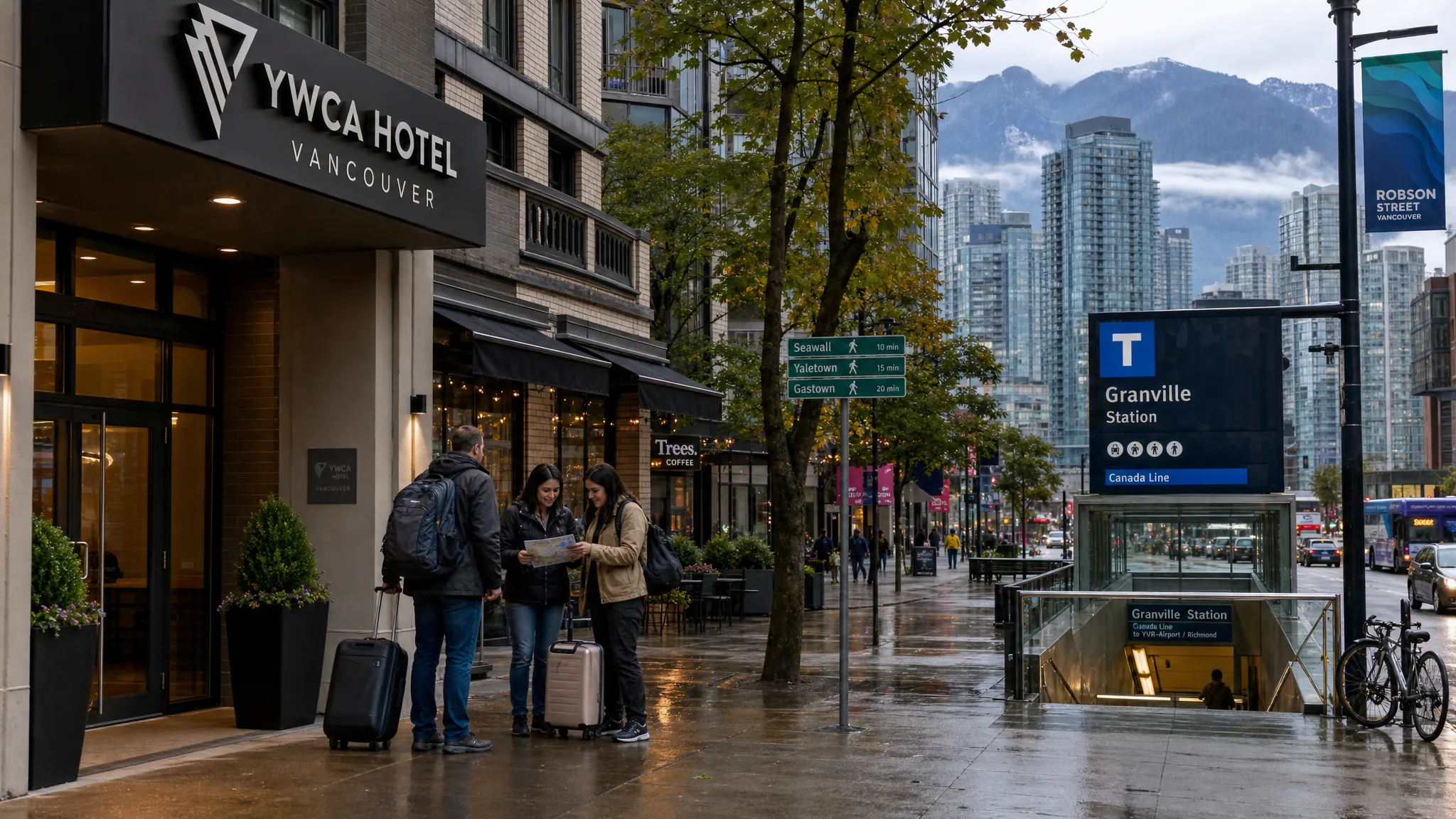
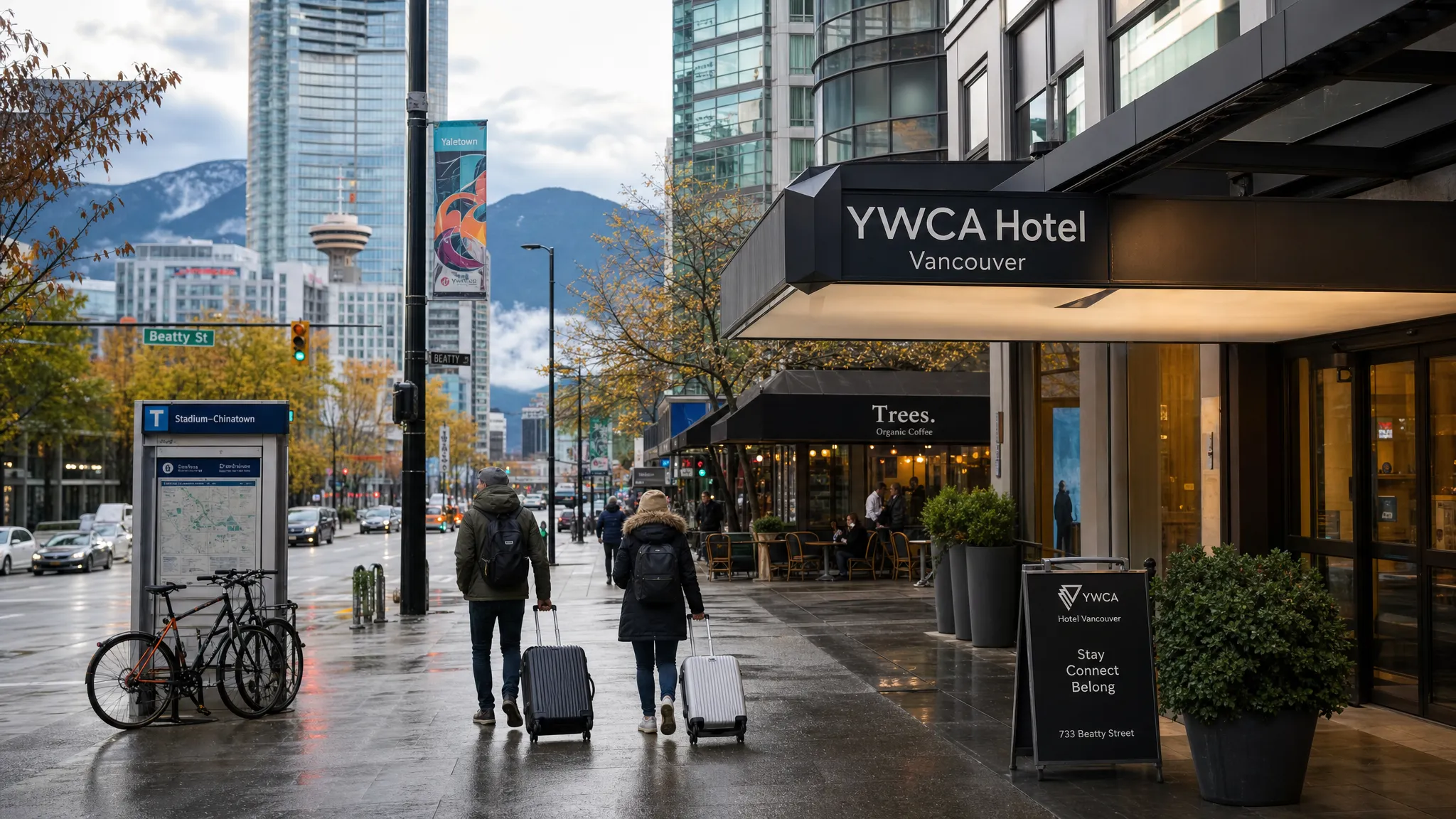
For travelers who want a true downtown base without luxury pricing, searches often start with practical names like YWCA Hotel Vancouver, especially when events, sports, or transit access matter. The location is the point. Before booking, check the room configuration carefully, since budget-minded central hotels may offer different room types, bathroom setups, or bedding layouts.
Another useful downtown reference point is Victorian Hotel Vancouver, where the value logic is character and location rather than big-room resort comfort. In an older building, travelers should compare room details more closely than they would in a standardized chain property. Historic atmosphere can be charming, but only if the noise level, bathroom arrangement, and luggage needs match your trip.
Downtown Vancouver is convenient in a way that becomes obvious when it rains. You can move between SkyTrain stations, malls, offices, theaters, and restaurants with minimal exposure. For a business traveler or someone arriving late, this can be worth more than a postcard view. The city center is also a strong choice for short stays because you do not waste the first morning learning the transit system.
The West End is a different version of central. It is where Vancouver relaxes. Robson Street gives you casual food, shops, and bus connections, while the side streets drift toward beaches, apartment towers, and huge trees. If your idea of value includes being able to walk to Stanley Park before breakfast, the West End can feel richer than a more expensive room in a glassier district.
Vancouver is not a classic beach-resort city, but the choice can feel similar. A West End room near English Bay buys sunset walks, park access, and a slower rhythm. A downtown city hotel buys transit, offices, shops, and all-weather convenience. Choose the beach-adjacent feeling for leisure time. Choose the tighter city base when your itinerary is compressed.
For this kind of trip, Blue Horizon Hotel Vancouver is a useful property to compare because its Robson Street setting can make a stay feel both central and neighborhood-based. It may not always be the cheapest option, especially in peak months, but travelers should compare the total value of location, room size, and walkability rather than judging only the first displayed rate.
The main West End pitfall is assuming all central-west rooms are quiet. Robson can be lively, Davie has nightlife, and summer evenings stretch late. If you are sensitive to sound, check whether the cheaper room faces a busy street or service area. A modest upgrade to a quieter room can be worth it. A vague city-view upgrade usually is not.
Vancouver has a particular style of mid-priced hotel that works well for travelers who do not need grand luxury. These places often trade marble lobbies for personality, location, and quick access to food. The key is to recognize when boutique style is genuine value and when it is only marketing wrapped around a small room.
A boutique or design-forward stay can be worthwhile if it changes how you use the city. If the hotel sits between Yaletown, Granville, and the West End, you can walk to dinner, the seawall, and transit without treating every outing like a logistics problem. That location can outperform a larger room farther out.
For travelers comparing this category, The Burrard Vancouver is the kind of central property where the question is not whether it feels like classic luxury. It is whether the location, personality, and walkability fit your plans better than a more conventional hotel outside the core.
Moda Hotel Vancouver is another downtown name worth checking when you want nightlife, theaters, restaurants, and central transit within easy reach. As with many value-oriented central hotels, the smartest move is to compare room size, cancellation terms, and noise notes before being persuaded by the lowest available category.
The opposite choice is the larger chain-style hotel, where predictability can matter more than charm. Families, longer-stay travelers, and business guests may benefit from bigger rooms, kitchenettes, breakfast options, or laundry access. But those extras only save money if you actually use them. A kitchenette is not a deal if you eat every meal out. A business-hotel breakfast is not a bargain if you only want coffee and a pastry from a nearby cafe.
For longer stays, compare properties such as Residence Inn by Marriott Vancouver Downtown against smaller independents. The nightly rate may look higher, but the math can change if the room setup reduces meal costs, gives a family more space, or helps a business traveler avoid paid extras elsewhere.
Vancouver does not usually trick travelers in one dramatic way. Instead, costs gather quietly. The hotel that seemed affordable at midnight can feel less so by checkout if you did not price the whole stay.
Taxes are the first layer. Accommodation in British Columbia can include federal, provincial, and municipal or regional taxes where applicable, so the final total can sit noticeably above the base room rate. This is one reason travelers should compare final prices, not teaser rates.
Parking is often the bigger surprise. In central Vancouver, nightly hotel parking can be expensive, and some properties charge extra for valet, in-and-out privileges, oversized vehicles, or taxes on the parking itself. If you are spending two days downtown, ask whether you need a car at all. The Canada Line connects the airport with central Vancouver, and downtown is unusually walkable for a North American city. A cheap room plus paid parking can quickly lose to a slightly higher room near transit.
Breakfast is another place where the budget story changes. A $25 per person hotel breakfast may be convenient before a tour or business meeting, but Vancouver's cafe culture makes it easy to eat well outside the hotel. Families should calculate differently. If two adults and two children need a predictable morning meal, a rate that includes breakfast can be better value than a lower room price with four separate breakfasts added daily.
View upgrades deserve skepticism. Vancouver has spectacular views, but not every view label means mountains and water. A city-view room may face another tower. A partial harbor view may be beautiful in clear weather and forgettable in fog. Pay for a view when the room is part of the trip, such as a romantic weekend or a recovery day after a long flight. Skip it when your real priority is exploring.
Amenity and service charges are less consistent, which makes them easy to miss. Always review whether there are destination fees, facility fees, minibar restocking charges, spa access restrictions, or early check-in and late checkout costs. If you arrive from a cruise, an overnight flight, or a red-eye connection, luggage storage can matter more than a fancy amenity you will never use.
For more on why the lowest room rate is not always the cheapest stay, this InnRox guide to cheap hotel rooms that do not cost more after check-in explains the same problem across city trips.
Vancouver hotel pricing has moods. Summer is the obvious high season, with cruise passengers, Alaska-bound itineraries, outdoor festivals, and long daylight. The same hotel room that feels reasonable in February can become startling in July. If your dates are flexible, even shifting by one or two nights can change the value picture.
Cruise days matter, especially near Canada Place, Coal Harbour, and Waterfront. If you are not boarding a ship, do not automatically pay the cruise-terminal premium. Staying slightly inland near a SkyTrain station or toward Robson can preserve central access without buying convenience you do not need.
Winter and rainy-season stays often create better room values, but the importance of location increases. In August, you may happily walk 25 minutes across downtown. In November rain, that distance feels longer. A central hotel near transit, restaurants, and indoor attractions can turn bad weather into a minor inconvenience instead of a daily obstacle.
Weekdays and weekends also behave differently. Business-heavy areas can spike midweek when conventions or corporate demand is strong. Leisure zones can jump on weekends, especially when concerts, sports, or festivals are scheduled. If you are visiting for a specific event, book earlier and compare cancellation terms. If you are visiting casually, let the calendar guide the neighborhood.
The airport area can be a smart Vancouver choice, but only for the right trip. Richmond has excellent food, practical airport access, and often better room availability. For a late arrival, early flight, or family road trip, it may be the most rational booking.
But for a first-time Vancouver city break, an airport hotel can become a false economy. You save on the nightly rate, then spend the trip riding in and out. The Canada Line makes that commute easier than in many cities, but it still changes the mood. You do not wander back to the room after a seawall walk. You do not spontaneously drop off a jacket before dinner. You plan.
This is the difference between affordable authenticity and remote affordability. A hotel in the West End or near Library Square may cost more at checkout, but it gives you a Vancouver rhythm. You walk for coffee, adjust your plans by the weather, and return to the room without making transportation the centerpiece of the day.
Not every upgrade is a trap. Some are genuinely useful in Vancouver because they reduce friction. The hard part is separating comfort that improves the trip from glossy extras that only improve the booking page.
| Upgrade or add-on | Usually worth it when | Often not worth it when |
|---|---|---|
| Flexible cancellation | Weather, work plans, medical trips, cruise timing, or event uncertainty matter | Your dates are fixed and the discount is substantial |
| Breakfast included | You are traveling with kids, have early tours, or need predictable mornings | You prefer cafes and light breakfasts |
| Larger room | You have luggage, children, work gear, or a longer stay | You will be out all day and only need sleep |
| Harbor or mountain view | The room is part of a romantic or relaxation-focused trip | You booked a packed sightseeing itinerary |
| Parking package | You truly need the car daily | You are staying downtown and can use transit or walk |
| Early check-in | You arrive after a long-haul flight or before a cruise | The hotel stores luggage and you can explore comfortably |
Luxury can be worth paying for in Vancouver when service saves time or when the setting is the reason for the trip. A waterfront hotel before a cruise, a polished business property near meetings, or a spa-focused stay after outdoor adventures can justify the premium. But classic luxury is not automatically better value than modern simplicity. If you are using the room only for sleep, a clean, central, well-reviewed budget hotel can be the smarter luxury.
The same applies to boutique hotels. A stylish lobby does not compensate for poor sleep, awkward transit, or surprise fees. Modern luxury is increasingly about removing obstacles: clear pricing, a practical location, a quiet room, and a booking that does not require detective work.
A romantic weekend and a business trip should not lead to the same hotel choice, even at the same price. Vancouver rewards travelers who book for the rhythm of the trip rather than the category of the hotel.
| Trip style | Best value base | What to prioritize | What to avoid |
|---|---|---|---|
| First-time city break | Downtown, West End, or Robson | Walkability, transit, flexible cancellation | Airport savings that turn into commuting |
| Business trip | Downtown core, Convention Centre area, or near meeting venue | Short transfers, quiet room, reliable check-in | Paying for leisure amenities you will not use |
| Romantic weekend | West End, Coal Harbour if priced well, or Yaletown | Atmosphere, restaurants, room comfort | Vague view upgrades that do not guarantee scenery |
| Family stay | Larger downtown rooms, suite-style options, transit access | Breakfast math, room size, laundry, quiet | Tiny cheapest room with added meal costs |
| Concert or sports trip | Stadium-Chinatown edge or downtown core | Walking distance after the event | Farther rooms that require surge-priced rides |
| Cruise overnight | Waterfront if convenience matters, downtown inland if value matters | Luggage logistics, early check-in, taxi time | Paying waterfront premiums if you have no time to enjoy them |
This is where hotel comparison becomes personal. The cheapest good room for a solo traveler attending a concert may be a poor choice for parents with luggage and a stroller. A polished Yaletown hotel may be perfect for a couple who plans to dine late, but unnecessary for travelers leaving early each morning for hikes.
Vancouver is generally easy to navigate, but block-by-block details matter. Before reserving, zoom in on the map and follow your actual walking routes. Is the hotel near a SkyTrain station or only near a bus you do not understand yet? Are there casual restaurants within five minutes? Is the walk from the station comfortable with luggage? Are you facing an entertainment street on a Saturday night?
Granville Street, for example, can be convenient and lively. That makes it useful for nightlife travelers and less ideal for light sleepers. Gastown can feel atmospheric, with brick, lamps, and old Vancouver texture, but travelers should inspect the exact block rather than booking on name recognition alone. Coal Harbour can be serene and scenic, but if you are not using the waterfront or convention area, the premium may not return much value.
If you want a broader framework beyond Vancouver, InnRox's guide to hotel price comparison for smarter city stays is helpful because the same map-first logic applies in expensive urban destinations.
The smartest travelers compare three totals before booking: the room total after taxes, the likely transportation total, and the cost of daily conveniences such as breakfast or parking. Only then does a cheap rate reveal whether it is truly cheap.
The best Vancouver booking process is calm and comparative. Start with the area that fits your trip, then compare final prices, cancellation terms, and room details. Do not let a low nightly number pull you into a location that works against your itinerary.
InnRox is built for that kind of hotel search: competitive hotel rates, upfront final pricing, fast reservations, secure payments, and flexible options such as free cancellation or pay-later deals where available. For Vancouver specifically, the practical advantage is clarity. You can compare central rooms without getting distracted by clutter, then decide whether paying a little more for walkability will save money elsewhere.
When you search, use filters and map view with a purpose. For downtown trips, prioritize distance to SkyTrain, the seawall, your venue, or your meeting location. For family trips, compare room layout and breakfast value. For a short stay, choose convenience over theoretical savings. For a longer stay, prioritize the neighborhood you want to live in for a few days.
What is the best area for cheap hotel rooms in Vancouver that still feels central? Downtown, the West End, Robson Street, and the Stadium-Chinatown edge often offer the best balance of central access and value. The right choice depends on whether you need transit, nightlife, parks, business access, or event venues.
Is it cheaper to stay near Vancouver Airport instead of downtown? It can be cheaper, and it is often smart for early flights or late arrivals. For a city-focused trip, however, the savings may shrink once you add daily transit time, airport-area commuting, and fewer spontaneous returns to the hotel.
Are Vancouver hotel view upgrades worth paying for? Sometimes, but only when the room is part of the experience. A guaranteed harbor or mountain view can be worthwhile for a romantic or relaxing stay. A vague city-view upgrade is often less valuable, especially if you will spend most of the day outside.
What hidden costs should I check before booking a Vancouver hotel? Check taxes, parking, breakfast pricing, early check-in or late checkout fees, amenity or destination fees, deposits, and cancellation terms. Parking and breakfast are especially important because they can change the total cost quickly.
When is the cheapest time to book hotels in Vancouver? Better values often appear outside summer and major event periods, especially during rainy-season months. Still, central location matters more in bad weather, so the lowest off-season rate is not always the best overall stay.
The best cheap hotel room in Vancouver is not the one that wins the rate race by a few dollars. It is the one that keeps you close enough to walk, rest, change plans, and enjoy the city without paying hidden costs in time and transport.
If you want value that still feels central, compare Vancouver hotels by final price, neighborhood, and real trip purpose. Start with a clear search on InnRox for Vancouver hotel deals, then choose the room that makes the whole stay cheaper, not just the booking page.
Tags