
Copyright © 2026 Innrox, Inc., an Innrox Group company. All rights reserved.


InnRox
Travel Experts
May 23, 2026
20 min read
A cheap room rarely announces its true price in the search results. It waits until the tired moment, the one after the delayed flight and the taxi queue, when the lobby smells faintly of citrus polish and raincoats. Then the extras appear: the destination fee, the breakfast you assumed was included, the parking charge that costs more than dinner, the “city view” that turns out to be a narrow slice of skyline above an air-conditioning unit.
The art of finding cheap hotel rooms in 2026 is not just about sorting by lowest nightly rate. It is about understanding the full stay before you tap “book.” The smartest travelers compare neighborhoods, transportation, cancellation terms, room category language, and the little fees that do not feel little after check-in.
This is a practical travel story about three kinds of cities where cheap rooms can either protect your budget or quietly break it: Chicago, Lisbon, and Tokyo. Each teaches a different lesson. Chicago is about business districts, parking, and convention surges. Lisbon is about hills, breakfast, tourist taxes, and paying for charm. Tokyo is about location precision, room size, and the difference between efficient value and false economy.
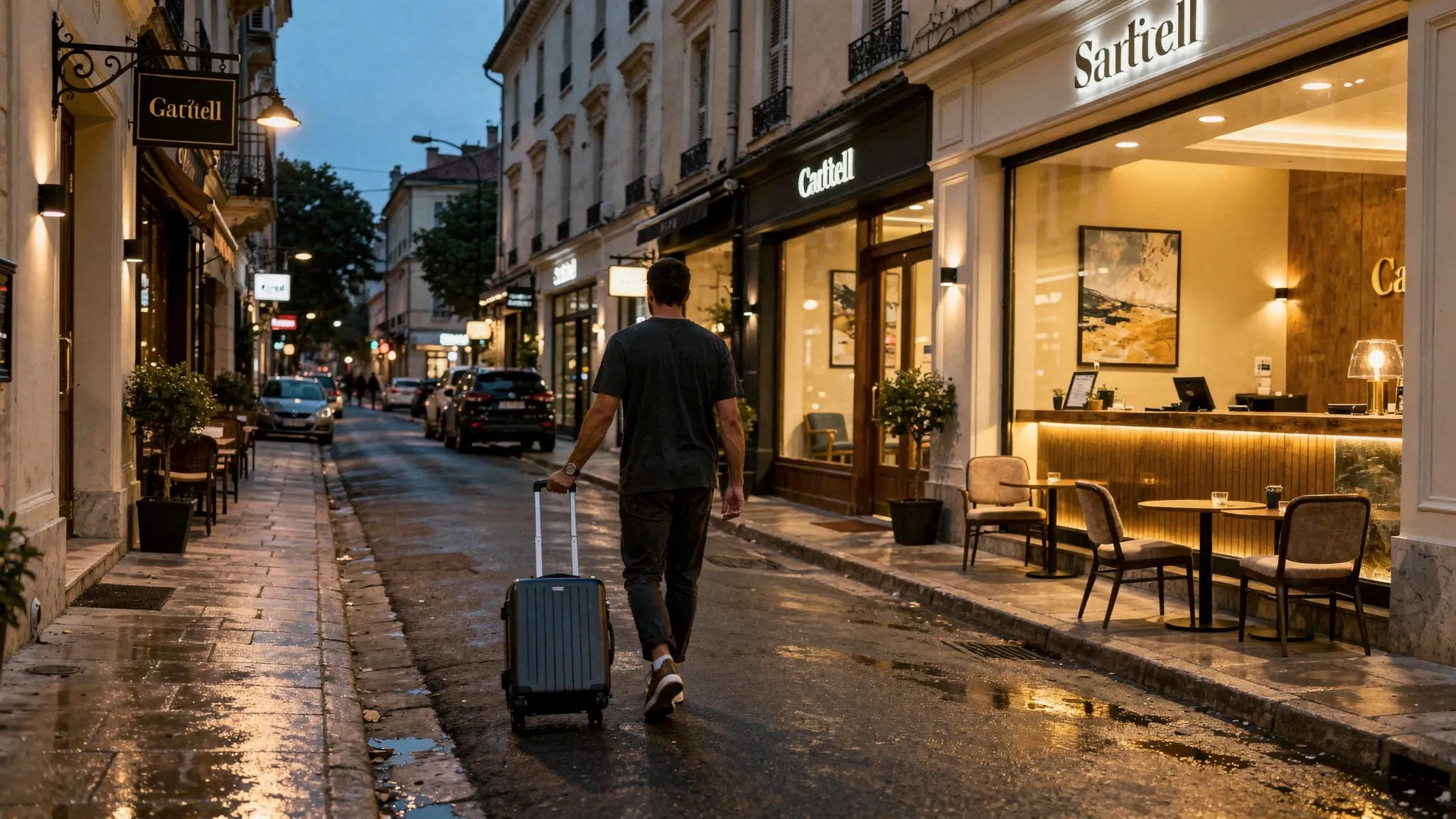
A room is only cheap if the total experience stays cheap. That sounds obvious until you compare two hotels side by side and realize the lower nightly rate creates a more expensive trip.
A $119 room outside the center may seem better than a $159 room near the train line, but if you spend $30 each way on rideshares, lose an hour daily in transit, and pay for breakfast because nothing nearby opens early, the “deal” becomes a tax on your time. A $210 business hotel with free cancellation and a predictable commute may beat a $165 boutique hotel with prepaid terms, loud nightlife, and a surprise amenity fee.
The best booking decision starts with one question: what will this room make easy, and what will it make expensive?
| What looks cheap | What can make it expensive after check-in | How to evaluate it before booking |
|---|---|---|
| Low nightly rate outside the center | Daily transit, rideshare costs, wasted time | Map your first and last activities, not just the city center |
| “Breakfast available” | High per-person breakfast charges | Check if nearby cafes open when you need them |
| Boutique hotel in nightlife area | Noise, premium drinks, late-night transport | Read room location details and neighborhood character |
| Airport hotel | Transfers into town, limited dining | Compare airport convenience against total itinerary |
| Room with a view | Paid upgrade for a vague or partial view | Ask whether the view changes your stay or just the photo |
| Pay-later deal | Higher rate than prepaid option | Decide how much flexibility is worth for your trip |
Cheap hotel rooms that stay cheap are usually not the absolute lowest-priced rooms. They are the ones with fewer traps.
A common booking mistake is choosing a hotel before choosing a travel rhythm. Business travelers need predictability. Couples may value walkability and evening atmosphere. Families need breakfast logistics, elevator access, and room size. Solo travelers may prefer transit and a neighborhood that feels comfortable at night. Luxury travelers may find that paying more for service saves friction, but only if they actually use the service.
The room should match the day you are likely to have, not the fantasy version of the trip. If you will leave at 8 a.m. and return at 10 p.m., do not overpay for a spa you will not enter. If you are traveling with a child, do not save $25 on a room that forces a 25-minute walk uphill after dinner. If you are on a short city break, location often beats square footage.
Food routines matter too. Travelers who want to control costs, eat lightly, or keep a health plan consistent often do better near grocery stores, cafes, and simple restaurants than in isolated resort-style hotels. For people actively managing lifestyle or weight goals, medically guided resources such as personalized coaching for lasting weight management can be a reminder that travel planning and daily habits work best when they are realistic, not improvised at midnight from a minibar.
That kind of planning matters because hotel pricing often profits from fatigue. You arrive hungry, the restaurant downstairs is easy, and the breakfast buffet suddenly feels unavoidable. The room rate was cheap, but the property wins back margin through convenience.
The quiet truth is that many travelers do not overpay for beds. They overpay for decisions they did not make early enough. A hotel in the right neighborhood reduces impulse spending because it keeps normal life within reach: coffee, transit, pharmacies, parks, laundry, and dinner that does not require a reservation or a taxi.
Chicago is a city where the hotel map can mislead first-time visitors. The downtown grid looks compact, Lake Michigan shines like a postcard, and a room slightly west or south may appear close enough. But the real cost depends on why you are there.
For business trips, the Loop and River North often justify higher rates because they reduce morning uncertainty. If your meetings are downtown, a hotel near the office can save rideshare spikes, weather delays, and the awkward math of dragging a carry-on through wind and rain. For leisure travelers, however, the same downtown convenience may feel sterile after office hours, especially on weekends when neighborhood dining and nightlife matter more.
A practical comparison starts with the kind of Chicago you want. The Loop is efficient, architectural, and strong for weekday business. Fulton Market and the West Loop feel more social, restaurant-driven, and design-conscious. River North is convenient for first-timers who want central nightlife. Lincoln Park and Lakeview can be better for travelers seeking a more local weekend, though transit time becomes part of the cost.
If you are comparing a polished neighborhood stay such as The Hoxton Chicago with a more business-oriented option like Club Quarters Hotel Central Loop Chicago, the cheaper choice depends less on the room rate than on your schedule. A West Loop stay can be worth more for a restaurant-focused weekend because you walk to dinner instead of crossing town. A Central Loop stay can be worth more for meetings because you reduce morning friction.
Parking is where many Chicago “deals” collapse. If you drive, the nightly parking charge can erase the savings of a cheaper room. If you fly into O’Hare, access to the Blue Line can be more valuable than a slightly larger room. If you fly into Midway, the Orange Line changes the calculation again. A hotel that looks expensive may become cheaper once you remove two rideshares and one parking bill.
Seasonality matters sharply. Summer weekends, major events, and convention weeks can inflate central rates, while winter can produce genuine value if you can tolerate cold winds and shorter daylight. The mistake is assuming Chicago has one normal price. It has many: weekday business price, weekend leisure price, event price, and winter value price.
The upgrade most travelers can skip in Chicago is the vague skyline or city-view room unless the view is specific and meaningful to you. Paying more for walkability, cancellation flexibility, or lower transport friction usually produces more real value than paying for a window description.
Lisbon teaches a softer but equally important lesson. Here, the cheapest room may sit in a romantic street of tiles, balconies, and tram bells, yet still cost you more in effort. The city is beautiful because it rises and falls. Your hotel decision is also a decision about knees, luggage, heat, and late-night walks.
The historic center, especially Baixa, Chiado, and areas around Rossio, gives first-time visitors the pleasure of stepping straight into postcard Lisbon. You can walk to viewpoints, restaurants, shops, and riverfront squares. For a short stay, that convenience can be worth a higher nightly rate because it compresses the city into two or three easy days.
But historic convenience has tradeoffs. Central hotels can be smaller, older, noisier, and more expensive in spring and autumn. Breakfast may cost extra. Some buildings have room categories that sound charming but feel tight once luggage opens. A room on a lively street can make you feel wonderfully connected at 8 p.m. and regretful at 1 a.m.
For travelers comparing central options such as Hotel Mundial Lisbon with more modern-value searches around areas like Moxy Lisbon City, the choice is really about atmosphere versus predictability. Historic center stays give you immediate romance and better sightseeing efficiency. Modern districts such as Saldanha, Picoas, or Avenida areas can offer easier metro access, newer rooms, and a calmer sleep, often at better value.
Lisbon also has underestimated costs that do not always feel obvious from the booking page. Tourist taxes may be charged per person per night depending on current local rules. Airport transfers can be affordable, but late arrivals and heavy luggage may push you toward a taxi or rideshare. The hills make “only 15 minutes away” very different from “15 flat minutes away.” Breakfast becomes a real cost if your hotel is in a quiet area where cafes open later than your tour departure.
Where travelers waste money in Lisbon is paying luxury prices for ordinary centrality. A basic room in the historic core can cost more than a better-designed room ten metro minutes away. If your trip is romantic and short, the premium may be worth it. If your trip is five nights and you plan to explore widely, modern neighborhoods can deliver better total value.
The upgrade to question is the balcony or view. Lisbon views are seductive, especially over terracotta roofs and river light, but not every “view” room is equal. If you will be out all day, a quiet rear-facing room may give you better sleep than a pricier partial-view room above nightlife.
Tokyo is the city where travelers learn that distance on a map is not the same as convenience. The rail network is extraordinary, but your hotel choice can still add transfers, stairs, luggage stress, and late-night costs.
A cheap Tokyo room can be genuinely excellent because many hotels are clean, efficient, and professionally run. The catch is size and location precision. A very small room near the right station may beat a larger room that requires awkward transfers. A slightly higher rate near a direct line to your plans can save energy every day.
Shinjuku is powerful for first-timers because it connects to nightlife, shopping, dining, and major train routes. It can also feel intense, crowded, and expensive during peak periods. Ueno and Asakusa can be better for travelers who want older neighborhood texture, museums, temples, and more relaxed evenings. Ginza and Tokyo Station are strong for polished stays and business convenience, but rates can climb quickly.
A stay such as Hotel Gracery Shinjuku Tokyo suits travelers who want urban intensity and easy access to late-night food, while a search like Nohga Hotel Ueno Tokyo points toward a calmer, neighborhood-oriented base with strong transit. The right answer depends on whether you want Tokyo as spectacle or Tokyo as daily rhythm.
Tokyo’s hidden costs are subtler than resort fees. They come from choosing the wrong station exit, underestimating luggage logistics, or booking a room so compact that repacking becomes a nightly puzzle. Breakfast can be convenient but not always necessary because convenience stores, bakeries, and station food are part of the city’s travel experience. Late checkout may cost extra, and if your flight leaves late at night, luggage storage policies become more valuable than a room upgrade.
Seasonality is dramatic. Cherry blossom periods, Golden Week, autumn foliage, and major event dates can turn normal rooms into premium inventory. If you travel during these windows, flexible booking terms and early confirmation matter. If you travel in quieter winter periods, you may find excellent value in central districts that feel impossible during peak demand.
The upgrade to consider in Tokyo is not usually a view. It is room size, station proximity, or a better bed if you are staying several nights. A few extra square meters can change the mood of a trip when two suitcases, winter coats, and shopping bags are competing for floor space.
A hotel neighborhood should pass three tests: movement, meals, and mood.
Movement means you can get where you need to go without turning every day into a transport project. Meals means you are not trapped into hotel dining because the surrounding area is empty, overpriced, or inconvenient. Mood means the neighborhood feels right when you return tired. This last point is underrated. A bargain hotel in an area you dislike at night is not a bargain.
In city travel, there are usually four neighborhood types:
| Neighborhood type | Best for | Watch out for |
|---|---|---|
| Historic center | First-time sightseeing, short stays, romantic weekends | Noise, smaller rooms, premium pricing, tourist restaurants |
| Business district | Work trips, weekday efficiency, transit access | Quiet evenings, expensive weekday rates, limited weekend atmosphere |
| Creative or food district | Couples, friends, boutique hotel fans, nightlife | Noise, parking costs, weekend demand surges |
| Outer transit neighborhood | Longer stays, repeat visitors, budget travelers | Commute time, fewer late-night options, transfer costs |
The mistake is treating “central” as automatically better. Central is better when you will use it. If your itinerary is museums, restaurants, and walks, central can save money. If your itinerary is one conference venue, one family visit, or day trips by train, the best area may be the one closest to that practical anchor.
Travelers often compare star ratings, but star ratings do not always reveal what will cost more after check-in. A four-star hotel can charge heavily for parking and breakfast. A three-star hotel near transit may save you far more. A boutique hotel may have soul but fewer included services. A luxury hotel may be worth it if service reduces planning, but wasteful if you only sleep there.
Budget chains are best when you want predictable basics and will spend your time outside the hotel. They can be excellent for business overnights, airport stops, and short city stays. The danger is assuming everything is included. Always check breakfast, luggage storage, early check-in, and cancellation terms.
Boutique hotels are best when neighborhood atmosphere is part of the trip. They can make a city feel intimate, especially in food districts or historic areas. The risk is paying design premiums for smaller rooms, limited storage, or nightlife noise.
Full-service luxury is best when you will use the property: concierge help, room service, spa, lounge, pool, or special-occasion service. Luxury is poor value when it becomes just an expensive bed in a city where you will be out for twelve hours a day.
Aparthotel-style stays can help families and longer-stay travelers because laundry or kitchenette access can reduce food and packing costs. The tradeoff is that service may be lighter, and the location may be less central.
Before booking any cheap hotel room, run a quick audit. It takes five minutes and often saves more than a promo code.
This audit is especially important for last-minute bookings. When travelers book in a hurry, they focus on availability and ignore terms. That is when nonrefundable rooms, inconvenient locations, and unclear fees become expensive.
The best upgrade is the one that changes your trip, not the one that sounds luxurious.
Breakfast is worth it when you have early starts, children, business meetings, or a location with limited morning options. It is usually not worth it in cities where cafes and bakeries are nearby, unless the hotel breakfast is priced fairly and saves meaningful time.
A larger room is worth it on longer stays, family trips, winter trips with bulky clothing, or Tokyo-style compact-room destinations. It is less important for a one-night business stop.
A view is worth it when the room is part of the experience: anniversaries, slow mornings, scenic destinations, or a city you want to absorb from above. It is not worth it when the description is vague, the stay is short, or the price jump is large.
Club lounge access can be worthwhile for business travelers who need quiet workspace, evening snacks, or breakfast included. It is often poor value for travelers who plan to eat out and explore.
Spa or resort access requires careful reading. Some hotels advertise wellness facilities but charge separately for certain areas, treatments, thermal circuits, or daybeds. If relaxation is the reason for the trip, clarify access before booking. If it is not, do not let spa language justify a higher rate.
Seasonality is not a line item, but it functions like one. It changes what your money buys.
In Chicago, a normal downtown room can become expensive during conventions, summer weekends, and major city events. In Lisbon, spring and early autumn often command higher prices because the weather is pleasant and demand is strong. In Tokyo, cherry blossom season can make even compact rooms feel premium-priced.
The strategy is different in each case. For event-heavy cities, check whether your dates overlap with conventions before assuming a neighborhood is overpriced. For weather-driven destinations, shift by a week or two if your schedule allows. For bucket-list seasons, book earlier and prioritize location because last-minute bargains are less likely.
Weekdays and weekends also flip value. Business districts can be expensive midweek and better value on weekends. Leisure districts can do the opposite. If your dates are flexible, shifting a trip from Friday-Sunday to Sunday-Tuesday can sometimes improve both rate and atmosphere.
A clear booking flow matters because most hotel mistakes happen when details are hidden or scattered. InnRox is built for travelers who want competitive hotel rates, transparent terms, and fast reservations without unnecessary clutter. That is especially useful when you are comparing not just the nightly rate, but cancellation terms, payment timing, and whether the final price is clear before you commit.
When searching on InnRox, use the hotel page as a decision tool, not just a checkout page. Compare the room type, cancellation policy, payment terms, and location together. If free cancellation or pay-later options are available, weigh them against prepaid savings based on how certain your plans are. If you are arriving late, traveling for work, or booking close to departure, instant confirmation can be more valuable than chasing a tiny difference elsewhere.
The goal is not to make every trip cheap in the same way. It is to make the final cost match the promise you saw when you booked.
Business travelers should usually pay for location, reliable transit, and flexible terms before paying for design. A hotel five minutes from the meeting can be cheaper in real life than a prettier room across town. Late checkout may be worth more than a view.
Couples should decide whether the hotel is part of the romance or just the base. If it is part of the romance, invest in neighborhood atmosphere, quiet rooms, and perhaps a view. If the city is the main attraction, spend less on the room and more on dining or experiences.
Families should prioritize space, breakfast logistics, elevators, transit simplicity, and nearby casual food. The cheapest room can become stressful if everyone is hungry, tired, and far from an easy meal.
Solo travelers should think about arrival time and nighttime comfort. A slightly higher rate in a well-connected neighborhood may be worth it if it reduces late transfers or long walks.
Luxury travelers should ask whether the premium buys service they will actually use. True luxury is not always marble and a lobby scent. Sometimes it is a smooth arrival, a helpful human being, and no confusion about charges.
How do I find cheap hotel rooms without hidden fees? Look beyond the nightly rate and compare the total price, taxes, mandatory fees, breakfast costs, parking, cancellation rules, and transportation expenses. The cheapest room is the one with the lowest realistic trip cost, not just the lowest search result.
Are city-center hotels usually worth the higher price? They are worth it for short stays, first-time visits, walkable sightseeing, and business trips near downtown meetings. They are less valuable if you will spend most of your time in another neighborhood or if transit from a cheaper area is simple and reliable.
Which hotel fees surprise travelers most often? Parking, breakfast, destination or amenity fees, tourist taxes, early check-in, late checkout, minibar charges, and vague room upgrades are common surprises. In some destinations, transfer costs and seasonal surge pricing matter even more.
Is a boutique hotel better value than a luxury hotel? A boutique hotel is often better value when you want neighborhood character and do not need full-service amenities. A luxury hotel is better value when you will use its service, spa, lounge, concierge, or special-occasion atmosphere.
When is paying more for free cancellation worth it? Free cancellation is worth considering when flights are uncertain, work plans may change, weather could affect the trip, or you are booking far in advance. If your plans are fixed, a prepaid rate may offer better savings.
What is the best way to compare two cheap hotel rooms? Map both hotels against your actual itinerary, then add likely extras such as transport, breakfast, parking, and time lost. The better deal is the room that supports your trip with fewer paid workarounds.
Cheap hotel rooms should feel like a win at check-in, not a negotiation. Before you book, compare the neighborhood, room type, transport, cancellation terms, and extras that could change the final bill.
InnRox helps travelers search hotel rates with transparent terms, instant confirmation, and a simple booking flow designed for clarity. Start with the city, then choose the room that fits the way you actually travel, not just the price that looks best for five seconds.
Tags