
Copyright © 2026 Innrox, Inc., an Innrox Group company. All rights reserved.

InnRox
Travel Experts
June 11, 2026
20 min read
Vancouver has a way of making hotel prices feel personal. You land at YVR, ride toward the city under a low ceiling of coastal cloud, and the skyline appears between water, glass, forest, and snow-streaked mountains. It is beautiful, compact, and often more expensive than travelers expect.
That is why searching for Vancouver hotels cheap in 2026 is less about finding the lowest nightly rate and more about understanding the city’s geography. Vancouver is squeezed between ocean, mountains, bridges, and transit lines. A hotel that looks expensive may save you taxis, parking, and time. A hotel that looks cheap may quietly add a daily commute, airport surcharges, breakfast costs, or event-night pricing.
The smartest Vancouver booking strategy is to choose your area first, then your hotel category. Downtown is not always overpriced. Richmond is not always a compromise. North Vancouver can be wonderful or inconvenient depending on your schedule. The West End can feel like the best bargain in the city if you like walking, while Burnaby can rescue your budget when summer rates spike.
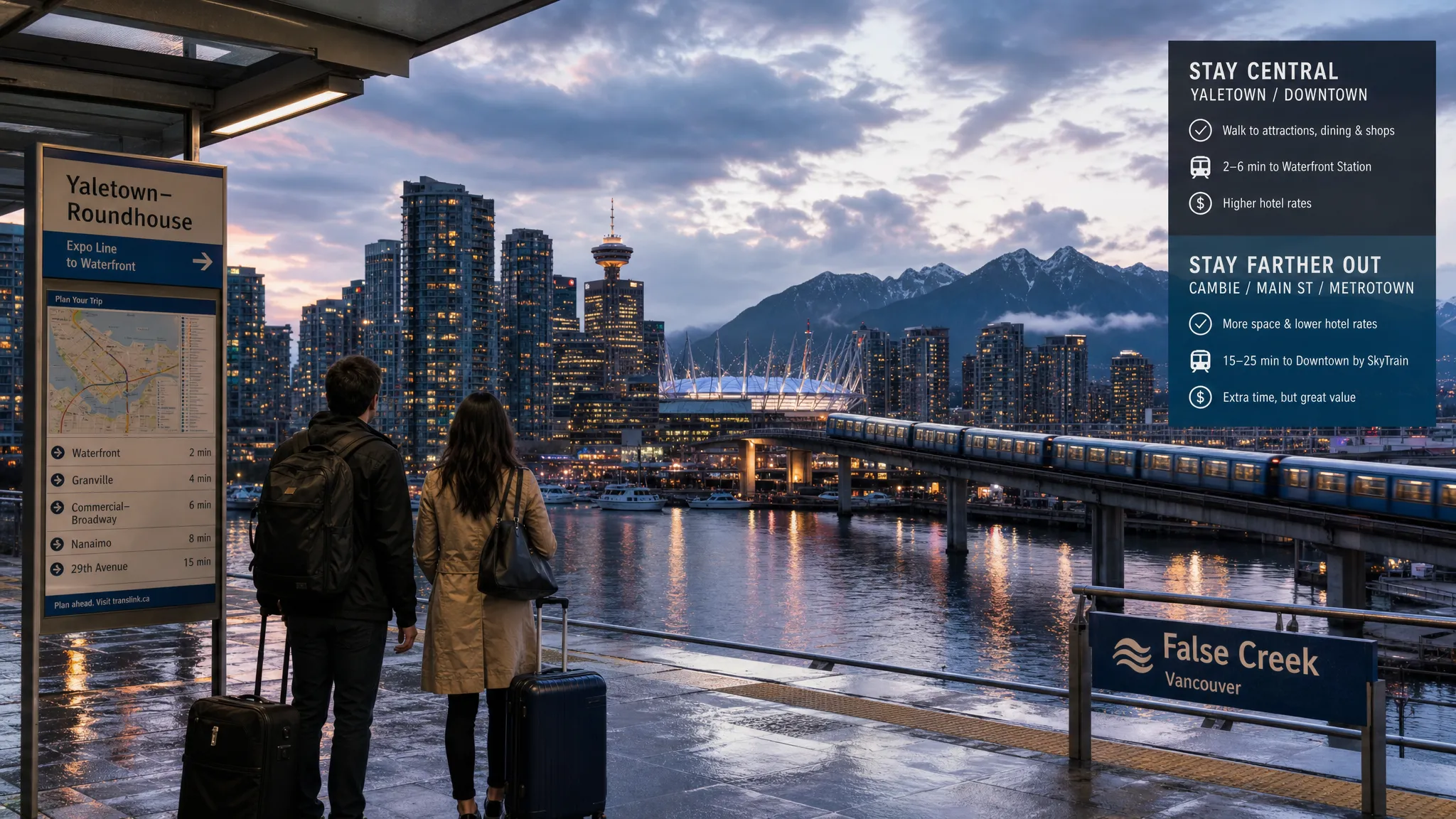
Vancouver’s hotel market is shaped by three things travelers often underestimate: the downtown peninsula, the SkyTrain network, and seasonality. Downtown Vancouver is hemmed in by English Bay, Burrard Inlet, False Creek, and bridges. That makes central locations highly convenient, especially for first-time visitors, cruise passengers, business travelers, and anyone without a car. It also means hotel rates rise quickly when demand is high.
The good news is that Vancouver has useful public transit. The Canada Line connects the airport and Richmond with downtown. The Expo and Millennium lines open up Burnaby, New Westminster, and other inland areas. The SeaBus connects Waterfront Station with North Vancouver’s Lonsdale Quay. If your hotel sits near one of these lines, you can often trade a lower room rate for a manageable commute.
The mistake is assuming every outer neighborhood saves money. If you stay far from transit and rely on rideshares, the savings can vanish by the second evening. If you rent a car and stay downtown, overnight parking may cost enough to erase the benefit of a cheaper room. If you visit during cruise season, summer weekends, major concerts, conventions, or FIFA World Cup dates in 2026, even ordinary rooms can behave like premium inventory.
The word “cheap” means different things in Vancouver. For one traveler, it means a lower nightly rate near the airport. For another, it means a central room that avoids $40 rideshares and lets them walk to dinner. Use the table below as a first filter before comparing individual hotels.
| Area | Best for | Value advantage | Watch out for |
|---|---|---|---|
| Downtown Core | Business, first-time trips, cruise departures, short stays | Saves time and transportation | Parking, breakfast, event spikes, view upgrades |
| West End and Robson | Walkable sightseeing, Stanley Park, relaxed city breaks | Often strong location value without full waterfront pricing | Older buildings, limited parking, summer demand |
| Yaletown and Stadium District | Nightlife, events, restaurants, False Creek | Great for car-free travelers and evening plans | Concert and sports pricing, premium room categories |
| Richmond and YVR | Airport nights, food-focused trips, early flights | Lower rates and airport convenience | Less romantic for downtown sightseeing, airport transport details |
| North Vancouver and Lonsdale | Outdoors, mountains, quieter stays | Good for nature access and local atmosphere | SeaBus timing, bridge traffic, late-night returns |
| Burnaby and Metrotown | Families, longer stays, rate spikes downtown | Transit value and larger hotel formats | Commute time, less postcard Vancouver atmosphere |
| New Westminster | Budget-minded repeat visitors, SkyTrain users | Often better rates when central Vancouver is full | Longer ride to downtown and fewer tourist conveniences |
The rest of the decision comes down to trip style. A romantic weekend should not be booked like a business trip. A cruise night should not be booked like a weeklong family stay. A hotel near the airport may be perfect for one night and frustrating for four.
Downtown Vancouver is where travelers most often overpay, but it is also where many travelers save the most time. If you are attending meetings, leaving on a cruise, arriving for one or two nights, or planning to walk between restaurants, waterfront paths, shopping, and transit, the central premium can make sense.
The Downtown Core works especially well for travelers who dislike friction. You can arrive from the airport by Canada Line, walk or take short rides to many central attractions, and avoid renting a car. For business travelers, that convenience is not just comfort. It can mean fewer missed meetings, easier client dinners, and less time stuck near bridge traffic.
If you want a central benchmark, compare searches around Hyatt Regency Vancouver with other downtown options. The point is not that every central hotel is a bargain. The point is to compare total stay cost: room, taxes, breakfast, parking, and how many paid transfers you avoid.
Classic downtown luxury and branded business hotels are usually worth considering when your schedule is tight. They are less compelling if you plan to spend most of your trip hiking, driving to suburban relatives, or exploring neighborhoods outside the core. In those cases, you may pay for a location you barely use.
The most common downtown booking trap is the “almost cheap” room with expensive add-ons. Parking can be costly. Breakfast may be priced per person. Some properties charge amenity or destination-style fees, depending on the hotel and rate plan. A room upgrade promising a better city view may not matter much in a city where you will probably spend daylight hours outside.
Downtown is best when convenience replaces costs elsewhere. It is weakest when you bring a car, skip the central attractions, or book during a major event without checking the final price carefully.
The West End is Vancouver’s great value lesson. It is central, but it feels more residential than the financial district. Mornings smell of coffee and wet cedar. Side streets lead toward English Bay, Stanley Park, Denman Street, and the seawall. For travelers who want Vancouver to feel like a walkable city rather than a checklist, this area often delivers more emotional value than a more formal downtown hotel.
The West End is especially good for couples, solo travelers, and first-time visitors who prefer walking over taxis. You can wander to the waterfront, rent bikes, eat casually, and reach downtown shopping without feeling trapped in the busiest business blocks. Compared with Coal Harbour or the most polished downtown addresses, the West End can feel less staged and more lived-in.
For this style of stay, start by comparing Blue Horizon Hotel Vancouver with other Robson and West End properties. Look closely at cancellation terms, room type, and whether parking or breakfast is included, because these details often change the real value more than the nightly rate.
The tradeoff is building age and parking. Some West End hotels and apartment-style properties may not feel as sleek as newer luxury hotels. Parking can be limited or expensive. If you are driving in from elsewhere in British Columbia, a cheap West End room plus high nightly parking may not beat a slightly less central hotel with better vehicle access.
Where travelers waste money here is paying extra for a view category they will barely use. If you are out walking Stanley Park, eating on Denman, and watching the sunset from English Bay, the difference between a partial view and a standard room may not justify the premium. Spend on location and flexibility before scenery from the window.
Yaletown and the Stadium District are where Vancouver’s polished urban side comes alive. The old warehouse textures, restaurant patios, marina edges, and False Creek paths create a different mood from the West End. This is a good base if your trip leans toward dinner reservations, nightlife, concerts, sports, and quick access to the seawall.
Compared with the Downtown Core, Yaletown can feel more social and residential. Compared with the West End, it can feel sleeker and more expensive. The Stadium District may offer better value on quiet nights, but prices can jump when there is a game, concert, or major event. A hotel that looks sensible on a Tuesday can look inflated on a Saturday with an arena crowd.
A useful search comparison is Georgian Court Hotel Vancouver, particularly if you want to be near the stadium area and still connected to downtown. Compare it against nearby Yaletown and central options by total price, not just star rating.
This area is strongest for travelers without cars. If you can walk to dinner, the waterfront, transit, and evening events, you avoid many small costs. It is weaker if you need calm, early nights, or easy road access. Weekend noise can matter, and event pricing can distort value.
The upgrade trap here is paying a premium for “lifestyle” positioning without using the lifestyle. If you will eat breakfast elsewhere, skip the minibar, and spend the day outdoors, a highly styled room may not matter. If the hotel’s location lets you walk home safely after an event, that convenience is worth more than decorative luxury.
Richmond is where Vancouver hotel decisions become more honest. It is not the same experience as waking up downtown. You will not step outside into Stanley Park or the glassy drama of Coal Harbour. But for airport nights, early flights, food-focused stays, and travelers who want to avoid downtown parking, Richmond can be one of the most practical value plays in the region.
The Canada Line makes Richmond more useful than many airport-adjacent hotel zones in North America. If your hotel is close to a station, downtown is accessible without renting a car. Richmond also has its own strong identity, especially for travelers who care about Asian dining, bakeries, malls, and night-market energy in season.
For an airport-oriented comparison, look at searches around River Rock Casino Resort Richmond and nearby Richmond hotels. The key is to compare airport convenience, transit access, and final price rather than assuming every airport-area stay is automatically cheap.
Richmond is best for the first or last night of a trip, family travel with luggage, travelers arriving late, and people who want food and transit more than downtown scenery. It is less ideal for romantic city weekends, nightlife-heavy itineraries, or short visits where every hour downtown matters.
Watch for airport transportation details. Some hotels may offer shuttles, but schedules and eligibility can vary. Canada Line trips from the airport can include an airport surcharge in certain circumstances. Rideshares between Richmond and downtown may look reasonable once, then become expensive if repeated daily.
The biggest Richmond mistake is booking it for a full Vancouver sightseeing trip without checking your daily movement. If you plan to visit Stanley Park, Granville Island, Gastown, Kitsilano, and North Vancouver, the lower nightly rate may be eaten by time and transport. If your plans are airport, Richmond dining, and one downtown day, it can be excellent value.
North Vancouver changes the emotional texture of a trip. Downtown’s glass towers become a view across the inlet. The air feels a little more forested. The mountains are closer. If your Vancouver dream includes suspension bridges, trails, ski areas, or a slower evening near the waterfront, the North Shore can feel more authentic than staying in the middle of the downtown hotel grid.
Lonsdale Quay is the key. If you stay near the SeaBus, you can reach Waterfront Station without fighting bridge traffic. That makes North Vancouver more viable for car-free travelers than many expect. But the SeaBus is still a schedule, not a hotel elevator. Late-night returns, luggage, bad weather, and early meetings downtown all matter.
For this side of the inlet, compare searches around Pinnacle Hotel at the Pier North Vancouver with downtown waterfront hotels. The question is whether you want to pay for being inside the city center or save by staying across the water with a different atmosphere.
North Vancouver is best for outdoorsy couples, repeat visitors, families with mountain plans, and travelers who want Vancouver to feel less corporate. It is weaker for late-night downtown dining, conference schedules, cruise departures, and anyone who hates timed transfers.
Where travelers miscalculate is bridge traffic. A hotel that looks “just across the water” can feel far away by car at the wrong hour. If you stay here, commit to the SeaBus when possible or plan your driving around peak periods. The value is real when your itinerary matches the geography.
When downtown Vancouver prices surge, inland areas become more important. Burnaby, especially around Metrotown, often appeals to families, business travelers, and visitors who want transit access without paying full downtown premiums. New Westminster can also work for budget-minded travelers who are comfortable riding the SkyTrain and do not need postcard scenery outside the lobby.
These areas are not “lesser Vancouver” so much as different versions of the region. Burnaby is practical, commercial, and well connected. New Westminster has riverfront character and older urban texture. Both can make sense when central Vancouver is inflated by summer demand, cruise traffic, conventions, or major events.
The tradeoff is time. A lower nightly rate inland needs to be measured against daily transit, rideshares, and your energy. If you are traveling with children and returning to the room for afternoon breaks, a long transit ride becomes more expensive emotionally. If you are a solo traveler who enjoys reading on the train and saving money, the tradeoff may feel easy.
These areas are strongest for longer stays, repeat visitors, travelers with business outside downtown, and people arriving by car who want easier parking conditions. They are weakest for short romantic weekends, cruise departures, and first-time visitors who want to step straight into the classic Vancouver scenery.
In Vancouver, choosing the wrong hotel category is often more expensive than choosing the wrong neighborhood. A four-star hotel with expensive parking can cost more than a five-star promotional rate if you bring a car. A boutique room in a walkable neighborhood can deliver better trip value than a grand lobby in a location you do not use.
| Hotel style | Best use case | Where it often pays off | Common overpayment risk |
|---|---|---|---|
| Classic downtown luxury | Business, special occasions, short premium stays | Time savings, service, central access | Paying for parking, views, and amenities you do not use |
| Boutique or independent city hotel | Couples, walkers, neighborhood-focused trips | Atmosphere and location value | Smaller rooms, older buildings, limited services |
| Airport and Richmond hotel | Early flights, late arrivals, airport logistics | Lower stress and easier airport access | Repeated downtown trips that erase savings |
| North Shore hotel | Outdoor itineraries, quieter evenings | Mountain access and local feel | SeaBus timing and bridge traffic |
| Suburban chain hotel | Families, longer stays, car-based travel | Practical room formats and possible parking value | Commute fatigue and less central atmosphere |
The best category depends on what you will actually do. If you have one night before a cruise, a central hotel may be worth paying for even if the rate looks high. If you are spending a week hiking, eating casually, and visiting relatives, a quieter or more practical area can beat a downtown address.
Premium upgrades deserve skepticism. Late checkout can be worth it if you have an evening flight or cruise timing gap. Breakfast can be worth it for families if the per-person math works. Parking packages can be valuable if they clearly reduce the daily cost. But generic city-view upgrades, high-floor labels, and vague premium-room wording often deliver less value than travelers imagine.
Vancouver is not a city where the room rate tells the whole story. Taxes and accommodation levies can add a meaningful amount to the displayed price, and the final percentage may vary depending on the municipality and applicable local charges. In 2026, with major event demand in the background, checking the final payable amount before booking matters more than ever.
Parking is the cost many travelers underestimate first. Downtown and waterfront hotels can charge high nightly rates for parking, and in-and-out privileges are not always included. If you are arriving by car, compare the hotel’s parking policy before you celebrate a low room rate. A cheaper suburban or North Shore hotel may become better value simply because the car is less painful.
Breakfast is the second quiet cost. Vancouver has excellent cafes, but a family of four buying breakfast out every morning can spend quickly. On the other hand, paying for an expensive hotel breakfast you do not need is another common waste. The right answer depends on your schedule. Early meetings, children, and rainy mornings make breakfast inclusion more valuable. Leisurely couples may prefer coffee and pastries nearby.
Transportation is the third variable. The Canada Line is useful, but not every hotel is close to a station. The SeaBus is scenic and efficient, but it runs on a schedule. Rideshares can rise during rain, events, and late-night periods. A cheap room that requires two paid transfers per day may become a false bargain.
Also watch for early check-in and late checkout fees. Vancouver flights and cruises often create awkward timing. If your flight lands at 9 a.m. or your ship boards after lunch, luggage storage can be useful, but guaranteed early access may cost extra. Read the policy rather than assuming flexibility.
Finally, be careful with cancellation terms. A nonrefundable rate can look tempting in winter or shoulder season. In summer, cruise season, and major-event periods, it can also lock you into a hotel that no longer fits your plans. Cheap is only cheap if your itinerary is stable.
Vancouver’s value calendar is uneven. Winter can bring better hotel rates, especially outside holidays, but rain and shorter days change how much you will enjoy outer neighborhoods. A cheap hotel far from transit feels different when you are walking in drizzle after dinner.
Spring is often a strong value period, especially if you want mild weather and fewer peak-season crowds. Rates can still rise around events, weekends, and conference periods, but the city feels more accessible than in high summer.
Summer is the most competitive season. Cruise departures, Alaska-bound travelers, outdoor tourism, festivals, and international visitors push demand upward. In 2026, FIFA World Cup activity will add pressure around match dates and surrounding travel windows. If you are visiting in June or July, book earlier, compare final prices carefully, and avoid assuming last-minute downtown bargains will appear.
Fall can be excellent, especially after peak summer demand softens. The air turns crisp, restaurants feel inviting, and the seawall remains beautiful. For travelers chasing value, September and October can still be expensive on certain dates, but they often offer a better balance of atmosphere and price than midsummer.
For a business trip, choose Downtown Core, Coal Harbour, or a transit-connected hotel near your meeting location. Paying slightly more to avoid cross-city commuting can be a rational business decision. Check breakfast timing, workspace comfort, and cancellation flexibility before chasing the lowest rate.
For a romantic weekend, West End, Yaletown, or a carefully chosen downtown hotel usually beats an airport bargain. The room is only part of the romance. Walkability, dinner access, waterfront strolls, and not calculating every transfer matter.
For a family trip, Burnaby, Richmond, and selected West End properties can all make sense depending on your plans. Look for total room practicality rather than lobby glamour. Breakfast math, parking, laundry access, transit distance, and room size matter more than a fashionable address.
For an outdoors-focused trip, North Vancouver can be excellent if your itinerary points toward mountains, trails, and the North Shore. If you also plan several downtown late nights, split the stay or choose a central hotel and make day trips instead.
For a cruise night, downtown convenience is often worth the premium. A cheap outer hotel may save money on paper, then add stress, transfer costs, and timing risk on embarkation morning.
For nightlife, Yaletown, Stadium District, and central downtown are strongest. Richmond or North Vancouver can work for specific plans, but late-night transport should be part of the budget.
Before booking, run a simple total-cost test. First, choose the neighborhood that fits your trip style. Second, calculate the final hotel price with taxes and any mandatory fees. Third, add parking if you have a car. Fourth, estimate breakfast and daily transportation. Fifth, ask whether the location will save or cost you time.
This method often changes the answer. A downtown hotel that is $45 more per night may be cheaper if it avoids parking elsewhere, two rideshares, and a stressful cruise transfer. A Richmond hotel that is $70 less per night may be smart if you arrive late, leave early, and plan one downtown visit. A Burnaby hotel may be ideal during a summer surge if you are comfortable using SkyTrain.
The goal is not to avoid paying for comfort. It is to pay for the right comfort. Vancouver rewards travelers who understand that a mountain view, a transit station, a parking policy, and a cancellation term can all be part of the real price.
What is the cheapest area to stay in Vancouver in 2026? Richmond, Burnaby, and New Westminster often offer better rates than central Vancouver, especially during peak periods. The cheapest area depends on your itinerary, because transportation and parking can erase savings.
Is downtown Vancouver worth the higher hotel price? Downtown is worth it for short stays, business trips, cruise departures, first-time visitors, and car-free itineraries. It is less worthwhile if you plan to drive daily or spend most of your time outside the central city.
Where should I stay in Vancouver without a car? Downtown, the West End, Yaletown, Richmond near the Canada Line, and North Vancouver near the SeaBus are the most practical choices. Prioritize walking distance to transit over a slightly cheaper room far from a station.
Are airport hotels in Vancouver a good value? Airport and Richmond hotels are good value for late arrivals, early departures, and food-focused stays. They are less ideal for a full sightseeing trip if you plan to go downtown every day.
What hidden costs should I check before booking a cheap Vancouver hotel? Check taxes, local accommodation levies, parking, breakfast, amenity fees, airport transfers, early check-in, late checkout, and cancellation terms. These can change the real cost of a low nightly rate.
When should I book Vancouver hotels for the best value in 2026? Book early for summer, cruise season, major events, and FIFA World Cup travel windows. For winter and some shoulder-season dates, you may find better flexibility, but always compare final prices and cancellation rules.
The best Vancouver hotel is not always the cheapest listing. It is the hotel that fits your route through the city, your transport plan, and the costs you will actually pay after check-in.
Use InnRox to compare hotel rates with clear terms, upfront pricing, instant confirmation, and flexible options where available. Start with a broad Vancouver hotel search, then narrow by neighborhood, cancellation policy, parking needs, and the kind of trip you are really taking.
Tags