
Copyright © 2026 Innrox, Inc., an Innrox Group company. All rights reserved.

InnRox
Travel Experts
July 1, 2026
18 min read
Amsterdam does not reveal itself all at once. It arrives in layers: the bell of a passing bicycle, the damp shine on cobblestones after rain, the smell of coffee drifting from a corner café, the sudden quiet of a canal just one street away from a crowded square. For a first stay, that charm is also the problem. The city looks compact on a map, but the wrong hotel choice can turn a romantic canal weekend into a noisy, expensive, luggage-dragging lesson.
If you are searching for hotels in Netherlands Amsterdam, the first question is not simply “Which hotel is best?” It is “Which version of Amsterdam do I want to wake up in?” A canal-ring address may save time and feel magical, but it can cost more for smaller rooms. A modern district may offer better space and transport, but it can feel less atmospheric after dinner. A bargain near the edge of the city may disappear once you add tram fares, taxi rides, breakfast, tourist tax, and the mental cost of being too far from the evening you imagined.
This is a guide to choosing where to stay first, with the tradeoffs made visible before you book.
Most first-time visitors arrive with a list: Rijksmuseum, Anne Frank House, canal cruise, Jordaan, maybe De Pijp, perhaps a night around Leidseplein or a quiet dinner in the Nine Streets. The temptation is to find the lowest nightly rate and trust the tram network to fix everything. Amsterdam’s public transport is excellent, but location still shapes the trip. It decides whether you wander home along lantern-lit bridges or stand in a late-night queue for a tram. It decides whether a midday rest is easy or whether you stay out, tired, because the hotel is too far away.
A good Amsterdam hotel is not only about stars. It is about the friction between your room and your plans. For a short stay, pay for walkability. For a business trip, pay for speed to meetings and reliable transport. For a family trip, pay for space and calmer streets. For a romantic weekend, pay for atmosphere, but do not automatically pay for the most famous canal view if you will barely be in the room.
The smartest first step is to decide your travel style before comparing rooms. A beautiful hotel in the wrong neighborhood is not a deal. It is a daily compromise.
Amsterdam’s neighborhoods sit close together, but they do not feel interchangeable. Crossing a canal can shift the mood from postcard to local, from nightlife to residential, from museum calm to tourist crush. Here is the practical first-stay comparison.
| Area | Best for | What it feels like | Where travelers overpay | Smart booking move |
|---|---|---|---|---|
| Canal Ring and Old Centre | First-timers, short stays, romance | Historic, walkable, atmospheric | Paying a high premium for tiny rooms or noisy streets | Choose central only if you will use the location multiple times daily |
| Jordaan and Nine Streets | Couples, boutique lovers, food-focused trips | Intimate, stylish, café-rich | Paying “boutique” prices without checking room size or stairs | Prioritize quiet side streets over the busiest shopping lanes |
| Museum Quarter and Oud-Zuid | Culture trips, families, calmer luxury | Spacious, elegant, polished | Paying center prices while still needing trams at night | Great if museums and parks matter more than nightlife |
| De Pijp | Food, nightlife, younger travelers | Local, energetic, less formal | Booking too close to noisy bar streets without reading room details | Choose it if restaurants and atmosphere beat postcard views |
| Plantage and Eastern Canal Belt | Quiet couples, families, relaxed walkers | Green, cultured, softer-paced | Assuming “not Old Centre” means inconvenient | Often strong value if you like walking and calm evenings |
| Amsterdam Noord | Design hotels, repeat visitors, better space | Creative, modern, waterfront | Underestimating ferry timing and late-night returns | Best if you like a different Amsterdam and do not need instant central access |
| Zuidas, Sloterdijk, airport zones | Business, conferences, early flights | Efficient, modern, less romantic | Choosing a low rate then spending time and money getting back at night | Works when transport logistics matter more than canal atmosphere |
The Canal Ring is the easy answer, but not always the best one. If you have only one night, or if Amsterdam is part of a larger Europe itinerary and you want immediate beauty, central convenience can be worth the premium. But if you are staying three or four nights, the quieter edges of the center often feel richer. You still walk to the main sights, yet you escape the constant crowd flow around Damrak, Dam Square, and the station corridors.
Jordaan is the classic “I want Amsterdam, but not the loudest Amsterdam” choice. It is lovely in the morning, when delivery bikes hum past cafés and locals lean into tiny bakeries. But boutique charm can hide practical flaws: steep stairs, compact rooms, limited elevators, and decorative rooms that photograph larger than they feel. If you travel with big luggage, mobility concerns, or work equipment, check access details carefully before paying extra for character.
Museum Quarter and Oud-Zuid suit travelers who like order. You trade some old-center chaos for broad streets, museums, Vondelpark, and a more residential polish. This is where families and culture-heavy travelers often get better sleep. The catch is evening movement. If your dinners and nightlife are in Jordaan or De Pijp, you may depend more on trams or ride-hailing than you expected.
De Pijp is the opposite proposition: less postcard, more pulse. It is where a traveler can eat well without planning too much, drift between bars and casual restaurants, and feel closer to daily Amsterdam. But rooms above lively streets can be noisy, and not every “central” label here means easy access to every sight. For travelers who value food, nightlife, and local texture, it can beat the Canal Ring. For travelers who want quiet after 10 p.m., it requires careful street selection.
The best way to understand Amsterdam hotel value is to compare actual stay styles rather than ranking hotels in a vacuum. A central luxury hotel, a practical city-center hotel, and a quieter polished option can all be “right,” depending on the trip.
For travelers who want classic central luxury and a sense of occasion, Sofitel Legend The Grand Amsterdam represents the kind of stay where location, service expectations, and atmosphere are part of the reason to book. This type of hotel makes the most sense for a romantic weekend, a milestone trip, or a short stay where wasting time in transit would cost more than the room premium.
The tradeoff is that luxury in central Amsterdam should be judged by what it removes from your day: uncertainty, inconvenience, long walks back after dinner, and the need to plan every movement. If you only need a clean room before spending fourteen hours outside, you may not use enough of the hotel experience to justify the price. If you want the room, arrival, and service rhythm to be part of the memory, the premium becomes easier to defend.
For a more straightforward central base, Eden Hotel Amsterdam is the kind of option travelers compare when they want to stay close to the action without automatically stepping into top-tier luxury pricing. It suits visitors who care about being central, moving easily, and keeping the booking practical.
This category is often where Amsterdam first-timers find the best balance, provided they check the details. Look closely at room size, bed type, noise notes, breakfast terms, and cancellation policy. A central hotel with a slightly higher nightly rate can be cheaper in practice if it lets you skip taxis, return for a rest, and avoid paying for convenience elsewhere.
For travelers who want a calmer atmosphere while staying connected to the city, Monet Garden Hotel Amsterdam is worth comparing with more crowded center options. This style of stay can work well for couples, families, or travelers who want quieter evenings without feeling exiled to the edge of the map.
That middle ground is often Amsterdam’s underrated sweet spot. You may not step directly into the densest tourist zone, but you can sleep better, spend less on unnecessary upgrades, and still reach major sights without reshaping the trip around transport.
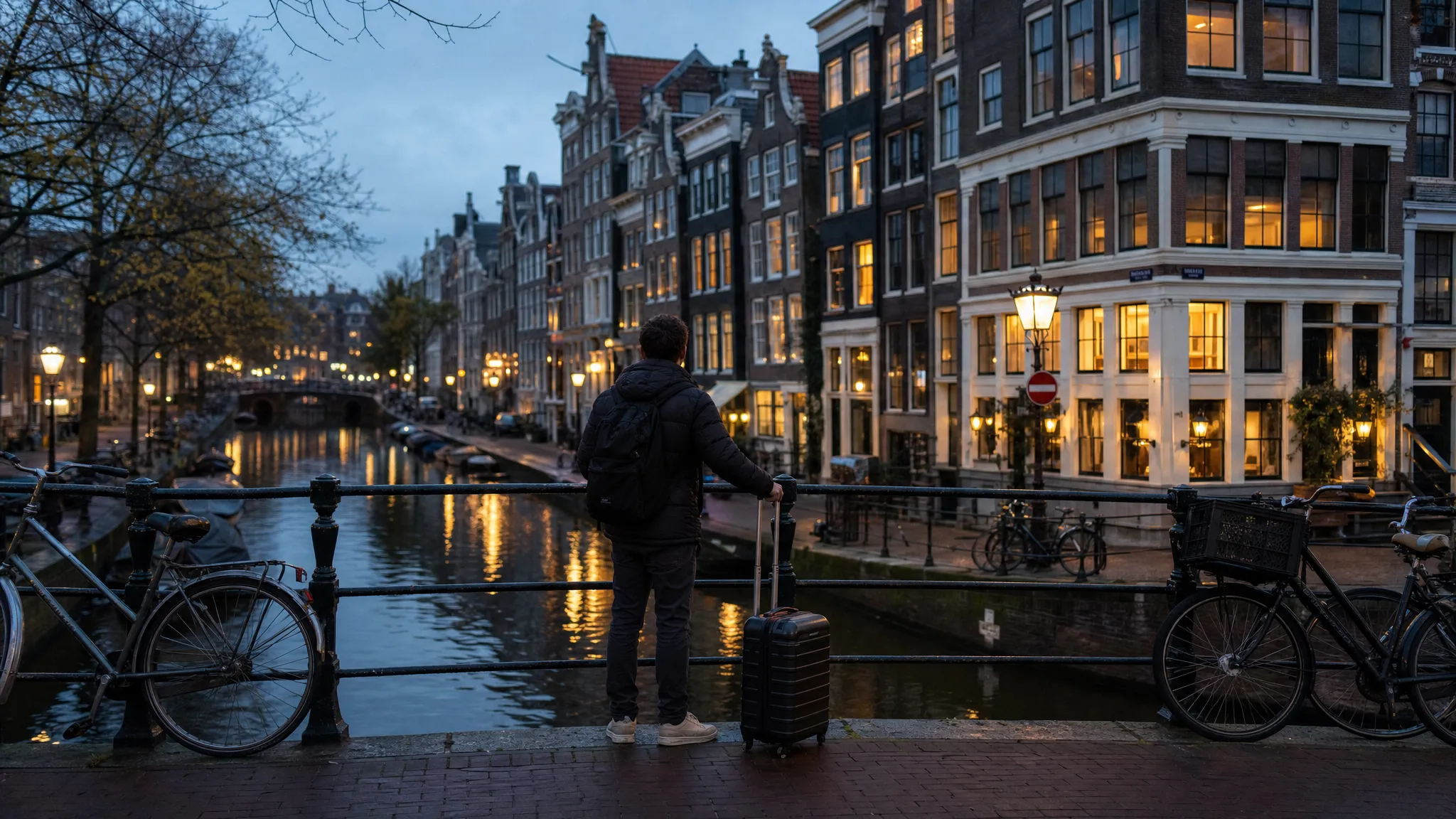
Amsterdam is not a resort-fee city in the way some beach destinations are, but that does not mean the final cost is obvious from the nightly rate. The extra costs are more subtle. They appear as city tax, breakfast decisions, room upgrades, transport assumptions, and the premium for being close to places you could have reached easily from a cheaper, calmer neighborhood.
The first cost to understand is tourist tax. Amsterdam has had one of Europe’s higher accommodation tax rates in recent years, calculated as a percentage of the room cost. That means the more expensive your hotel, the more tax can add to the total. When comparing hotels, do not compare only the base room rate. Compare the final payable total.
Breakfast is the second classic trap. Hotel breakfast can be convenient, especially for business travelers, early museum reservations, families, or rainy mornings. But Amsterdam is full of cafés and bakeries, and leisure travelers often overpay for breakfast they barely use. If breakfast is not included, check the per-person price before assuming the hotel rate is the full morning cost.
Airport transfers are another place where a “cheap” hotel can become less cheap. Staying far from the center may look smart until you arrive late, tired, and unwilling to navigate connections with luggage. Schiphol is well connected, but the best area depends on arrival time, group size, and how close your hotel is to a station or tram stop. A hotel beside a useful transit line can beat a more central hotel that requires awkward walking with bags.
| Cost or pitfall | Why it matters | How to avoid wasting money |
|---|---|---|
| Tourist tax | It can significantly change the final total | Compare final prices, not only nightly rates |
| Breakfast add-ons | Per-person pricing adds up fast | Book included breakfast only if you will actually use it |
| Canal-view upgrades | Romantic, but often expensive for limited time in-room | Pay for it on slow romantic trips, skip it on packed itineraries |
| Early check-in or late checkout | Convenient after flights, but not always free | Ask about luggage storage before paying for extra hours |
| Parking | Central Amsterdam parking can be very expensive | Avoid driving into the center unless necessary |
| Outer-neighborhood transport | Cheap rooms can require more time and transit spending | Price the hotel together with your daily movement plan |
| Minibar and service charges | Small charges can surprise tired travelers | Check room terms and avoid assuming extras are included |
The “city view” upgrade deserves special attention. In Amsterdam, a view can mean a canal, a street, rooftops, a courtyard, or simply a less obstructed angle. If the upgrade language is vague, ask yourself whether you are paying for a real experience or a phrase. Canal views are most worthwhile when you plan slow mornings, in-room coffee, or a romantic stay. They are least worthwhile when your itinerary keeps you outside until late.
Amsterdam luxury is not only about marble bathrooms and formal service. In a dense historic city, luxury can mean silence, space, elevator access, air conditioning in warmer months, a smoother check-in, better luggage handling, and a room that feels restful after walking all day. These things are not glamorous in a photo gallery, but they matter when you are jet-lagged on a narrow street in the rain.
Boutique hotels can deliver more personality for the money, especially in Jordaan, the Nine Streets, De Pijp, and canal-side pockets outside the busiest center. The risk is inconsistency. A boutique room may be charming but small. It may have stairs instead of an elevator. It may be above a bar, beside tram noise, or in a historic building where soundproofing is limited. Boutique is worth paying for when you value atmosphere and have checked the practical details.
Practical city hotels are often underrated. They may not be the place you photograph first, but they can offer the best actual travel experience if they sit near the right transit, have clearer room categories, and keep you within walking distance of your priorities. For hotel deal hunters, this is where value often lives: not the cheapest property, not the most famous one, but the hotel that removes the most daily friction for the lowest final cost.
If you want a broader method for comparing total value rather than headline rates, InnRox has a useful guide to hotel price comparison tips for smarter city stays, which is especially relevant in a city like Amsterdam where taxes, transit, and room size can change the real price.
Amsterdam in April is not Amsterdam in January. Spring brings tulips, longer lines, higher demand, and a city that feels freshly awake. Summer brings terraces and late light, but also peak crowds and stronger competition for central rooms. Autumn can be atmospheric and good value, with golden canal trees and fewer first-time tour groups. Winter can be the smartest season for travelers who care more about museums, restaurants, and cozy canal walks than postcard weather.
Weekdays and weekends also behave differently. Business districts can be better value on weekends. Central leisure hotels can spike when events, holidays, and school breaks overlap. If you are flexible, shifting arrival by one day can change the deal more than downgrading the hotel category.
Seasonality also affects which upgrades matter. In rainy winter, a better room, hotel breakfast, or lounge-like public space can be worth more because you may spend more time indoors. In bright summer, you may care more about location and air conditioning than a large room you barely use. During peak periods, flexible cancellation becomes valuable because prices can move quickly and better-fit rooms may open later.
A first stay is not one decision. It is several different trips wearing the same city name. The right hotel for a couple celebrating an anniversary is not necessarily right for a consultant arriving for two nights of meetings, a family with museum tickets, or a solo traveler chasing restaurants and late bars.
| Trip type | Best first area | Hotel style to prioritize | Upgrade usually worth it | Upgrade often not worth it |
|---|---|---|---|---|
| Romantic weekend | Canal Ring, Jordaan, quieter central pockets | Boutique or classic luxury | Larger room or real canal view | Breakfast if you prefer café mornings |
| Business trip | Zuidas, central near transit, station-connected areas | Modern practical hotel | Flexible cancellation or early breakfast | Decorative room categories |
| Family stay | Museum Quarter, Plantage, Oud-Zuid | Spacious, quiet, predictable | Larger room, included breakfast if convenient | Noisy central location for “atmosphere” |
| Nightlife and food | De Pijp, Leidseplein-adjacent, Jordaan | Walkable, simple, well located | Late checkout after a late night | Premium views you will not use |
| Museum-focused trip | Museum Quarter, Oud-Zuid, Canal Ring south | Calm, comfortable, close to tram lines | Breakfast before timed entries | Staying in the Old Centre just for prestige |
| Budget-conscious stay | Eastern Canal Belt, Noord, Sloterdijk if transit is strong | Clean, connected, transparent | Cancellation flexibility | Remote savings without calculating transport |
The key is honesty. If you know you will be out late, do not pay heavily for a room designed for lingering. If you know you need sleep, do not book above nightlife because the photos look stylish. If you know your trip is short, do not save a small amount by adding distance that steals your best hours.
Amsterdam’s beauty comes from its old buildings, narrow plots, and canal-side density. Those same qualities create hotel surprises. A room can be charming and still inconvenient. A historic building can be memorable and still wrong for someone with heavy luggage.
Before booking, check the details that matter more here than in many cities: elevator access, room size, bed configuration, air conditioning, window type, street noise, bathroom layout, and whether the room is below street level or facing an internal courtyard. Courtyard rooms can be quieter, even if less scenic. Higher floors can be better for noise, but only if there is an elevator or you are comfortable with stairs.
This is where a cheap room can become a regret. The lowest category may be perfectly fine for one traveler with a backpack staying one night. It may be miserable for two people with large suitcases staying four nights. If you are tempted by the cheapest room, compare it against your actual behavior: unpacking, working, resting, dressing for dinner, storing bags, and navigating the bathroom in the morning.
For a deeper checklist on avoiding false bargains, the InnRox guide to cheap rooms with fewer regrets is a helpful companion before you lock in a low rate.
The best Amsterdam booking process starts with a map, not a discount badge. Put your first two days on the map: arrival station or airport, museums, dinner areas, canal walks, work meetings, nightlife, and departure point. Then choose a hotel zone that reduces repeat travel, not just one that looks central in a broad sense.
Use this simple sequence before booking:
This is also where booking transparency matters. A clean booking flow with clear terms helps you avoid the classic Amsterdam mistake: thinking you found a deal, then discovering the better hotel was only slightly more once all costs were included. On InnRox, travelers can compare hotel options with upfront pricing, real-time availability, and instant confirmation, which is especially useful when Amsterdam demand shifts quickly around weekends, events, and peak seasons.
If you are ready to compare live options across the city, start with an Amsterdam hotel search on InnRox and judge each stay by total trip value rather than the nightly rate alone.
What is the best area to stay in Amsterdam for a first visit? For most first-time visitors, the Canal Ring, Jordaan, Museum Quarter, and Plantage are the safest choices. The Canal Ring is best for maximum walkability, Jordaan for atmosphere, Museum Quarter for culture and calm, and Plantage for quieter value near central sights.
Are central Amsterdam hotels worth the higher price? They can be worth it for short stays, romantic trips, and travelers who want to walk everywhere. They are less worthwhile if you mainly need a room to sleep in and are comfortable using trams or trains from a quieter district.
What hidden costs should I watch for when booking hotels in Amsterdam? Watch for tourist tax, breakfast charges, early check-in or late checkout fees, parking costs, vague view upgrades, minibar charges, and transport costs if you stay outside the center. Always compare the final total, not only the nightly rate.
Is it better to stay near Amsterdam Centraal Station? It depends on your arrival and itinerary. The station area is convenient for trains and short stays, but some nearby streets feel crowded and tourist-heavy. If atmosphere and sleep matter more, consider Jordaan, the Eastern Canal Belt, Museum Quarter, or Plantage.
Which Amsterdam hotel upgrades are usually worth paying for? Larger rooms, quiet rooms, flexible cancellation, and real location advantages are often worth paying for. Canal views and premium room labels are only worth it if you will spend enough time in the room to enjoy them.
Amsterdam rewards travelers who choose carefully. The right hotel does not have to be the most expensive, the most central, or the most photographed. It has to fit your rhythm, your budget, your luggage, your arrival time, and the way you want the city to feel when you step outside each morning.
With InnRox, you can compare Amsterdam hotel options with clear pricing, transparent terms, and fast reservations, without getting lost in unnecessary booking clutter. Start with the neighborhood that matches your trip, check the final total, and book the stay that makes Amsterdam easier from the first hour.
Tags