
Copyright © 2026 Innrox, Inc., an Innrox Group company. All rights reserved.

InnRox
Travel Experts
May 25, 2026
18 min read
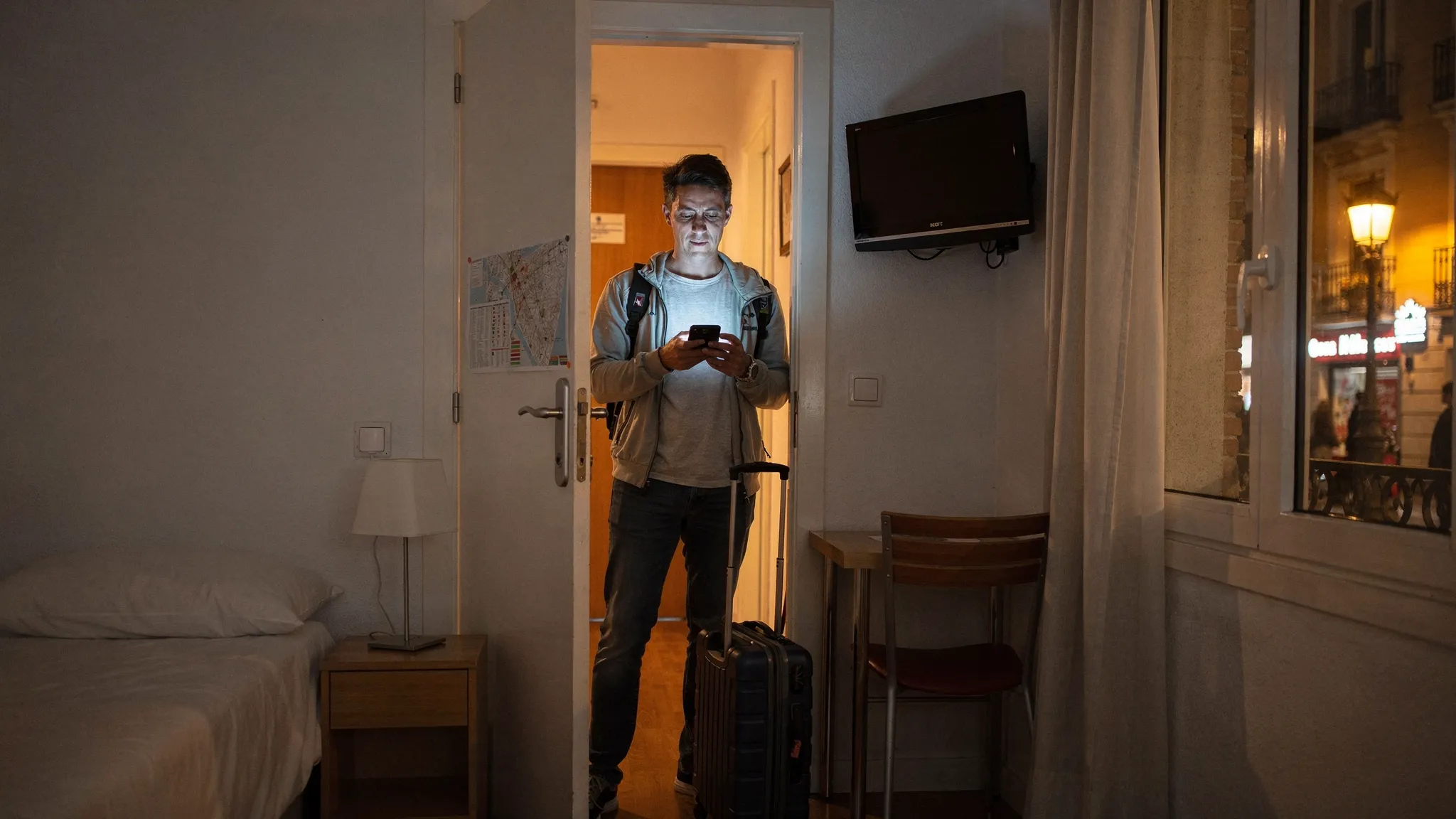
The cheapest room on a Madrid map can look almost heroic at midnight. A traveler arrives from the airport, tired enough to trust the glowing discount on a phone screen, and sees a central address only a few blocks from Gran Vía. The rate is low, the photos show a neat bed, and the word central does most of the selling.
Then the small print begins to travel with you. The room faces a late-night street. Breakfast is not included. The taxi from the airport costs more than expected because the metro would have required two changes with luggage. A city-view upgrade turns out to mean headlights and theater crowds until 2 a.m. By morning, the room was cheap, but the stay was not.
That is the real question behind cheap rooms: not whether the nightly rate is low, but whether the room still feels like a good decision after check-in. In cities like Madrid, where lively neighborhoods sit close together and hotel categories blur quickly, the smartest booking choice often comes from checking the boring details first.
Price matters, of course. But the first check should be what the room makes easier and what it makes harder. A cheap room can save money by being smaller, farther from the center, less flexible, less quiet, or less generous with extras. None of those tradeoffs is automatically bad. The mistake is accepting them accidentally.
Travel booking has become highly polished. Hotels know which words make a room feel more appealing: cozy, classic, superior, urban, boutique, lifestyle. This is not so different from how retail brands refine messages online with tools for AI-powered marketing workflows, testing which phrasing attracts attention. The lesson for travelers is simple: treat room labels as invitations, not evidence.
Before believing the mood of a listing, check the facts. Look at the map, not just the neighborhood name. Check whether the final price includes taxes and charges. Look for the room size, bed type, cancellation policy, breakfast cost, parking cost, and transit time to the places you will actually visit.
Madrid is a useful city for learning this because the difference between a great cheap room and a regrettable one can be only three metro stops. A room near Puerta del Sol is excellent if you have one night and want to walk everywhere. The same room can feel exhausting if you are traveling with children, driving a car, or trying to sleep before an early train.
Madrid does not have one correct hotel district. It has several versions of convenience. Gran Vía gives you instant energy. Las Letras gives you museums, wine bars, and walkability. Chamberí gives you calmer local life. Atocha gives you train access. Salamanca gives you polished comfort. Airport and IFEMA areas give you practicality, but only if your itinerary lives there too.
A four-star hotel in the wrong area can be worse value than a simple room in the right one. The best neighborhood is the one that reduces friction for your specific trip.
| Madrid area | Why cheap rooms can work | Common regret | Best for | Check first |
|---|---|---|---|---|
| Sol and Gran Vía | Maximum walkability and late-night energy | Noise, smaller rooms, higher breakfast prices | First-timers, short stays, nightlife | Window type, floor level, included extras |
| Las Letras and Cortes | Central without feeling as frantic | Weekend bar noise on certain streets | Couples, museum trips, food-focused stays | Street location and room orientation |
| Chueca and Malasaña | Design hotels, restaurants, nightlife | Paying boutique prices for tiny rooms | Friends, solo travelers, nightlife | Room size and soundproofing |
| Salamanca and Retiro | Calmer streets, refined atmosphere | Higher restaurant and shopping costs nearby | Business, romantic stays, comfort seekers | Total price after breakfast and transport |
| Atocha and Delicias | Excellent for trains and day trips | Less charming if you want late-night wandering | Rail travelers, short stays, practical itineraries | Walking route to station and noise exposure |
| Chamberí and Argüelles | Local cafés, metro access, better value | More transit time to major sights | Longer stays, repeat visitors, families | Metro distance and late-night return plans |
| Airport and IFEMA | Useful for flights and conferences | Expensive transfers into the center | Early flights, events, business travel | Shuttle hours, taxi cost, meal options |
If you want a central base, compare the location and total stay terms of properties such as Hotel Regina Madrid with options closer to Plaza Mayor like Petit Palace Plaza Mayor Madrid. The first question is not which one looks more impressive, but which one puts you closer to the version of Madrid you came to experience.
For travelers whose plans revolve around trains, museums, or onward travel, an Atocha-area search such as Only YOU Hotel Atocha Madrid can make more sense than paying to be in the most tourist-heavy streets. If you want simpler rates and metro access away from the busiest core, it is worth comparing options like Ibis Madrid Centro Las Ventas against central budget rooms with higher hidden costs.
Central Madrid is not a trap. It is only a trap when travelers pay for it without using it. If your stay is one or two nights, if you want to walk from dinner to hotel without checking transit schedules, or if this is your first visit, the center can be genuinely economical. You save time, reduce taxi use, and turn spare hours into actual travel experience.
But the center sells convenience at a premium. Cheap rooms around Sol, Gran Vía, and Plaza Mayor often become cheap because they compromise somewhere else. The room may be compact, the view may be an interior shaft, or the building may carry sound from hallways and streets. None of this is fatal if you know in advance.
The smartest central-room check is noise. A low floor facing a nightlife street is not the same product as an interior room in the same hotel. Travelers often overpay for a city view when the better value is a quieter courtyard-facing room. In Madrid, a room that looks less glamorous online may deliver the better morning.
Breakfast is the second check. Central hotels sometimes charge enough for breakfast that two guests can spend the equivalent of a strong casual lunch before leaving the lobby. If your hotel sits near cafés, bakeries, and markets, a room-only rate may be better. If you are traveling for business and need speed, breakfast included can be worth it, but only if the timing matches your schedule.
Parking is the third check. Driving into central Madrid can turn a cheap room into a false economy. Nightly parking charges, access restrictions, and garage logistics matter more than the room rate if you are arriving by car. In that case, a hotel farther out with parking clarity and metro access may be the more rational choice.
The best cheap rooms are often not hidden in remote areas. They are in neighborhoods where locals still define the rhythm of the street. In Chamberí, mornings smell like coffee and toasted bread rather than lobby perfume. In Argüelles, students, families, and office workers share the same sidewalks. Around Las Ventas, metro access can be more valuable than a famous address.
The tradeoff is time. A local neighborhood can save money, but only if you are comfortable building your day around transit. If you will leave after breakfast and return after dinner, a few metro stops are not a burden. If you plan to rest midday, change clothes often, or travel with young children, that distance begins to matter.
This is where cheap rooms require honesty. Some travelers say they do not mind being outside the center, then take taxis every night because they are tired. The room was cheaper, but the trip was not. Others choose a calmer district, use the metro confidently, eat better for less, and sleep more deeply. Same map, different traveler.
For longer stays, local neighborhoods often win. You are less dependent on hotel breakfast, less tempted by tourist-menu restaurants, and more likely to find laundries, supermarkets, casual bars, and practical services nearby. A cheap room becomes better value when the neighborhood itself lowers the daily cost of travel.
Madrid is a business city as much as a leisure capital, and hotel pricing reflects that. Areas near major rail stations, office clusters, conference zones, and the airport can be excellent or terrible value depending on the weekday, event calendar, and purpose of your trip.
For business travelers, the best cheap room is rarely the cheapest visible room. It is the room that protects time. A hotel near the meeting location may be worth more than a charming neighborhood across town. A desk, reliable Wi-Fi, early breakfast, clear invoicing, and fast checkout can matter more than a rooftop bar you will never use.
Atocha is a classic example. If you are taking early trains, planning day trips, or arriving late by rail, the area can remove stress. You may sacrifice some old-city atmosphere, but you gain control over timing. By contrast, booking near the airport only makes sense when your flight schedule demands it. If most of your trip is in the center, repeated transfers can erase the savings.
Airport hotels deserve a specific warning. Always check shuttle hours, whether the shuttle is free, and how often it runs. A cheap airport room with a shuttle that stops before your arrival may become an unplanned taxi stay. Also check dinner options nearby. A low room rate loses charm when the only easy meal is an overpriced hotel restaurant after a delayed flight.
Hidden costs are not always hidden because someone is trying to fool you. Sometimes they are simply separated from the nightly rate. The traveler sees one number, then experiences the real total through breakfast, transport, taxes, parking, and flexibility.
Use this audit before booking any cheap room, especially in large cities where small decisions compound quickly.
| Cost or condition | Why it matters | Regret signal |
|---|---|---|
| Taxes and local charges | Some booking displays separate mandatory charges until later in the process | The nightly rate looks low but the final total jumps at checkout |
| Breakfast | Two people can add a significant daily cost | The hotel is in a café-rich area but breakfast is priced like a luxury meal |
| Parking | Central parking can overwhelm a discount | You are driving, but the listing does not clearly show nightly parking terms |
| Airport transfer | Cheap rooms far from transit can require taxis | The hotel is described as near the airport or center without a realistic route |
| Cancellation policy | Nonrefundable rates are risky when plans are fluid | The savings are small compared with the cost of changing plans |
| Early check-in or late checkout | Long layovers and red-eye flights create timing problems | You arrive at 8 a.m. but check-in is midafternoon and storage is unclear |
| Room category | View and upgrade language can be vague | City view costs more but may also mean more noise |
| Occupancy rules | Extra guests, children, or rollaway beds may change the price | The room sleeps two, but your actual party needs different bedding |
| Wellness or spa access | Luxury-looking photos do not always mean access is included | The pool or spa is seasonal, limited, or requires an added fee |
The most common waste is paying for upgrades that do not change your actual trip. A balcony over a traffic artery is not romance. A larger room is not useful if you only sleep there. A premium breakfast is not a deal if you prefer wandering into a local café. The best upgrade is the one that solves a real problem.
Hotel category matters, but not in the way many travelers assume. A budget chain can be the smartest choice when predictability matters. A boutique hotel can be excellent when atmosphere is part of the trip. Discounted luxury can be worthwhile in low season, but only if you account for the expensive ecosystem around it.
Budget chains are strongest for short, practical stays. You usually trade character for clarity. The room may be compact, but the experience is easier to predict. This works well for solo travelers, business trips, airport nights, and travelers who spend most of the day outside.
Boutique hotels are more emotional. They can make a trip feel local, stylish, and memorable. The risk is inconsistency. One room may be lovely, another may be small or awkward because older buildings have irregular layouts. Before booking boutique cheap rooms, study room categories closely rather than relying on lobby photos.
Discounted luxury is tempting because it feels like beating the system. Sometimes it is. A five-star or high-end hotel at an off-season rate can deliver excellent value through service, bedding, location, and quiet. But the extras often remain luxury-priced. Breakfast, parking, cocktails, spa access, and laundry can make the final bill feel less discounted than the room.
| Hotel style | Where money is well spent | Where travelers overpay | Best match |
|---|---|---|---|
| Budget chain | Clean sleep, predictable basics, transit access | Expecting charm or large rooms | Short stays, solo travel, business basics |
| Boutique hotel | Atmosphere, neighborhood feel, design | Paying for style while ignoring room size | Couples, repeat visitors, food-focused trips |
| Business hotel | Work comfort, breakfast efficiency, transport links | Booking during peak weekday demand | Meetings, conferences, early departures |
| Discounted luxury | Service, bedding, quiet, special occasion feel | Extras that remain expensive | Romantic trips, low-season comfort seekers |
| Aparthotel-style stay | Space, simple meals, longer-stay practicality | Cleaning rules or less central locations | Families, longer stays, flexible routines |
The best value is rarely the fanciest room you can afford. It is the least compromised room for your actual needs.
Premium upgrades are worth paying for when they remove a known pain point. They are rarely worth paying for when they only improve the fantasy of the trip.
A refundable rate is worth it when flights, work schedules, visas, weather, or family plans are uncertain. A larger room is worth it for families, longer stays, or travelers who need to work from the room. Breakfast is worth it when your mornings are early and structured. Late checkout is worth it after a night flight, a race, a wedding, or a final work meeting.
City-view upgrades are more suspicious. In dense areas, the view can be less important than the soundproofing. A high-floor quiet room may be better than a lower-floor view. Club-level access can be good value if you will use it daily, but poor value if your itinerary is built around restaurants and evenings out.
Spa or pool access requires careful reading. Photos can make a hotel feel resort-like even when access is seasonal, limited, timed, or separately charged. If relaxation is the reason for booking, confirm the practical details before paying more.
Cheap rooms only work when they match the traveler. A backpack-light solo traveler can happily take a smaller interior room near transit. A couple on an anniversary may remember the lack of space more than the savings. A family may care less about a famous address and more about bedding, breakfast, and a smooth walk to the metro.
| Trip type | Best cheap-room strategy | Avoid |
|---|---|---|
| Business trip | Stay near meetings or direct transit, prioritize breakfast timing and checkout speed | Saving money across town, then paying in taxis and stress |
| Romantic weekend | Choose atmosphere and walkable dinner options, not necessarily the most famous street | Tiny rooms sold with vague boutique language |
| Family trip | Pay for space, bedding clarity, and breakfast practicality | Nonrefundable rooms with unclear occupancy rules |
| Solo trip | Use transit-rich areas and prioritize safety, simplicity, and late arrival ease | Remote savings that feel uncomfortable after dark |
| Short stay | Pay for location and instant convenience | Losing limited hours to transfers |
| Longer stay | Choose local neighborhoods with cafés, groceries, and metro access | Paying central premiums every night without needing them |
| Luxury-lite trip | Book high-end hotels in quieter seasons, then control extras | Assuming a discounted room means discounted services |
The painful hotel regret usually comes from copying someone else’s ideal stay. The right room for a business traveler can feel sterile to a couple. The right room for nightlife can be miserable for a parent with a stroller. The right airport stay can be absurd for a museum weekend.
Madrid has seasons of value, not one permanent price level. Spring and autumn often feel ideal, with warm evenings, outdoor tables, and strong demand. Rates can rise during major events, school holidays, and business-heavy weekdays. A room that looks overpriced on Tuesday may be reasonable on Sunday, and a business district that feels costly midweek may soften on weekends.
Summer can produce surprising hotel deals, but heat changes the value equation. Air conditioning becomes essential, not optional. A slightly better hotel with reliable cooling and a quiet room may be worth more than a cheaper stay that leaves you exhausted. If a rooftop or pool is part of the appeal, check whether access is included and whether it is seasonal or capacity controlled.
Winter can be strong value outside holiday peaks. Shorter days make location more important because you may spend more time moving between indoor plans. In colder or rainy weather, a cheap room far from the metro feels less charming than it did on the map.
The best seasonal tactic is flexibility. If your dates are fixed, book early enough to preserve choice. If your dates can move, compare weekdays and weekends before choosing the hotel. Cheap rooms often appear when your calendar avoids the city’s most compressed demand.
Most travelers book in the wrong order. They sort by lowest price, click a nice photo, then discover the tradeoffs. Reverse the process and the regrets shrink.
This order turns hotel booking from a gamble into a decision. You may still choose the cheapest room. The difference is that you will understand why it is cheap.
What should I check first when booking cheap rooms? Check the total trip cost before the nightly rate. That means final taxes and charges, breakfast, parking, cancellation terms, transport costs, and whether the location fits your actual itinerary.
Is it better to stay in the city center or a local neighborhood? Stay in the center for short trips, first visits, nightlife, and maximum walkability. Choose a local neighborhood for longer stays, calmer evenings, better everyday food prices, and a more residential rhythm.
Are cheap airport rooms worth it? They are worth it for early flights, late arrivals, and airport meetings. They are often poor value if most of your trip is in the city center because transfers can cost time and money.
Which hotel upgrades are usually worth paying for? Refundable rates, larger rooms for families or longer stays, breakfast for early business schedules, and late checkout after difficult flight times can be worth it. City views and vague room-label upgrades are often less reliable.
How can I tell if a cheap room is genuinely good value? A good-value room has a clear final price, a location that reduces your daily friction, room details that match your needs, and no surprise costs that erase the savings.
Cheap rooms are not the enemy. Unchecked assumptions are. The best hotel deal is the one that keeps its promise after taxes, breakfast, transport, sleep quality, and schedule reality are included.
InnRox is built for travelers who want that kind of clarity: competitive hotel rates, upfront pricing, instant confirmation, flexible options where available, secure payments, and a simple booking flow without unnecessary clutter. When you are ready to compare rooms by real value instead of headline price alone, start with InnRox and book the stay that fits the trip you are actually taking.
Tags