
Copyright © 2026 Innrox, Inc., an Innrox Group company. All rights reserved.

InnRox
Travel Experts
June 17, 2026
21 min read
Vancouver has a way of making a cheap hotel feel either brilliant or deeply inconvenient by breakfast the next morning. You arrive with the mountains sitting blue behind the glass towers, the harbor flashing between buildings, and a room rate that looked like a victory when you booked it. Then the real city starts adding itself up: airport transfer, parking, breakfast, taxes, event pricing, a late-night ride after the last easy connection, and maybe a “view” upgrade that gives you more office windows than ocean.
That is why the best discount hotels Vancouver travelers should actually consider are not always the absolute cheapest rooms on the map. In this city, the better question is: what kind of Vancouver are you trying to have?
If your trip is built around Stanley Park walks, ferry-hopping to Granville Island, morning meetings near Canada Place, or a late arrival before an early flight, the right hotel changes completely. A budget room in the wrong area can become expensive through transportation. A midrange room in the right neighborhood can feel like a discount because it removes two taxi rides, a parking charge, and the need to eat overpriced hotel breakfasts.
This guide takes a practical, neighborhood-first approach. It looks at where lower hotel rates make sense, where travelers often overpay, which upgrades are worth questioning, and which Vancouver hotels deserve a closer look when value matters more than brand glamour.
Vancouver is compact on paper, but water, bridges, mountains, and event traffic can make a “nearby” hotel feel farther than expected. The downtown peninsula is wrapped by Burrard Inlet, English Bay, and False Creek. The North Shore is visually close, but separated by water. Richmond can be excellent for airport stays, but it is a different travel experience from waking up near the seawall. East Vancouver may offer character and better food value, but hotel inventory is thinner and transit planning matters more.
That geography is the heart of hotel value here. A traveler who wants to walk from the hotel to the waterfront, the convention center, Gastown, and Stanley Park is really buying time and convenience. A traveler with a rental car heading to Whistler, Squamish, or the ferry terminal may be buying something different: easier road access, simpler parking, and less stress leaving the city.
This is also a city where seasonality matters. Summer brings cruise traffic, family vacations, outdoor festivals, and more competition for central rooms. Shoulder periods can be excellent for deals, especially when the weather is mixed but the city still works beautifully for food, museums, seawall walks, and mountain views between rain showers. Winter often brings better rates, but travelers should value transit access and neighborhood comfort more because cold rain makes “just a 25-minute walk” feel less charming.
If you want a broader map-based breakdown before narrowing your hotel shortlist, InnRox has a separate guide to affordable hotels in Vancouver by area, transit, and value. Use that kind of neighborhood thinking first, then compare individual rooms and booking terms.
A first-time Vancouver visitor usually gets more value from walkability than from saving a small amount on the nightly rate. If you can walk to Robson Street, Stanley Park, the waterfront, or the SkyTrain, you reduce the number of moments where money leaks out of the trip. That matters more than many travelers expect.
Business travelers need a different calculation. If your meetings are near the convention center, Coal Harbour, or the financial district, a more central hotel can be worth it even when the rate looks higher. The hidden cost of staying farther away is not just transportation. It is the lost hour before a morning meeting, the rain-soaked transfer, and the need to keep returning to a distant room between appointments.
Families should pay close attention to room layout, breakfast, laundry access, and proximity to easy meals. A cheaper room with only one bed configuration or no practical breakfast option may force extra spending every morning. Couples may care more about atmosphere, quieter streets, restaurants within walking distance, and whether a room feels relaxing enough to return to after a long day outside.
Short-stay travelers should be especially ruthless. If you have only one night in Vancouver, the right location is often worth more than a room upgrade. If you have four or five nights, a slightly less central neighborhood can become attractive because you have time to learn transit routes and settle into local restaurants.
Here is the simplest way to frame the choice:
| Trip type | Usually better value | Often overpriced for this traveler | Key cost to check |
|---|---|---|---|
| First-time sightseeing | West End, Downtown, Stadium area | Remote airport hotels | Transit and taxi time |
| Business trip | Downtown Core, Coal Harbour, Yaletown | Farther rooms requiring transfers | Peak-hour rides and parking |
| Family stay | Practical downtown or near transit | Tiny boutique rooms with upgrade pressure | Breakfast and room configuration |
| Road trip | Edge-of-downtown or airport-area hotels | Central hotels with high parking charges | Nightly parking and bridge traffic |
| Food and nightlife | Yaletown, Gastown edge, Main Street access | Quiet districts far from evening plans | Late-night ride costs |
| Nature-focused trip | West End, North Vancouver, road-access hotels | Downtown luxury without outdoor convenience | Transfer time to trails or parks |
The mistake is treating Vancouver as one hotel market. It is really several markets layered together: cruise city, business city, mountain gateway, airport stopover, food city, and nature escape. Your best discount depends on which version you are booking.
Downtown Vancouver is convenient, but it is not automatically the smartest value. The downtown core works well for meetings, shopping, cruise departures, and travelers who want to avoid a car. The tradeoff is that parking can be expensive, breakfast is often priced like a business expense, and rooms with impressive wording may still be compact or inward-facing.
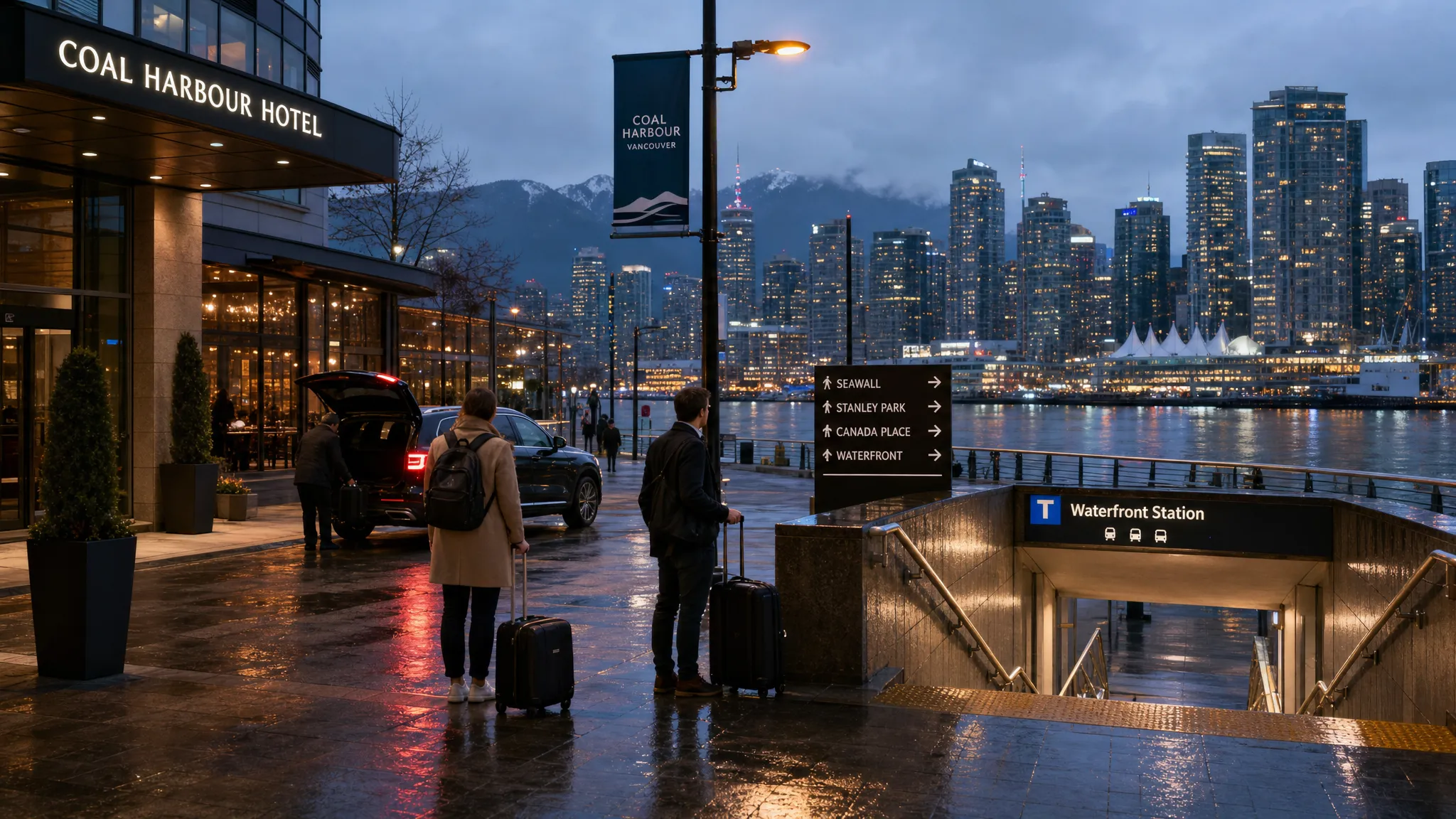
Coal Harbour feels polished and calm, with glass towers, water views, and quick access to the convention center. It is excellent for business travelers and couples who care about scenery. But for discount hunters, it can be dangerous if the rate is only slightly reduced while parking, breakfast, and view upgrades remain premium. If you will not use the waterfront location, you may be paying for a mood rather than a practical advantage.
The West End is one of Vancouver’s best value zones because it feels lived-in rather than staged. Robson Street gives you casual dining, Denman Street leads toward English Bay, and Stanley Park is close enough to become part of your morning instead of a scheduled excursion. It is not always the cheapest area, but it often protects travelers from overspending on taxis and expensive restaurant corridors.
Yaletown is sleek, restaurant-heavy, and useful for travelers who want nightlife without sacrificing transit access. It can be a strong choice for couples or business travelers extending a work trip into a weekend. The risk is paying a premium for style while still dealing with noise, weekend demand, and expensive dining. If you are mostly using the room to sleep, compare Yaletown carefully against the West End or Stadium area.
Gastown and the edges of Chinatown can deliver atmosphere and occasional value, especially for travelers who like heritage buildings, coffee shops, and evening energy. But Vancouver is block-by-block in these areas. A hotel can be well located for restaurants and transit, yet still not fit a traveler who wants quiet streets late at night. This is where reading recent guest comments about noise, room condition, and exact entrance location matters more than star rating.
Richmond and the airport corridor are practical, not romantic. They can be excellent for early flights, late arrivals, car trips, and travelers who want access to Richmond’s food scene. But if your actual plan is Stanley Park, Granville Island, and the downtown waterfront, the discount has to be large enough to justify the commute. Airport hotels can also vary in shuttle policies, parking terms, and breakfast value, so do not assume every airport stay includes the same conveniences.
North Vancouver is tempting because it sits close to mountains, trails, and the SeaBus. For nature-focused travelers, it can be more authentic than staying downtown and paying premium rates for views you barely use. The caution is timing. SeaBus schedules, evening returns, and bad-weather transfers change the experience. North Vancouver is good value when it matches your itinerary, not when it is simply cheaper.
Value in Vancouver often comes from choosing a hotel whose compromises match your priorities. A small room is fine if the location saves you from transit headaches. A less glamorous property can be excellent if it is clean, well placed, and transparent about what is included. A stylish boutique room can be a bad deal if you pay extra for every practical need.
For travelers who want the West End and Robson Street without jumping straight into luxury pricing, Blue Horizon Hotel Vancouver is the kind of property to compare against more expensive downtown stays. The value logic is location: you are close to casual restaurants, shopping, and the walk toward Stanley Park. It suits first-timers, couples who like walking, and travelers who want downtown convenience without staying in the busiest convention corridor.
If you like personality more than polished chain predictability, The Burrard Vancouver is worth comparing with standard midrange downtown rooms. Its appeal is not old-school luxury. It is the idea that a central, design-forward stay can feel lively and efficient if you care about access more than room size. The tradeoff to check is noise and the exact room category, especially if you are a light sleeper or arriving after a long-haul flight.
For event travelers, families watching the budget, or visitors who prioritize location and practicality, YWCA Hotel Vancouver often belongs on the shortlist. Its location near stadium and central attractions can make it more useful than cheaper rooms far outside the core. The booking pitfall is assuming every room type works the same way, so check bathroom configuration, bed setup, and cancellation terms before you treat the rate as final value.
Heritage lovers looking near Gastown may compare Victorian Hotel Vancouver against newer but less atmospheric properties. The draw is character and walkability, especially for travelers who like old buildings, coffee, and restaurant streets. The practical question is whether the room setup, stairs or elevator access, and possible street noise fit your comfort level. A charming room is only a discount if the details match your expectations.
If nightlife access matters and you are comfortable with an energetic setting, Moda Hotel Vancouver can be part of a smart comparison. It may appeal to travelers who want to walk to restaurants, bars, entertainment, and central transit. But this is where the discount-versus-sleep tradeoff becomes real. A low central rate near nightlife can be excellent for the right traveler and frustrating for someone expecting a quiet retreat.
For travelers with a car, an event near the PNE, or plans that point east rather than into the downtown core, Atrium Inn Vancouver deserves a different kind of evaluation. It is not competing with waterfront glamour. It is competing on practical access and the possibility of avoiding the cost spiral of central parking. The key is to calculate your actual routes, especially if most of your meals, meetings, or sightseeing are downtown.
Airport-focused travelers should compare properties like Accent Inns Vancouver Airport when timing matters more than postcard scenery. If you land late, fly early, or plan to explore Richmond’s restaurants, an airport-area stay can be rational. But if you are booking it for a vacation centered on downtown Vancouver, add the transit time and any shuttle or ride costs before calling it a deal.
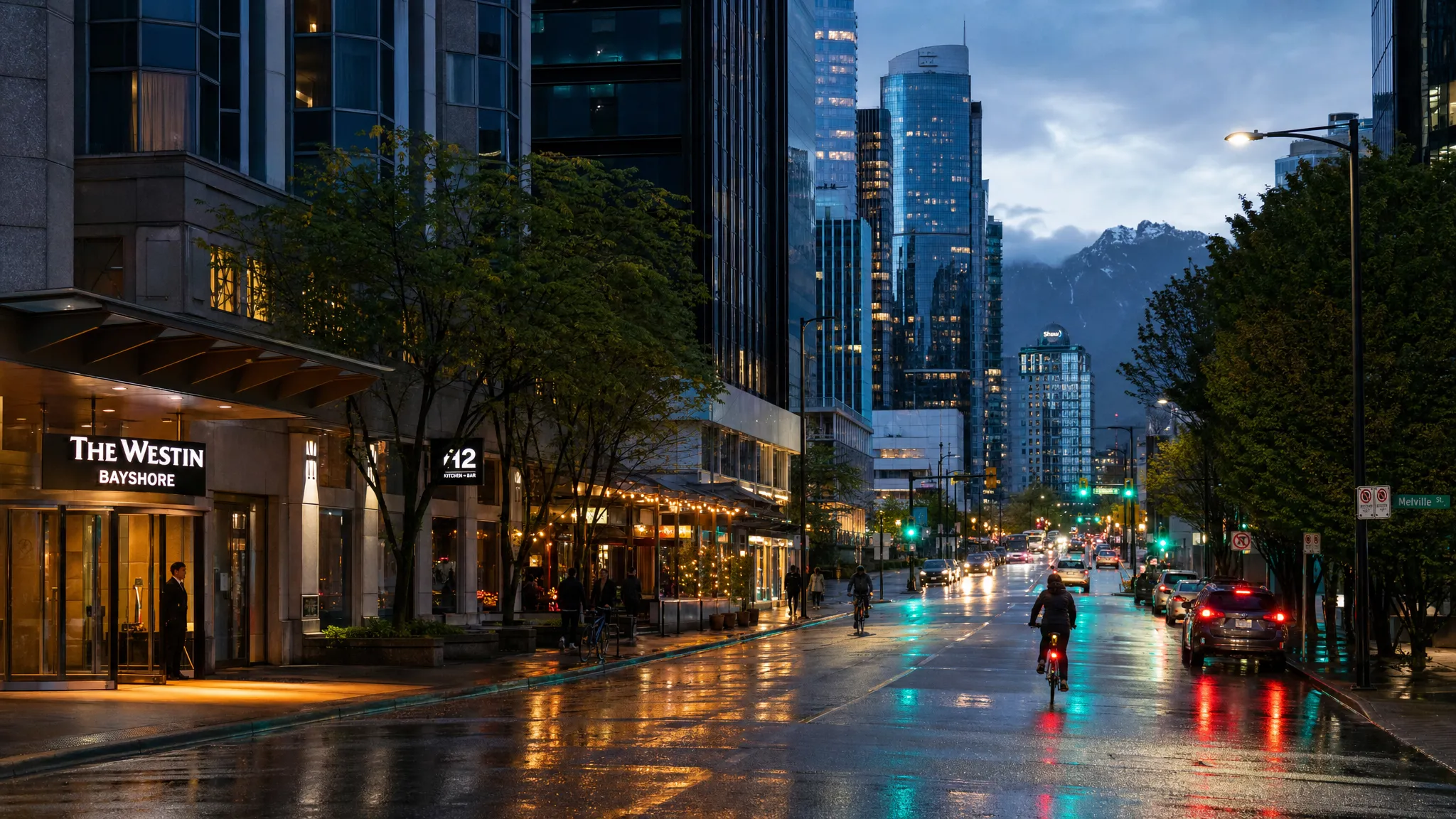
The most expensive Vancouver hotel mistake is focusing only on the nightly rate. The city rewards travelers who compare the total stay, not the first number they see. Taxes and hotel fees can lift the final price. Parking can change the entire ranking between two properties. Breakfast can be a convenience or a daily overspend. Location can quietly add rideshare charges every time rain, luggage, or late-night timing makes transit less appealing.
Parking is often the biggest surprise for North American travelers. Downtown Vancouver is not a casual parking city. If you are bringing a car, check whether the hotel charges nightly parking, whether in-and-out privileges are included, and whether the garage height works for your vehicle. A hotel that is slightly more expensive but includes practical parking in a suitable location may beat a cheaper downtown room after one night.
Breakfast is another area where marketing can mislead. A “good rate” without breakfast may still be fine in the West End or near Main Street because independent cafes are close. The same rate in a less walkable area may force you into a hotel breakfast you did not budget for. Families should calculate breakfast as a group cost, not an individual convenience.
Early check-in and late checkout can matter in Vancouver because many flights arrive from long distances and cruise schedules create awkward gaps. Do not assume either is free. If you land at 8 a.m., a hotel with luggage storage and a comfortable neighborhood may be better value than a cheaper property where you are stranded until afternoon.
View upgrades deserve skepticism. Vancouver’s best views are legitimately beautiful, but the wording matters. “City view” may mean surrounding towers. “Partial view” may be a narrow angle. A harbor or mountain view can be worth paying for if the room is part of the trip, such as a romantic stay or recovery day after a long journey. If you will spend most of the day outside, that money may be better spent on location, breakfast, or flexible cancellation.
| Cost to check | Why it matters in Vancouver | Smart traveler move |
|---|---|---|
| Parking | Downtown garages can add a major nightly cost | Compare total cost with parking included or nearby alternatives |
| Breakfast | Hotel breakfast may be convenient but expensive | Check nearby cafes before paying for a breakfast rate |
| Airport transfer | Airport-area savings can disappear if you keep going downtown | Compare SkyTrain access, shuttle rules, and late arrival timing |
| Taxes and fees | Final price can differ from the displayed base rate | Use platforms that show the total price clearly before booking |
| View upgrades | “City view” and “partial view” can be vague | Pay only when the view is central to the trip |
| Cancellation terms | Weather, flights, and cruise plans can shift | Choose flexible terms when uncertainty is real |
| Event pricing | Concerts, conventions, and cruise days can spike rates | Check local event dates before assuming a room is overpriced |
This is where transparent booking matters. If you are trying to avoid a cheap room that costs more after check-in, it helps to use the same logic outlined in InnRox’s guide to cheap hotel rooms that don’t cost more after check-in: compare what you will actually pay, not what the headline rate promises.
Vancouver’s boutique hotels can be excellent when you want atmosphere, design, and a neighborhood that feels personal. They are best for couples, solo travelers, and people who care about restaurants and local texture. The risk is paying for style while sacrificing space, quiet, or flexible policies. A boutique discount is real when the location and personality improve your trip. It is not real when you end up paying extra for basics.
Practical budget and midrange hotels are often underrated in Vancouver. They may not give you lobby drama or luxury amenities, but they can win on location, clean simplicity, and total cost. These are the hotels to consider for event weekends, family sightseeing, business trips where the room is mostly for sleeping, and short stays where every hour of location convenience counts.
Upscale hotels are not automatically a bad value. Sometimes a higher-category property drops into a competitive range during quieter dates, and then the added comfort, service, gym access, better bedding, or waterfront location can be worth the difference. A traveler attending a conference, celebrating an anniversary, or recovering from a long journey may get real value from less friction.
The trick is to separate genuine comfort from marketing gloss. A larger room can be worth it for families. A quiet high floor can be worth it before a workday. A flexible cancellation rate can be worth it if flights or ferry plans are uncertain. But a vague room-view upgrade, premium minibar, or breakfast package you will not use rarely deserves priority.
When comparing categories, ask one practical question: what problem does the higher price solve? If the answer is “it saves 30 minutes each way,” “it avoids parking stress,” or “it gives my family enough room,” the upgrade may be rational. If the answer is “the photos look nicer,” slow down.
Vancouver’s SkyTrain is one reason a discount room can work beautifully. A hotel near a useful station can outperform a more central hotel that requires awkward transfers. The Canada Line connects the airport with downtown, making station access particularly valuable for travelers without a car. Still, proximity needs to be real. “Near transit” can mean a three-minute walk or a 15-minute uphill drag with luggage in the rain.
Walking is another form of value. A West End hotel that lets you stroll to English Bay, Stanley Park, and Robson Street can reduce transportation spending and make the trip feel more relaxed. A Downtown Core hotel near the convention center can make a business trip smoother because your day is not broken by logistics.
But not every traveler should avoid a car. If your plans include Capilano, Cypress, Squamish, Whistler, or ferry connections, a car may make sense. In that case, do not judge hotels only by downtown appeal. Look at bridge access, parking, and how painful it will be to leave in the morning. A central hotel with costly parking and slow exits may be worse than a less glamorous property positioned for the road.
Late-night travel changes the math too. A hotel that is easy by transit at 2 p.m. may be inconvenient after dinner, rain, or an event. If your plan includes nightlife on Granville Street or dinner in Yaletown, staying within walking distance might be worth more than the lowest rate outside the core.
Summer rates can be unforgiving because Vancouver is both a city destination and a gateway to nature. Cruise traffic, Alaska itineraries, festivals, weddings, school vacations, and mountain-bound travelers all compete for rooms. During this period, a true discount usually comes from choosing a less obvious area, booking earlier, accepting a smaller room, or finding a practical hotel rather than a flashy one.
Spring and fall can be the smartest value windows. The city may be damp, but it is still atmospheric: wet cedar in Stanley Park, low clouds over the harbor, warm restaurants glowing against dark streets. For travelers who do not need beach weather, these months can offer a better balance of rate and experience.
Winter can produce stronger discounts, but it asks more of your hotel choice. Rain makes walkability, transit proximity, and neighborhood dining more important. A cheap room far from easy meals may feel bleak after sunset. A slightly more expensive hotel near cafes, transit, and indoor attractions can feel like the better discount because it protects the mood of the trip.
Weekday and weekend patterns also vary. Business-heavy downtown hotels may soften on some weekends, while leisure-heavy areas can spike. Event dates can flip the usual logic. If there is a concert, convention, sports event, or cruise surge, the area around stadiums and the waterfront may behave differently from the rest of the city.
Imagine two rooms. One is cheaper near the airport. One is higher in the West End. If you are arriving late and leaving early, the airport room may be the obvious winner. You avoid a downtown transfer, sleep sooner, and keep the trip simple.
Now imagine the same two rooms for a three-night sightseeing trip. Suddenly the West End room may be cheaper in practice. You can walk to Stanley Park, eat nearby without planning every meal, reach downtown easily, and avoid repeated airport-to-city transfers. The higher nightly rate buys back time, mood, and convenience.
The same logic applies to a central boutique hotel versus a practical stadium-area room. If you are in town for restaurants, design, and a couple’s weekend, boutique atmosphere may be part of the value. If you are in town for an event and leaving the next morning, the practical room near transit may be smarter.
Before booking, test each Vancouver deal against five questions:
If a hotel passes those questions, it may deserve consideration even if it is not the cheapest. If it fails them, the low rate is probably just the beginning of the bill.
What is the best area for discount hotels in Vancouver? The West End, Stadium area, select Downtown edges, Richmond airport corridor, and some East Vancouver locations can all offer value, but the best area depends on your trip. First-time visitors often benefit from walkability, while early-flight travelers may get better value near the airport.
Are airport hotels a good way to save money in Vancouver? Airport hotels can be smart for late arrivals, early departures, car trips, or Richmond dining plans. They are less ideal for sightseeing-focused stays unless the savings are large enough to offset repeated transit or ride costs into downtown.
Should I pay more to stay downtown Vancouver? Paying more downtown can be worth it if it reduces transportation, saves time, or places you near meetings, cruise terminals, restaurants, or major attractions. It is less worthwhile if you will have a car, pay high parking charges, or spend most of your trip outside downtown.
Are view upgrades worth it in Vancouver hotels? They can be worth it for romantic trips, relaxation days, or travelers who plan to spend real time in the room. For short sightseeing trips, vague city-view upgrades are often less valuable than better location, flexible cancellation, or included breakfast.
How do I avoid hidden hotel costs in Vancouver? Compare the total price, not just the nightly rate. Check taxes, parking, breakfast, cancellation terms, airport transfer costs, early check-in fees, and whether the room type matches your needs before booking.
The smartest Vancouver hotel deal is not just a low number. It is a room that fits the city’s geography, your schedule, your transportation plan, and the costs that appear after the first search result.
InnRox is built for travelers who want clearer hotel booking: competitive rates, upfront final pricing, instant confirmation, secure payment, and flexible options such as free cancellation or pay-later deals where available. If you are comparing Vancouver stays, start with the neighborhoods that match your trip, then use InnRox to search Vancouver hotels without unnecessary clutter.
In a city where the mountains look close, the rain changes your walking plans, and a waterfront view can double as a marketing trap, the real discount is choosing deliberately. Book the room that saves you time, protects your budget, and lets Vancouver feel as effortless as it looks from the seawall.
Tags