
Copyright © 2026 Innrox, Inc., an Innrox Group company. All rights reserved.

InnRox
Travel Experts
May 20, 2026
21 min read
Vancouver can look expensive before you even leave the airport. The mountains seem to raise the room rates as surely as they rise above Burrard Inlet, and the glossy downtown hotels know exactly how photogenic their windows are. Yet the city also rewards travelers who read the map carefully. A room that looks costly at first can save you taxi money, time, and stress. A cheaper room can become expensive once parking, transfers, and breakfast are added.
That is why searching for affordable hotels in Vancouver is not only about finding the lowest nightly rate. It is about choosing the right side of the water, the right transit line, and the right kind of hotel for the trip you are actually taking. Vancouver is compact, but it is also divided by inlets, bridges, beaches, rail lines, and rain. Those details matter more than many first-time visitors expect.
I learned this on a wet evening near Waterfront Station, watching two travelers make opposite choices. One had booked a discounted airport hotel and was already calculating the cost of riding into downtown for dinner. The other had paid more for a central room, then discovered overnight parking cost almost as much as a good meal. Both had found a deal. Neither had found the full cost.
Vancouver’s hotel geography is shaped by nature. Downtown sits on a peninsula, surrounded by False Creek, English Bay, and Burrard Inlet. The North Shore mountains are close enough to feel part of the skyline, but crossing toward them depends on bridges or the SeaBus. Richmond and the airport are south on the Canada Line. Burnaby sits east on the SkyTrain. Kitsilano feels relaxed and beachy, but it is not as rail-connected as downtown.
Smart booking here feels less like browsing pretty rooms and more like pricing a route. The same transparency mindset travelers use for other high-cost decisions applies. When people compare vehicles, for example, they look for platforms that make total cost clearer, such as transparent online car marketplaces that prioritize filters, pricing, and verified details over sales noise. Hotel booking deserves the same discipline.
For hotel stays, that means comparing the final price rather than the headline rate. A room ten minutes from the SkyTrain may beat a cheaper room that requires taxis. A hotel with a slightly higher rate but included breakfast may win for families. A central property with no need for a rental car can be better value than a suburban bargain with daily parking and bridge traffic.
In Vancouver, plot three costs before you fall in love with a room: the room itself, the transportation pattern, and the extras. Extras include taxes, parking, breakfast, early check-in, late checkout, luggage storage, view upgrades, and any amenity or destination-style fees. The right hotel is the one where those costs match your trip style.
The city’s best-value area depends on what you plan to do after you drop your bag. A visitor walking to meetings near the convention center needs a different base from a family renting a car for Capilano, Stanley Park, and Whistler. A couple coming for restaurants and seawall walks has different priorities from a solo traveler trying to sleep before a 6 a.m. flight.
| Area | Best for | Value advantage | Main tradeoff | Watch before booking |
|---|---|---|---|---|
| Downtown core | First-timers, short stays, business trips | Saves time and transit costs | Higher nightly rates | Parking, event surges, small rooms |
| Robson and West End | Walkability, food, Stanley Park access | Central without always feeling corporate | Can be noisy near nightlife | Room view wording and parking charges |
| Yaletown and False Creek | Restaurants, couples, polished city stays | Great for walking and Canada Line access | Often pricier on weekends | Premiums for design and views |
| Gastown and Chinatown edge | Character, nightlife, heritage hotels | Often better rates than waterfront luxury | Street noise and uneven blocks | Elevator, bathroom, and noise details |
| Richmond and airport area | Early flights, late arrivals, value hunters | Canada Line access and lower rates | Less Vancouver atmosphere | Shuttle rules and transit time |
| North Vancouver | Outdoors, quieter stays, mountain access | Scenic value when downtown spikes | Bridge or SeaBus dependency | Late-night return costs |
| Burnaby and Metrotown | Longer stays, shopping, SkyTrain users | Bigger inventory outside downtown | Less romantic for first visits | Distance from west-side attractions |
This table is not a ranking. It is a reminder that affordability changes by itinerary. A cheap hotel in the wrong area is not a deal, it is a logistical tax.
Downtown Vancouver is where convenience gets expensive, but it is also where convenience can pay you back. If you are staying one or two nights, arriving without a car, and planning Stanley Park, the waterfront, Gastown, Yaletown, Robson Street, or business meetings, downtown can be the most economical choice even when the room rate is higher. You trade square footage for time.
Budget-minded travelers often begin with practical central options, especially if they care more about location than a lobby scene. You can compare current availability for YWCA Hotel Vancouver as a starting point for a central stay where the neighborhood does much of the work.
The downtown mistake is booking the cheapest central room without reading the fee structure. Parking can turn a fair rate into a painful one, especially if you keep the car unused for two days. Breakfast can be another quiet expense. In Vancouver, it is easy to find coffee and a pastry nearby, so a pricey hotel breakfast only makes sense if you have children, early meetings, or a rate where breakfast is truly included.
Downtown is most worth it for short stays, business travelers, cruise-adjacent itineraries, and first-timers who want to walk everywhere. It is less worth it for travelers with a car, travelers spending most of their time on the North Shore, or anyone hoping for spacious rooms at budget prices.
The West End is where Vancouver starts to feel lived-in. There are apartment towers, ramen shops, grocery stores, bakeries, and damp sidewalks leading toward English Bay. It is not hidden, but it is more human than the glassier waterfront blocks. For many travelers, this is the sweet spot between tourist convenience and local texture.
If you want a boutique feel without jumping directly into luxury pricing, compare properties such as The Burrard Vancouver, especially if your priority is walkability and personality over large-room formality.
Robson Street is practical because food is everywhere and Stanley Park is reachable on foot from many points. A stay around Robson can also reduce the temptation to pay for breakfast, since casual options are close by. For travelers who want an established hotel feel in the same broad area, Blue Horizon Hotel Vancouver is another useful name to compare when checking date-specific rates and policies.
The hidden cost in the West End is not always money. It can be noise. Rooms near nightlife corridors, busy intersections, or late-night food streets may cost less because sleep is less protected. If you are a light sleeper, a quieter side street or higher floor can be a better upgrade than a vague city view.
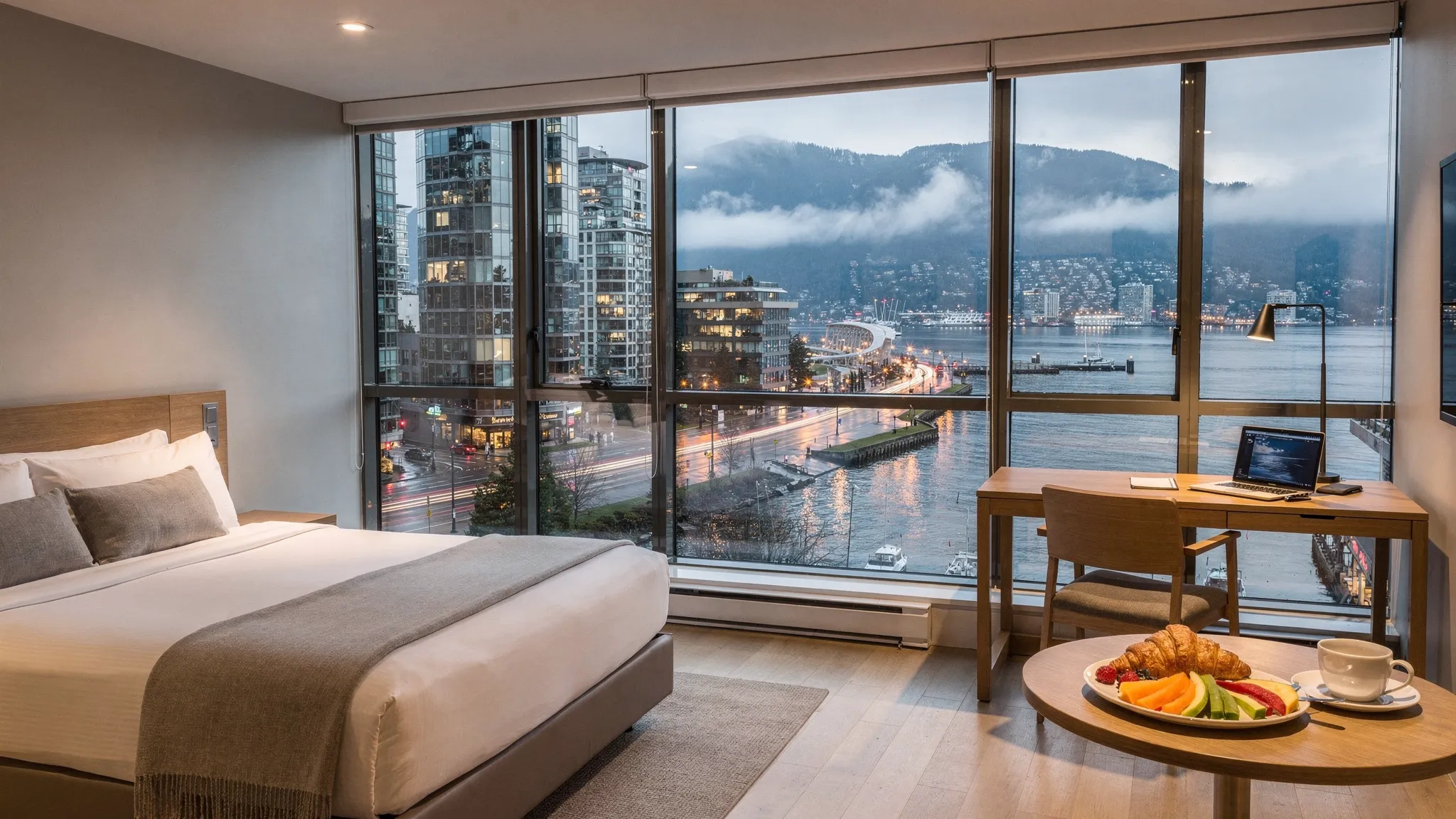
This is also where the city view trap appears. In Vancouver, a true water or mountain view can transform a room, especially on a rainy morning when the clouds lift. But a city view may simply mean buildings across the street. Before paying extra, check whether the listing specifies harbor, mountain, park, or bay, not just view.
Yaletown is Vancouver’s modern dining room, all converted warehouse edges, glass residential towers, cocktail bars, patios, and seawall access. It is excellent for couples who want a polished urban weekend without needing taxis after dinner. It is also good for travelers using the Canada Line because Yaletown-Roundhouse connects directly to the airport line.
The value question is whether you will use the neighborhood enough to justify the rate. If your ideal trip is restaurants, seawall walks, Granville Island by ferry, and easy transit, paying more here can make sense. If you mostly need a bed while exploring North Vancouver trails or UBC, Yaletown’s premium may not pay off.
Classic luxury versus modern luxury also plays differently here. Older grand hotels may offer ceremony, service, and larger public spaces. Newer modern hotels may offer sharper design, sleeker rooms, and better placement for restaurants or transit. The affordable choice is often not the cheapest one, but the one that prevents add-on spending.
Watch for premium language around wellness, views, and amenities. A pool, spa, or lounge sounds valuable only if access is included and the hours fit your schedule. If you are out all day, you may be subsidizing features you never touch.
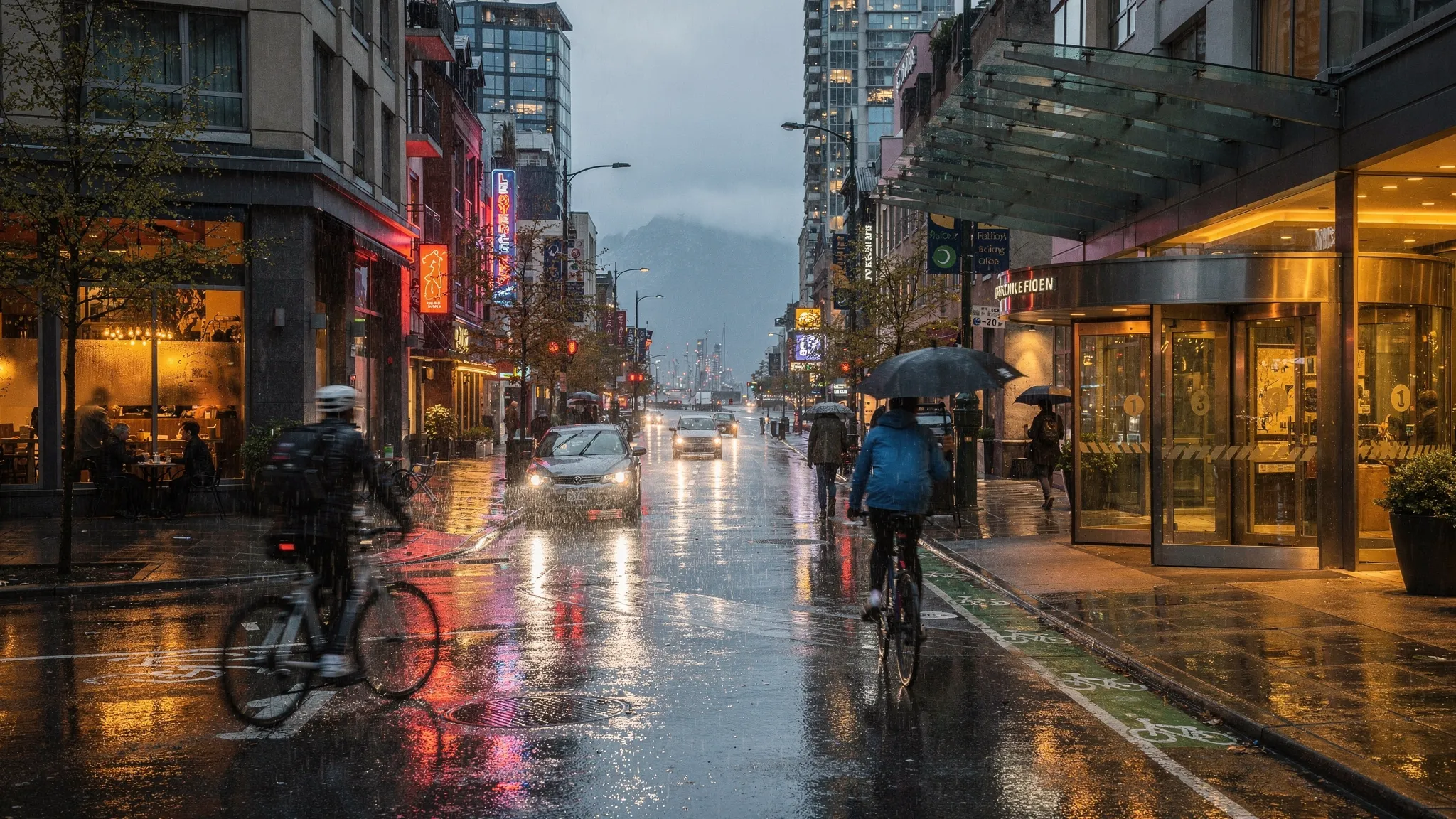
Gastown seduces travelers with brick, steam, lamplight, and the feeling that the city has a deeper memory here than in the glass towers. It can also offer appealing rates compared with the most polished waterfront zones. For travelers who like nightlife, coffee, independent restaurants, and heritage atmosphere, it can feel more memorable than a standard downtown block.
Heritage-minded travelers can compare availability for Victorian Hotel Vancouver when looking for character near the older part of the city.
The tradeoff is that charm and comfort are not the same thing. Historic buildings can have smaller rooms, more street noise, fewer modern conveniences, or layout quirks. Before booking, confirm whether the room has a private bathroom, elevator access if needed, air conditioning, and soundproofing details. Vancouver summers are milder than many North American cities, but heat waves have made air conditioning more relevant than it once was.
This area is best for adults, solo travelers, nightlife-focused visitors, and people who value atmosphere over predictability. Families and travelers who want a quiet return every night may prefer the West End, Yaletown, or a more conventional downtown block.
Airport-area hotels are often the first place deal hunters look, and sometimes they are right. Richmond has the Canada Line, strong Asian dining, airport access, and often better rates than downtown during peak periods. If you land late, leave early, or plan to move around the region rather than linger downtown, it can be a smart base.
For airport-focused value, compare options such as Accent Inns Vancouver Airport while paying close attention to shuttle information, cancellation terms, and the actual distance to the station or terminal.
The mistake is assuming every airport hotel is equally convenient. Some are easy by shuttle, some are better by taxi, and some require planning if you arrive after shuttle hours. If you plan to spend every evening downtown, add the round-trip transit time to your mental bill. The Canada Line is efficient, but a hotel that looks cheap can feel far away after dinner in the rain.
Richmond works best for early flights, late arrivals, food-focused travelers, and families or business travelers who want easier logistics outside the downtown core. It is less ideal for first-time visitors who want to step outside and immediately feel Vancouver’s waterfront energy.
North Vancouver can be excellent value when downtown rates surge. You wake up closer to mountain trails, suspension bridge attractions, ski access in winter, and a quieter waterfront rhythm. The SeaBus makes the crossing to downtown feel scenic rather than tedious, especially during daylight when the city skyline opens across the inlet.
For travelers who want a waterfront base outside downtown, compare Pinnacle Hotel at the Pier North Vancouver and similar North Shore options against downtown prices on the same dates.
The catch is timing. If you plan late dinners, concerts, or nightlife downtown, the return can be less spontaneous than staying central. Ride-hailing or taxi costs can rise when bridge traffic is bad. The SeaBus is reliable, but it is still a schedule. North Vancouver is a smart choice when your trip is built around nature, daytime sightseeing, or a calmer evening routine.
This is the classic walkable location versus quieter remote-area tradeoff. Downtown lets you wander home. North Vancouver gives you breathing room. The better value depends on whether you spend your evenings chasing restaurants or your mornings chasing mountains.
Burnaby is not the postcard Vancouver most travelers imagine, but it can be practical. Metrotown has SkyTrain access, shopping, and more room to maneuver if downtown prices are inflated by summer travel, conferences, concerts, or cruise traffic. For longer stays, the possibility of slightly larger rooms or easier parking can matter.
The tradeoff is atmosphere. Burnaby is functional rather than romantic. It works well for travelers visiting friends or family in the region, business travelers with meetings outside downtown, or guests who are comfortable using transit. It is less compelling for a first Vancouver weekend built around seawall walks, restaurants, and harbor views.
If you stay east, do not judge the hotel only by distance in miles. Judge it by station access. A room near a SkyTrain station can outperform a closer hotel that requires slow bus connections or expensive rides. Vancouver value often follows rail lines more than geography.
A cheap room can disappoint if the category does not match your needs. Vancouver has everything from stripped-down central rooms to luxury waterfront towers, and the difference is not just thread count. It is service, storage, noise control, workspace, parking, and how smoothly the stay fits your day.
| Hotel style | Best for | Where value is strong | Where travelers overpay |
|---|---|---|---|
| Budget central hotel | Short stays, solo travelers, event weekends | Location beats amenities | Paying extra for tiny view upgrades |
| Boutique hotel | Couples, design-minded travelers | Personality and walkability | Style without soundproofing or space |
| Full-service business hotel | Work trips, meetings, loyalty to convenience | Desk, lobby, service, reliable logistics | Parking, breakfast, premium floors |
| Airport hotel | Early flights, late arrivals | Lower rates and easy airport access | Repeated downtown commuting |
| Extended-stay or suite-style hotel | Families, longer visits | Kitchenette, laundry, space | Higher base rate if you do not use features |
| Luxury waterfront hotel | Special occasions, view-focused trips | Service, location, memorable setting | Paying luxury rates for a room with no meaningful view |
The affordable choice is the category that prevents waste. A family may save by paying more for a kitchenette. A business traveler may save by staying closer to meetings. A couple may be happier with a boutique hotel in the West End than a larger hotel in a less atmospheric area.
Vancouver does not usually behave like a resort-fee-heavy beach destination, but unexpected costs still matter. Taxes, parking, breakfast, and transportation can reshape the bill. Always compare the final payable amount, not only the nightly rate.
| Cost to check | Why it matters in Vancouver | Smarter booking move |
|---|---|---|
| Taxes and local accommodation charges | The final hotel bill can be meaningfully higher than the base rate | Compare final prices before committing |
| Parking | Downtown parking can be a major nightly expense | Avoid renting a car unless needed, or choose an area with better parking value |
| Breakfast | Hotel breakfast can erase a cheap-rate advantage | Book breakfast only if it saves time or is truly included |
| Airport transfer | A low airport-area rate may require taxi or shuttle planning | Check shuttle hours and station distance |
| Early check-in or late checkout | Long-haul arrivals often tempt paid add-ons | Ask about luggage storage before paying |
| View upgrades | City view can be vague and underwhelming | Pay only for clearly described mountain, water, bay, or park views |
| Amenity or destination-style fees | Less expected here, but still possible at some properties | Read the fee line before confirming |
| Cleaning fees in non-hotel stays | Apartment-style alternatives can look cheap until checkout | Compare hotels and rentals by total stay cost |
The most common waste is renting a car for a downtown stay. Vancouver’s core is walkable, transit is useful, and parking is expensive. A car makes sense for Whistler, ferry connections, scattered suburbs, or serious outdoor plans. It makes less sense if your itinerary is restaurants, museums, shopping, Stanley Park, and meetings downtown.
Not every upgrade is a trap. Vancouver is one of the few cities where a view can genuinely change the stay. A mountain or water view can make a rainy morning feel cinematic, especially if you are in town for a birthday, honeymoon, anniversary, or a rare first visit. If you will spend time in the room, a real view may be worth it.
A city view, however, is often not worth much. The phrase can mean rooftops, neighboring towers, or a sliver of skyline. If the upgrade does not specify what you will see, treat it as a marketing phrase rather than a guarantee.
Breakfast upgrades are worth it for families, early business travelers, and guests with tightly scheduled mornings. They are usually less valuable for couples or solo travelers who enjoy exploring cafés. Vancouver is a breakfast-friendly city, and neighborhoods such as the West End, Mount Pleasant, and downtown are full of casual options.
Club lounge or executive-floor upgrades depend on how you travel. If the lounge includes breakfast, evening snacks, quiet workspace, and you will actually be there during operating hours, the math can work. If you are sightseeing all day and dining out at night, you may be paying for a benefit you only admire in the elevator.
Parking packages deserve careful comparison. A package can be smart if the total is lower than the separate rate, but do not assume it is. If you will not use the car daily, consider returning it early or picking it up only for the road-trip portion.
Vancouver prices move with weather, events, cruise patterns, and business demand. Summer brings long days, patios, seawall energy, and the highest competition for central rooms. If you want affordable hotels in Vancouver in July or August, book earlier, be flexible on area, and consider Richmond, Burnaby, or North Vancouver when downtown spikes.
Spring and fall can be the sweet spots. The city is still alive, the mountains remain dramatic, and rates can soften outside major events. Rain is part of the bargain, but Vancouver in the rain has its own mood: cedar air, shining pavement, steamed-up café windows, and mountains appearing and disappearing behind cloud.
Winter is the best value season for many city-focused travelers, excluding holiday periods and special events. Rooms can be cheaper, restaurants are easier to reserve, and the city feels more local. The tradeoff is shorter daylight and wetter weather. If you plan mostly indoor dining, museums, cafés, and relaxed walks, winter can be a quietly excellent time to save.
Weekdays and weekends behave differently depending on the area. Business-heavy downtown blocks can be expensive midweek. Leisure-heavy areas may rise on weekends. Airport hotels can spike when flights are disrupted or early departures cluster. Always compare your exact dates rather than relying on a neighborhood’s general reputation.
If this is your first Vancouver trip and you have two nights, choose downtown, Robson, the West End, or Yaletown. You will pay more for the room, but you will avoid wasting precious time on transfers. Do not rent a car unless your itinerary clearly leaves the city.
If you are traveling for business, stay near your meeting zone or along the Canada Line if airport access matters. A cheaper room across town can cost more in morning stress. For business travelers, a reliable desk, quiet room, and breakfast timing may matter more than neighborhood charm.
If you are traveling as a couple, decide whether your romance is city or nature. City romance points toward Yaletown, the West End, or a view-focused downtown stay. Nature romance points toward North Vancouver or a hotel that makes Stanley Park and the seawall easy.
If you are traveling with family, prioritize room layout, breakfast cost, laundry access, and transit simplicity. A slightly larger room outside the core can be better value than squeezing into a central room and paying for every extra convenience. But if children are young, central walkability may save more energy than money.
If nightlife matters, stay downtown, Yaletown, Gastown, or near Davie and Robson, but read noise comments carefully. If relaxation matters, prioritize the West End, North Vancouver, or a quieter central block over the cheapest room beside a busy entertainment corridor.
Real value in Vancouver has four signs. First, the hotel’s location matches your first and last activity each day. Second, the transit route is simple enough that you will actually use it. Third, the final price includes the costs you cannot avoid. Fourth, the room category matches your need for quiet, space, work, or atmosphere.
Marketing hype often hides in phrases such as near downtown, easy access, partial view, boutique, and upgraded. None of those words are bad, but each needs proof. Near downtown could mean a short SkyTrain ride or a slow bus transfer. Boutique could mean stylish and compact. Partial view could mean leaning toward the window.
Use a booking platform that lets you compare clearly and move quickly when the right rate appears. InnRox is built around transparent terms, upfront pricing, fast reservations, and flexible options where available, which is especially useful in a city where the total cost matters as much as the nightly rate.
You can start a broad search for Vancouver hotels on InnRox, then narrow by neighborhood, cancellation policy, and the kind of trip you are taking.
What is the best area for affordable hotels in Vancouver without a car? Downtown, Robson, the West End, Yaletown, Richmond near the Canada Line, and Burnaby near SkyTrain stations are usually the strongest options. The best choice depends on whether you value walkability, airport access, or lower nightly rates.
Is it worth paying more to stay downtown Vancouver? Yes, if you are staying briefly, visiting for the first time, attending meetings downtown, or planning to walk to major sights. It is less worthwhile if you have a car, want mountain-focused activities, or plan to spend most of your time outside the core.
Are airport hotels in Richmond a good way to save money? They can be, especially for early flights, late arrivals, and travelers comfortable using the Canada Line. They are less ideal if you plan to be downtown every night, because transit time and late-night return costs can reduce the savings.
What hidden hotel costs should I watch for in Vancouver? Watch for taxes, parking, breakfast, airport transfers, early check-in, late checkout, unclear view upgrades, and any amenity-style fees. Always compare the final stay cost, not only the advertised nightly rate.
When is the cheapest time to book Vancouver hotels? Winter and shoulder seasons often offer better value than peak summer, although events and holidays can change rates quickly. Spring and fall can be especially good for travelers who accept some rain in exchange for lower prices and fewer crowds.
Are view upgrades worth it in Vancouver? A clearly described mountain, harbor, bay, or park view can be worth paying for on a special trip. A vague city view is usually less reliable and often not worth a large premium.
Vancouver rewards travelers who book with the map open and the final price visible. Choose the neighborhood that fits your days, respect the cost of transit and parking, and pay for upgrades only when they improve the trip you are actually taking. Do that, and the city becomes less expensive without becoming less memorable.
Tags