
Copyright © 2026 Innrox, Inc., an Innrox Group company. All rights reserved.

InnRox
Travel Experts
June 22, 2026
20 min read
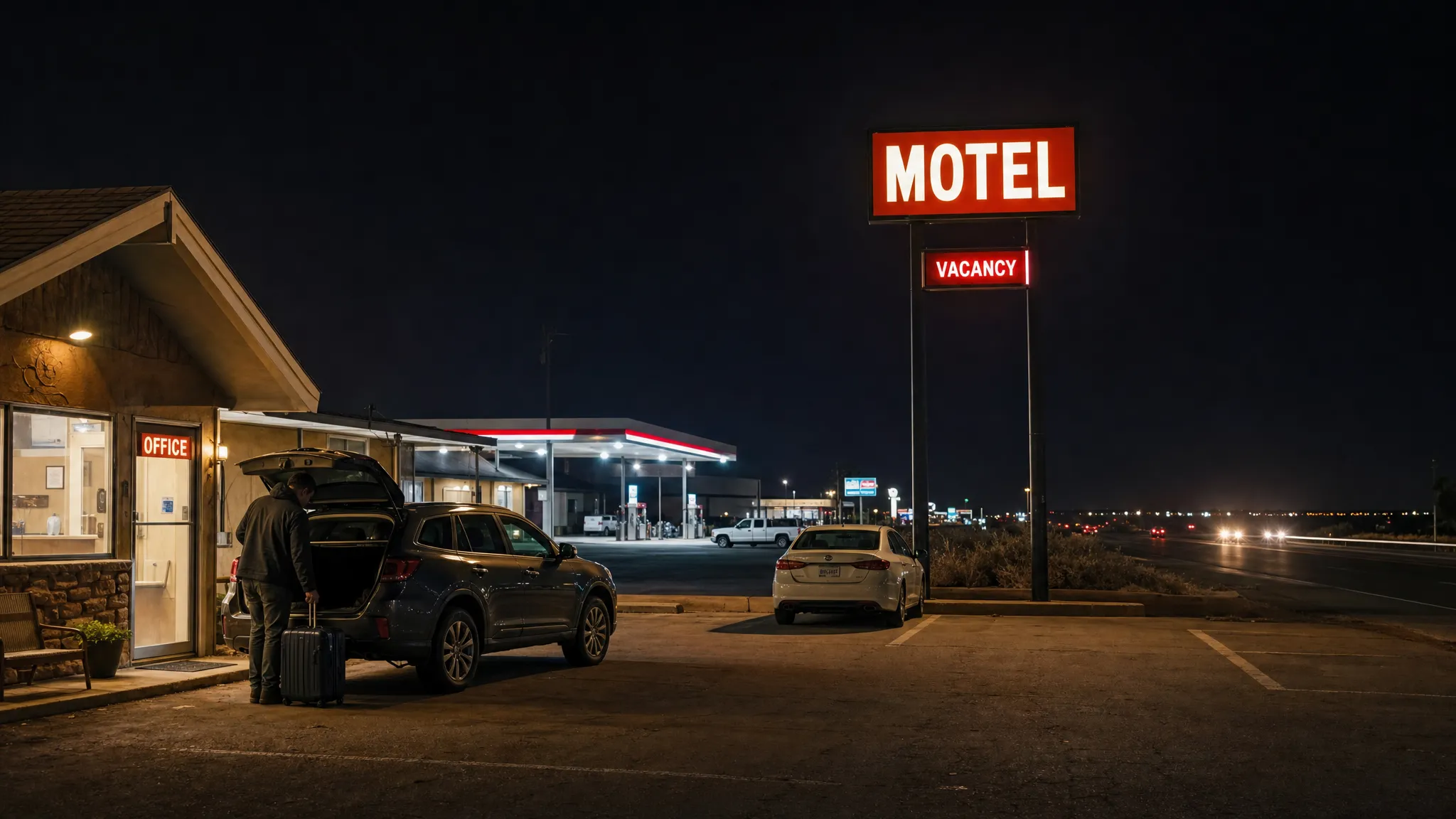
The motel sign appears before the gas station does, a rectangle of red light floating above the highway after midnight. The rate on the sign looks like mercy. You are tired, the car smells faintly of coffee and sunscreen, and the idea of paying half what a downtown hotel costs feels like the kind of travel win people brag about later.
Then morning arrives. The “free breakfast” is a wrapped pastry and weak coffee. The room is twenty-five minutes from where you actually need to be. Parking is free, but every ride into town costs more than expected. The cheaper neighborhood feels fine in daylight and less comfortable after dinner. By checkout, the number that made you pull off the road no longer tells the full story.
That is the tension behind the cheapest motels in the US. They can be brilliant for the right trip: a road night between national parks, a practical stop near an interstate, a no-frills bed before an early drive. But in cities, beach towns, event weekends, airport corridors, and theme park zones, the lowest nightly rate can quietly become one of the most expensive decisions of the trip.
The better question is not, “What is the cheapest motel?” It is, “What does this room cost after time, transport, fees, sleep quality, and convenience are counted?”
Cheap motels work best when they match the shape of your trip. If you are driving through New Mexico on the way to Arizona, arriving late and leaving before breakfast, a clean roadside motel with free parking may be exactly right. You do not need a rooftop bar, a concierge desk, a view, or a lobby designed for lingering. You need a safe parking spot, a functioning shower, a firm bed, and a checkout process that does not slow you down.
The same motel logic breaks down in a city stay. In Los Angeles, a low rate in a far-flung area can cost you hours in traffic. In Las Vegas, a motel that appears cheaper than a casino hotel may leave you paying for rideshares, parking, or lost convenience. In Orlando, a bargain room outside the main tourist corridor may look smart until theme park transfers, breakfast, and late-night returns turn the stay into logistics management.
A cheap room becomes genuinely cheap only when it reduces the total burden of the trip. That burden includes money, but it also includes energy. A traveler arriving for a business meeting does not experience “savings” the same way a road-tripper does. A family with two tired children does not value a distant room the way a solo traveler with a rental car might.
This is why the motel decision should start with trip type. Are you sleeping, or are you basing yourself somewhere? Are you driving, walking, using public transit, or relying on rideshares? Are you visiting one attraction, moving between several neighborhoods, or attending an event where timing matters? The cheapest motel is often a good answer only when the rest of the itinerary is simple.
Las Vegas is one of the clearest examples of a destination where the displayed room rate can mislead. The city is built on contrasts: neon spectacle and desert quiet, giant resorts and modest roadside motels, walkable fantasy and surprisingly long distances. A motel several blocks from the Strip may seem close on a map, but in summer heat or after midnight, those blocks can feel much longer.
The biggest booking trap in Las Vegas is focusing only on the nightly rate. Resort fees can change the real price of a hotel stay, and parking policies vary by property. Meanwhile, a cheap motel without resort fees may still become expensive if you take multiple rideshares each day or avoid walking back at night. Travelers often overpay not because they choose luxury, but because they choose inconvenient cheapness.
For a one-night road stop, a basic motel near your onward route can make sense. If you are not interested in shows, restaurants, casinos, or nightlife, staying away from the Strip may be a rational choice. You get in, sleep, and leave. In that scenario, paying for centrality you will not use is wasted money.
For a first-time Vegas weekend, the calculation changes. A more central hotel can save time and transportation costs, especially if you plan to move between casinos, dinners, and late-night venues. The “city view” or “Strip view” upgrade is often less important than the building’s actual location and walking convenience. A cheaper room in a better position can outperform a nicer room that requires constant transport.
If downtown Las Vegas fits your style better than the Strip, compare hotel options such as Downtown Grand Hotel & Casino against low-rate motels farther from the action. The point is not that one category always wins. The point is to price the night you will actually live, not the rate you first saw.
Los Angeles punishes bad location choices more than almost any American city. A motel can be technically near the city and still be emotionally far from your plans. Ten miles may mean twenty minutes at one hour and ninety minutes at another. The map is not flat in LA. It is shaped by traffic, parking, neighborhood rhythm, and what you want your trip to feel like when you step outside.
Consider three travelers. A couple wants restaurants, bars, galleries, and walkability. A family wants beaches and low-stress parking. A business traveler needs predictable access to meetings downtown or near the airport. The same cheap motel will not serve all three well.
A low-rate motel near a freeway can be convenient if you have a car and plan to cover different parts of the metro area. But if your trip is centered on downtown, Hollywood, Santa Monica, Koreatown, or the Arts District, staying far away can turn every day into a commuting exercise. Parking may be free at the motel, but parking at your destination may not be. Rideshares can surge. Breakfast savings disappear if there is nowhere pleasant nearby to eat.
This is where a boutique or design-forward hotel can become practical rather than indulgent. If it puts you within walking distance of dinner, transit, or your main daytime plans, the higher nightly rate may buy back hours. Travelers often underestimate how valuable it is to return to a hotel between activities, change clothes, rest, and go back out without negotiating traffic again.
For a downtown Los Angeles base, compare something like Freehand Los Angeles with cheaper motels outside your preferred area. The fair comparison is not motel rate versus hotel rate. It is motel rate plus daily transport, parking, time, and fatigue versus a better-located stay.
Orlando looks easy to price until you travel with children. Then the hidden costs multiply. A cheap motel outside the main attraction zones may advertise a tempting nightly rate, but families need to check shuttle schedules, parking costs, breakfast value, room layout, laundry access, cancellation terms, and whether returning midday is realistic.
The classic Orlando mistake is choosing the cheapest room and assuming the parks are “nearby.” Nearby by car is not the same as easy. If the hotel shuttle runs only at fixed times, you may lose flexibility. If you rent a car, parking at attractions can add up. If the room has no useful breakfast option, a family of four can spend far more each morning than expected.
This is not an argument against budget lodging. It is an argument for matching the room to the rhythm of the trip. If your family leaves early, stays out all day, and returns exhausted, a simple hotel or motel can work well. If you need naps, pool breaks, or flexible returns, a slightly more expensive location can reduce stress dramatically.
A family comparing Orlando stays should look beyond the cheapest motel row and include practical hotel options such as Rosen Inn at Pointe Orlando in the search. Even when rates shift by season, the real question remains stable: which stay reduces the number of paid inconveniences?
In music and nightlife cities, the cheapest motel often sits just far enough away to create a transportation bill. Austin and Nashville both reward travelers who understand the difference between sleeping near the energy and commuting to it. A motel outside the core may be quiet and inexpensive, but if your evenings are built around live music, late dinners, and walking between venues, distance can erase the savings.
The tradeoff is not simply cheap versus expensive. It is atmosphere versus access. In Austin, a traveler who wants to explore South Congress, downtown, and the riverfront may benefit from a central hotel even if the room is smaller. In Nashville, staying near the entertainment district can be convenient but loud and often priced for tourists. A nearby quieter neighborhood may offer better value if transport is easy and you are not trying to step directly into nightlife from the lobby.
Business travelers face a different equation. If the meeting is downtown, an outer motel can introduce unpredictable morning travel. If the meeting is near the airport or a suburban office park, a central hotel may be unnecessary. The right stay is the one closest to your obligations, not the one with the most famous neighborhood name.
For Austin, comparing a central option such as The LINE Austin with freeway motels can clarify the tradeoff. If your itinerary is walkable from the hotel, a higher rate may be buying transportation savings, better evenings, and fewer late-night decisions.

The cheapest motel is not the villain of American travel. Some of the best low-cost stays are honest, practical, and perfectly matched to the trip. A motel can be the smartest choice when you are driving your own car, parking is included, your arrival and departure are simple, and you do not need the surrounding neighborhood to entertain you.
Road trips are the natural habitat of the motel. On routes through Utah, Arizona, Texas, the Carolinas, or the Midwest, a motel near the highway can beat a downtown hotel because it eliminates detours. If you are visiting a national park, a modest motel in a gateway town can be a smart base, especially when you plan to leave before sunrise. In those cases, the room is not the trip. It is the launchpad.
Cheap motels also make sense for certain airport stays, but only when the shuttle details are clear. “Near the airport” is not enough. You need to know whether the shuttle is free, how often it runs, when it stops, and whether it serves your terminal. A low-rate motel that requires two paid rideshares can lose to a slightly more expensive airport hotel with reliable transfers.
They can also work for workers, event crews, long-distance drivers, and travelers who value parking more than polish. The best motel stays are usually chosen deliberately, not desperately. They are booked because their location, terms, and simplicity fit the plan.
The smartest travelers do a quick total-cost audit before committing to a low rate. This is especially important for short stays, where one or two unexpected expenses can change the value of the entire booking.
| Cost factor | Why it matters | What to check before booking |
|---|---|---|
| Taxes and local fees | The displayed rate may not be the final paid amount | Confirm the final total before payment |
| Parking | Free parking can be a real advantage, but not everywhere | Check whether parking is free, limited, gated, or charged |
| Transportation | Distance can create daily rideshare, fuel, toll, or transit costs | Map the trip to your actual plans, not just the city center |
| Breakfast | “Free breakfast” varies widely in value | Decide whether it replaces a real meal or just coffee |
| Resort or destination fees | Some hotel categories add mandatory charges | Review fee disclosures before comparing rates |
| Security deposits | Budget properties may hold a card deposit at check-in | Check deposit amount and release timing |
| Cancellation terms | Cheap prepaid rates can become expensive if plans change | Compare refundable and nonrefundable options |
| Noise and sleep quality | A low rate near highways, bars, or airports may cost rest | Read recent comments about noise, not just star ratings |
| Early check-in or late checkout | Short trips often need flexibility | Ask whether luggage storage or time extensions cost extra |
This kind of audit is not about becoming paranoid. It is about preventing the classic budget travel mistake: treating the nightly rate as the whole truth. For a deeper framework, InnRox has a useful guide to hotel booking mistakes that quietly raise your total cost, especially when the cheapest option looks obvious at first glance.
The category label matters less than the practical benefits. A motel is often cheaper because it strips away services and centrality. A limited-service hotel may cost more but include better breakfast, more predictable standards, elevators, interior corridors, or loyalty-style amenities. A boutique hotel may offer a stronger neighborhood experience, but not always more space. A luxury hotel may deliver service and comfort, but it can also add parking, breakfast, minibar, and destination fees that make the final bill jump.
The trick is to identify what you will use. Paying more for a pool you will never visit is wasteful. Paying more for a walkable location when you have only one evening in town may be smart. Paying more for breakfast can be worth it for a family, less so for a solo traveler who prefers a local café. Paying more for free cancellation can be extremely valuable during uncertain weather, event travel, or road trips where timing may change.
| Stay type | Best for | Common value risk |
|---|---|---|
| Roadside motel | Drivers, one-night stops, simple itineraries | Poor fit for walkable city trips |
| Airport motel | Early flights, late arrivals, short layovers | Shuttle gaps and paid transfers |
| Limited-service hotel | Families, business travelers, predictable stays | Higher rate without a better location |
| Boutique hotel | Couples, city explorers, food and nightlife trips | Style premium without practical convenience |
| Luxury hotel | Special occasions, service-focused stays, relaxation | Mandatory fees and expensive add-ons |
| Extended-stay hotel | Longer trips, work travel, travelers needing kitchen space | Location may be less central |
A cheap motel can beat every category in the table when it fits the trip. But when it does not, even a modest hotel upgrade can feel like a better decision every hour of the day.
Travelers often compare properties vertically, one star rating against another. In practice, neighborhood choice can matter more. A two-star motel in the right place for a road trip can be better than a four-star hotel across town. A three-star hotel in a walkable district can outperform a cheaper motel that forces every meal and attraction into a drive.
In beach destinations, the trap is paying for “near the beach” without understanding access. Some motels are across busy roads or farther from public access points than the description suggests. Parking near the beach may cost extra. A beachfront resort may charge more upfront, but if it includes direct access and reduces transport, it may be better for a short relaxation trip. For a budget traveler who only wants one beach afternoon, an inland motel with free parking may still be the smarter buy.
In historic downtowns, the opposite problem appears. Central hotels may charge high parking fees because space is limited. A motel on the edge can save on parking, but if the city is walkable and parking downtown is expensive, driving in every day can become irritating. The best value is often just outside the tourist core, close enough to walk or take short transit, but not priced like the postcard district.
In business districts, weekday prices often rise when meetings, conferences, or conventions fill rooms. A cheap motel outside the core may seem rational, but missed sleep and uncertain commute times can damage the purpose of the trip. If you are traveling for work, convenience is not a luxury. It is risk management.
The most useful upgrades are rarely the flashiest. Free cancellation is often worth paying for when your schedule is uncertain. Pay-later terms can be helpful if your plans are still moving. Included parking can be worth more than a prettier lobby. A room with two real beds can matter more than a vague “city view.” Breakfast can be valuable if it saves a family time, but less valuable if it is overpriced or not aligned with how you eat.
Question upgrades that sound emotional but do little for the trip. A view upgrade is often not worth it if you will be out all day. A larger room may not matter for a late arrival and early departure. Spa or resort access can be limited, seasonal, or subject to separate charges. Early check-in may cost extra and still not be guaranteed unless clearly confirmed.
Motels have their own upgrade traps. A “renovated room” may be worth choosing if reviews show a major difference between room types, but do not pay blindly for wording. A pet-friendly room may involve a separate pet fee or cleaning deposit. A smoking versus nonsmoking distinction still matters in older properties. If sleep quality is the goal, recent reviews about noise, cleanliness, and room condition are more useful than polished photos.
For another practical lens, this InnRox guide on cheap hotel rooms that do not cost more after check-in is especially relevant when a bargain rate has multiple conditions attached.
In summer, cheap motels near national parks, beaches, and road-trip routes can become surprisingly expensive because demand is concentrated. A basic motel outside Yellowstone, Zion, Yosemite, or coastal California may cost more than travelers expect, especially when there are limited rooms and high seasonal traffic. In those places, booking early often matters more than hunting for a last-minute bargain.
In winter, desert and sunbelt destinations can see strong demand from travelers escaping colder regions. In spring, event calendars reshape cities like Austin, Nashville, Miami, and New Orleans. During large conventions, even plain motels can surge because they serve overflow demand. A motel that is usually a bargain can become poor value if it is priced like a better hotel but still offers fewer advantages.
Weekday and weekend patterns matter too. Business districts can be cheaper on weekends when office demand falls. Leisure districts can be cheaper midweek when weekend travelers leave. Airport areas can swing depending on flight disruption, conferences, and crew demand. If your dates are flexible, moving a stay by one night can sometimes do more than downgrading hotel category.
Seasonality also changes atmosphere. A cheap beach motel in the off-season may feel quiet and charming. The same property on a peak summer weekend may feel crowded, noisy, and overpriced. A motel near a festival zone may be convenient for nightlife but frustrating for sleep. Value is never just the building. It is the building during your dates.
Before booking the lowest rate, build a simple comparison between the cheap motel and the better-located alternative. Do not overcomplicate it. Add the costs you can predict, then ask which stay creates fewer problems.
Then compare the result with the hotel that originally looked “too expensive.” Sometimes the motel still wins. When it does, book it confidently. But if the difference narrows, choose the stay that protects the trip.
This approach is especially useful for short stays. On a one-night trip, a single rideshare each way can erase the savings. On a two-night city break, a bad location can affect every meal, walk, and evening plan. On a business trip, a poor commute can cost more than money. On a family vacation, inconvenience multiplies by the number of people in the room.
Are the cheapest motels in the US usually safe to book? Many budget motels are perfectly usable, especially for road trips and simple overnight stays. The key is to check recent reviews, location, parking, lighting, cancellation terms, and whether the area fits your arrival time and travel style.
When is a cheap motel better than a hotel? A cheap motel is often better when you have a car, need free parking, arrive late, leave early, and do not need a walkable neighborhood. It is most valuable when it supports the itinerary instead of forcing extra transportation.
When does a low motel rate cost more? It can cost more when the property is far from your plans, lacks reliable airport or attraction transport, has poor breakfast, adds deposits or fees, or creates safety, noise, or parking issues that reduce the quality of the trip.
Should families book cheap motels near theme parks? Families should compare total cost carefully. A cheap motel may work if transportation is simple and the room setup is practical, but shuttle limits, attraction parking, breakfast costs, and midday rest needs can make a better-located hotel the stronger value.
Are city-view or upgraded rooms worth paying for at budget properties? Usually only if the upgrade improves comfort in a concrete way, such as quieter placement, renovated condition, or better bed configuration. A vague view upgrade is rarely as valuable as location, parking, cancellation flexibility, or breakfast.
How can I compare motel and hotel prices fairly? Compare the final price, not the first rate. Include taxes, fees, parking, transport, breakfast, deposits, cancellation rules, and the time required to reach your real plans each day.
The cheapest motel can be a smart travel tool, but it should not be chosen on autopilot. In the right place, it saves money without adding friction. In the wrong place, it turns a low rate into a series of small payments, long drives, missed sleep, and unnecessary compromises.
InnRox is built for travelers who want the total picture before they book, with competitive hotel rates, upfront pricing, instant confirmation, and flexible options where available. When you compare your next stay on InnRox, look past the lowest nightly rate and choose the room, neighborhood, and terms that make the whole trip work better.
Tags