
Copyright © 2026 Innrox, Inc., an Innrox Group company. All rights reserved.

InnRox
Travel Experts
June 30, 2026
20 min read
The most Boston mistake is not overpaying for a hotel. It is overpaying for the wrong kind of convenience.
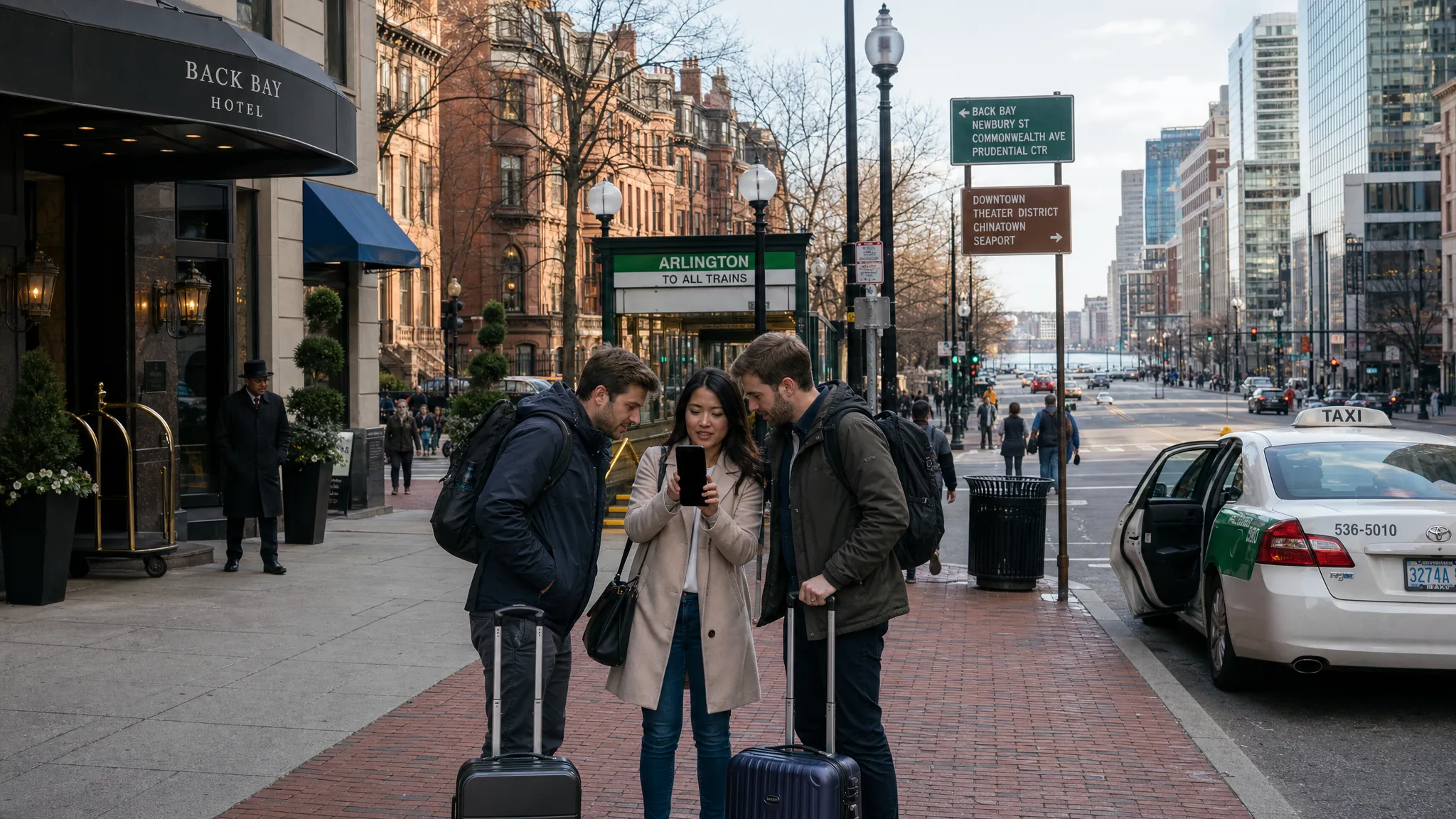
You feel it the moment you arrive. The city looks compact on a map, almost tidy, with the Charles River curled around Cambridge, the Common sitting green and old in the center, and Logan Airport close enough to tempt you into thinking every neighborhood is easy. Then you try to cross town at 5:30 p.m., price a downtown parking garage, or realize your affordable room is a 35-minute transit ride from the dinner reservation you actually care about.
That is why finding affordable hotels in Boston is less about chasing the lowest nightly rate and more about matching the neighborhood to your trip. A $40 cheaper room can become expensive after rideshares, parking, breakfast, and lost time. A slightly higher rate near the right subway line can feel like a bargain by the second day.
Boston rewards travelers who choose precisely. The right stay depends on whether you are here for a first visit, a Fenway weekend, a hospital appointment in Longwood, a convention in Seaport, a college tour in Cambridge, or a business meeting downtown. Each area has its own version of value, and each one hides different costs.
Boston’s hotel market behaves like a city with limited space and many overlapping travel seasons. Business travelers fill Financial District and Seaport rooms during the week. College events push up prices around Cambridge, Back Bay, Fenway, and Brookline. Fall weekends can feel priced for foliage, parents’ weekends, and weddings all at once. Marathon week in April can turn ordinary rooms into premium inventory.
The first rule is simple: do not compare Boston hotels by nightly rate alone. Compare the total stay cost, including taxes, parking, breakfast, transportation, and cancellation terms. Boston hotel taxes are significant, and central parking can sometimes add more than a budget dinner for two. If you are driving into the city, the cheapest central hotel may not be cheap after the valet line.
The second rule is to treat transit access as part of the room. A hotel two blocks from the Red, Green, Blue, or Orange Line can be more valuable than a nicer hotel in a transit gap. Boston is walkable, but not every walk is pleasant in January, late at night, or with luggage. A neighborhood that looks close on the map may require a transfer, a rideshare, or a slow surface route.
For a broader framework on judging total stay cost, InnRox has a useful guide to hotel price comparison tips for city stays, which is especially relevant in compact but expensive cities like Boston.
Downtown Boston is the practical choice when your trip is short and your schedule is packed. If you are arriving at South Station, taking the train from North Station, walking to the Common, visiting the Freedom Trail, or meeting clients in the Financial District, this area can justify a higher rate because it removes friction.
The atmosphere changes block by block. Near Downtown Crossing, the city feels fast, commercial, and slightly gritty in the way older American downtowns often do. Around the Common and Beacon Hill, brick sidewalks and gas lamps soften the edges. North Station is more modern and event-driven, with sports crowds, concerts, and a direct link to Cambridge by transit.
This is where compact hotels and efficient lifestyle properties can beat larger full-service hotels for value. You may sacrifice room size, a grand lobby, or a quiet breakfast room, but you gain time. For a one-night stay or a business trip, that tradeoff often makes sense.
To compare downtown-style value, look at searches such as The Godfrey Hotel Boston or citizenM Boston North Station. Both represent the kind of central, space-conscious hotel choice where location and efficiency matter more than resort-style amenities.
The trap downtown is paying a premium for vague wording. A central location is valuable. A generic city view, tiny room upgrade, or package that includes amenities you will not use may not be. If your stay is only one or two nights, spend for location and flexibility before you spend for extras.
Downtown is best for first-time visitors who want to walk, business travelers with tight schedules, solo travelers, and anyone arriving by train. It is less ideal for travelers with cars, families needing larger rooms, or visitors seeking a local neighborhood feel.
Back Bay is the Boston many travelers imagine before they arrive: brownstones, Newbury Street, Copley Square, the Public Garden, and elegant hotel lobbies with a polished city rhythm. It is also one of the easiest places to overspend because the neighborhood feels safe, central, and familiar.
The value case for Back Bay is strong if you plan to walk. You can reach the Common, Fenway, the Charles River Esplanade, the Prudential area, and South End restaurants without constantly arranging rides. For a romantic weekend, a first Boston trip, or a shopping-and-dining itinerary, paying more here can be rational.
But Back Bay value depends on the room. Older buildings can mean smaller layouts, limited natural light, and expensive parking. A room described as charming may be compact. A view upgrade may face another building rather than the skyline moment you pictured. If you are choosing between a basic room in Back Bay and a larger room in a slightly less famous area, ask what you will actually do in the room. If the answer is sleep and shower, location may win.
The South End, just below Back Bay, offers a different version of affordability. It is still walkable, but it feels more residential and restaurant-focused. Streets are lined with brick row houses, neighborhood bakeries, small bars, and dinner spots that feel less tourist-directed than the areas around major landmarks. You may walk farther to subway stations depending on the hotel, but the tradeoff is atmosphere.
A search like The Revolution Hotel Boston can help you understand this category: design-forward, location-conscious, and often more about neighborhood energy than traditional luxury.
Choose Back Bay if you want classic Boston, easy walking, shopping, and romance. Choose the South End if you care more about restaurants, brownstone streets, and a slightly more local evening scene. Avoid both if you are driving and your hotel does not clearly show parking costs upfront.
Fenway is one of Boston’s most misunderstood hotel zones. Visitors often think of it only as the baseball neighborhood, but it is also a practical base for museums, universities, hospitals, music venues, and parts of Brookline. On non-event nights, it can offer better value than Back Bay while still feeling urban and lively.
On game days, everything changes. Room rates can spike, restaurants fill, and the neighborhood becomes more crowded. That energy is fantastic if you are there for Fenway Park. It is less charming if you booked the area only because it looked cheaper and did not realize a major event was happening.
Hotels here often split into two styles. Boutique or lifestyle hotels lean into the neighborhood’s music, baseball, and nightlife identity. More practical properties around Longwood and Brookline serve medical visits, college tours, and longer stays. The first category is fun. The second category can be more sensible.
If Fenway is the reason for the trip, compare a place like The Verb Hotel with more functional options in Brookline or Longwood. The right answer depends on whether you want to be in the middle of the evening buzz or sleep somewhere quieter after it.
Brookline can be a smart move for families, hospital visitors, and travelers who prefer calmer streets. The Green Line is useful but slower than it looks on a map, especially if you are trying to reach the Financial District every morning. A cheaper room in Brookline is excellent for Longwood or Fenway, but less compelling for a downtown-heavy itinerary.
Boston’s Seaport feels like a different city from Beacon Hill or the North End. Glass towers catch the harbor light. Restaurants are sleek, sidewalks are wide, and hotels often feel newer than their Back Bay counterparts. For business travelers, convention attendees, and visitors who want harbor air, it can be extremely convenient.
It is rarely the cheapest part of Boston, but it can be worth paying for if your meetings, event, or evening plans are there. The mistake is booking Seaport because it looks close to downtown, then relying on rideshares for every meal or museum visit. Walking across the bridges is possible, even beautiful in good weather, but winter wind and evening fatigue can change the calculation.
Properties in this area often compete on design, views, fitness facilities, and modern rooms. That can be valuable if you will actually use those features. It is less useful if you are out all day and paying for a lifestyle package you barely touch.
A search like YOTEL Boston shows the more compact, modern side of Seaport value, while a waterfront-focused option such as Boston Harbor belongs in the conversation when the harbor itself is part of the experience you are buying.
Seaport is best for convention travelers, business trips, couples who want a modern waterfront mood, and short stays where the district is your main destination. It is less ideal for budget travelers planning to spend most of their time in Cambridge, Fenway, or historic Boston.
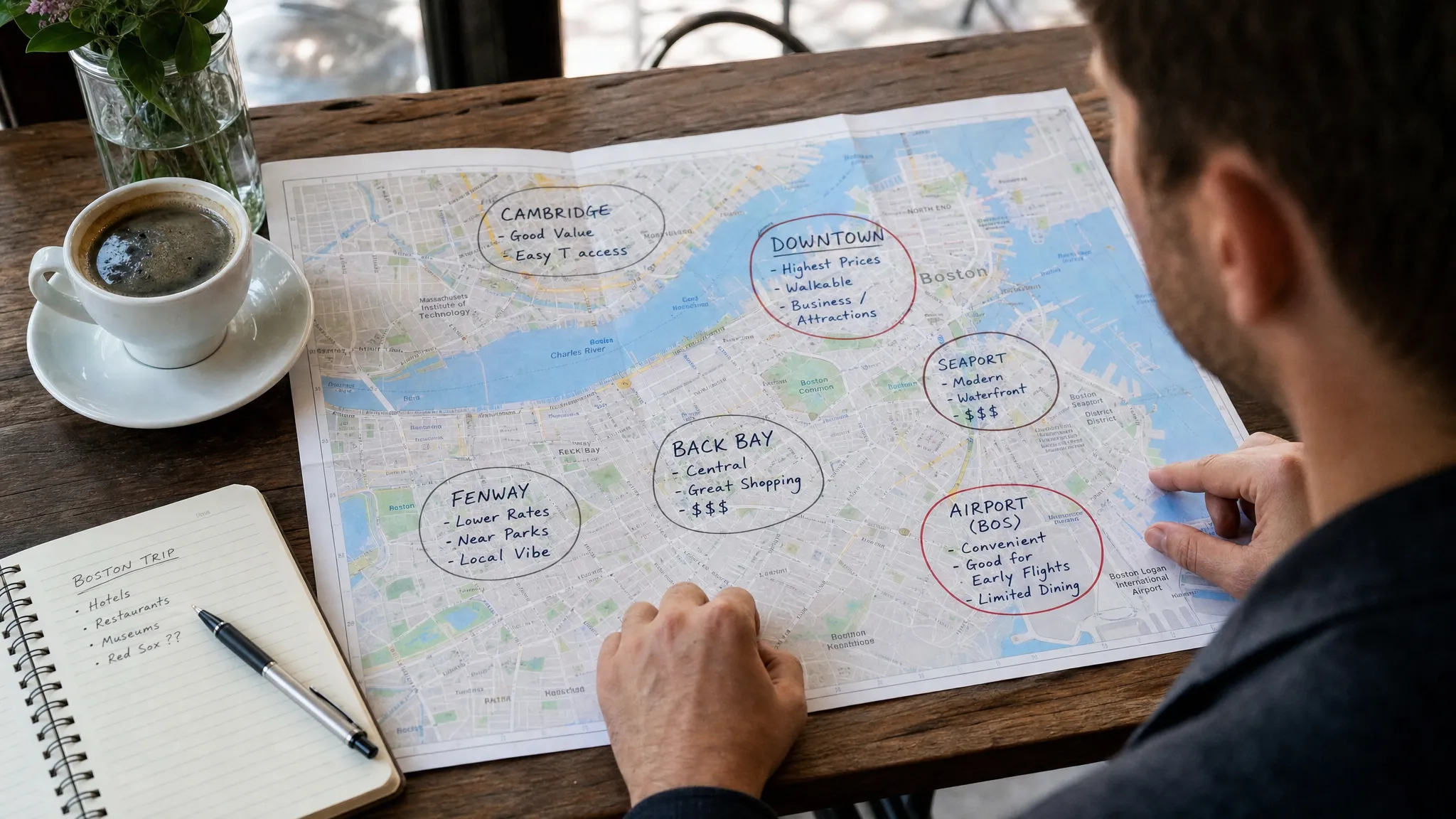
Crossing the Charles can lower the nightly rate, but only if you choose carefully. Cambridge is not automatically cheaper, especially near Harvard, MIT, or graduation season. Still, it can be a better value for travelers who want restaurants, bookstores, campuses, and transit rather than postcard Boston outside the lobby.
Harvard Square feels intellectual and busy, with students, tourists, and visitors moving between cafés and bookstores. Kendall Square is more businesslike, shaped by technology offices and research buildings. Porter Square and Somerville can feel more residential, with better odds of practical pricing if you are comfortable being a bit farther from the center.
The Red Line is the key. If your Cambridge or Somerville hotel is close to it, downtown Boston remains manageable. If it is not, your savings can disappear into rideshares. For this category, searches such as Porter Square Hotel help frame the value question: are you paying less because the location is clever, or because it is inconvenient?
Allston and parts of Brookline can also work for longer stays, student visits, and travelers who care about casual restaurants more than tourist landmarks. The atmosphere is younger, less polished, and often more affordable. The tradeoff is transit time. The Green Line can be charming when you are not in a hurry and frustrating when you are.
Airport-area hotels in East Boston, Chelsea, and Revere are strategic, not romantic. They can be perfect for late arrivals, early flights, or one-night stays before heading elsewhere in New England. They are usually a poor choice for a full Boston sightseeing trip unless the savings are substantial and transportation is clearly planned.
If you are comparing airport-area options, check searches like Hampton Inn Boston Logan Airport and pay close attention to shuttle details, transit access, and whether breakfast or parking is included. An airport hotel without a reliable shuttle can become surprisingly inconvenient.
Boston rates fluctuate heavily, so any fixed number can mislead. A room that feels affordable in February may triple during graduation, Marathon week, a major convention, or an October weekend. Still, budget bands help you know what to expect.
| Budget level | What it usually means in Boston | Best neighborhoods to check | Watch for |
|---|---|---|---|
| Under $160 before taxes | More likely off-season, airport edge, outer neighborhoods, compact rooms, or limited-service stays | Chelsea, Revere, Somerville, Allston, parts of Brookline | Transit time, shuttle limits, parking fees, nonrefundable terms |
| $160 to $240 before taxes | Practical value in shoulder season or less central areas | Fenway on non-event nights, Cambridge outside peak weeks, South End edges, airport area | Small rooms, paid breakfast, slower transit |
| $240 to $350 before taxes | Solid central options, especially with advance booking or weekend business-district dips | Downtown, Back Bay, North Station, Seaport weekends | Amenity fees, valet parking, view upgrade traps |
| $350+ before taxes | Premium location, luxury service, waterfront views, event-week scarcity, or high-demand dates | Back Bay, Seaport, Waterfront, Beacon Hill edges | Paying for prestige instead of usefulness |
The smartest Boston booking often sits in the second or third band, not the lowest. A slightly higher room rate near the right transit line can beat a cheaper hotel that forces daily rideshares. This is especially true for families, older travelers, and business guests with fixed meeting times.
If you are trying to keep the final bill controlled, study the total cost before you commit. InnRox is built around clear pricing, fast reservations, and upfront terms, which matters in a city where the difference between a bargain and a bad deal often appears after taxes and extras.
Boston is not a resort-fee capital in the same way some leisure destinations are, but urban amenity fees and underestimated extras still matter. The most common budget leak is parking. If you bring a car into Back Bay, Downtown, Seaport, or the Waterfront, nightly parking can be painful enough to erase any room-rate win.
Breakfast is the second leak. A room that seems $25 cheaper may not be cheaper if two travelers pay hotel breakfast prices each morning. In neighborhoods like Back Bay, South End, Cambridge, and Brookline, nearby cafés can be a better value and a better local experience. In airport or business districts, included breakfast can be genuinely useful.
The third leak is transportation. Airport stays can look like bargains until you calculate multiple rides into the city. Seaport can create extra rides at night if you are not comfortable walking or if transit does not line up with your plans. Brookline and Allston may be cheaper, but the slower commute can wear down a short trip.
| Cost to check | Why it matters in Boston | When it is worth paying |
|---|---|---|
| Parking | Central garages and valet parking can dramatically raise the final bill | Only if you need a car for regional travel |
| Breakfast | Hotel breakfast can be expensive for couples and families | Worth it for early business days, airport stays, or kids |
| Amenity or destination fees | May bundle services you do not use | Worth it only if the inclusions replace real expenses |
| Early check-in or late checkout | Common pain point after red-eye flights or late trains | Worth it for short stays where rest matters |
| View upgrades | City view language can be vague | Worth it for true harbor or landmark views on a special trip |
| Nonrefundable rates | Lower upfront price but risky during weather, illness, or schedule changes | Best only when plans are certain |
If hidden costs are a concern, this InnRox guide to cheap hotel rooms without paying more after check-in is directly relevant to Boston, where fees can change the real value of a stay.
The upgrade most travelers should question is the city view. In Boston, a meaningful view is specific: harbor, river, Common, skyline, or a landmark. A vague city view can mean rooftops, office windows, or a sliver of street. Pay for it only when the hotel description makes the view clear and the trip has a reason to prioritize it.
A good Boston hotel is not universally good. It is good for a particular trip. The neighborhood that feels perfect for a convention traveler may feel sterile to a couple on a first visit. The bargain that works for a college tour may frustrate a downtown business guest.
| Trip style | Best value areas | Why it works | Areas to be cautious with |
|---|---|---|---|
| First-time sightseeing | Downtown, Back Bay, North Station | Walkability, landmarks, transit access | Airport edge, far Allston, transit-light Seaport |
| Business trip | Financial District, Seaport, Downtown, Kendall Square | Short commutes and predictable mornings | Cheaper outer areas that require rideshares |
| Romantic weekend | Back Bay, South End, Beacon Hill edges, Waterfront | Atmosphere, dining, evening walks | Airport hotels, event-heavy Fenway weekends |
| Family trip | Back Bay, Brookline, Cambridge near transit | Parks, cafés, transit, calmer evenings | Tiny room categories and parking-heavy zones |
| Fenway or concert trip | Fenway, Brookline, Back Bay | Easy post-event return | Downtown if you will be tired after the event |
| Budget solo travel | Downtown compact hotels, Cambridge, Somerville, Allston | Smaller rooms matter less, transit can work | Remote stays without late-night transit |
| Early flight | Logan airport edge, East Boston, Chelsea | Less morning stress | Downtown if departure is very early |
This is where affordable hotels in Boston become personal. A family may get better value from a larger Brookline room than from a tiny downtown room. A solo traveler may prefer a compact central hotel because the room is just a base. A business traveler should usually pay to reduce commute uncertainty, especially in winter.
Boston hotel upgrades often sound tempting because the city is expensive and travelers want to make the splurge feel special. But not every premium option improves the trip.
A larger room is worth considering for families, longer stays, winter trips, or anyone who will spend real downtime inside. It is less important for a one-night business stay. A flexible cancellation rate is often worth it during uncertain weather, college-event periods, or trips tied to medical appointments. A nonrefundable deal can be fine for a fixed conference or prepaid flight, but it is not always the bargain it appears to be.
Breakfast packages are tricky. They can work for families and business travelers with early starts, but Boston’s café culture makes à la carte mornings more appealing in Back Bay, South End, Cambridge, and Brookline. Parking packages can be valuable only if the total is clearly lower than separate parking, not just easier to book.
The most worthwhile premium upgrade in Boston is location. Paying $40 more per night to stay near your actual plans can be smarter than paying $40 less and losing time every day. The least worthwhile upgrade is prestige without function: a famous address that forces you to pay for taxis, parking, and meals you did not want.
Boston’s best hotel values often appear in winter, excluding major holidays and event dates. January and February can bring lower rates, quieter museums, and easier restaurant reservations, but weather affects walkability. A cheap hotel far from transit feels less clever when sidewalks are icy and the wind cuts across the harbor.
Spring is uneven. Marathon week is expensive. Graduation season can push rates sharply higher across Boston, Cambridge, Brookline, and Somerville. If you are visiting in May, book early and do not assume outer neighborhoods will be cheap. Families, alumni, and university visitors spread across the entire metro area.
Summer brings leisure demand and strong weekend pricing, especially around waterfront and family-friendly areas. Fall may be the most beautiful and the most dangerous for bargain hunters. Foliage trips, college weekends, conferences, and weddings can collide. If your dates are flexible, shifting by one or two nights can change the price dramatically.
Weekday versus weekend also matters. Financial District and Seaport hotels may soften on some weekends when business demand drops. Back Bay and waterfront hotels may stay high on leisure weekends. Fenway changes with the event calendar. Always check the reason behind a low rate. Sometimes it is a deal. Sometimes it is a location mismatch.
Start with your must-do location, not your dream hotel. If your trip centers on Fenway, Longwood, Harvard, Seaport, or the Financial District, anchor the search there first. Then widen the map by transit line, not by random distance.
Next, calculate the real daily cost. Add estimated taxes, breakfast, parking, and transit. If you are not driving, a central hotel with no parking need may beat a cheaper outer hotel. If you are driving to Cape Cod, Maine, or western Massachusetts after Boston, an airport-edge or outer neighborhood hotel with better parking may make more sense.
Then compare room category honestly. Boston has many compact rooms, especially in central and older buildings. A small room is not a problem if you are traveling light. It is a problem if you have children, winter coats, work gear, or several nights of luggage.
Finally, choose flexibility based on the risk of the trip. Nonrefundable rates can be useful, but Boston weather, flight delays, college schedules, and work changes can make flexible bookings valuable. The cheapest rate is only the best rate when your plans are stable.
InnRox is designed for this kind of decision-making: competitive hotel rates, upfront final pricing, instant confirmation, and a cleaner booking flow without unnecessary clutter. For Boston, that clarity is not just convenient. It helps you avoid choosing a room that looks cheap before the real costs appear.
What is the best neighborhood for affordable hotels in Boston? The best neighborhood depends on your trip. Downtown and North Station are strong for short stays and first visits, Fenway and Brookline work well for events or hospital visits, Cambridge and Somerville can be smart if you are near the Red Line, and airport-area hotels are best for early flights rather than sightseeing.
Is it cheaper to stay outside Boston? Sometimes, but not always. Cambridge, Brookline, Somerville, Chelsea, and Revere can offer better rates, but transportation can erase the savings if you need repeated rides into the city. Choose outside Boston only when transit, parking, or your itinerary supports it.
Which Boston hotel fees should I check before booking? Check taxes, parking, breakfast, amenity or destination fees, early check-in fees, late checkout charges, and cancellation rules. Parking and breakfast are often the biggest surprises for travelers comparing affordable hotels in Boston.
Is Seaport a good area for budget travelers? Seaport is convenient for conventions, business trips, and waterfront stays, but it is not usually the cheapest area. It can be good value if your plans are in Seaport. If most of your trip is in Back Bay, Cambridge, or historic Boston, transportation costs may make it less practical.
When should I book Boston hotels for the best value? Book early for Marathon week, graduations, fall weekends, major conferences, and Fenway event dates. For quieter winter periods or flexible weekends, compare rates across nearby neighborhoods and check whether business-district hotels drop in price.
Boston is a city where smart hotel choices feel better every hour you are there. The right neighborhood saves steps, rides, fees, and frustration. The wrong bargain quietly charges you back in time.
Use InnRox to compare Boston hotel options with clear pricing, fast reservations, and straightforward terms. Start with your trip style, check the total cost, and choose the stay that makes the city easier, not just cheaper.
Tags