
Copyright © 2026 Innrox, Inc., an Innrox Group company. All rights reserved.

InnRox
Travel Experts
June 1, 2026
18 min read
The mistake often begins with a perfectly reasonable click. A traveler sees a glowing score, a polished lobby photo, and a familiar promise: this is one of the top rated hotels in the city. Then the trip starts. The couple in Paris spends half the weekend in taxis because their romantic tower view is nowhere near the restaurants they actually booked. The business traveler in Seoul realizes too late that a beautiful boutique hotel is on the wrong side of the river from every meeting. The family in Dubai saves on the nightly rate, then pays again for beach access, transfers, breakfast, and early check-in.
High ratings matter, but they are not a personality test. They tell you that other guests liked something about a hotel. They do not tell you whether the hotel fits your pace, your budget, your tolerance for noise, your transportation habits, or the way you want the city to feel when you step outside in the morning.
The smartest hotel choice starts with a different question: not which hotel is best, but which hotel is best for this trip. A top rated hotel for a three-night food crawl may be the wrong choice for a conference week. A famous luxury address may be worth every dollar for a honeymoon and an unnecessary expense for a solo traveler who plans to be out from breakfast until midnight.
Top rated hotels often earn their reputation through service, design, location, room comfort, or brand consistency. Those are useful signals. The problem begins when travelers treat the rating as a shortcut for every decision that should come before booking.
Your hotel is not just where you sleep. It determines how often you take taxis, whether you return for a midday rest, how safe or lively the streets feel at night, how much breakfast costs, and whether a short trip feels generous or rushed. A lower nightly rate can lose its value if it adds 40 minutes to every outing. A luxury room can feel wasteful if you never use the spa, lounge, pool, or late checkout.
Use the rating as confirmation, not the starting point. Start with your trip style, then find highly reviewed hotels that support it.
| If your trip feels like... | Start your search in... | Pay more for... | Be skeptical of... |
|---|---|---|---|
| First-time city sightseeing | Central, transit-rich districts | Walkability and easy returns to the room | Distant bargains that require constant transfers |
| Romantic weekend | Atmospheric neighborhoods near dinner spots | Quiet rooms, late checkout, memorable common spaces | View upgrades that do not change the daily experience |
| Business trip | Near meetings or direct transit lines | Reliable Wi-Fi, breakfast efficiency, desk space | Trendy areas far from morning appointments |
| Family vacation | Safe, practical areas with food nearby | Larger rooms, breakfast value, easy transport | Cheap rooms with expensive taxis and limited bedding |
| Luxury escape | Hotels where you will use the amenities | Service, spa, pool, club access, location | Paying for prestige while spending all day elsewhere |
| Deal-focused short stay | Transit hubs or secondary central areas | Cleanliness, cancellation flexibility, total price clarity | Low rates with taxes, fees, or transport surprises |
Paris is one of the easiest cities in the world to book emotionally and one of the easiest to misread practically. A traveler sees a balcony, a cream-colored facade, a glimpse of the Eiffel Tower, and suddenly the neighborhood feels secondary. But Paris rewards people who choose by daily rhythm. Do you want to wander after dinner, visit museums early, browse boutiques, or sit in a corner cafe watching the neighborhood wake up?
For first-time romance, the Eiffel Tower area feels irresistible. It gives you the postcard moment, especially if you have never seen the tower glitter at night. The tradeoff is that many of the meals, galleries, and late-night streets travelers imagine are often elsewhere. If your restaurant list leans Marais, Saint-Germain, Canal Saint-Martin, or the 11th arrondissement, a tower-focused hotel can turn into a taxi habit. The view may be magical, but the commute can quietly tax every evening.
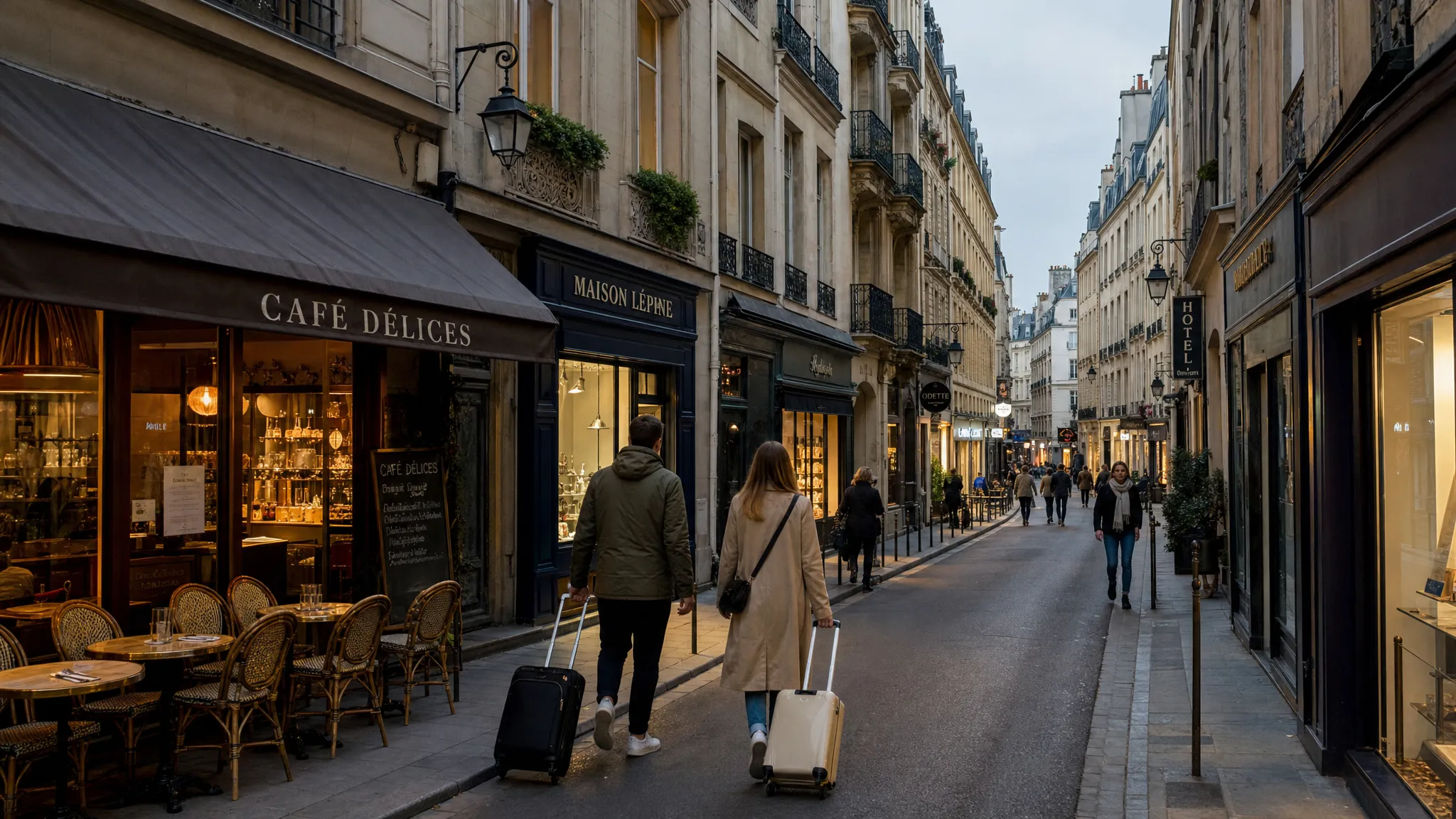
The Marais tells a different story. Streets are tighter, boutiques spill light onto the pavement, and dinner can become a walk rather than a reservation followed by a ride. This is where boutique and design-led hotels can be better than classic luxury if your version of Paris is food, galleries, and neighborhood life. The tradeoff is noise, smaller rooms, and less of the grand driveway arrival some luxury travelers expect.
Travelers who want a stylish base in that part of the city might compare options like Le Grand Mazarin Paris, especially if the trip is built around walking, dining, and lingering in one of the city’s most animated districts.
The Louvre and Opéra area is more pragmatic. It may not feel as village-like as the Marais or as cinematic as the Left Bank, but it works beautifully for short stays because it shortens the day. You can return between museum visits, reach several districts without complicated transfers, and avoid making every plan dependent on one neighborhood.
For travelers who want a polished central base near major sights and transport, Hôtel Madame Rêve Paris is the kind of property to evaluate through that lens: less about chasing the cheapest rate, more about saving time in a city where every extra crossing can cost money and energy.
The hidden costs in Paris are rarely dramatic one by one. They accumulate. Tourist taxes are commonly charged per person, per night and vary by accommodation category. Hotel breakfast can be convenient but expensive compared with a bakery breakfast if you are happy with coffee and a croissant. Airport transfers from Charles de Gaulle or Orly can change the value of a hotel if you choose an area with awkward access. And the classic “city view” or “Eiffel view” upgrade deserves scrutiny. If the view is partial, distant, or only visible from an angle, you may be paying for a photograph rather than a better stay.
Seoul feels different from Paris because it is not one city center but several intense urban worlds stitched together by subway lines, bridges, hills, and late-night appetite. A top rated hotel in Seoul can be excellent and still wrong if it sits far from the version of the city you came to experience.
Myeongdong works well for short first visits, shopping, street food, and travelers who want easy access to central sights. It is lively, practical, and rarely subtle. Hongdae is younger, louder, more nocturnal, and better for music, cafes, casual food, and nightlife. Gangnam suits business travelers, medical visitors, shoppers, and anyone whose meetings or appointments are south of the river. Jamsil makes sense for families, luxury travelers who want skyline drama, and guests focused on the Lotte World area or eastern Seoul.
A design-forward stay around Myeongdong can be a smart match if convenience matters as much as personality. L’Escape Hotel Seoul is the kind of hotel travelers often consider when they want a more theatrical atmosphere without giving up access to central Seoul.
But a traveler with meetings in Gangnam or plans around Jamsil may experience that same central location differently. Seoul’s subway is excellent, but distance across the Han River is not just a map line. It is time, transfers, and sometimes a late-night taxi when trains are no longer convenient.
For a luxury stay focused on views, vertical drama, and the Jamsil side of the city, Signiel Seoul belongs in a completely different decision category. It can make sense for a celebratory stay, a family itinerary around nearby attractions, or a traveler who wants the hotel itself to be part of the experience. It makes less sense if every dinner reservation and gallery visit is in Hongdae, Itaewon, or the historic core.
Seoul’s underestimated costs are mostly behavioral. Late-night taxis after nightlife can erase the savings of staying farther away. Airport transfers can be simple if you choose near an airport rail or bus stop, but awkward with luggage if the hotel requires multiple transfers. Breakfast is another decision point. If you love Korean cafe culture, convenience store snacks, or morning markets, an expensive buffet may be unnecessary. If you have early meetings, jet lag, or children, breakfast included can be worth more than a slightly cheaper room-only rate.
The upgrade question in Seoul is also trip-specific. A higher floor can feel special in a skyline city, but if your days are packed and your nights are late, the upgrade may be cosmetic. A club lounge or breakfast package may be valuable for business travelers who need predictable mornings. For food-focused travelers, it may compete with the very reason they came.
Dubai is where hotel category changes the entire trip. In some cities, you can choose a cheaper district and still improvise. In Dubai, distance, heat, road patterns, and beach access make the hotel decision more consequential. A city hotel and a beach resort can both be top rated hotels, but they create two very different vacations.
Downtown Dubai and Business Bay work for travelers focused on malls, restaurants, business meetings, fountains, and quick access to modern landmarks. You get convenience, skyline energy, and often a smoother short-stay rhythm. The tradeoff is that the beach becomes an outing. That means taxis, timing, potential beach club charges, and the friction of leaving the hotel for a swim.
A city stay such as The Dubai EDITION is worth comparing if your trip is built around dining, Downtown, shopping, nightlife, or business rather than slow resort days. In that case, paying for a beachfront resort you barely use can be the more expensive mistake.
Beach areas like Jumeirah, JBR, and Palm Jumeirah make sense when the hotel is the vacation. If your ideal day is breakfast, pool, beach, long lunch, spa, and a slow evening, paying more for direct resort access can be rational. You are buying convenience, not just a room.
For travelers who want a resort-centered Dubai trip, Jumeirah Beach Hotel Dubai is the type of stay to evaluate against how much time you will actually spend on property. If you will use the beach, pools, dining, and family-friendly facilities, the higher rate may translate into less planning and fewer daily add-ons.
Value-focused travelers may also look at practical city options like Rove Downtown Dubai, especially when they care more about location, simplicity, and price clarity than resort-style extras.
Dubai’s hidden costs deserve attention before you book. The Tourism Dirham is typically charged per room, per night and varies by hotel category. Taxes and service charges can make a room look cheaper at first glance than it feels at checkout if you do not compare final totals. Breakfast can be costly in full-service hotels, especially for families. Early check-in after a long overnight flight is another common surprise. If your room is not ready until afternoon, paying for guaranteed early access or booking the previous night may be worth it for some travelers and unnecessary for others.
The biggest overpay in Dubai is misunderstanding access. A hotel with a pool is not the same as a beach resort. A hotel near the beach is not always a hotel with private beach access. A beautiful city hotel can be perfect for a three-night business or shopping trip and frustrating for a traveler imagining barefoot mornings.
New York makes travelers pay for assumptions. The map looks compact, the subway looks simple, and suddenly a cheaper room in a less central area seems like a victory. Sometimes it is. But on a short stay, especially in winter, with luggage, children, or a packed schedule, the cheaper room can cost more in time and fatigue.
Midtown is often dismissed as too touristy, yet it can be the right answer for theater trips, first-time sightseeing, business near major offices, and train arrivals. You may not get the most local neighborhood feeling, but you get efficiency. If your days begin uptown and end near Broadway, paying more to stay close may be smarter than chasing authenticity downtown.
A theater-focused or Midtown-heavy itinerary may lead travelers to compare classic central options like The Knickerbocker New York, where the question is not whether the area is busy, but whether the location reduces friction enough to justify the rate.
Downtown neighborhoods tell another story. The Lower East Side, SoHo, NoHo, and Tribeca can make the city feel more personal, especially for restaurants, bars, galleries, and boutique shopping. But they are not equally convenient for every plan. A traveler with morning meetings in Midtown may enjoy downtown nights but resent downtown mornings.
For a design-led downtown stay with neighborhood energy, The Ludlow Hotel New York is the sort of option to compare against your actual schedule, not just your aesthetic taste.
New York’s hidden costs can be blunt. Amenity or destination fees may appear at some hotels. Parking can be extremely expensive and is rarely worth building a city trip around unless you truly need a car. Breakfast in hotel restaurants can cost far more than a neighborhood bagel or coffee shop, but the convenience may be worth it before early meetings. Room size is another invisible cost. A cheaper room that is too small for two suitcases, a crib, or work calls can make the whole trip feel cramped.
The most overrated upgrade in New York is often the vague city view. Unless the view is specific and meaningful, skyline, park, river, or landmark, you may simply be paying for height. The most underrated upgrade is sometimes location: a hotel five minutes from your real plans instead of 25 minutes away.
The wrong hotel choice is rarely absurd. It usually looks sensible at booking time. The problem is that travelers compare room rates before they compare trip behavior.
| Destination | Common overpay | Why it happens | Smarter comparison |
|---|---|---|---|
| Paris | Paying heavily for a partial view | The photo feels romantic, but the area may not match dining plans | Compare view value against walkability and evening transport |
| Seoul | Booking a beautiful hotel across the river from your schedule | Ratings hide the cost of transfers and late-night taxis | Choose by subway line and daily neighborhood rhythm |
| Dubai | Choosing city rates for a beach vacation | A cheaper hotel looks close enough until beach access becomes an outing | Decide first whether the hotel or the city is the main event |
| New York | Saving on nightly rate far from plans | The subway looks easy on a map, but time and fatigue add up | Price the stay by total daily convenience, not room rate alone |
Premium upgrades are not automatically wasteful. Some are excellent value when they solve a real problem. Others are marketing language attached to a room that will not change your trip.
| Upgrade | Worth it when... | Usually skip it when... | Ask before paying |
|---|---|---|---|
| Better view | You will spend meaningful time in the room or it is a celebration trip | You leave early and return late | Is the view guaranteed or only requested? |
| Breakfast included | You have early starts, kids, meetings, or limited nearby options | The neighborhood has great casual breakfast spots | What is the normal breakfast price per person? |
| Club lounge | You need workspace, snacks, quiet, or evening drinks | You are traveling for restaurants and nightlife | Are hours and inclusions useful for your schedule? |
| Larger room | You have luggage, children, work calls, or a longer stay | You are solo on a one-night stay | How much larger is it in actual square footage? |
| Spa or beach access | The hotel is part of the vacation | You will be sightseeing most of the day | Is access included or limited by room category? |
| Late checkout | Your flight leaves late and you want a calm final day | You can store luggage and keep exploring | Is it guaranteed in writing or subject to availability? |
The most important word in upgrade language is not luxury. It is guaranteed. A guaranteed early check-in can save a brutal first day after an overnight flight. A guaranteed connecting room can matter for families. A vague upgrade request may be pleasant if honored, but it should not be the reason you choose a more expensive hotel.
Before you book, put the rating aside and test the hotel against your trip. This does not need to become a spreadsheet. Five minutes can prevent the most common regrets.
This is how you separate genuinely good value from marketing hype. A hotel is not good value because it is cheap. It is good value when the total stay supports the trip you are actually taking.
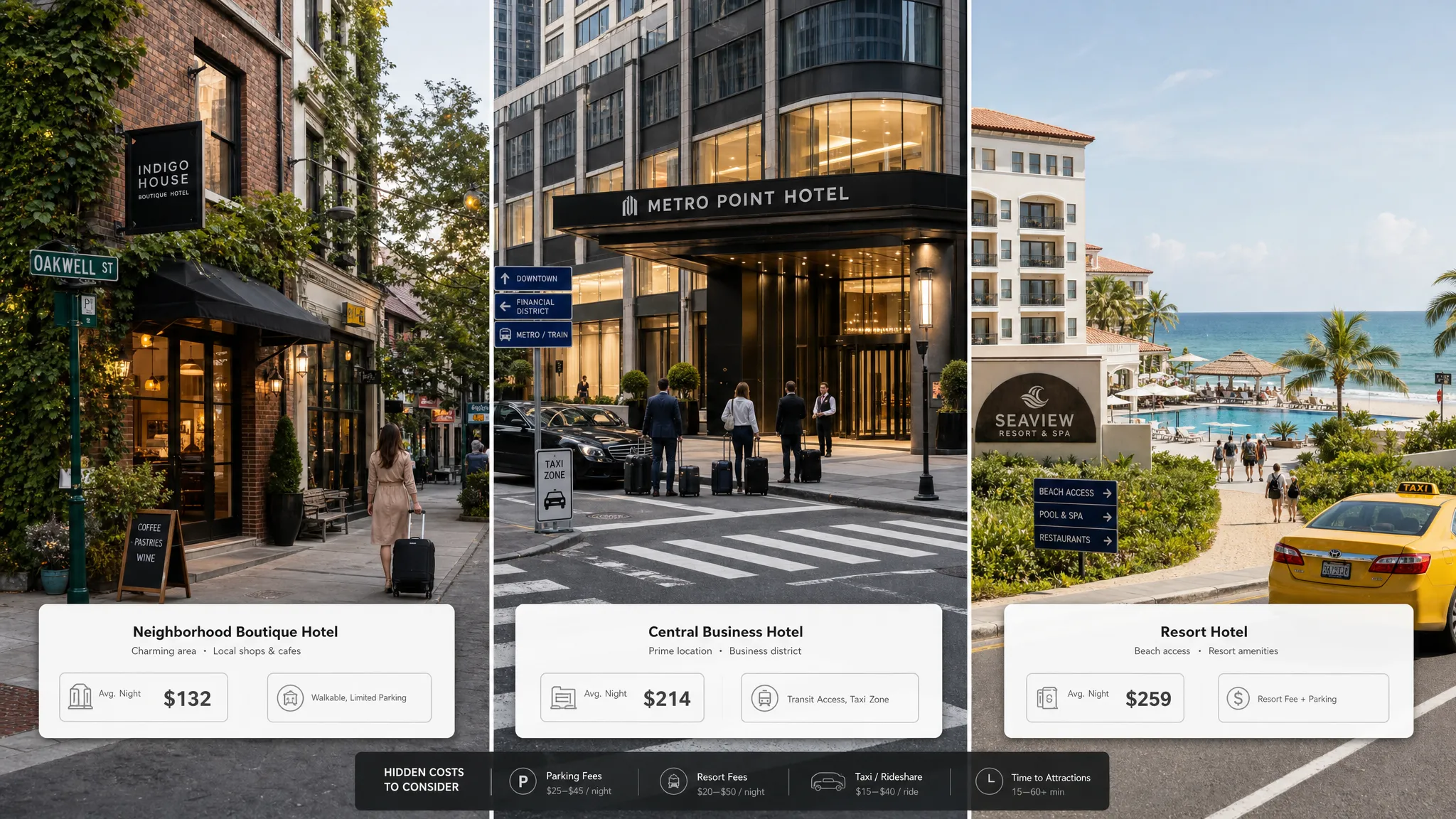
Trip style should decide the hotel category more than star rating alone. A boutique hotel can beat classic luxury for a couple who wants atmosphere and neighborhood life. A business hotel can beat a fashionable property when it saves a stressful morning commute. A resort can be worth the premium when the point is rest, but wasteful when the city is the attraction.
| Traveler type | Best hotel pattern | Avoid overpaying for |
|---|---|---|
| Business traveler | Direct transit, quiet room, reliable breakfast, easy checkout | Trendy neighborhoods far from meetings |
| Romantic couple | Walkable dining district, memorable design, quiet room category | A view upgrade that adds little to the actual weekend |
| Family | Larger room, simple transport, nearby casual food, breakfast value | Cheap locations that require taxis several times a day |
| Luxury traveler | Hotel-centered stay with service and amenities you will use | Prestige if your itinerary keeps you outside all day |
| Nightlife traveler | Safe late-night return, lively district, reasonable taxi distance | Remote calm that becomes inconvenient after midnight |
| Deal hunter | Transparent final price, flexible terms where available, strong location | Lowest nightly rate with hidden time and transport costs |
The best top rated hotels do not force you to adapt to them. They make your version of the destination easier. They shorten the right journeys, frame the right atmosphere, and remove the right kinds of friction.
Are top rated hotels always worth the higher price? Not always. A high rating is useful, but value depends on your trip style, location needs, room category, and total cost after taxes, fees, meals, and transportation.
How do I choose between a luxury hotel and a boutique hotel? Choose luxury when you will use service, amenities, spa, lounge, pool, or resort features. Choose boutique when neighborhood atmosphere, design, dining, and walkability matter more than extensive facilities.
Which hidden hotel costs should I check before booking? Look for tourist taxes, destination or amenity fees, parking, breakfast charges, airport transfers, resort or beach access limitations, early check-in fees, late checkout fees, and service charges.
Is it better to stay in the most central neighborhood? For short stays, first visits, business trips, and packed itineraries, central locations often save money through convenience. For longer stays or travelers seeking local atmosphere, a slightly less central neighborhood can be better value.
When is a hotel view upgrade worth it? A view upgrade is worth it when the view is specific, guaranteed, and part of how you plan to enjoy the room. It is usually less valuable if you will spend most of the trip outside.
The right hotel is not the one with the loudest reputation. It is the one that fits your mornings, your nights, your budget, and your reason for traveling. Top rated hotels are most useful when you compare them through real-life questions: Where will I eat? How will I move? What will I use? What will cost extra?
InnRox is built for travelers who want that kind of clarity, with competitive hotel rates, upfront final pricing, instant confirmation, secure payments, and flexible options such as free cancellation or pay-later deals where available. Before you book the highest-rated name on the page, compare the stay that actually matches your trip style.
Tags