
Copyright © 2026 Innrox, Inc., an Innrox Group company. All rights reserved.

InnRox
Travel Experts
June 27, 2026
20 min read
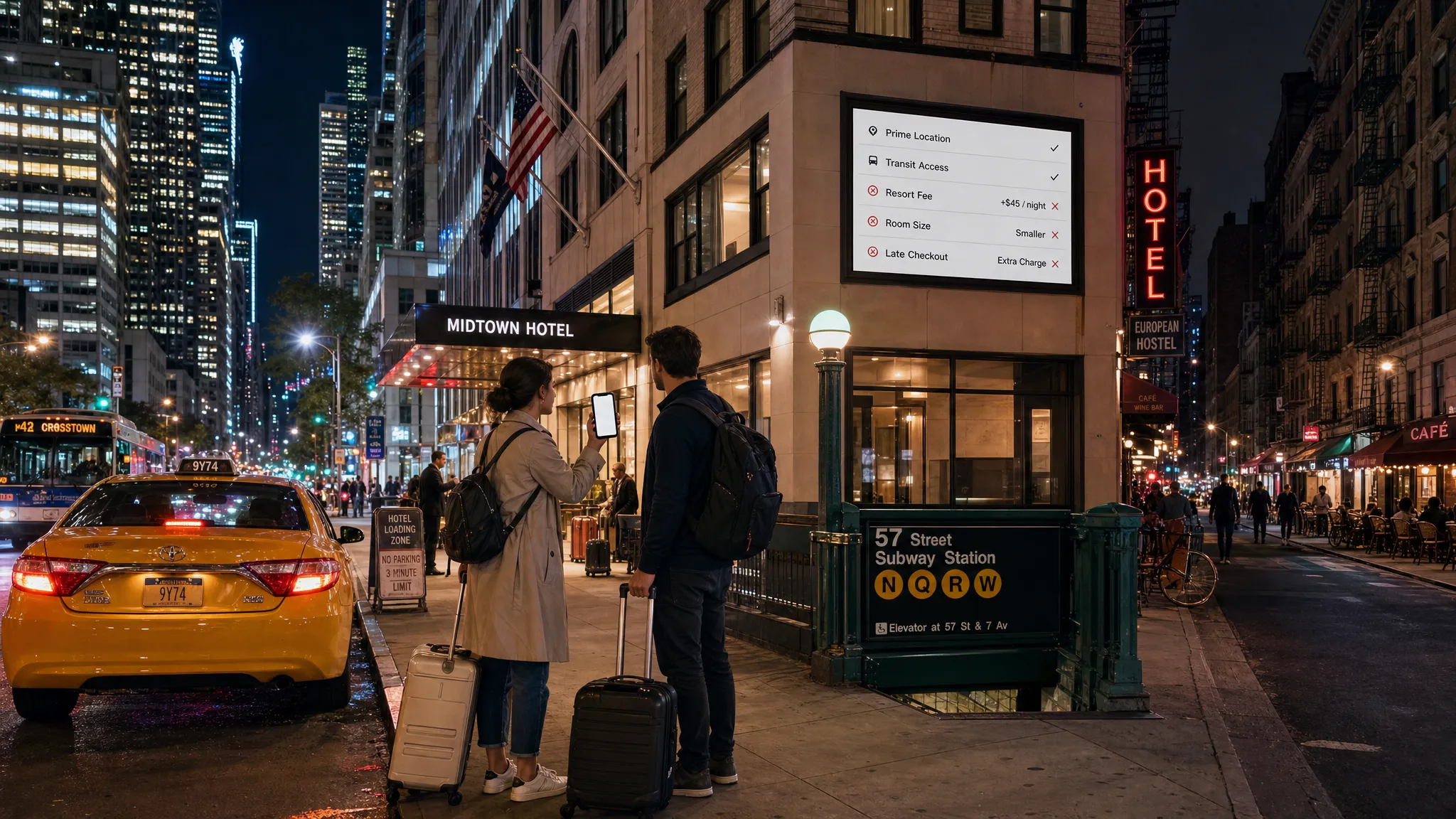
At 7:10 p.m., New York has a way of testing your hotel choice before you even reach the lobby. A suitcase wheel catches in a subway grate. A taxi meter blinks through crosstown traffic. Somewhere in Midtown, a traveler realizes that the room they saved money on is now a 22-minute walk from dinner in winter wind.
That is the truth about New York accommodation: the best stay is not simply the lowest nightly rate. It is the place that lets you sleep, move, and spend intelligently. In this city, value lives in the gap between the room price and the total experience. A hotel can look cheap until you add a destination fee, breakfast for two, a late-night rideshare, or a daily subway detour that turns every plan into logistics.
The smartest way to book New York is to choose the neighborhood first, then the hotel category, then the rate. Midtown, Downtown, Brooklyn, and Queens each offer a different version of the city. Some give you instant access to theaters and offices. Some give you quieter sleep. Some save money only if you are willing to ride the train. The trick is knowing which compromise fits your trip.
Before comparing hotel names, imagine the three blocks around your front door. Not the postcard version, but the real one at 11:45 p.m. after dinner, rain, or a delayed flight. Is the subway entrance close enough that you will actually use it? Is there a pharmacy, coffee shop, or casual meal nearby? Does the street feel like a place where you can arrive tired and still relax?
In New York, a hotel one avenue farther from the subway can cost you more than money. It can cost time, patience, and the willingness to go back out after checking in. This matters for short stays more than long ones. If you are in the city for two nights, being near the right train line can be worth more than a bigger room in a less useful location.
Use this simple decision frame before you book:
A good New York hotel solves at least two of those three. A great one solves all three for your specific trip.
Midtown is the first answer many travelers reach for, and for good reason. It is the city’s practical center: Penn Station, Grand Central, Times Square, Bryant Park, Fifth Avenue, Rockefeller Center, and many office towers all sit within a dense grid of subways, buses, and walkable blocks. If your trip is short, theatrical, business-heavy, or your first time in New York, Midtown reduces friction.
But Midtown is not one neighborhood. Times Square is not the same stay as Bryant Park. Grand Central is not the same mood as Hell’s Kitchen. Chelsea and NoMad can feel calmer and more grown-up, while still keeping you connected. The difference matters because Midtown convenience often comes with noise, smaller rooms, and more pricing traps.
Times Square is best when you want maximum simplicity. You can walk to Broadway shows, major subway lines, and late-night food. The tradeoff is atmosphere. Some travelers love the lights and energy. Others regret paying a premium to sleep above crowds, sirens, and street performers. If you book here, prioritize soundproofing, a higher floor, and a clear understanding of mandatory hotel fees.
For travelers who truly need the Times Square area, OYO Times Square is the kind of central option worth comparing carefully against your itinerary. It makes sense if your plans cluster around Broadway, Midtown meetings, or quick subway hops, but the right value depends on total price and room expectations, not location alone.
Bryant Park and Grand Central often deliver a more balanced Midtown experience. You still get excellent subway access, but the streets feel less chaotic late at night. Business travelers should especially look around Grand Central if meetings are spread across Midtown East, the East Side, and commuter rail connections. Couples may prefer Bryant Park or NoMad for a softer evening atmosphere and better dinner options.
Where travelers overpay in Midtown is the generic convenience upgrade. A vague city-view room may look tempting, but many city views are partial skyline angles or neighboring buildings. A paid breakfast can also be a poor deal if you prefer quick coffee and a bagel outside. Parking is rarely rational here unless you have a very specific reason to drive. In many Midtown hotels, parking can cost enough per night to erase the savings of a cheaper room.
Downtown Manhattan feels different after dark. Tribeca streets widen into quiet corners. SoHo has cast-iron shadows and late dinners. The Financial District empties out after office hours, which can be either peaceful or too quiet depending on your style. If Midtown is about access to everything at once, Downtown is about choosing a calmer base with strong subway connections.
Tribeca and SoHo are strong choices for travelers who care about restaurants, design, galleries, shopping, and walkable atmosphere. They tend to cost more than purely business-focused areas, but the money often buys a better neighborhood experience. You are paying not only for a bed, but for the pleasure of stepping outside into streets that feel less transactional than Times Square.
The Financial District can be one of New York’s better value plays on weekends. Hotels built around weekday business demand may soften their rates when offices close. The tradeoff is that some blocks become quiet late at night, and restaurant options can thin out compared with SoHo, the West Village, or the Lower East Side. For travelers planning Statue of Liberty ferries, Wall Street meetings, Brooklyn Bridge walks, or early downtown starts, it can be excellent.
If your ideal base is Downtown but not isolated, Sheraton Tribeca is worth putting into the comparison set. Tribeca gives you access to SoHo, Chinatown, the Hudson River side, and several subway routes, which can make the area feel both local and efficient.
Downtown’s hidden costs are different from Midtown’s. You may save on the room but spend more on taxis if your evenings are mostly uptown. Breakfast is another common trap. A hotel breakfast that seems convenient can become expensive for families, while a nearby bakery or café may suit the neighborhood better. Check whether a destination or facility fee is mandatory, whether it includes anything you will actually use, and whether late checkout is complimentary or priced like an extra night in miniature.
Across the East River, the city changes texture. In Brooklyn and Queens, mornings can smell like roasted coffee, laundromats, wet pavement, and bakery steam rather than hotel lobbies and office towers. This is where New York accommodation can feel more residential, more relaxed, and sometimes more affordable.
Long Island City is the classic value calculation. It can place you one or two subway stops from Midtown while offering lower rates than comparable Manhattan hotels. For business travelers near Midtown East or first-timers who do not mind a quick train ride, it can be smart. The mistake is booking far from the station. Long Island City value depends heavily on walking distance to the right subway line. A cheap room that requires a long walk in bad weather or a rideshare every night is not really cheap.
Downtown Brooklyn works well for travelers splitting time between Manhattan and Brooklyn. It has strong transit, newer hotels, and fast access to Brooklyn Heights, Dumbo, Fort Greene, and Lower Manhattan. Families may appreciate the roomier feel and easier access to parks and waterfront walks. But the area can feel businesslike in parts, so check the exact block before assuming neighborhood charm.
Williamsburg and Greenpoint offer nightlife, restaurants, independent shops, and a more local rhythm. They are excellent for repeat visitors who already know Manhattan and want evenings close to home. They are less ideal if every day begins at the museums on the Upper East Side or ends near Times Square. Late-night rideshare costs can turn a cool neighborhood choice into an expensive habit.
The broader rule is simple: stay outside Manhattan when your itinerary also lives outside Manhattan, or when the subway route is direct. Do not leave Manhattan just because the nightly rate is lower. Leave it because the total stay, including mood, sleep, transit, and food, is better.
| Area | Best for | Sleep quality | Transit strength | Value warning |
|---|---|---|---|---|
| Times Square | First-timers, Broadway, very short stays | Mixed, often noisy | Excellent | Convenience premiums, view upgrades, mandatory fees |
| Bryant Park and Grand Central | Business trips, polished Midtown access | Better than Times Square | Excellent | Midweek business rates can spike |
| Chelsea and NoMad | Couples, restaurants, design-minded travelers | Good on side streets | Very good | Trendy hotels may charge high amenity fees |
| Tribeca and SoHo | Boutique stays, dining, quieter luxury | Strong | Very good | Higher rates may not include breakfast |
| Financial District | Weekend value, Lower Manhattan plans | Often good | Good | Quiet evenings can mean more taxi use |
| Upper West Side | Families, museums, calmer nights | Good | Good | Longer rides to Downtown and Brooklyn |
| Upper East Side | Museums, classic residential feel, medical visits | Good | Moderate to good | Less convenient for nightlife and some airports |
| Downtown Brooklyn | Split Manhattan and Brooklyn itineraries | Good | Excellent | Exact block matters for atmosphere |
| Long Island City | Value seekers, Midtown access | Good if away from traffic | Strong near stations | Savings disappear if far from subway |
| Williamsburg and Greenpoint | Nightlife, repeat visitors, local dining | Good to lively | Variable | Weekend train changes and rideshares add cost |
New York compresses hotel categories in a way that can surprise visitors. A luxury hotel may still have a smaller room than you expect. A budget hotel may have a brilliant location but limited storage. A boutique hotel may feel memorable but charge extra for amenities you assumed were included. The label tells only part of the story.
Classic luxury in New York is often about service, lobbies, dining, legacy addresses, and a sense of occasion. It is worth paying for when the hotel itself is part of the trip: a romantic weekend, an anniversary, a high-stakes business visit, or a traveler who wants calm service after long days. Modern luxury leans more toward design, wellness spaces, rooftop views, and social energy. It can feel fresher, but not always quieter.
Boutique hotels are strongest when you want neighborhood identity. In Tribeca, SoHo, NoMad, or the Lower East Side, a boutique stay can make the city feel less generic. The risk is room size and inconsistent service depth. A beautiful lobby does not guarantee a restful bed, good lighting, or enough space for two open suitcases.
Business hotels are underrated in New York. They may not photograph as romantically, but they often have practical desks, reliable elevators, straightforward service, and locations near transit. On weekends, they can become better value because weekday corporate demand drops. Budget and compact hotels make sense for solo travelers, late arrivals, and people who will spend almost no time in the room. They are less ideal for families, winter trips with bulky coats, or anyone who needs quiet recovery time.
| Hotel type | When it is worth it | Common pitfall |
|---|---|---|
| Classic luxury | Special occasions, premium service, formal business trips | Paying for prestige when you will barely use the hotel |
| Modern luxury | Design, wellness, rooftop energy, stylish weekends | Amenity fees and crowded social spaces |
| Boutique hotel | Neighborhood character and intimate atmosphere | Small rooms, limited storage, inconsistent noise control |
| Business hotel | Work trips, efficient transit, weekend value | Less personality, weekday rate spikes |
| Budget or compact hotel | Solo trips, short stays, late arrivals | Tiny rooms, fewer amenities, less flexibility |
| Airport hotel | Early flights or overnight layovers | Transfer costs and weak city access |
The upgrade question in New York is unusually important because the base room can be small, the streets can be loud, and the city can exhaust you. Still, many upgrades are emotional traps.
A larger room is often worth it for families, longer stays, winter travel, or two people with full-size luggage. Space changes the mood of a New York trip. If every morning begins with stepping over bags, the savings may feel less satisfying by day three.
A high floor can be worth paying for if the hotel is near Times Square, a major avenue, nightlife, or a loading zone. But do not assume high floor means quiet. Elevator noise, rooftop bars, and mechanical systems can still matter. Ask what the upgrade actually changes.
Breakfast is worth it only when it matches your travel rhythm. Business travelers with early meetings may benefit from a predictable hotel breakfast. Families with children may value convenience. But couples and solo travelers often do better with neighborhood cafés, especially Downtown, the Upper West Side, and Brooklyn. A breakfast package that saves time can be smart. A breakfast you skip twice is wasted money.
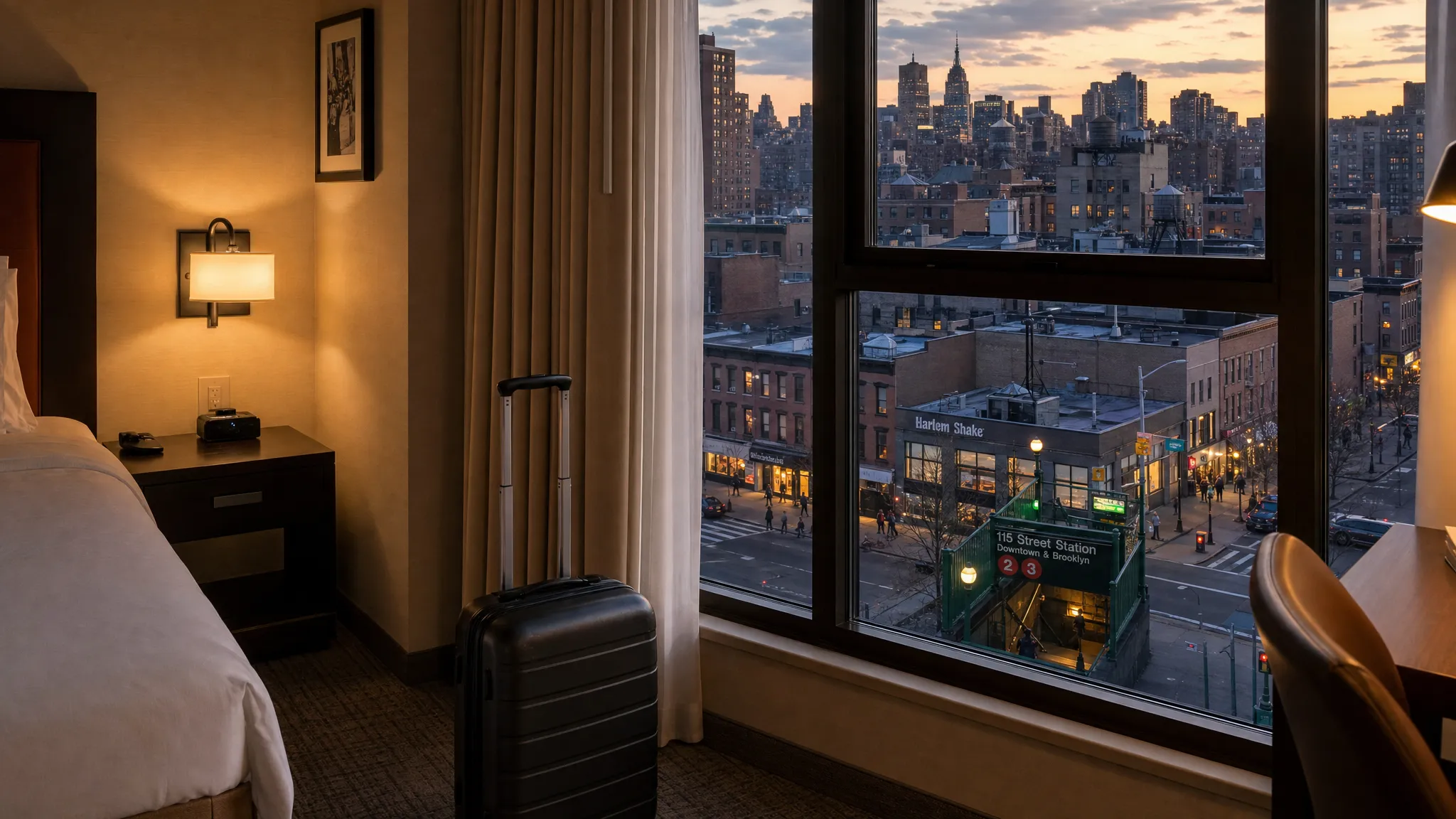
City-view upgrades deserve skepticism. In New York, a city view can mean skyline drama, but it can also mean the side of another building with a slice of street. If the view is central to the trip, verify the room category carefully. If not, spend that money on location, cancellation flexibility, or a room size upgrade.
Flexible cancellation is one of the most underrated upgrades. New York pricing swings with events, weather, and business demand. If your plans are uncertain, a slightly higher flexible rate can be better value than a nonrefundable bargain that traps you. Pay-later options, where available, can also help travelers compare more calmly instead of rushing into the first low number.
New York hotel value is deeply seasonal. January and February can bring some of the best rates, especially after the holiday rush, but the tradeoff is cold weather, bulky luggage, and less patience for long walks. A hotel close to the subway becomes more valuable in winter than it looks on a map.
Spring and fall are beautiful, but they are also expensive because they attract leisure travelers, conferences, weddings, and business trips at the same time. During these periods, neighborhood choice matters more. If Midtown looks inflated, Downtown Brooklyn, Long Island City, the Upper West Side, or the Financial District may offer better value depending on your itinerary.
Summer can be mixed. Some business-heavy hotels soften at certain times, but family travel and international demand keep popular areas busy. Heat changes the practical value of transit. A hotel that requires a long uncovered walk from the subway may feel worse in August than it did when you booked in March.
Late November through New Year is its own category. The city is festive, crowded, and emotionally irresistible, but hotel pricing often reflects that demand. If you are coming for holiday windows, shows, shopping, or seasonal dining, pay for location only where it saves real time. Do not pay a holiday premium for a central hotel and then spend most of your trip in Brooklyn or Downtown.
Weekday patterns matter too. Midtown East and Grand Central can rise sharply on Tuesday and Wednesday when business demand is strong. The Financial District may improve on weekends. Brooklyn nightlife areas can be more expensive on Friday and Saturday. Before booking, compare your exact dates rather than relying on general neighborhood reputations.
If you are booking close to arrival, use the same discipline you would use for any city stay: compare total price, cancellation terms, and location together. Innrox has a deeper guide on last-minute deals that still make sense for hotel bookers, which is especially useful when a low same-day rate looks tempting but the neighborhood does not fit the trip.
The best area to stay in New York depends less on personality than itinerary. A romantic trip, a conference trip, and a family museum weekend should not be booked from the same map.
| Trip style | Best-fit areas | Why it works | Where travelers often overpay |
|---|---|---|---|
| First visit | Midtown, Bryant Park, Chelsea | Easy orientation and broad transit | Times Square premiums when sleep matters more |
| Business trip | Grand Central, Midtown East, Financial District | Fast office access and predictable routines | Parking, breakfast, and weekday rate spikes |
| Romantic weekend | Tribeca, SoHo, West Village edge, NoMad | Walkable dinners and atmospheric streets | Paying for luxury branding over room quality |
| Family trip | Upper West Side, Midtown near parks, Downtown Brooklyn | Calmer streets and practical transit | Tiny rooms without checking square footage or bed setup |
| Nightlife trip | Lower East Side, Williamsburg, Chelsea | Shorter late-night returns | Rideshares from distant hotels after midnight |
| Museum-focused trip | Upper East Side, Upper West Side, Midtown East | Easier access to major museums | Booking Downtown just for a cheaper rate |
| Budget-focused trip | Long Island City, Downtown Brooklyn, select Midtown compact hotels | Lower rates with subway access | Choosing a cheap hotel far from the train |
| One-night stay | Midtown, airport corridor, Grand Central | Less transfer friction | Saving a little but losing time in transit |
New York makes hidden costs feel normal because the city itself is expensive. That does not mean you should accept every add-on without question.
Mandatory destination or facility fees are among the biggest booking pitfalls. They may cover gym access, Wi-Fi, bottled water, local calls, or credits that sound useful but do not match your plans. The key is not whether the fee exists, but whether it is included clearly in the final price and whether the included benefits matter to you.
Taxes and occupancy charges can make a base rate look misleading. Always compare final totals, not nightly teasers. This is especially important when choosing between neighborhoods. A room that appears cheaper in one area may not remain cheaper once fees and transportation are included.
Parking is usually the easiest cost to avoid. Unless your trip requires a car, do not drive into Manhattan for a hotel stay. Parking, tolls, valet fees, and traffic turn the car into an expensive burden. If you are road-tripping, consider whether staying outside Manhattan with secure parking and direct train access makes more sense.
Airport transfers can also change the value equation. A lower hotel rate in a distant neighborhood may be fine for a three-night stay if the subway is convenient. It may be annoying for a one-night stay after a late flight. JFK, LaGuardia, and Newark each create different arrival experiences, so choose the hotel with your luggage and arrival time in mind, not only your sightseeing map.
Early check-in and late checkout are not guaranteed. In a high-occupancy city, hotels may charge for them or decline them entirely. If you land at 7 a.m., ask whether luggage storage is available and whether early access is likely. A comfortable lobby and good neighborhood cafés can matter on arrival day.
For a broader framework, Innrox’s guide to what really matters when choosing a hotel reservation site is useful because New York rewards travelers who compare final price, location, cancellation terms, and fee transparency together.
Start with your anchor points. List the places you must be: office, theater, airport, family address, restaurant reservations, museum plans, ferry terminals, or nightlife districts. Then choose the neighborhood that reduces your hardest journey, not your easiest one. If you have one late night in Williamsburg and four days in Midtown, stay in Midtown. If your meetings are Downtown and your dinners are in SoHo and Tribeca, do not default to Times Square.
Next, compare the hotel’s block, not just the neighborhood. A hotel two minutes from an express subway stop can outperform a more famous address ten minutes away. Look for side streets when sleep matters, avenues when transit matters, and mixed-use neighborhoods when you want both food and quiet.
Then compare final price. Include taxes, mandatory fees, breakfast, room size, cancellation rules, and likely transport. If one hotel is cheaper by a small amount but adds a longer commute twice a day, the more central hotel may be the better value. If one hotel is more expensive but saves two rideshares and gives you better sleep, it may be worth it.
Finally, book for the trip you are actually taking. New York rewards honesty. If you will be out all day, do not overpay for a hotel you will barely use. If you are traveling with children, do not gamble on a tiny room. If you are here for rest, do not stay above the loudest street just because the address is famous.
What is the best area for New York accommodation on a first visit? Midtown, Bryant Park, Chelsea, and Grand Central are usually the easiest areas for a first visit because they combine walkability with strong subway access. Times Square is convenient, but travelers who prioritize sleep may prefer nearby blocks that feel calmer.
Is it cheaper to stay in Brooklyn or Queens instead of Manhattan? It can be cheaper, especially in Long Island City, Downtown Brooklyn, and some Brooklyn neighborhoods. The savings are only real if the subway route is direct and close to the hotel. If you rely on late-night rideshares, the cheaper room can become more expensive overall.
Are New York hotel destination fees common? Many New York hotels charge mandatory destination, facility, or amenity fees. Always check whether they are included in the final price and what they actually cover. A fee is less frustrating when it is transparent before booking.
Which New York hotel upgrades are usually worth it? Larger rooms, flexible cancellation, and high floors in noisy areas are often worth considering. Generic city-view upgrades, expensive breakfasts you may skip, and vague amenity packages are more likely to disappoint.
When is the best season to find hotel value in New York? January and February often bring better rates, while spring, fall, and the holiday period can be expensive. Business-heavy areas may be better on weekends, while leisure neighborhoods can rise on Friday and Saturday nights.
The right New York hotel should make the city feel easier, not more complicated. Compare neighborhoods by sleep, transit, and real total cost before falling for the lowest visible rate.
With Innrox, you can search New York stays with upfront pricing, clear terms, instant confirmation, and flexible options where available. Start with the neighborhood that fits your trip, then choose the room that makes the whole stay work.
Tags