
Copyright © 2026 Innrox, Inc., an Innrox Group company. All rights reserved.

InnRox
Travel Experts
June 10, 2026
17 min read
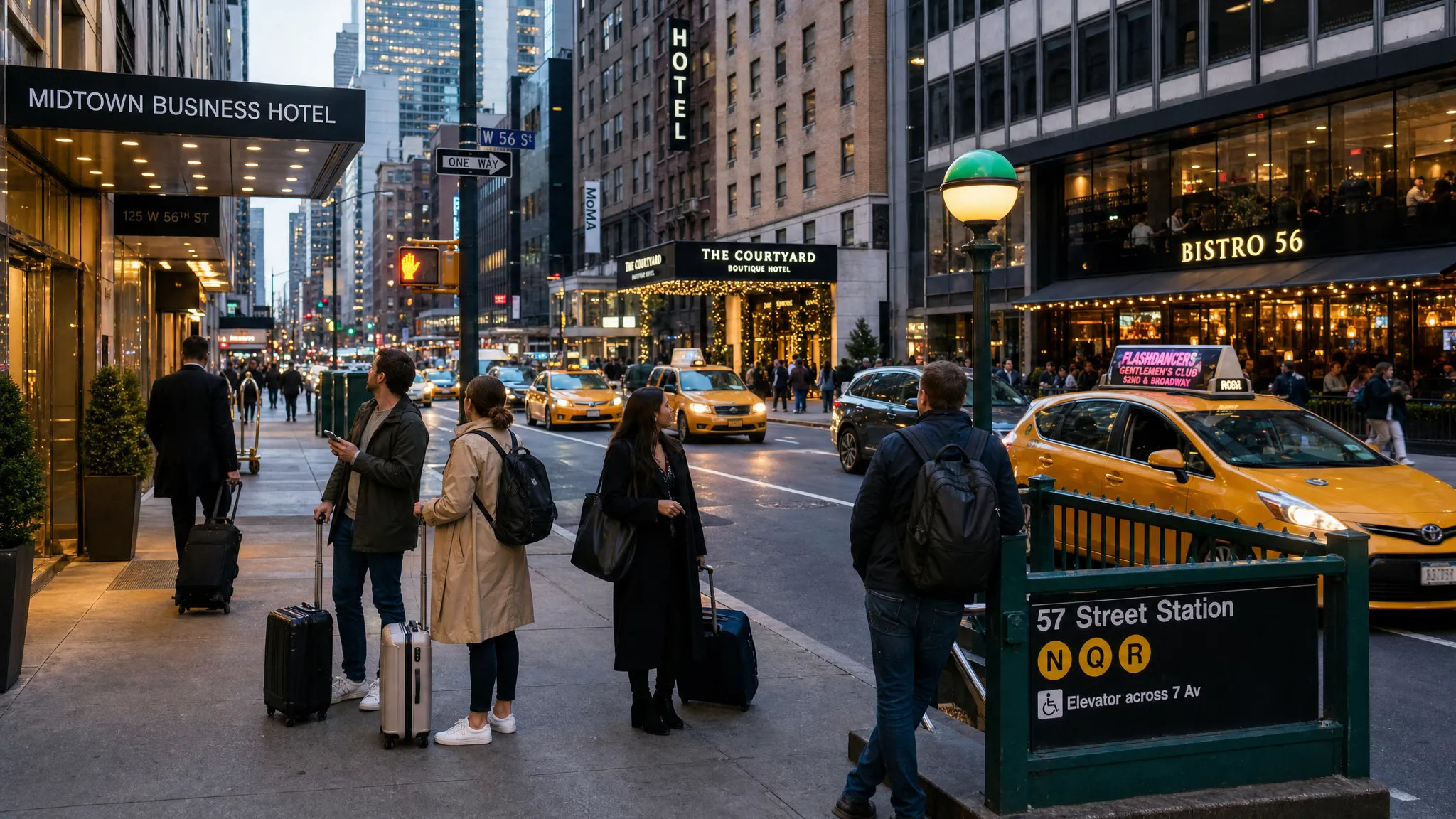
At 6:11 p.m., New York changes character. Office towers empty into the sidewalks, hotel lobbies fill with roller bags, and travelers who thought they had more time start refreshing availability from the back of taxis, train stations, airport queues, and crowded coffee shops.
This is when last minute deals become tempting. A room that looked too expensive yesterday suddenly drops. A boutique hotel in a neighborhood you actually wanted appears beside an airport property with a surprisingly low rate. A luxury hotel offers a room category you normally would not consider. The question is not whether the price is lower than it was last week. The real question is whether the deal still makes sense after location, taxes, fees, transport, breakfast, sleep quality, and tomorrow morning are included.
New York is a useful city for learning this because it punishes lazy hotel booking. A cheap room in the wrong borough can cost more once you add rideshares. A glamorous view can be a poor upgrade if you spend the whole night out. A business-district hotel that feels quiet on a Friday can be perfect for one traveler and inconvenient for another. The best last minute deals are not accidents. They are fast, disciplined choices.
The biggest mistake hotel bookers make under pressure is starting with tonight’s price. That feels logical, especially when inventory is moving fast, but it reverses the decision. A hotel is not just a bed. It is the starting point for your next meeting, flight, museum day, family breakfast, client dinner, or walk across town.
If you are arriving at Penn Station and meeting someone near Madison Square Park in the morning, Midtown South or NoMad may be worth paying more for than a cheaper room in a far quieter area. You will save time, reduce transport friction, and avoid beginning the day already tired. If your evening is built around restaurants and bars downtown, a hotel near the Lower East Side or SoHo edge may feel more natural, even if the room is smaller. If you have a 7 a.m. flight, the best deal might not be in Manhattan at all.
That is why sensible last minute deals begin with a map. Put a pin on where you must be tomorrow, then compare hotel options within a realistic travel radius. In New York, two hotels can be only a few miles apart and still create very different trips because bridges, tunnels, subway transfers, late-night traffic, and luggage all change the value.
A room around Midtown, a room downtown, and a room at the airport may appear beside each other in search results. On paper, they are all hotel rooms. In reality, they solve different problems.
Midtown South and NoMad are not usually where travelers go to feel undiscovered. The appeal is practical. You can walk to offices, reach multiple subway lines, get to Penn Station or Grand Central with less drama, and still be close enough to downtown or uptown for dinner. For a short business trip, a theater night, or a one-night stopover with an early meeting, convenience is the amenity.
The tradeoff is that this area often compresses room size and inflates upgrade language. A city view may mean a sliver of skyline. A high floor may not change the experience much if you are only sleeping there. Breakfast can be expensive relative to nearby cafes, and parking is rarely friendly. If you are booking late, check whether the lower rate is attached to a non-refundable room, a limited room type, or a mandatory facility fee.
For travelers who want centrality without committing to classic grand-hotel pricing, searches around properties such as The Evelyn Hotel New York can make sense when the itinerary is concentrated around Flatiron, NoMad, Union Square, or Midtown South.
If your plan is more vertical, with meetings, rooftop drinks, and quick subway movement, compare availability around Arlo NoMad New York. Compact-room hotels can be a good last-minute decision for solo travelers and couples who care more about location than square footage.
Downtown has a different rhythm. The sidewalks feel more residential and more nocturnal. A late dinner is easier. A morning coffee can be more memorable. You may hear music through a wall, pass a neighborhood bakery on the way to the subway, and feel less trapped in the business grid.
Boutique hotels here can be excellent for romantic trips, food-focused weekends, solo neighborhood exploration, and travelers who want New York to feel lived-in rather than managed. But boutique does not automatically mean cheaper. Smaller hotels may have fewer room types left at the last minute, and the room that drops in price may be near an elevator, lower floor, or nightlife-facing street.
If the trip is built around restaurants, galleries, night walks, and downtown friends, a hotel search like The Ludlow Hotel New York can be more sensible than chasing a nominally cheaper room far from where the evening will happen.
The value test is simple: will you spend your savings on taxis because you chose the wrong neighborhood? If the answer is yes, the cheaper hotel is not cheaper.
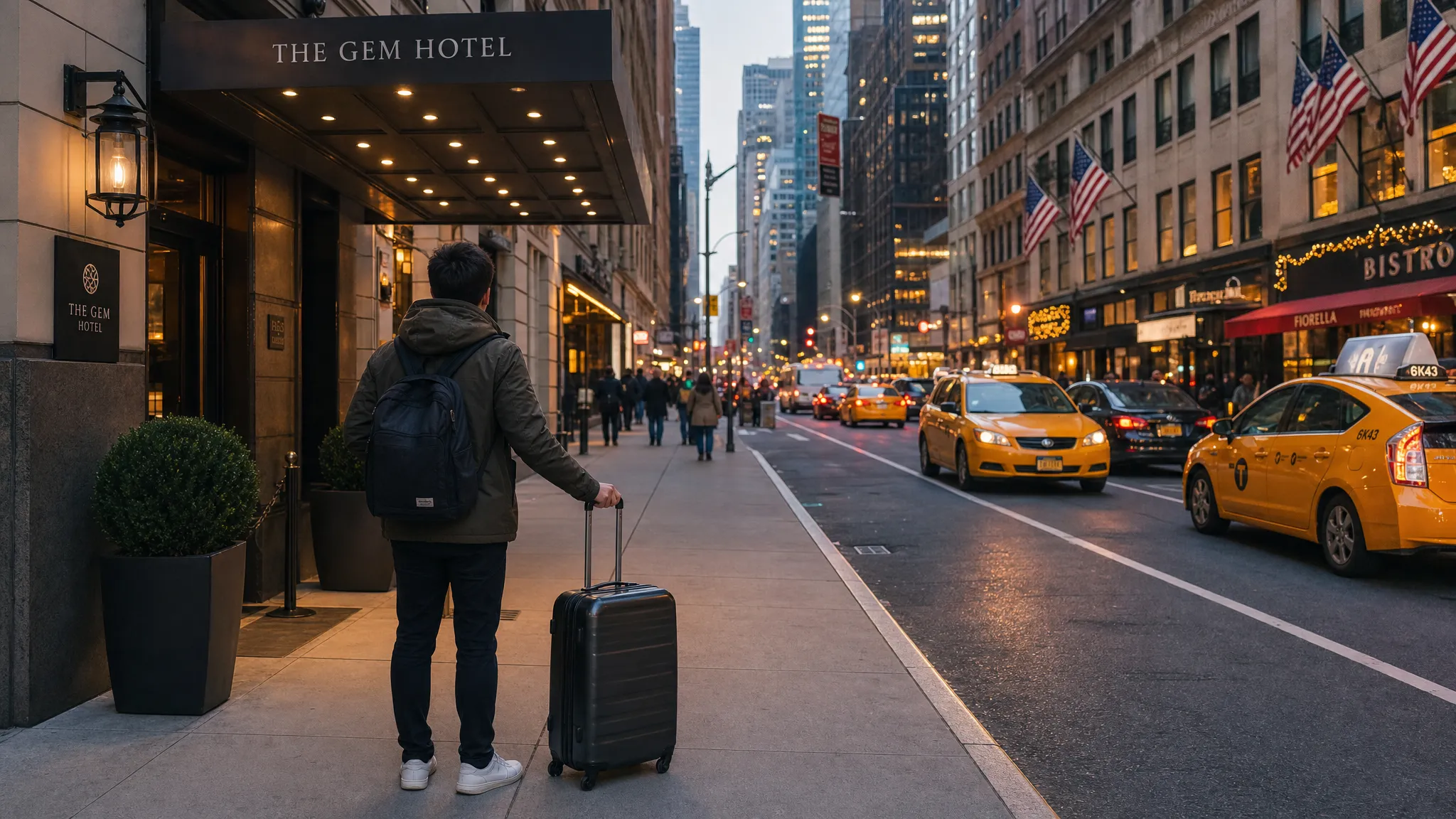
The Financial District can feel like a secret after work hours. Streets that were loud at noon become calmer, the waterfront opens up, and weekend hotel pricing can be more interesting than in tourist-heavy zones. For business travelers with meetings downtown, it is obvious. For leisure travelers, it depends on the plan.
If you want Wall Street, the ferries, the 9/11 Memorial area, Brooklyn Bridge walks, or easy downtown subway access, the Financial District can be smart. If your dream night is Broadway, Central Park, and late drinks uptown, the transport time may start to feel like a tax.
The last-minute opportunity is often strongest when a business hotel has unsold weekend inventory or when corporate demand dips. A search around Hyatt Centric Wall Street New York is a good example of the type of downtown stay that can make sense when your plans are south of Canal Street or tied to the waterfront.
Do not confuse quiet with inconvenient. Quiet is valuable if you need sleep. It is frustrating if you wanted to step outside into nightlife.
Brooklyn can make a last-minute stay feel less frantic. Williamsburg offers skyline views, restaurants, boutiques, and a more local rhythm than Midtown. For couples, creative travelers, and visitors who have already done the standard Manhattan route, it can feel like a better version of the same trip.
But Brooklyn has a bridge tax, even when there is no official fee. Late-night rides can cost more. Subway transfers with luggage can be irritating. A Manhattan meeting at 8:30 a.m. may make the neighborhood feel farther away than it looked on the map.
If the trip is about restaurants, design, a slower morning, and skyline atmosphere, compare properties such as The William Vale Brooklyn. If the trip is a one-night business sprint in Midtown, Brooklyn may turn a pleasant deal into a logistical chore.
Airport hotels are often misunderstood. They can look unglamorous beside city hotels, but for the right traveler they are the best last-minute decision. If your flight leaves early, if you are arriving late with children, or if a delay has already burned your evening, staying near the terminal can protect sleep and reduce risk.
The mistake is using an airport hotel as a cheap substitute for a New York visit. If you plan to sightsee in Manhattan, airport distance will charge you in time, transport, and energy. The room rate may be appealing, but the city becomes a commute.
For true flight-focused stays, a search around TWA Hotel New York JFK can be worth comparing when the priority is getting to or from JFK with minimal friction.
When you book weeks ahead, you can afford to be romantic about hotels. When you book late, category clarity matters. Luxury, boutique, business, airport, and extended-stay hotels each fail in different ways if chosen for the wrong trip.
| Hotel style | Why it can appear in last-minute results | Best for | Watch for |
|---|---|---|---|
| Classic luxury | Cancellations, soft weekday or weekend demand | Anniversaries, client-facing trips, travelers who value service | Breakfast pricing, spa limits, parking, vague view upgrades |
| Boutique hotel | Unsold niche room types or quieter weekdays | Romantic trips, nightlife, local neighborhood stays | Smaller rooms, street noise, limited late-night services |
| Business hotel | Corporate calendar gaps, especially on weekends | Work trips, solo stays, short-notice meetings | Quiet districts, paid breakfast, less atmosphere after hours |
| Airport hotel | Flight disruptions, early departures, late arrivals | Layovers, families, disrupted itineraries | Shuttle details, food costs, weak city access |
| Extended-stay style | Longer inventory windows and practical layouts | Families, multi-night stays, travelers needing space | Location compromises, service differences, cleaning policies |
The category should fit the problem you are solving. A luxury hotel is worth paying for when service, comfort, and location reduce stress. It is less useful if you arrive at midnight, leave at 7 a.m., and never use the amenities. A boutique hotel is wonderful when the neighborhood is the point of the trip. It is less wonderful if you need quiet, a large desk, and a predictable morning.
Business hotels are often underrated by leisure travelers chasing last minute deals. They may lack charm, but they can deliver reliable beds, better workspaces, and easier transit. Airport hotels are the ultimate example of value by context. They are rarely the emotional choice, but sometimes they are the intelligent one.
Last-minute booking compresses your decision time, which is exactly when hidden costs become dangerous. You see the lower rate first. The extras appear later, often when you are too tired to reconsider.
| Cost to check | Why it matters more at the last minute | Smarter question to ask |
|---|---|---|
| Mandatory hotel or facility fee | The nightly rate may look lower than the real total | Is this included in the final price I am seeing? |
| Parking | Urban parking can erase the entire discount | Do I actually need a car in this neighborhood? |
| Breakfast | Convenience can be overpriced if cafes are nearby | Will I use it, or am I leaving early? |
| Airport transfer | A cheap faraway hotel can become expensive after transport | What will arrival and departure cost with luggage? |
| Early check-in or late checkout | Same-day travelers often need timing flexibility | Is the timing guaranteed or only requested? |
| Room upgrade | Last-minute upgrades can sound better than they feel | Does the upgrade change comfort, or only wording? |
| Cancellation terms | Discounted rooms may be stricter | What happens if my flight or meeting changes? |
| Taxes and local charges | These can shift the final total significantly | Am I comparing final prices, not base rates? |
In New York, parking is one of the clearest traps. If you are arriving by car, a hotel that is $40 cheaper can quickly become a bad choice once garage pricing is added. If you do not need a car, the smarter move is often to avoid driving entirely and choose a neighborhood aligned with subway access.
Breakfast is another common leak. Paying for hotel breakfast can be worth it for families, early meetings, or travelers who want one predictable decision in the morning. It is often not worth it in neighborhoods full of cafes, especially if your room already costs more because of location.
The most seductive trap is the view upgrade. In a city of tall buildings, view language sells well. But if you arrive after dark, leave early, or spend most of your time outside, paying extra for a vague city view can be marketing hype. A larger room, quieter placement, flexible cancellation, or guaranteed late checkout may create more real value.
Tourist-heavy areas are not automatically bad. Times Square, Central Park South, and major Midtown corridors can be practical if your trip is short, your plans are nearby, or you are traveling with someone who needs easy orientation. The problem is paying tourist-zone prices for a trip that does not benefit from being there.
If you are a first-time visitor with one night and theater tickets, staying near the action may be efficient. If you are a repeat visitor interested in food, galleries, shopping, or local nightlife, downtown Manhattan or parts of Brooklyn may offer more memorable value. If you are a business traveler, the best neighborhood is usually the one that minimizes morning uncertainty, not the one that photographs best.
The decision becomes especially important with last minute deals because leftover inventory can cluster in places that were overpriced earlier. A room near a famous attraction may appear discounted, but still be expensive relative to what you need. A quieter business district room may look less exciting, but save money and sleep.
Last-minute value in New York is highly seasonal. In winter after the holiday rush, travelers may find softer demand and more flexible pricing. In late summer, heat and slower business travel can create openings. Sundays can be interesting when weekend leisure travelers leave and weekday business travelers have not fully arrived.
But certain periods punish procrastination. Major conferences, fashion weeks, holiday shopping, marathon weekend, graduation periods, large concerts, and peak autumn travel can make last-minute booking difficult. In those windows, the right move is not to wait for a miracle discount. It is to protect location, cancellation clarity, and total cost before the remaining rooms become worse.
Seasonality also changes atmosphere. A Financial District hotel that feels calm in August may feel highly practical. A Midtown hotel in December may be expensive, crowded, and still worth it if your entire trip revolves around holiday events nearby. A Williamsburg stay in warm weather can feel leisurely and neighborhood-rich, while in cold rain the bridge distance may feel less charming.
Premium upgrades are not all equal. The late-booking mindset can make travelers vulnerable because once you have found a room, paying a little more feels easier than restarting the search.
Usually worth considering are guaranteed flexibility, a larger room for families, a confirmed early check-in after a red-eye, a confirmed late checkout before an evening flight, and breakfast when the schedule is tight. These upgrades change the mechanics of the trip.
Often not worth it are vague city views, high-floor language without a clear benefit, spa access you will not have time to use, parking packages without a car, and prepaid non-refundable rates when travel plans are unstable. Luxury is worth paying for when it removes friction. It is not worth paying for when it only improves the description.
For romantic trips, a better room can be meaningful if you will actually spend time there. For business trips, quiet, desk space, and location usually beat décor. For families, space and breakfast predictability can matter more than neighborhood cool. For nightlife trips, walkability after dinner can be worth more than a star rating.
Use a short decision filter. It keeps you from mistaking urgency for value.
This filter takes less than ten minutes and can save a trip. It also turns a stressful booking into a controlled choice.
| Traveler type | Best area to compare first | Why it makes sense | Common mistake |
|---|---|---|---|
| One-night business traveler | Midtown South, NoMad, Financial District | Reduces morning uncertainty and transit time | Choosing nightlife over meeting access |
| Couple on a spontaneous weekend | Lower East Side, SoHo edge, Williamsburg | Better restaurants, atmosphere, and walkability | Paying for luxury amenities they will not use |
| Family after a delayed flight | Airport area or central hotel near transit | Protects sleep and simplifies luggage movement | Booking the cheapest room with poor transfer options |
| First-time visitor | Midtown, NoMad, selected downtown areas | Easy orientation and broad transit access | Overpaying for a tourist-heavy block with no practical benefit |
| Repeat visitor | Downtown Manhattan or Brooklyn | More local feeling and stronger neighborhood identity | Forgetting late-night transport costs |
| Early flight traveler | JFK or airport-adjacent options | Reduces departure stress | Staying in the city to save a little, then losing sleep |
The best last minute deals are therefore not universal. They are personal. A family with two children, a consultant with a laptop, and a couple chasing restaurants should not book the same hotel simply because the same discount appeared.
Are last minute deals actually cheaper for hotels? Sometimes. They can be cheaper when hotels have unsold inventory, cancellations, or softer demand. They can also be worse during peak events, holidays, and high-compression business periods. Always compare the final price, not just the displayed nightly rate.
Is it better to book same-day or one day before? Same-day can work for flexible solo travelers, airport stays, and quiet periods. One day before is often safer for families, business travelers, and anyone who needs a specific neighborhood or room type.
What is the biggest last-minute hotel booking mistake? Choosing the cheapest room without calculating transport, breakfast, taxes, mandatory fees, and morning convenience. A slightly higher rate in the right neighborhood can cost less overall.
Are luxury hotels worth booking at the last minute? They can be if the discount gives you better location, service, sleep, or flexibility. They are not worth it if you arrive late, leave early, and pay extra for amenities you will not use.
Should I choose an airport hotel for a last-minute New York stay? Choose an airport hotel if your trip revolves around a late arrival, early departure, delay, or layover. Avoid it if your main goal is exploring Manhattan, because transport time can erase the savings.
How do I avoid hidden fees when booking quickly? Review the final price, check mandatory hotel fees, confirm cancellation terms, look for breakfast and parking charges, and avoid vague upgrades unless they clearly improve your stay.
A last-minute hotel should not feel like a gamble you only understand at checkout. It should solve the real problem of the trip: where you need to be, how much time you have, what comfort matters, and which costs are hiding behind the rate.
InnRox is built for travelers who want clear hotel booking without clutter. You can compare hotel options, see upfront pricing, look for flexible choices where available, and book with instant confirmation.
Start by searching the destination that matches your actual plans, not just the lowest number on the screen. For a New York stay, compare options with InnRox hotel search and choose the last-minute deal that still makes sense after the whole trip is counted.
Tags