
Copyright © 2026 Innrox, Inc., an Innrox Group company. All rights reserved.

InnRox
Travel Experts
June 28, 2026
18 min read
Boston becomes expensive quietly. One minute you are comparing nightly rates over coffee, feeling clever about a room that looks $80 cheaper than the rest. The next, you are standing outside South Station in the evening wind, realizing your bargain is a long ride from dinner, your hotel charges more for parking than you budgeted for lunch, and the “city view” you paid for is mostly a brick wall with confidence.
The best cheap hotel rooms Boston travelers can book are rarely the absolute cheapest rooms on the screen. They are the rooms that still make the city easy. In Boston, value depends on how you move, what you came to do, and whether the hotel’s total cost stays honest after taxes, parking, breakfast, cancellation rules, and transport are added.
Boston is compact on a map, but it is not always cheap to navigate. A hotel in the wrong pocket can turn a walkable weekend into a string of rides. A central hotel that looks expensive at first can become the better deal if it lets you skip a rental car, walk to meetings, or return easily after dinner in the North End. Confidence comes from reading the city like a traveler, not just sorting by price.
The first hotel decision is not star rating. It is the morning after check-in. Do you want to wake up and walk to a conference badge pickup? Do you want brick sidewalks, brownstones, and cafés before museums? Do you need to be near Logan before a 6 a.m. flight? Or are you trying to get a quieter local neighborhood without losing half the trip to transit?
Back Bay and Downtown are the easiest first-timer choices because they put much of Boston within reach. Back Bay feels polished and residential, with Newbury Street, Copley Square, and a classic Boston rhythm of old stone, boutiques, and commuters moving fast. Downtown and the Financial District are more practical than romantic, but they can be excellent for short stays because South Station, the waterfront, Faneuil Hall, and several transit lines are close.
The Seaport is modern, glassy, and convenient if your work or event is there. It is also one of the easiest places to overpay if you are not actually using that location. A room that saves you a short commute to a convention can be smart. A room there for a leisure weekend, when you plan to spend most of your time in Beacon Hill, the North End, or Cambridge, may become expensive convenience without much payoff.
Cambridge, Somerville, Brookline, Fenway, and the airport edge all create different versions of value. Some are better for local atmosphere, some for universities and medical visits, some for drivers, and some for travelers who only need a clean bed before a flight. The trick is matching the hotel to your trip type before you compare rates.
| Trip style | Best areas to compare first | Why it can work | Cost to watch |
|---|---|---|---|
| First-time sightseeing | Back Bay, Downtown, Beacon Hill edge | Walkability and easy transit reduce wasted time | Premium rates for small rooms and view upgrades |
| Business trip | Financial District, Seaport, Back Bay, Kendall Square | Shorter commute can be worth more than a lower rate | Weekday surge pricing and breakfast costs |
| Romantic weekend | South End, Back Bay, Beacon Hill edge, waterfront edge | Atmosphere, restaurants, and evening walks matter | Paying too much for a vague “city view” |
| Family visit | Back Bay, Fenway, Brookline, Cambridge | Access to parks, museums, universities, and transit | Extra-person charges, breakfast, and room size |
| Early flight | Logan area, Chelsea, Revere, East Boston | Saves stress before departure | Shuttle schedules, rideshare costs, and parking |
| Deal-focused short stay | Downtown, Theatre District, South End, airport edge | Smaller rooms or less-famous blocks can lower the rate | Noise, cancellation terms, and added fees |
For a deeper neighborhood-by-neighborhood value map, InnRox has a separate guide to cheap hotels in Boston MA that focuses specifically on where budget travelers can sleep well without drifting too far from the city.
A cheap Boston room should pass a simple test: after every required cost and realistic transport expense, does it still feel cheap?
Boston hotel pricing can feel especially slippery because the city attracts different demand waves. Business travel pushes up weekday rates in the Financial District, Seaport, and Kendall Square. College events and graduations squeeze Cambridge, Fenway, Back Bay, and Brookline. Summer families raise leisure prices. Fall weekends bring foliage travelers, parents, conferences, and people who simply want Boston at its most cinematic.
Then there are the costs that hide in plain sight. Central parking can be painful enough to change the entire value calculation. Breakfast that looks convenient can become expensive if it is priced per person. Early check-in and late checkout may be useful, but they are not always free. Some hotels add destination, facility, or amenity-style fees. Even when those fees are disclosed before booking, travelers often compare only the nightly rate and forget the final total.
If you want a broader framework for spotting rates that stay affordable after arrival, the InnRox guide to cheap hotel rooms that do not cost more after check-in is useful before booking any urban stay.
| Cost item | Why it surprises Boston travelers | How to book with more confidence |
|---|---|---|
| Parking | A low nightly rate can lose its advantage if you drive into central Boston | Compare hotel parking, nearby garages, and whether you need a car at all |
| Breakfast | Full-service hotel breakfasts can be costly for couples or families | Check whether breakfast is included, optional, or better replaced by a café |
| Local taxes and assessments | Final totals rise beyond the displayed base rate | Judge hotels by total price, not headline price |
| Destination or amenity fees | These can make a “deal” less competitive | Read the price breakdown before payment |
| Early check-in or late checkout | Useful for flights, but often conditional or paid | Ask whether it is guaranteed, paid, or subject to availability |
| View upgrades | Harbor or city wording can be vague | Pay only if the view is central to the trip |
| Cancellation rules | Nonrefundable deals can be risky during weather or schedule changes | Choose flexible terms when plans are uncertain |
Imagine four travelers arriving on the same Friday evening.
One comes by train, stepping out near South Station with one carry-on and dinner plans in the North End. One arrives with a partner, hoping for candlelit restaurants and quiet streets. One has a Monday meeting in the Seaport but wants to keep the weekend affordable. One lands late at Logan and leaves early two mornings later.
They might all type the same search phrase. They should not book the same kind of hotel.
Downtown is not always charming in the postcard sense, but it is one of Boston’s most practical hotel bases. If you want to walk to the waterfront, the Freedom Trail, the Greenway, Faneuil Hall, the Theatre District, and South Station, location can outweigh room size. For a one- or two-night trip, a smaller central room often beats a larger room that requires taxis.
Travelers comparing central, lower-friction options often look at searches such as Found Hotel Boston Common when they want a Theatre District or Boston Common-adjacent base without automatically jumping to Back Bay pricing. The confidence move is to check room type carefully. In older or budget-leaning central properties, the cheapest category may be compact, street-facing, or less flexible.
A different central logic applies to business travelers. If meetings are near the Financial District, Faneuil Hall, or Government Center, a practical hotel can save enough time to justify paying slightly more than an outer-neighborhood bargain. Searches like Club Quarters Hotel Faneuil Hall Boston make sense when your main goal is being close to the workday rather than chasing a romantic neighborhood feel.
The South End is where Boston starts to feel less like a checklist and more like a lived-in city. Brick row houses, small restaurants, pocket gardens, and quieter morning streets give it a different value proposition from Back Bay. It can be walkable to parts of central Boston, depending on the exact block, but you should check the route, not just the neighborhood name.
For travelers who want a boutique-leaning stay and a more local evening atmosphere, The Revolution Hotel Boston is the kind of search that belongs on a value shortlist. The tradeoff is that neighborhood character can come with room-type variation, distance from specific transit stops, or a slightly longer walk after a late dinner. That is not a flaw if you choose it knowingly. It is a regret if you expected Back Bay convenience at South End pricing.
The waterfront is seductive. Morning light on the harbor, ferries moving across the water, seafood restaurants filling at dusk, and the North End close enough to smell garlic before you see the restaurant doors. But waterfront pricing often charges for emotion, not only location.
If the harbor is the point of the trip, a waterfront search such as Harborside Inn Boston may be worth comparing. If your plans are mostly museums, universities, shopping, or nightlife elsewhere, do not pay a harbor premium just to leave the area every morning. Also be careful with view language. “Harbor area” and “harbor view” are not the same promise.
Airport-side hotels can look like the rational choice when central Boston rates spike. They are often especially tempting for drivers, late arrivals, early flights, and travelers who do not care about nightlife. But airport value depends on transfer reality.
Before booking an airport-area room, check shuttle hours if offered, transit walking distance, parking terms, and the cost of getting into the city each day. A search such as Hampton Inn Boston Logan Airport can make sense for flight-centered trips, but it is not automatically cheaper if you plan multiple daily rides into central Boston.
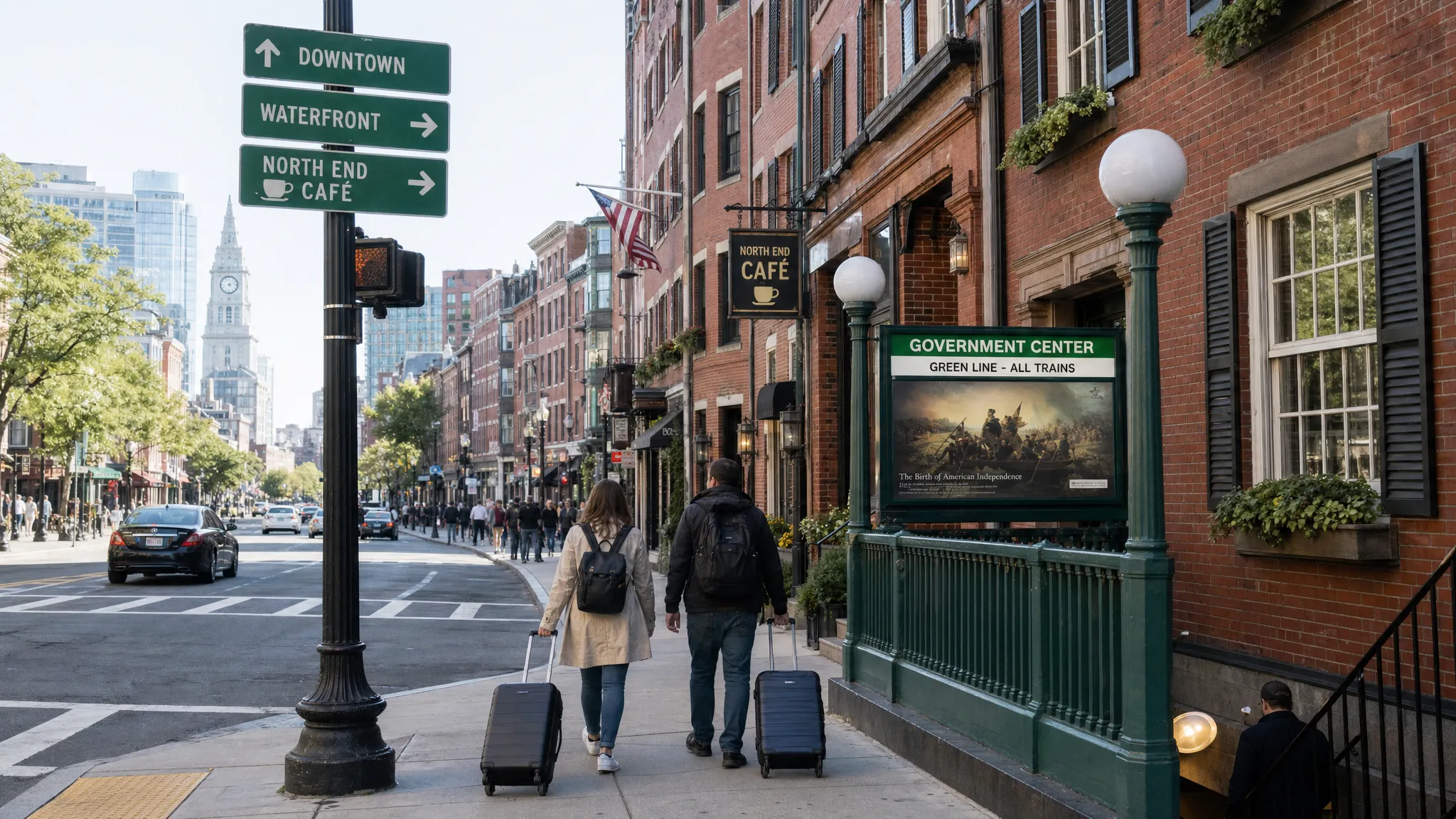
Star ratings can be misleading when searching for cheap hotel rooms in Boston. A three-star hotel in the right location may outperform a four-star hotel that charges for amenities you will not use. A compact boutique property can feel better than a bigger chain if your trip is built around restaurants and walking. A full-service hotel can be worth it for business travel if it reduces friction, but wasteful for a solo weekend traveler who only needs a quiet, clean base.
The right category depends on what you are buying: space, service, location, predictability, or atmosphere. Most booking regrets happen when travelers think they are buying one thing and pay for another.
| Hotel category | What you are usually paying for | Best for | Common booking trap |
|---|---|---|---|
| Compact central hotel | Location over room size | Short stays, solo travelers, train arrivals | Expecting large rooms at budget prices |
| Boutique neighborhood hotel | Atmosphere and local feel | Couples, repeat visitors, restaurant-focused trips | Ignoring transit distance or room layout |
| Business hotel | Predictability and workday convenience | Meetings, conferences, weekday travel | Paying weekday surge rates when location is not needed |
| Airport hotel | Flight access and possible parking value | Early departures, late arrivals, drivers | Underestimating trips into the city |
| Premium full-service hotel | Space, service, views, amenities | Special occasions, longer stays, less mobile travelers | Paying for amenities you will not use |
This is where “cheap” becomes personal. A business traveler with two meetings downtown may get better value from a higher nightly rate near the office because it protects time and avoids rides. A couple spending the weekend wandering bakeries, galleries, and restaurants may feel richer in a small South End room than in a larger hotel beside a highway. A family may need space more than location, but only if the transit plan does not exhaust everyone.
Boston’s most common overpayment is not luxury. It is convenience that does not match the itinerary.
Back Bay can be worth its premium if you want classic Boston, shopping, Copley, easy transit, and walkable evenings. It becomes less sensible if you only booked it because the name sounded central. Downtown can be a better value for train arrivals and short sightseeing, while South End can offer a more atmospheric stay if you do not mind planning your transit more carefully.
The Seaport is another value puzzle. It is excellent if your conference, office, or event is there. It can be frustrating if you booked it for a general Boston vacation and then spend each day crossing into older neighborhoods. Modern hotels, skyline views, and water proximity feel good, but the surrounding dining and parking costs can make a supposedly simple trip expensive.
Cambridge and Somerville can feel more local and intellectually alive, with cafés, campuses, bookstores, river walks, and a different tempo from downtown Boston. They are smart for Harvard, MIT, Kendall Square, and Red Line access. They are less smart if every plan is in the Seaport, South End, or near the waterfront and you expect rides to be quick at peak times.
Fenway and Brookline are strong choices for medical visits, university trips, baseball, concerts, and travelers who like a neighborhood with students, parks, and casual food. But event nights change the math. A room that looks reasonable on a quiet winter weekday may jump dramatically when the ballpark or nearby venues are active.
The airport edge, including Logan-adjacent areas, Chelsea, Revere, and East Boston, is where deal hunters often find lower rates. The decision is honest only if you calculate the daily cost of reaching your actual plans. If you are in Boston for one dinner and an early flight, it can be perfect. If you are in town for museums, shopping, and late nights, it can slowly tax your time and patience.
Boston has pricing seasons with distinct personalities. Winter, especially outside major event periods, is often when value travelers find the most breathing room. The city is colder and darker, but restaurants are easier to book, sidewalks are less crowded, and central rooms can become more realistic.
Spring brings a different equation. The Boston Marathon period, college visits, and graduation season can make rates rise quickly. May is especially tricky because travelers sometimes underestimate how much university activity affects hotels across Boston, Cambridge, Brookline, and nearby suburbs.
Summer is lively and expensive in a broader leisure-travel way. Families arrive, harbor walks become irresistible, and outdoor dining makes central neighborhoods more desirable. The cheapest room may be farther out, but summer is also when a bad transit choice feels most punishing after long hot days.
Fall is Boston at its most atmospheric and sometimes at its least forgiving for bargain hunters. Foliage trips, parents’ weekends, conventions, and strong leisure demand can all overlap. If you are searching in September or October, flexibility matters. Shifting from Friday-Sunday to Sunday-Tuesday, or from Back Bay to a transit-connected neighborhood, can change the value equation.
Weekday versus weekend matters too. Business districts may price high Tuesday through Thursday and soften on some weekends. Leisure-heavy areas can do the opposite. Before assuming one neighborhood is always expensive, compare your exact dates. Boston does not have one hotel market. It has several, and they move differently.
Premium upgrades are not bad. Unexamined upgrades are bad.
A larger room can be worth it for families, longer stays, or travelers who need to work from the hotel. Flexible cancellation can be worth paying for during winter weather, uncertain business schedules, or multi-city trips. A late checkout can be worthwhile if you have an evening flight and no place to store luggage comfortably.
Other upgrades deserve skepticism. A city view may be less meaningful in Boston than in a skyline-focused destination, especially if you plan to be out most of the day. A breakfast package may be convenient, but Boston has enough cafés and bakeries that paying per person at the hotel is not always the best value. A harbor view can be beautiful, but only if the room category clearly defines what you are getting.
| Upgrade | Usually worth it when | Usually skip it when |
|---|---|---|
| Flexible cancellation | Weather, work, or flight plans may change | Your dates are fixed and savings are meaningful |
| Larger room | You are traveling with family or staying several nights | You will use the room only for sleep |
| Breakfast included | It is clearly included in the total and saves time | It is a costly add-on and cafés are nearby |
| Harbor or city view | The view is central to the trip and clearly described | The wording is vague or the stay is short |
| Late checkout | Your departure is late and luggage storage is inconvenient | You can store bags or leave early |
| Parking package | You truly need a car every day | You can use transit, walk, or arrive by train |
The most confident Boston bookings usually involve saying no to something. No to a car if you are staying central. No to a view if the trip is restaurant-focused. No to the cheapest room if it turns every outing into a transfer. No to a famous neighborhood if a nearby less-famous one fits your plans better.
Before you book, pause for five minutes and rebuild the trip from the ground up. Picture arrival, first morning, busiest day, late-night return, and departure. Then ask whether the hotel supports those moments or complicates them.
A room is a good deal if it keeps the trip simple at the final price shown. It is a weak deal if it forces you to spend the savings on rides, parking, breakfast, or stress.
Use this short confidence checklist before committing:
This is also where a cleaner booking flow helps. When rates, taxes, terms, and room options are easier to compare, travelers make fewer emotional mistakes. Boston rewards calm booking because the city’s value is often hidden one block, one transit stop, or one fee line away.
What is the best area for cheap hotel rooms in Boston? Downtown, the Theatre District, South End, Fenway, Cambridge, and airport-adjacent areas can all offer value, but the best choice depends on your itinerary. Downtown is strong for short sightseeing, South End for atmosphere, Cambridge for university and Red Line access, and airport areas for early flights.
Are airport hotels near Boston actually cheaper? They can be cheaper on the nightly rate, especially when central hotels surge, but they are not always cheaper overall. Add the cost and time of getting into Boston, check shuttle details if relevant, and compare parking terms before deciding.
Is Back Bay worth paying more for? Back Bay can be worth it for first-time visitors, couples, shoppers, and travelers who want classic Boston walkability. It is less worth it if your plans are mostly in the Seaport, Cambridge, or near Logan.
What hidden costs should I check before booking a Boston hotel? Look for parking charges, breakfast pricing, local taxes, destination or amenity fees, cancellation penalties, early check-in fees, late checkout fees, and vague paid upgrades such as “city view” or “harbor area.”
When is the cheapest time to book Boston hotels? Winter often brings better value outside major events. Spring graduations, marathon dates, summer leisure travel, fall weekends, and convention periods can raise prices sharply. Always compare exact dates rather than relying on seasonal assumptions.
How can I tell if a cheap Boston room is good value? A good-value room has a fair final total, a location that supports your plans, clear terms, acceptable room size, manageable noise risk, and no major transport penalty. The lowest rate is not always the best deal.
Cheap Boston stays are not about beating the city. They are about choosing it accurately. If you know when to pay for location, when to trade glamour for transit access, and when a fee turns a bargain into a mistake, you can book with far more confidence.
InnRox is built for travelers who want clear hotel choices, upfront final pricing, fast reservations, and fewer distractions during the booking process. Start your Boston search on InnRox, compare the total cost carefully, and choose the room that fits the trip you are actually taking, not just the lowest number on the screen.
Tags