
Copyright © 2026 Innrox, Inc., an Innrox Group company. All rights reserved.

InnRox
Travel Experts
June 12, 2026
22 min read
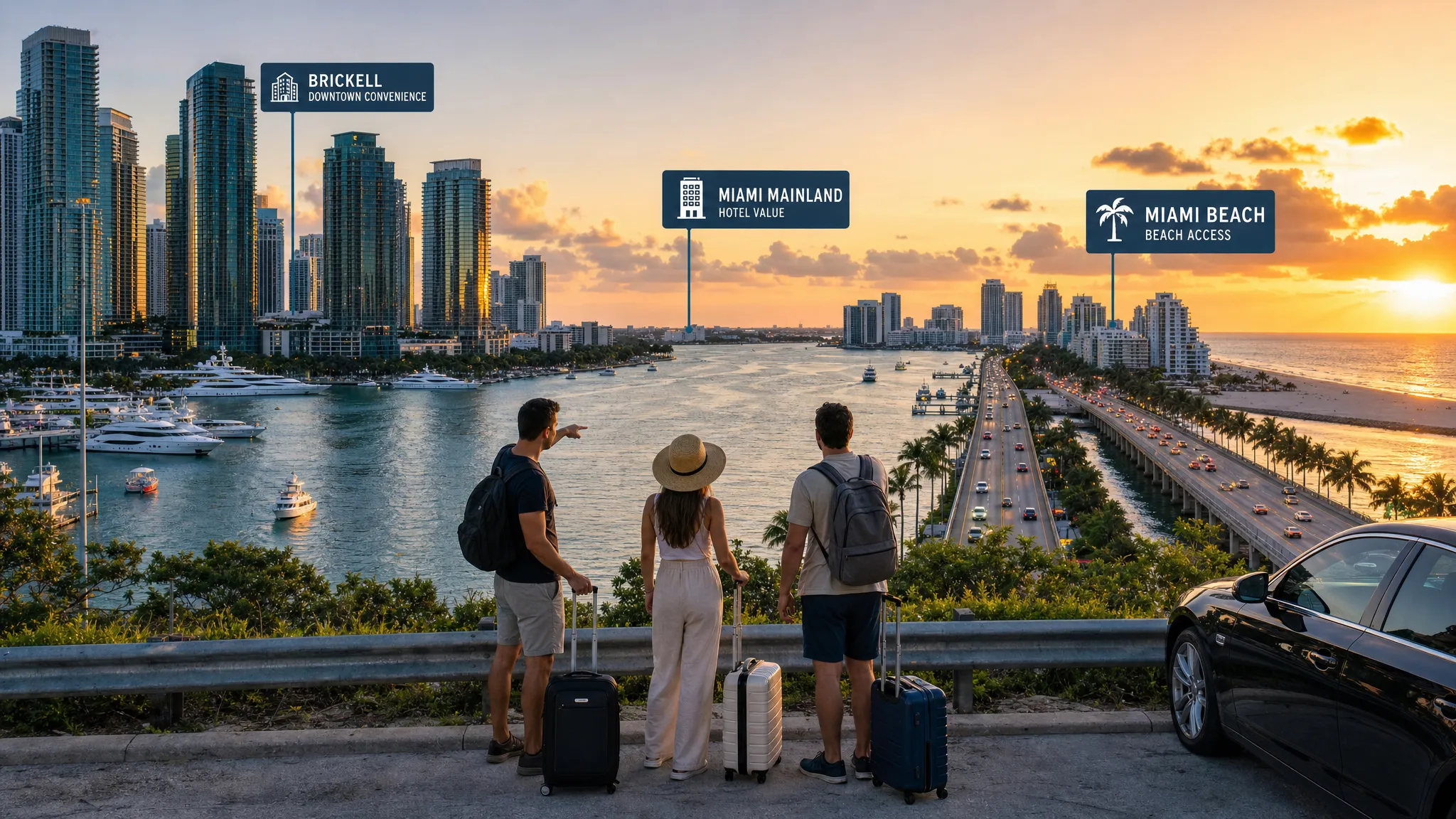
The first thing Miami does is confuse your sense of distance. From the plane window, the city looks stitched together by water: Biscayne Bay flashing silver, bridges pulling the mainland toward the beaches, glass towers rising from Brickell, cruise ships near Downtown, and the long pale ribbon of Miami Beach waiting beyond the causeways.
Then you open a hotel map and the choices blur. A “Miami hotel” might mean a beachfront resort with a resort fee and valet parking, a business tower near the Metromover, a design-forward stay near Wynwood galleries, a leafy Coconut Grove hotel made for long breakfasts, or an airport property that saves a 6 a.m. flight from becoming a nightmare. Booking Miami well is not about finding the most famous address. It is about matching the neighborhood to the trip you are actually taking.
That distinction matters because Miami is a city where the cheapest room can become expensive quickly. Parking, resort fees, beach chairs, breakfast, rideshares across the causeway, early check-in charges, and seasonal surge pricing can quietly change the math. A hotel that looks like a deal in the wrong area may cost more than a higher nightly rate in the right one.
Miami rewards travelers who think in zones. South Beach is not Brickell. Mid-Beach is not Downtown. Coconut Grove feels like a different city from Wynwood after midnight. Even two hotels with similar ratings can produce completely different trips because your real costs depend on where you wake up, how you move, and what you want to do after dinner.
Here is the practical version before we go deeper.
| Trip style | Best area to consider | Strong alternative | Watch for |
|---|---|---|---|
| First-time Miami weekend | South Beach or Mid-Beach | Downtown waterfront | Resort fees, parking, beach chair costs |
| Business trip | Brickell or Downtown | Airport or Doral | Valet parking, breakfast pricing, weekday rates |
| Nightlife-focused stay | South Beach, Wynwood, Brickell | Downtown | Late-night rideshare surge, noise, minimum-stay rules |
| Romantic escape | Mid-Beach, Coconut Grove, Surfside | South of Fifth | View upgrade traps, spa access fees, resort charges |
| Family trip | Mid-Beach, Coconut Grove, Coral Gables | Airport west for road access | Breakfast costs, room size, parking, pool access |
| Cruise pre-night | Downtown or Brickell | Airport if arriving late | Port transfers, early check-in, luggage storage |
| Short layover | Airport area | Downtown if time allows | Shuttle hours, parking, food options |
| Value-focused city break | Downtown, Coconut Grove, Coral Gables | North Beach | Transport costs, distance from beach or nightlife |
The trick is not to ask, “Where is the best area in Miami?” The better question is, “What kind of Miami do I want to pay for?”
South Beach is the Miami most visitors imagine before they arrive: pastel buildings, palms bending over Collins Avenue, music slipping out of hotel lobbies, morning joggers on the Beachwalk, and restaurants filling before sunset. If you want to walk from hotel to beach to dinner to drinks without negotiating a car, South Beach still makes sense.
But it is also where travelers most often overpay for the wrong reasons. Oceanfront convenience is valuable if you plan to spend real time on the sand. It is less valuable if you are using the hotel as a crash pad between neighborhoods. A hotel one or two blocks inland can sometimes offer better total value, especially if you do not need beach service, a large pool deck, or a balcony.
The biggest South Beach tradeoff is atmosphere versus sleep. Ocean Drive and nearby nightlife blocks can be fun, loud, and expensive after dark. Collins Avenue can feel more hotel-focused, while the quieter southern edge near South of Fifth offers a calmer, more polished stay with easier walks to the beach and dining. If your trip is romantic, choose calm over proximity to late-night crowds. If your trip is a high-energy weekend, paying more for walkability may save you from repeated rideshares and surge pricing.
Beachfront hotels can add resort or destination fees that cover amenities you may or may not use. Always check whether the fee includes beach chairs, towels, fitness access, bottled water, local calls, or credits. “Beach access” does not always mean umbrellas, extra chairs, cabanas, or premium loungers are included. Parking is another major cost. Many Miami Beach hotels rely on valet, and daily charges can be high enough to make a rental car feel wasteful if you are staying mostly in South Beach.
If your ideal Miami weekend is literary lobby, Art Deco streets, and a central South Beach base, compare availability for The Betsy South Beach. If you want a larger classic beachfront setup closer to the convention center and Lincoln Road, look at Loews Miami Beach Hotel and compare the total price carefully, including any fees and parking.
For South Beach upgrades, be skeptical of vague view language. A “city view” may mean rooftops and alley light. A “partial ocean view” can mean an angled glimpse between buildings. Oceanfront or direct ocean-view rooms are most worth it when you plan to slow down: breakfast on the balcony, afternoon downtime, early nights, or a romantic trip where the room is part of the experience. If you will be out until 2 a.m., spend the money on location instead.
South Beach is also seasonal in personality. Winter and early spring bring better weather, higher rates, and a more international resort feel. March can bring spring-break energy in certain blocks. Summer is cheaper but humid, stormy, and slower during weekdays, which can be good value for flexible travelers who want pools, restaurants, and lower room rates without expecting perfect beach weather every hour.
Move north from South Beach and Miami changes rhythm. Mid-Beach feels more resort-driven, with wider hotel footprints, bigger pools, and a stronger “stay on property” mentality. Surfside and Bal Harbour are quieter and more residential, with a polished coastal feel and fewer reasons to leave on foot after dinner.
This is where the classic beach resort versus city hotel question becomes important. A beach resort can be worth the premium if you want the hotel to carry the trip: pool, beach service, oceanfront breakfast, spa, lounge areas, and less daily planning. It is less convincing if your itinerary is full of Wynwood, Little Havana, Design District, Downtown dining, or business meetings. In that case, you may pay resort prices while still paying to leave the resort every day.
The hidden costs here are less accidental and more structural. Resort fees, valet parking, breakfast, spa access, cabanas, umbrellas, and premium pool seating can all change the final bill. Some resorts also charge for early check-in, late checkout, package handling, or extra guests in ways that surprise travelers who only compared nightly rates.
If your Miami trip is built around sand, pool decks, and a big-name beachfront stay, you can compare Fontainebleau Miami Beach as a reference point for large-scale resort energy. For a softer, garden-and-beach atmosphere, check The Palms Hotel & Spa and compare what is actually included in the room rate.
Families often do better in Mid-Beach than South Beach because the atmosphere is calmer and the hotel footprints can be more spacious. But families should calculate breakfast carefully. A room that is $40 cheaper per night can lose the advantage quickly if breakfast is expensive for multiple people and there is no convenient alternative nearby.
Couples should ask a different question: will the resort encourage you to stay put? If yes, paying for a better pool, quieter beachfront, and a more comfortable room can be worthwhile. If the plan is to chase restaurants and nightlife across town, a resort premium may be marketing gloss rather than real value.
Brickell is Miami’s vertical city. In the morning, it smells faintly of espresso and warm pavement. At lunch, office workers move between towers and shaded patios. At night, rooftop bars and restaurants glow above the traffic. For business travelers, conference attendees, and travelers who prefer modern hotels over beach resorts, Brickell can be the smartest base in Miami.
The main advantage is efficiency. Brickell puts you near offices, dining, Downtown, and transit connections. You can reach Miami International Airport more easily than from Miami Beach, and the free Metromover helps with short hops around the urban core. If your meetings are on the mainland, staying on the beach can turn every day into a causeway calculation.
Brickell is also a good choice for travelers who want Miami without sand in the room. You trade beachfront mornings for skyline views, cocktail bars, shopping, and a less tourist-heavy daily rhythm. The downside is that you are not casually walking to the ocean. If your idea of Miami requires morning swims, Brickell will make you schedule the beach rather than live beside it.
For modern city energy and a central Brickell base, compare EAST Miami. For a practical downtown-adjacent stay that still keeps you close to waterfront walks and event venues, you can also review Kimpton EPIC Hotel and weigh location against total nightly cost.
Brickell’s hidden costs are different from Miami Beach’s. You may avoid resort-style beach fees, but valet parking can still be steep, and breakfast in business hotels can add up quickly. Lounge access is worth paying for only if you will use it daily for breakfast, work breaks, or evening snacks. If meetings start early and dinners are planned elsewhere, a lounge upgrade may become an expensive room key accessory.
Weekday pricing can spike when business demand is strong, while some weekends can be surprisingly competitive unless major events are in town. That makes Brickell a useful area to check if South Beach weekend rates look inflated. For a couple who wants restaurants and nightlife without beach crowds, Brickell can feel more adult and less chaotic than the most tourist-heavy parts of Miami Beach.
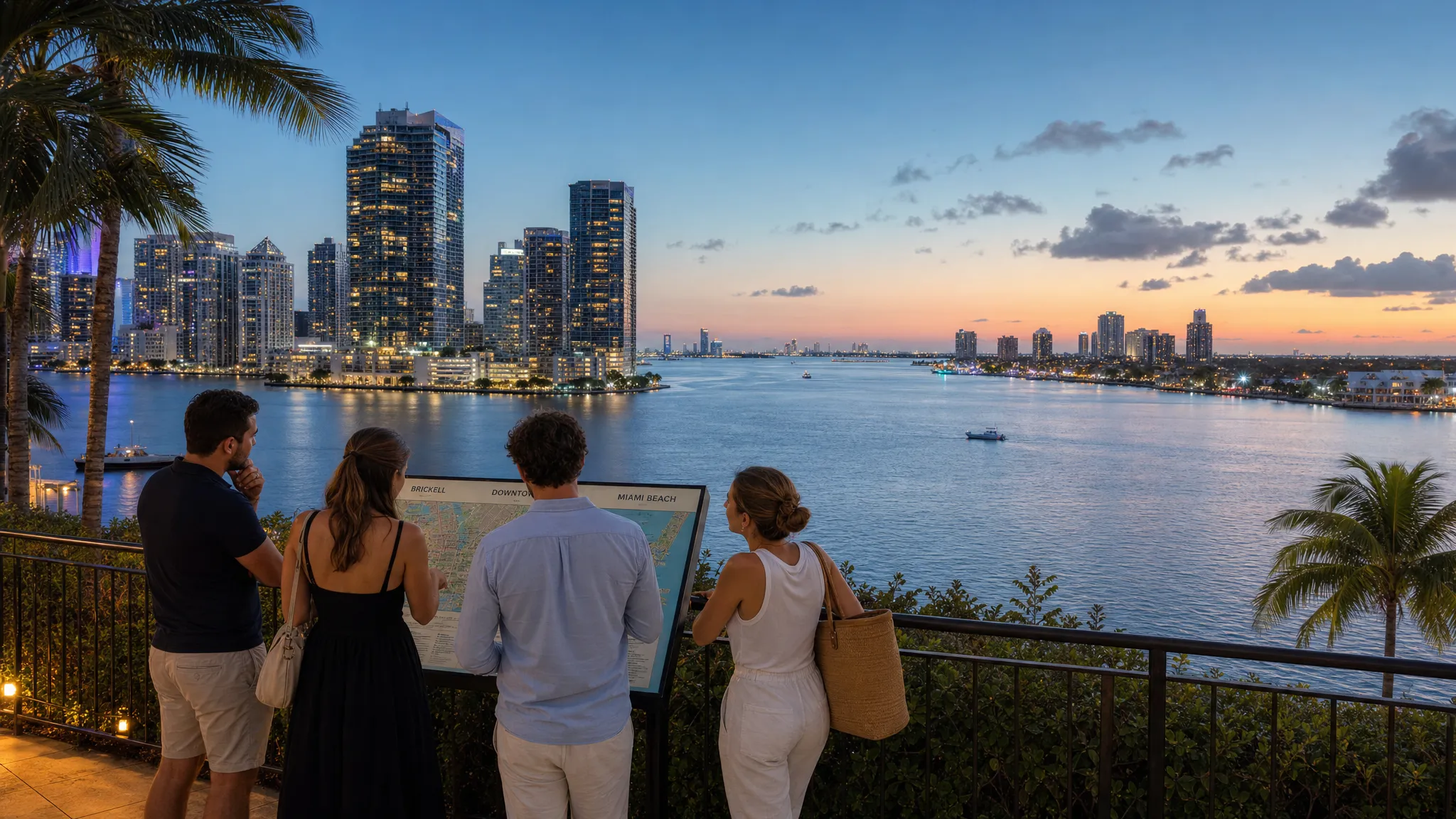
Downtown Miami is often misunderstood by leisure travelers. It is not as polished as Brickell and not as postcard-simple as South Beach, but it can be extremely practical. If you are arriving before a cruise, attending an arena event, visiting museums, or staying one night before moving on, Downtown can save time and reduce friction.
The key comparison is Downtown versus Brickell. Brickell usually feels sleeker and more restaurant-driven. Downtown can be better for port access, waterfront parks, event venues, and certain short stays. If you are in Miami for one night before a cruise, staying near the port area may be worth more than paying for a beach hotel you will barely use.
For cruise travelers, the room rate is only part of the calculation. Look at luggage storage, early check-in policies, taxi or rideshare costs to the port, and breakfast timing. If your flight lands early and the hotel charges for early check-in or cannot store bags conveniently, a cheaper room can become an inconvenient wait.
For a waterfront Downtown classic, compare InterContinental Miami. If you prefer a newer apartment-style feel near entertainment and longer-stay flexibility, review The Elser Hotel Miami and check room details, cancellation rules, and any cleaning or amenity-related fees before booking.
Downtown can offer good value when travelers understand its rhythm. Some blocks feel lively during events and quiet afterward. Walkability depends heavily on your exact address, not just the neighborhood name. A hotel that looks central on the map may still require rideshares at night if your restaurant, venue, or waterfront plan is farther than expected.
This is also where “bay view” upgrades can be worth considering, but only if clearly defined. A high, unobstructed Biscayne Bay view can change the feel of a short stay. A generic “city view” may not. If you are arriving late and leaving early, skip the view and buy convenience instead.
Wynwood is not the old beach fantasy. It is murals, warehouses, breweries, galleries, late dinners, loud sidewalks, and travelers who prefer texture to polish. The nearby Design District is more curated, with luxury retail, architecture, restaurants, and a cleaner-edged version of Miami style.
Staying here can make sense if your itinerary is built around food, art, nightlife, and exploring beyond the obvious. It is less ideal if you want a beach vacation or a restful family base. Hotel inventory is more limited than in South Beach, Brickell, or Downtown, so travelers often choose between staying nearby or staying in Brickell and riding over.
That choice is mostly about timing. If you expect late nights in Wynwood, staying close can reduce late-night transportation costs and make the trip feel easier. If Wynwood is one afternoon on a broader Miami itinerary, Brickell or Downtown may be more practical. Do not pay a premium for “near Wynwood” unless you are actually using the neighborhood after dark.
The booking pitfall here is aesthetics over logistics. A stylish hotel can photograph well but still leave you spending on rideshares for beach days, airport transfers, and dinners in other parts of town. Check whether the hotel has parking, whether you need a car, and how comfortable the surrounding blocks feel for your plans at night.
Wynwood and the Design District are excellent for travelers who have already done South Beach or who want a Miami trip shaped by restaurants, galleries, and neighborhood wandering. First-timers with only two nights should be honest: if the beach is still the emotional reason for the trip, stay near the beach and visit Wynwood rather than reversing the priorities.
Coconut Grove is Miami under banyan trees. It is green, humid, and slower, with marinas, sidewalk cafés, old stone walls, and a village-like atmosphere that feels far from the glossy beachfront sales pitch. Coral Gables is more ordered and elegant, with broad boulevards, Mediterranean-style architecture, business travel pockets, and a calmer dining scene.
These areas are ideal for travelers who want Miami to feel lived-in rather than consumed. Couples who prefer long meals to club lines, families who want quieter evenings, and business travelers with meetings south of Downtown may find better value here than in South Beach. You give up immediate beach access, but you gain atmosphere, calmer nights, and often a more comfortable sense of place.
The main comparison is affordable authenticity versus expensive convenience. South Beach gives you instant beach and nightlife, but charges for it. Coconut Grove and Coral Gables may require rideshares or a car for certain plans, but they can deliver a more relaxed trip with fewer tourist-pressure moments. If your itinerary includes Vizcaya, Coral Gables, Coconut Grove restaurants, Key Biscayne, or meetings in the southern metro area, staying here can be more logical than forcing every day through Miami Beach traffic.
For a romantic Grove stay with a polished neighborhood feel, compare Mr. C Miami Coconut Grove. For a distinctive, design-forward option surrounded by the Grove’s greenery, review Mayfair House Hotel %26 Garden and pay close attention to fee details, parking, and room category descriptions.
Premium upgrades in the Grove are usually more about space, terrace, and ambiance than iconic views. A larger room or balcony can be worthwhile for couples and families who plan to spend downtime at the hotel. A vague view upgrade is less compelling if the view is mostly neighborhood greenery or adjacent buildings.
Coconut Grove can be underrated for longer stays because it gives you somewhere pleasant to return to after exploring. The tradeoff is transportation. If you are planning nightly South Beach dinners, the charm fades when you are repeatedly crossing town. Choose the Grove because you want the Grove, not because it looked cheaper on the map.
Airport hotels are rarely romantic, but they are often rational. If you land late, leave early, have meetings near Doral, or plan to drive to the Everglades, the Keys, or suburban business parks, staying west of the city can save time and stress. The mistake is treating airport-area hotels as automatically cheaper. Sometimes they are. Sometimes the savings disappear through rental car costs, parking, and the fact that you still want to spend every evening elsewhere.
The airport area works best when convenience is the purpose of the stay. A one-night layover, an early departure, a business meeting nearby, or a road-trip launch can justify choosing function over atmosphere. For a beach vacation, it usually feels like compromise from the first morning.
Shuttle details matter. Not every hotel shuttle runs 24 hours, and some require advance contact or have limited pickup points. If you land after midnight, confirm the actual process before booking. Paying less for a hotel and then waiting too long for transportation is not a good start to a short trip.
Doral can make sense for business travelers, golf trips, and travelers who want parking and road access. It does not make sense for someone who wants walkable Miami nightlife. If you are comparing a Doral rate with a Brickell or Beach rate, include the cost of rideshares, tolls, parking, and the time value of sitting in traffic.
Miami hotel prices are not only about location. They are about timing, fees, and how aggressively the city fills during certain periods. A room that seems overpriced in August may look normal in February. A weekday rate in Brickell can behave differently from a weekend rate in South Beach. Event weeks can make ordinary hotels feel suddenly premium.
The major cost categories are predictable, but easy to ignore when you are excited by a low nightly rate.
| Cost to check | Where it matters most | Why it changes the value |
|---|---|---|
| Resort or destination fee | Miami Beach, some Downtown luxury hotels | May add amenities you do not use |
| Valet or self-parking | Miami Beach, Brickell, Downtown | Can erase savings from a cheaper room |
| Breakfast | Resorts, business hotels, family trips | Per-person pricing adds up fast |
| Beach chairs and umbrellas | Beachfront and near-beach hotels | Access may not include comfort items |
| Airport transfers | Miami Beach, Surfside, Bal Harbour | Distance and traffic affect rideshare costs |
| Early check-in or late checkout | Short stays, cruise trips, red-eye flights | Timing mismatch can create extra charges |
| Spa or pool access | Resorts and luxury hotels | Facilities may be limited or fee-based |
| View upgrades | Beach and bay hotels | Wording can be vague or misleading |
The most common waste is paying for two forms of convenience at once. Travelers rent a car, then pay expensive valet at a walkable beach hotel. Or they book an oceanfront resort, then spend the entire trip exploring mainland neighborhoods. Or they choose a far cheaper hotel west of the airport, then spend the savings on rideshares into Miami every night.
Good Miami booking is about refusing to pay twice.
From roughly December through April, Miami’s weather is the product everyone wants to buy. Rates rise, beach hotels fill, and the city feels bright, international, and busy. This is when location mistakes are expensive because switching plans or extending a stay can cost more.
Spring brings event energy and, in some periods, younger party crowds. If you want calm, check the exact dates and avoid the loudest blocks of South Beach. If you want nightlife, this can be the right atmosphere, but do not expect bargain pricing near the action.
Summer and early fall often bring lower rates, humidity, afternoon storms, and a slower resort rhythm. This can be excellent value for travelers who want pools, dining, and flexible schedules. It is less ideal for visitors who expect uninterrupted beach days or dislike heat. Hurricane season also means cancellation flexibility matters more. A slightly higher flexible rate can be smarter than a rigid bargain if weather disrupts flights.
Event periods can distort everything. Art fairs, music festivals, boat shows, major sports weekends, cruise peaks, and holiday weeks can make one neighborhood spike while another remains comparatively reasonable. If South Beach looks irrationally expensive, compare Brickell, Downtown, Coconut Grove, or Coral Gables before assuming the entire city is out of reach.
Miami sells upgrades beautifully. Ocean view. Bay view. Poolside. Club level. Resort credit. Cabana. Late checkout. Some are worth it. Others are expensive adjectives.
| Upgrade | Usually worth it when | Often not worth it when |
|---|---|---|
| Direct ocean view | You will spend real daytime hours in the room | You arrive late and leave early |
| Balcony | Romantic trip, family downtime, longer stay | Nightlife trip with little room time |
| Breakfast included | Family trip or resort stay with limited nearby options | You prefer cafés or have early meetings |
| Club or lounge access | You will use breakfast, snacks, and workspace daily | Your schedule keeps you out all day |
| Late checkout | Red-eye flight, cruise timing, beach day | You have morning plans elsewhere |
| Resort credit | It applies to things you would buy anyway | It excludes tax, gratuity, or key services |
| Spa access | Wellness trip with time to use facilities | Access is limited or treatment-only |
The best Miami upgrade is often not the fanciest room. It is the feature that reduces friction. For a family, that may be breakfast. For a couple, it may be a balcony. For a business traveler, it may be location near meetings. For a cruise traveler, it may be luggage storage and checkout timing.
Before you book, write down the three places you will visit most. Not the places you might visit if there is time, but the places that define the trip. If two of them are on the beach, stay beachside. If two are in Brickell, Downtown, Wynwood, or Coral Gables, the mainland may be smarter. If your main priority is an early flight, do not pretend a beach hotel will make the morning easier.
Next, compare the final stay cost, not the nightly rate. Add room price, taxes, required fees, parking, breakfast, likely rideshares, and any beach or resort extras. Then compare that number against the better-located option. Miami often reveals that the “expensive” hotel was actually the cleaner decision.
Finally, read room category language with suspicion. “Near beach” can mean a meaningful walk in heat. “Partial ocean view” can mean a sliver. “City view” can face another tower. “Resort fee includes beach access” may not include umbrellas or premium seating. “Free shuttle” may not run when you need it.
Booking Miami well is not about avoiding luxury. It is about paying for luxury only when it supports the trip.
What is the best area to stay in Miami for first-time visitors? South Beach is the easiest choice for first-time visitors who want beach access, nightlife, restaurants, and walkability. Brickell is better if you prefer modern city energy, dining, and easier mainland transportation.
Is it better to stay in Miami Beach or Downtown Miami? Stay in Miami Beach if the beach is central to your trip. Stay Downtown or Brickell if you are cruising, attending events, traveling for business, or planning to explore multiple mainland neighborhoods.
Where should business travelers stay in Miami? Brickell and Downtown are usually the most practical for business travelers with meetings in the urban core. Airport and Doral hotels make sense for early flights, suburban meetings, or road access.
Are Miami resort fees common? Resort and destination fees are common at many beach and upscale properties. Always check what the fee includes, especially beach chairs, umbrellas, fitness access, credits, and pool or spa access.
Do I need a rental car in Miami? Not always. If you stay in South Beach, Brickell, or Downtown and plan mostly local activities, a rental car may create parking costs without much benefit. A car is more useful for suburban meetings, road trips, Key Biscayne, the Everglades, or multi-area itineraries.
When is Miami cheapest to book? Summer and early fall often bring lower hotel rates, though heat, humidity, storms, and hurricane-season flexibility should be considered. Winter and early spring usually bring higher prices and stronger beach demand.
Miami is too varied for one-size-fits-all hotel advice. The right stay depends on whether you want beach mornings, business efficiency, nightlife, calm neighborhoods, cruise convenience, or road access. Once you know your trip style, the smarter booking is the one that shows the real cost clearly.
With InnRox, you can compare hotel rates, see upfront pricing with no hidden fees, find flexible options where available, and book with instant confirmation. Start with the neighborhood that fits your trip, then choose the hotel that keeps the total experience simple, transparent, and worth what you pay.
Tags