

InnRox
Travel Experts
February 11, 2026
11 min read
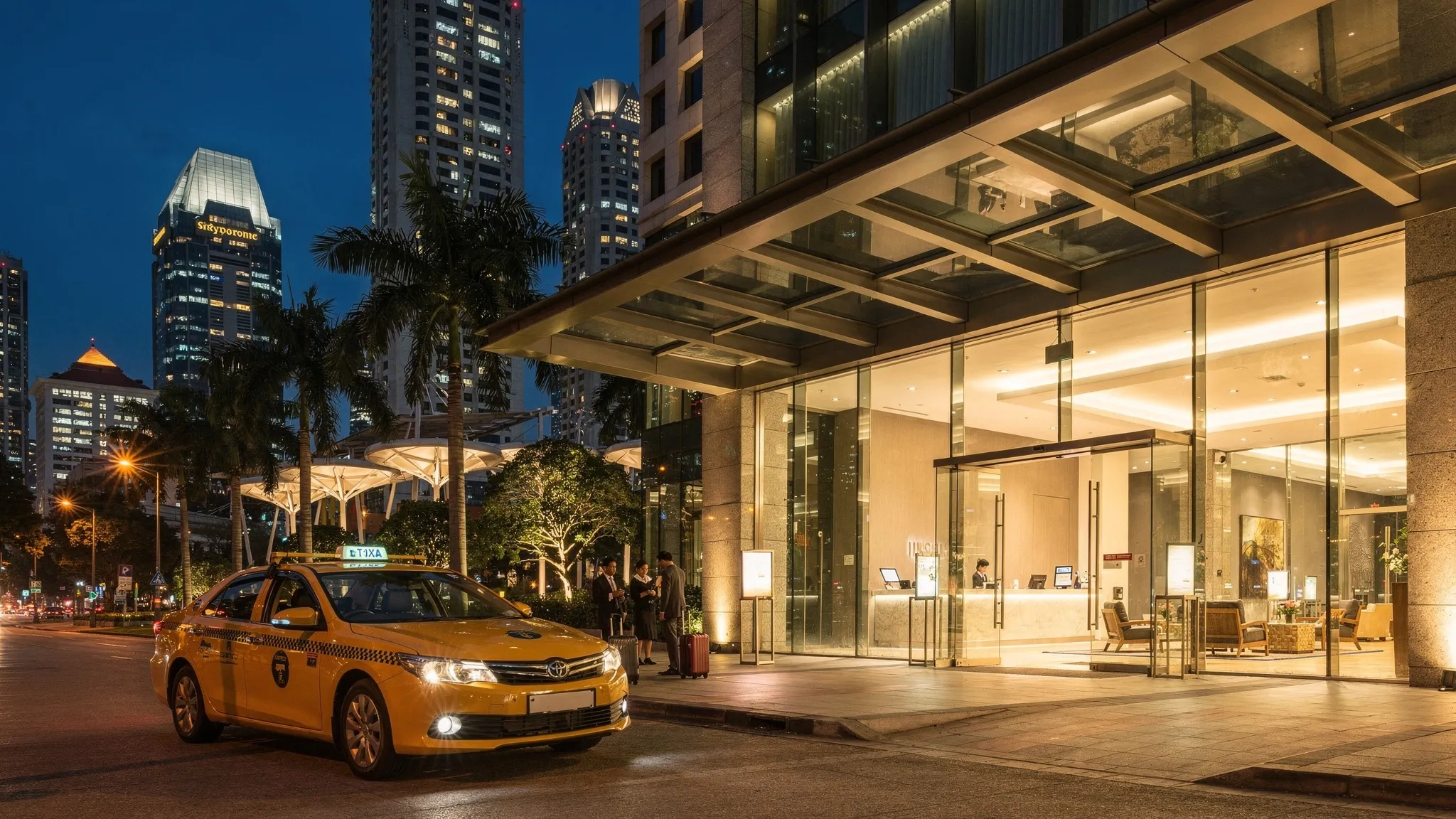
The taxi from Changi felt like a quiet glide through glass and light, expressways curving past palms and mirrored towers. It was after 11 p.m., the hour when business travel stops feeling glamorous and starts feeling like a race against your own fatigue. In the back seat, I did what almost everyone does on a short-notice trip: I opened a meta-search page, typed “Singapore, tonight,” and began a trivago hotel booking comparison with one goal, get a clean room near the CBD before my inbox caught up to me.
The price that grabbed me looked perfect: low, tidy, and confident. Then I clicked through.
At the final step, the total shifted. Not by a dramatic amount, just enough to trigger that specific traveler’s suspicion: Is this still the deal I thought it was, or did I miss something? The city outside was immaculate, but hotel pricing rarely is. Singapore’s nights are too valuable to spend arguing with a checkout page, so I slowed down and double-checked the final price like it was a contract.
This guide is that moment, expanded, so the next time you use Trivago-style comparisons you can confirm the real total, avoid surprise add-ons, and book with confidence.
Price drift is common in hotel booking because the number you see first is often a partial truth. It can be accurate, but only within a specific set of assumptions.
The most common culprits are boring, predictable, and easy to miss when you are booking in a hurry: taxes, mandatory property charges, payment timing, cancellation rules, and currency conversion. Sometimes the hotel is not changing anything at all, it is the booking flow revealing details later than you expected.
Singapore is a great example because it’s a global business hub with a steady churn of conferences, finance traffic, and short layovers. Hotels here are experts at yield management: rates can move quickly based on demand, room category, and restrictions.
Think of this as a traveler’s audit. You are not trying to “game” the price, you are making sure you are comparing like-for-like.
Before you compare anything, freeze these variables:
Exact check-in and check-out dates (watch time zones if you are booking right after midnight)
Number of guests (many properties price per double occupancy, then add for a third)
Bed configuration (queen vs twin can be a different rate)
Room category (a “City View” label can be a paid upgrade)
A surprising number of price differences come from one tab showing “2 adults” while the next tab quietly defaulted to “1 adult.”
If you are viewing prices in USD but paying a provider that charges in SGD (or vice versa), your bank’s exchange rate may become part of the real cost.
Double-check:
The currency displayed on the final checkout page
Whether your card will be charged in local currency or your home currency
Any “conversion service” offered at payment (often called dynamic currency conversion)
If you want clean comparisons, keep everything in one currency while you shop, then decide on the payment currency deliberately.
This is where the practical truth lives. Look specifically for:
Taxes and government charges (included vs added later)
Service charges
Breakfast (included vs paid add-on)
Wi‑Fi (often included now, but not always)
Parking (especially relevant in cities where it is scarce)
If one offer includes breakfast and free cancellation and another doesn’t, the cheaper rate may not be cheaper for your trip.
When you are comparing deals, you are usually comparing risk as much as money.
A non-refundable rate can be legitimately cheaper. A “pay later” rate can be higher because it preserves flexibility. Neither is a trick, but you need to compare them as different products.
Ask two questions:
When do I pay? (now, later, deposit, or at the property)
What happens if my plans change? (free cancellation window, partial penalty, or no refund)
For business travelers, flexibility often has real value. A meeting moves, a flight changes, a client adds a dinner, and suddenly your “perfect” rate is a sunk cost.
Even in cities with strong consumer norms, some charges are collected on-site rather than at booking.
What to look for:
Mandatory property charges (if any)
Deposits or holds at check-in
Extra guest fees
The key is not to assume a checkout total is the only total. Make sure the confirmation text doesn’t hint at amounts due on arrival.
Rates can update during the session if inventory changes, especially for same-night bookings.
A quick final check takes 10 seconds:
Refresh the checkout total
Confirm the room name matches what you intended
Confirm taxes and charges status (included vs excluded)
If the total changed, don’t panic. Go back one step, confirm the same conditions, and compare again.
Here’s a compact way to double-check the final number without turning your booking into a spreadsheet.
| Price component | Why it changes the total | Where to confirm it |
|---|---|---|
| Taxes and government charges | Sometimes excluded from the first price | Checkout breakdown and confirmation summary |
| Service charges | May be shown only near payment | “Price details” or “includes” section |
| Breakfast | Can add meaningful cost in city hotels | Rate inclusions, room plan text |
| Cancellation terms | Flexibility often costs more | Cancellation policy and payment schedule |
| Pay-now vs pay-later | Timing affects cash flow and refundability | Payment terms at checkout |
| Currency conversion | Your bank rate can change the real cost | Payment currency and card statement currency |
By the time the taxi crossed into Marina Bay, the skyline looked like a circuit board: bright lines, controlled energy, money moving invisibly between towers. That is the mood of Singapore on a weekday night, focused, efficient, quietly expensive.
I had two options in front of me.
One rate was lower, but non-refundable and excluded breakfast. The other cost more upfront, but included free cancellation until the day before and kept the payment flexible. On a personal trip, I might have gambled. On a business trip, where schedules shift like tides, the flexible rate was closer to “insurance” than “splurge.”
That is what double-checking the final price really does: it forces you to name what you are buying, not just how much you are paying.
Frequent travelers and business trip planners tend to thrive on systems. The best ones treat booking like an operational workflow: standard inputs, consistent checks, fewer surprises.
If you manage travel on behalf of a team or clients, the same principle applies outside hotels too: reduce back-and-forth, make every step explicit, and keep a single source of truth. Tools like client onboarding software are built around that idea, one clear link, fewer manual steps, and fewer “wait, which version is correct?” moments.
Good booking hygiene is the travel equivalent. It’s not about obsessing over pennies, it’s about removing ambiguity when time is tight.
Singapore also rewards that mindset. The CBD is built for speed: trains run like clockwork, lobbies are designed for flow, and the best stays feel frictionless.
The travelers who enjoy it most are the ones who plan like they mean it.
When you want to sanity-check a hotel total, it helps to use a booking flow that surfaces the final price clearly and early, especially when you are comparing multiple rates quickly.
InnRox Travel is designed around that traveler preference: competitive rates, transparent terms, and fast reservations without unnecessary clutter.
If you’re comparing Singapore options close to the business core, you can start by browsing hotels here:
Tanjong Pagar and the Downtown area can be a sweet spot for business trips: walkable streets, cafés that open early, and a mix of heritage shophouses and modern towers that makes mornings feel less generic.
Bugis and Bras Basah, slightly east, are often underrated for short stays. You get quick MRT access, a more textured street-life scene, and the kind of casual dinner options that make it easier to decompress after meetings.
If your priority is a design-forward stay near the CBD, try a quick rate check for Oasia Hotel Downtown:
Oasia Hotel Downtown Singapore
If you want something lively with a younger, urban feel (and you like being able to step outside into neighborhoods that don’t shut down at 9 p.m.), check rates for Hotel G Singapore:
Beyond the obvious breakdown, there are a few signals that usually indicate you are looking at a complete, comparable total.
First, the language is specific. Instead of vague “fees may apply,” you see concrete inclusions, clear payment timing, and cancellation windows stated in plain terms.
Second, the checkout repeats itself. This is a good thing. A trustworthy booking flow restates the room type, dates, occupancy, and total on the final page so you can catch mismatches before you pay.
Third, the confirmation arrives fast and reads like a receipt, not like a teaser. Instant confirmation is more than convenience, it’s proof that your booking is real-time and your price was captured.
Sometimes you do everything right and the number still doesn’t make sense. When that happens, you want a calm troubleshooting loop.
Start by checking whether you accidentally changed one variable (like breakfast, bed type, or cancellation). Then clear the biggest hidden culprit: currency.
If the checkout still feels unclear, step away from the comparison view and use one clean booking path where the final price is shown upfront. In practice, this reduces the “apples vs oranges” problem and makes it easier to choose confidently.
And if you are booking for work, take screenshots of the final breakdown before purchase. It is a small habit that saves real time later when expense reports and finance teams ask what exactly was included.

Why does the price change after I click through from a trivago hotel booking result? The first price may exclude taxes, service charges, breakfast, or show a different cancellation or payment policy. The checkout page usually reveals the full breakdown.
How can I confirm whether taxes and fees are included in the total? Look for a line that explicitly says “taxes included” (or similar) and review the price breakdown at checkout. If taxes are excluded, the total should show them added as separate items.
Does pay-later always mean the same final price? Not always. Pay-later rates can be higher than pay-now rates because they include more flexibility. Also confirm whether any deposit is required.
What’s the fastest way to compare two hotel offers fairly? Match the same dates, guests, room category, inclusions (especially breakfast), and cancellation policy, then compare totals in the same currency.
If you’re tired of totals changing at the last step, use a booking path built for speed and transparency. InnRox Travel focuses on competitive rates, clear terms, and a simple checkout so you can confirm the real price before you commit.
Browse your next stay and compare options in minutes: