

InnRox
Travel Experts
February 15, 2026
10 min read
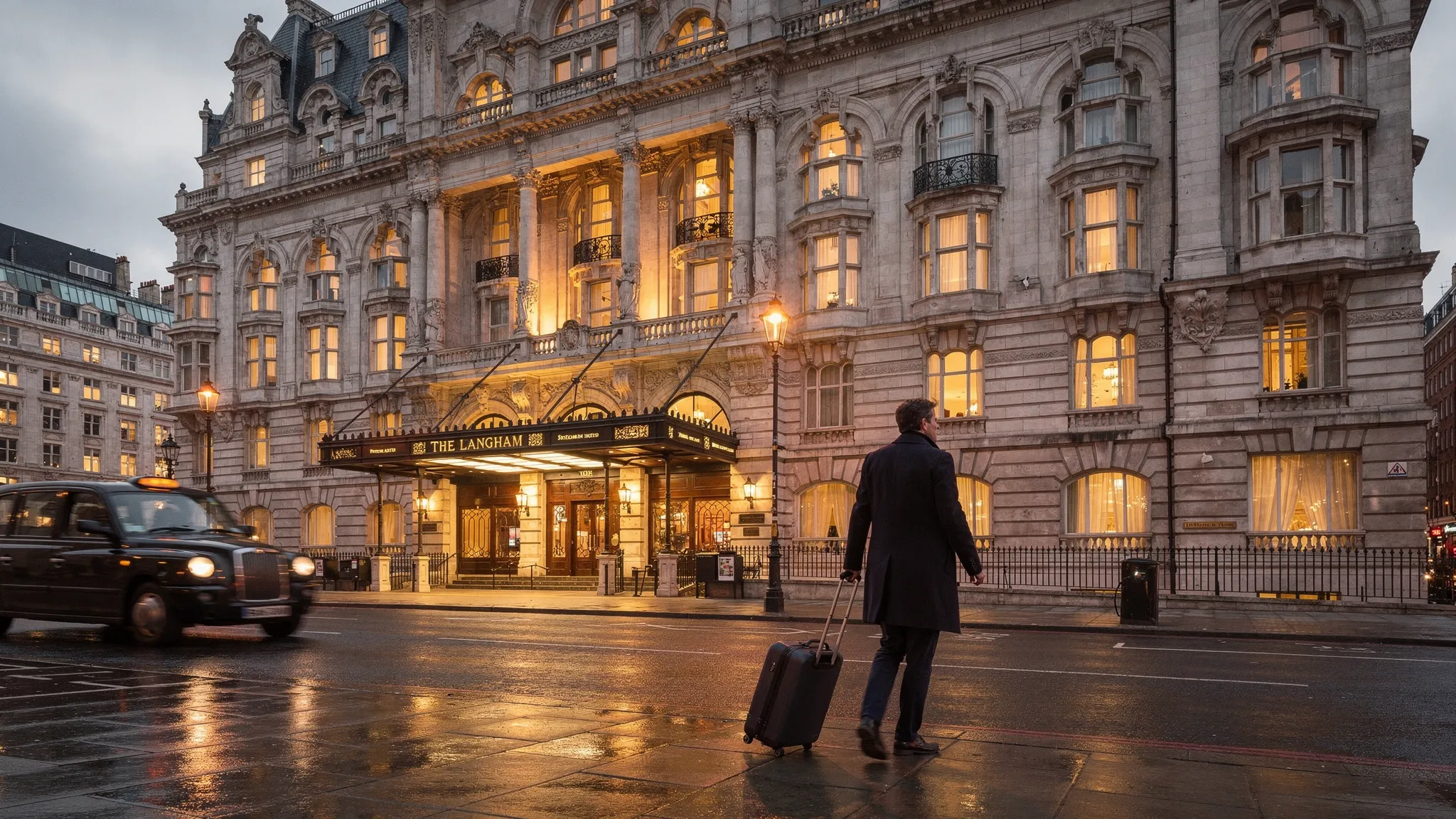
London has a particular sound when you arrive tired. The Tube doors hiss, suitcase wheels chatter over platform tiles, and someone always seems to be late for something. But step out near Regent Street and the city’s tempo starts to change. The crowds thin, the streets widen, the buildings grow calmer and more symmetrical. Then, almost without noticing, you’re standing on Portland Place, where the traffic feels politely distant and the air has that faint scent of stone after rain.
This is the moment when The Langham makes sense, not as a postcard idea of luxury, but as a practical one. Classic hotels are often described in adjectives that do not help you sleep better or check in faster. The Langham’s appeal is that its “classic” qualities translate into perks you can actually feel, in your shoulders, in your schedule, in the way your room behaves when you close the door.
Below is a stay, told from arrival to checkout, with the kinds of details that matter when you are paying for comfort, not just history.
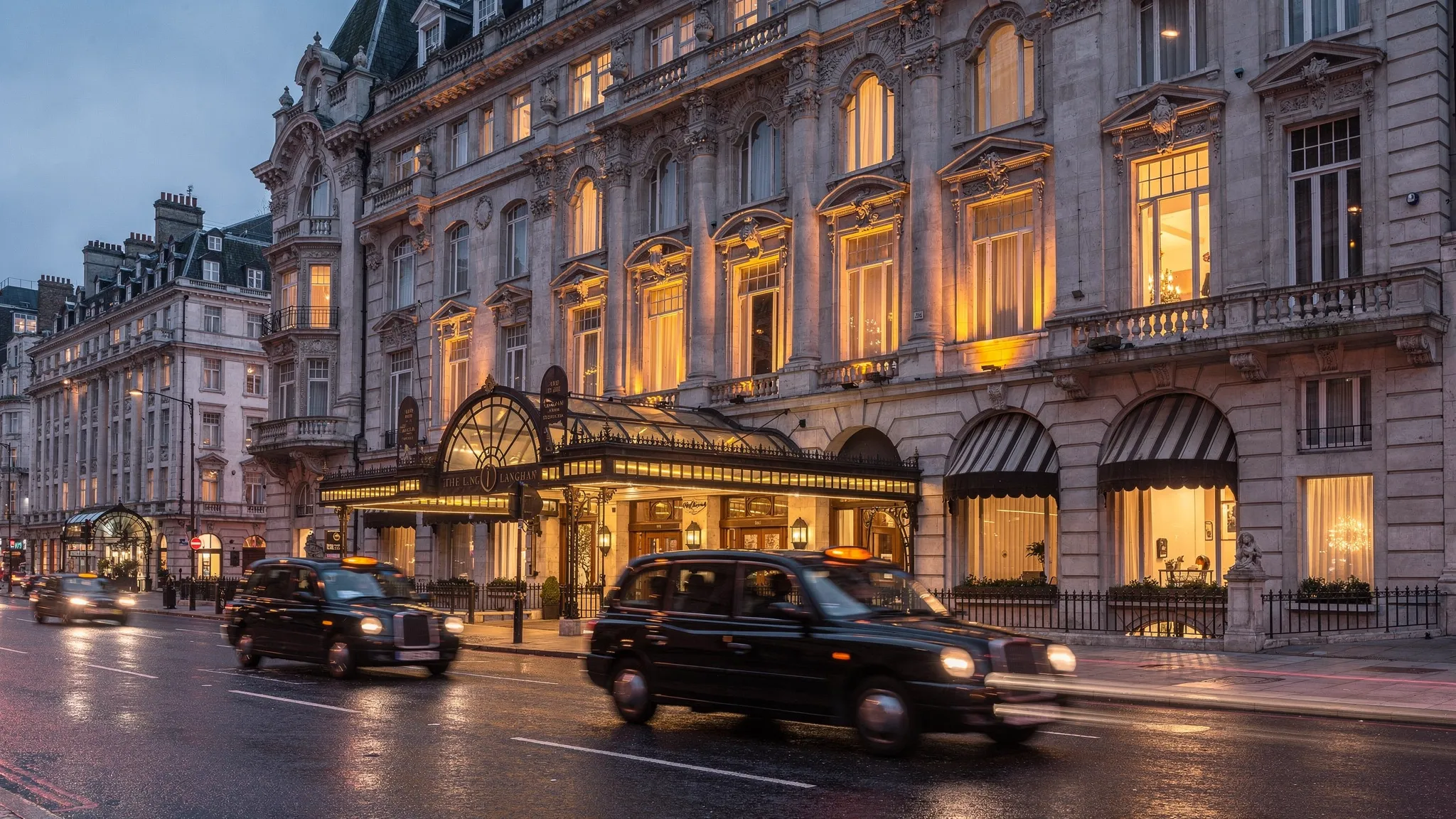
The first noticeable luxury is the buffer. The Langham sits close enough to London’s busiest shopping and theater corridors to be useful, but it is placed just far enough off the busiest corners that you do not feel swallowed by them. That distance is not romantic, it is functional. It’s the difference between stepping outside to chaos and stepping outside to London doing what it does, but at a manageable volume.
Inside, the mood changes again. A heritage property can sometimes feel like a museum, beautiful and slightly stiff. Here, the atmosphere tends to read more like an inhabited salon: polished surfaces, warm lighting, muted conversation, the quiet choreography of people who have done this a thousand times.
If you are arriving from a long flight or a day of meetings, this “soft landing” is the first perk you notice because your brain stops scanning for friction.
Some hotels treat check-in like a gate you must pass through. The better ones treat it like a handoff. At The Langham, the experience is typically designed to feel like you are being received, not processed.
What counts here is not the number of steps, it’s the absence of small annoyances:
That may sound basic, but in practice it is rare. It is also the core of service philosophy in a classic luxury hotel: staff anticipate your next question so you do not have to ask it.
Luxury perks become “real” at 2:00 a.m. when the city is still awake, and you need your room to behave like a private space.
At The Langham, what most travelers end up appreciating is less about ornament and more about performance:
In central London, quiet is a feature you can value the way you value square footage. A well-sealed room, thoughtful layout, and a corridor that doesn’t broadcast every footstep can change an entire trip, especially if you are dealing with jet lag.
Good hotel lighting is not about glamour, it’s about control. You want brightness when you are packing, softness when you are winding down, and a bedside setup that lets you read without turning the room into an office.
Hot water that arrives quickly, pressure that stays consistent, towels that feel properly substantial, and ventilation that clears steam without roaring are all small things. Together they become the perk: you stop negotiating with the room and start using it.
Even if you are not on a work trip, London has a way of making you handle logistics. Tickets, reservations, the next train, a quick call back home. A comfortable chair, reachable outlets, and a layout that does not force you to balance a laptop on a bedside table are understated advantages.
Classic hotels sometimes treat their public rooms as monuments. The Langham’s public spaces, by contrast, tend to function as useful intermissions between London episodes.
You come back midafternoon with shopping bags or damp sleeves and you don’t feel like you are intruding. You can pause, regroup, plan your evening, and watch the small theater of arrivals and departures without feeling exposed.
And then there is the ritual London does better than almost anywhere else.
Even if you think you are not “a tea person,” the ceremony is less about beverages and more about permission to slow down. The room’s hum, the careful pacing of service, and the way the city’s urgency fades into the background can turn a busy itinerary into something that feels curated instead of crammed.
If you’re traveling with someone you rarely get uninterrupted time with, this becomes an emotional perk. If you’re traveling alone, it becomes a restorative one.
A spa, a pool, a treatment menu, these can all blur together across luxury hotels. What matters is whether the hotel supports recovery in a way that fits real travel problems: jet lag, sore feet, tense shoulders, a brain that won’t switch off.
The best wellness perk is often the simplest: you can go down for a swim or a quiet session and come back to your room feeling like the city has stopped pulling on you.
If you want an outdoor version of the same reset, Regent’s Park is close enough for an early walk. In the morning, London can feel surprisingly gentle, especially when the air is cool and the streets are not yet performing.
Staying at The Langham puts you in a part of London that works for both planners and roamers.
To the south and east, the West End energy arrives quickly: theaters, late dinners, crowded pavements, the bright insistence of central London. To the north and west, Marylebone has a more local rhythm, small streets, calmer cafés, and that feeling of a city living its daily life.
A useful way to experience the area is to let your day swing between those modes:
This is an often-overlooked perk: you spend less time in transit, which means you waste fewer “good hours” of London.
The last impression of a hotel is usually formed in a rush. This is where classic service philosophy becomes tangible again.
A smooth checkout is not dramatic. It is simply frictionless:
When a hotel does this well, you leave feeling taken care of rather than extracted from.
| Perk you notice | What it changes in real life | Best for |
|---|---|---|
| A quiet buffer from the busiest streets | Better sleep, less sensory fatigue | Light sleepers, jet lagged travelers |
| Fast, confident check-in flow | Fewer wasted minutes on arrival | Short stays, late arrivals |
| Room comfort that performs (lighting, layout, bathroom reliability) | You stop “managing” the room | Everyone, especially frequent travelers |
| Public spaces that feel usable | A place to pause without retreating to your room | Couples, solo travelers, mixed itineraries |
| A built-in ritual like afternoon tea | A true break that resets your day | First-time London visitors, celebratory trips |
| Wellness options that support recovery | You feel better the next morning | Business travel, long-haul arrivals |
A few planning choices can make the difference between “beautiful hotel” and “perfect trip.”
Seasonality matters in London. Prices often rise around major holidays, summer peaks, and big event weeks. If your dates are flexible, shifting by even a day or two can sometimes open up better value.
Also, consider what you actually need from the room. If you’re out all day and want a flawless sleep and a great base, prioritize quiet and layout. If you’re working from the room, prioritize desk comfort and space. If the trip is a celebration, consider how much you will use the hotel’s public spaces and whether you want your stay to include slow rituals, not just a place to crash.
Finally, read the cancellation and payment terms carefully. Flexible cancellation and pay-later options can be worth more than a slightly lower rate when your schedule has moving parts.
Is The Langham a good choice for first-time London visitors? Yes, especially if you want a central base that still feels calm. You’re close to the West End, Regent Street, and Marylebone, without being stuck in the loudest intersections.
What are the most “noticeable” luxury perks in a hotel like The Langham? Quiet, sleep comfort, a smooth check-in and checkout, and public spaces that feel welcoming. These perks affect every hour of your trip, not just the highlights.
Is The Langham better for leisure or business travel? It works well for both. Leisure travelers benefit from walkability and classic London atmosphere, while business travelers benefit from reliable comfort, privacy, and a stay that supports recovery between meetings.
How far in advance should I book The Langham? For peak periods, booking earlier usually gives you more room choices and better flexibility. For quieter weeks, you may find good availability closer in, but London demand can shift quickly.
If you’re comparing options and want a straightforward path to a confirmed stay, InnRox is built for speed and clarity, competitive rates, upfront pricing, and simple reservations.
You can start your search for The Langham and compare available dates here: https://innrox.com
Pick the terms that match your trip style (free cancellation or pay-later where available), then lock in the stay and get instant confirmation without the usual booking clutter.