


InnRox
Travel Experts
June 6, 2026
25 min read
San Diego looks easy on a map until you start pricing hotels. The airport sits close to Downtown, the beaches curve west and north, Mission Valley stretches inland like a hotel corridor, and the trolley can be brilliant in one neighborhood and irrelevant in another. A room that looks cheap at 10 p.m. can become expensive by breakfast once parking, resort fees, rideshares, and beach-distance reality enter the bill.
That is the trick with San Diego hotels cheap searches. The best deal is rarely the lowest nightly rate. It is the hotel that matches the shape of your trip: where you will spend your mornings, how late you will return, whether you need a car, and whether the ocean view you are paying for is actually part of your day.
San Diego is not one compact city break. It is a coastal region stitched together by bays, canyons, highways, trolley lines, surf towns, business districts, and neighborhoods with very different rhythms. Downtown can save you from renting a car. Mission Valley can save you on room rates. La Jolla can make sense if the coast is the point of the trip. A beach hotel can be priceless for one traveler and a budget trap for another.
San Diego’s natural beauty is also what makes hotel decisions complicated. The city is shaped by water and distance: San Diego Bay, Mission Bay, the Pacific coastline, inland mesas, Balboa Park, and freeway valleys. Two hotels may be only eight miles apart, yet feel like different trips entirely.
If you are visiting for a convention, Padres game, courthouse appointment, quick business meeting, or one-night stop before crossing the region, Downtown can be the cheapest choice even when the room rate is higher. You can often avoid a rental car, reduce rideshare use, and walk to meals. If you are planning beach mornings, a Downtown bargain may punish you with daily transportation costs and time stuck crossing town.
Mission Valley and Hotel Circle often show some of the lowest rates in central San Diego. They appeal to road-trippers, families, and travelers with a car. But they are less romantic and less walkable. If your idea of San Diego is wandering from coffee to harbor to dinner without planning logistics, a cheaper room there may feel like you bought a commute.
The beach zones, Mission Bay, Pacific Beach, La Jolla, and Coronado, are where travelers most often overpay because the word “beach” does a lot of marketing work. Sometimes the premium is worth it. Sometimes the hotel is near water but not near the beach experience you imagined. Before paying more, check whether you are getting direct beach convenience, bay access, walkable restaurants, or simply a coastal ZIP code.
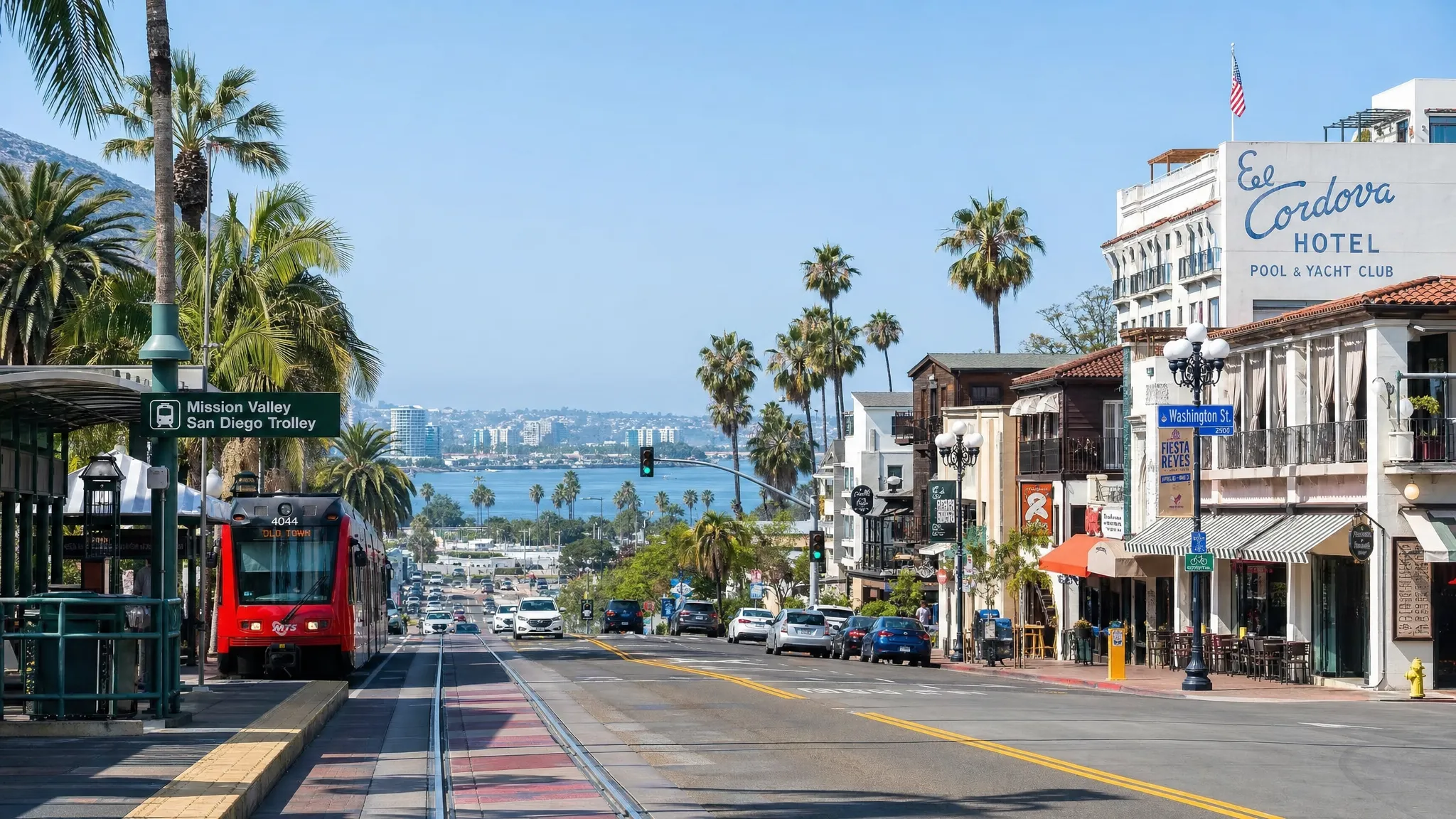
Use this table as a first filter before you compare individual rooms. San Diego rewards travelers who match the neighborhood to the trip instead of chasing the lowest number on the first search screen.
| Area | Best for | Why it can be good value | What can raise the total cost |
|---|---|---|---|
| Downtown and Gaslamp Quarter | Business trips, conventions, nightlife, short car-free stays | Walkability can offset higher rates | Parking, noise, event surges, destination fees |
| Little Italy and Waterfront | Airport access, dining, couples, bay walks | Strong location without needing the busiest nightlife blocks | Weekend rates, bay-view upgrades, valet parking |
| Mission Valley and Hotel Circle | Families, road trips, zoo and theme-park visits, value hunters | Often lower nightly rates and central by car | Rental car costs, parking, limited walkability |
| Old Town | Transit users, airport overnights, practical sightseeing | Trolley and bus access can reduce transport spending | Fewer luxury options, less late-night atmosphere |
| Mission Bay and Pacific Beach | Beach trips, casual groups, relaxed stays | Saves time if water is your main activity | Resort fees, parking, summer surge pricing |
| La Jolla | Romance, coastal scenery, UC San Diego visits | Worth it when the coast is the purpose | Higher rates, parking pressure, distance from Downtown |
| Coronado | Beach-focused couples, families, classic resort trips | Beautiful setting if you stay mostly on the island | Premium pricing, bridge or ferry logistics, resort fees |
| North Park and Hillcrest | Dining, bars, local neighborhoods, repeat visitors | More local atmosphere than tourist-heavy zones | Fewer hotel choices, rideshares to beaches and bay |
The pattern is simple: the farther your hotel is from your main daily plan, the more you risk paying the difference in transportation, time, and frustration.
Downtown San Diego changes character block by block. Near the bay, mornings feel bright and open, with joggers, business travelers, and cruise passengers moving along the waterfront. Around Gaslamp, the energy shifts after dark, especially on weekends, when restaurants, bars, and sports crowds fill the streets. For the right traveler, this is convenient. For a light sleeper chasing a cheap room, it can be the wrong kind of bargain.
Downtown makes the most sense if you are attending an event, traveling for business, catching a ballgame, staying one or two nights, or planning to use the trolley and rideshares instead of a rental car. A hotel rate that looks $40 higher than Mission Valley may still win if it lets you avoid nightly parking and multiple rideshares.
This is where hotel category matters. A classic business hotel or older central hotel may beat a flashier lifestyle property if all you need is a clean base, quick check-in, and a good location. Boutique and luxury hotels can be worth it for a romantic weekend, but for a packed itinerary, you may be paying for lobby atmosphere you barely use.
For a central stay where walkability matters more than resort-style extras, compare options such as The Sofia Hotel San Diego and The Guild Hotel San Diego against larger Downtown properties before deciding that the lowest nightly rate outside the center is automatically cheaper.
The Downtown trap is parking. If you drive in, ask yourself whether you will actually use the car every day. Downtown parking at hotels can be one of the most painful line items on the bill, especially when valet is the default. Even a good room rate can lose its advantage if parking adds $40 to $65 per night.
The other trap is the view upgrade. A “city view” in Downtown San Diego may not transform your trip unless you plan to spend real time in the room. For business travelers, late arrivals, and travelers who prioritize restaurants and harbor walks, location often beats a higher-floor room.
Little Italy is one of San Diego’s most useful hotel zones because it offers a practical compromise. You are close to the airport, close to the bay, close to Downtown, and surrounded by restaurants that do not require a complicated evening plan. The atmosphere is livelier than a generic airport corridor but less chaotic than the busiest Gaslamp blocks.
This area works especially well for couples, solo travelers, business travelers adding one leisure day, and anyone arriving late or leaving early. If your trip is only 36 hours, shaving 20 minutes off airport transfers and walking to dinner may matter more than saving $25 on the room.
Waterfront hotels can look expensive, but compare the full day. If you are taking harbor walks, visiting nearby museums, catching a ferry, or spending evenings around the bay, the convenience may be worth paying for. If you will spend most of the trip in La Jolla, Pacific Beach, or North County, the same hotel becomes a scenic but inefficient base.
The hidden cost here is paying for bay proximity without using it. Travelers often upgrade for a water view, then spend their days away from the room. If the choice is between a standard room in a better location and a view room in a less convenient one, the standard room is often the smarter value.
Mission Valley is where many travelers first notice San Diego’s price difference. Hotels line the valley near freeways, shopping centers, and transit stops. The setting is not postcard San Diego, but the location can be extremely practical if you plan to drive to multiple parts of the city.
This area is especially useful for families visiting the zoo, SeaWorld, Balboa Park, Old Town, and beaches in the same trip. It also works for travelers who do not care about nightlife outside the hotel and want easier access to highways. Compared with Downtown, parking may be easier or less expensive, though you should never assume it is free.
The tradeoff is atmosphere. Mission Valley is convenient, not dreamy. If you want to walk out the door into a neighborhood of cafes, galleries, and waterfront paths, it may disappoint you. If you want a central base with a lower nightly rate and do not mind driving, it can be one of the best practical choices in San Diego.
Value-focused travelers often compare hotels around Hotel Circle before looking at the coast. Properties such as Kings Inn San Diego and The Atwood Hotel San Diego SeaWorld Zoo are useful search examples when you want to test whether an inland location lowers the total trip cost enough to beat a beach or Downtown stay.
But do the car math. A cheaper Mission Valley room can lose value if you rent a car only because you stayed there, pay for parking at attractions, and then pay hotel parking at night. If you already have a car because San Diego is part of a longer California road trip, Mission Valley becomes much more attractive.
The best Mission Valley booking strategy is to compare three things before you commit: nightly rate, parking policy, and distance to your most frequent destination. If the hotel is near the trolley and your plans align with trolley routes, that can improve value. If every day requires two rideshares plus a return trip, the room is not as cheap as it looks.
Old Town is not the area most first-time visitors dream about when they picture San Diego. It does not have La Jolla’s cliffs or Pacific Beach’s surf scene. Yet for a value-minded traveler, it can be quietly excellent.
The reason is connectivity. Old Town sits near trolley and transit links, has convenient access to the airport area, and is positioned between Downtown, Mission Valley, and the coastal route toward Mission Bay. If your trip includes a little of everything and you want to avoid the highest Downtown and beach premiums, Old Town deserves a serious look.
It suits travelers who care more about logistics than nightlife. Families, road-trippers, short-stay visitors, and budget-conscious travelers can do well here, especially when parking terms are favorable. The atmosphere is more low-key than Downtown and less beachy than Mission Bay, but that is part of why prices can be more reasonable.
To test Old Town value, compare practical properties such as Old Town Inn San Diego with both Mission Valley and Downtown options. The right choice depends less on star rating and more on whether your daily plans follow the same transit and road patterns.
The booking pitfall is assuming transit access means your entire trip becomes transit-friendly. San Diego’s trolley is helpful for many routes, but not every beach or neighborhood is simple from every station. If your main goal is Pacific Beach nights or La Jolla sunsets, Old Town may still require rideshares.
Still, for travelers looking for cheap San Diego hotels without feeling stranded, Old Town can be the rare middle ground: less expensive than the coast, more connected than many inland pockets, and easier than a far-flung bargain.
Beach hotels in San Diego sell a feeling: salt air in the morning, flip-flops in the elevator, the soft laziness of not needing to schedule the ocean. If that is the point of your trip, paying more can be rational. If the beach is only one stop on a busy sightseeing itinerary, the premium can be wasteful.
Mission Bay is calmer and more family-oriented than Pacific Beach. It suits travelers who want water nearby, easier access to bay activities, and a resort-like pace. Pacific Beach is louder, younger, and more casual, with nightlife and surf-town energy. Both can be fun, but they serve different travelers.
A family with children may get more value from being close to the bay than from a cheaper inland room, because the convenience reduces transitions. A couple planning dinners in Little Italy and hikes in Torrey Pines might not need to sleep by the beach. A group planning nightlife may prefer Pacific Beach even if rooms are smaller or less polished.
When comparing beach-area hotels, search beyond the room rate. Look for resort fees, parking charges, breakfast costs, and whether beach or pool amenities are included or limited. Some properties make the base rate look reasonable, then add mandatory fees that narrow the gap with a better-located or higher-quality hotel.
For a relaxed water-focused stay, you might compare Humphreys Half Moon Inn with Mission Bay or Pacific Beach alternatives to see whether the total price supports the kind of trip you actually want.
The upgrade most worth questioning here is the partial water view. If the room faces a slice of bay over a parking lot, it may not be worth the premium. Direct convenience, a quieter room, or included parking may improve your trip more than a view label.
La Jolla is where San Diego becomes dramatic: cliffs, coves, polished streets, galleries, sea air, and sunset light that turns an ordinary walk into the reason you booked the trip. Coronado is different, flatter and more resort-like, with wide beaches, a village feel, and a sense of separation from the city across the bay.
Neither is usually the cheapest area. Both can still be good value if their setting is central to the trip. A romantic weekend in La Jolla where you walk to dinner and spend mornings by the coast can justify the higher rate. A family beach stay on Coronado can reduce daily logistics if you plan to remain mostly on the island.
Where travelers overpay is using La Jolla or Coronado as a base for a Downtown-heavy trip. If you are attending events near the convention center, going to Gaslamp dinners, and visiting Balboa Park, the coastal premium may add transportation costs without giving you enough time to enjoy the coast.
La Jolla also requires careful parking thinking. Some hotels charge for parking, street parking can be tight, and driving between La Jolla and central San Diego can take longer than mileage suggests. Coronado adds its own logistics, especially if you are crossing back and forth frequently.
For travelers prioritizing the coast, compare searches like La Jolla Shores Hotel against central San Diego hotels. If the price difference is modest and your itinerary is coastal, the upgrade may be worth it. If the gap is large and you only plan one sunset visit, stay central and visit the coast intentionally.
Luxury in these areas is most worth paying for when it replaces other spending. If a beautiful location means fewer rideshares, fewer rushed meals, and more time actually enjoying San Diego, the premium can be real value. If it only gives you a nicer room to sleep in after days spent elsewhere, it is marketing, not savings.
Some travelers do not want the beach postcard or the convention-center grid. They want coffee shops, craft beer, indie restaurants, bookstores, late dinners, and a neighborhood that feels lived in. North Park, Hillcrest, and nearby areas offer that version of San Diego.
The challenge is hotel supply. These neighborhoods may not have as many traditional hotel options as Downtown, Mission Valley, or the coast. When you find a good rate, it can feel like a hidden gem. But you need to map your plans honestly. Beaches, the airport, and Downtown may all require rideshares or careful transit planning.
For food-focused travelers or repeat visitors, staying local can be a smart way to avoid tourist-heavy zones. You may spend less on inflated waterfront dining and more time in neighborhoods with character. For first-time visitors trying to see everything, it can create friction.
A property search such as The Lafayette Hotel San Diego can help you compare the cost of a neighborhood-forward stay against a more conventional Downtown or Mission Valley base.
The decision comes down to identity. If your trip is about discovering local San Diego after dark, neighborhood hotels can be more rewarding than beach-adjacent lodging. If your trip is about efficient sightseeing, a local-feeling stay may cost more in transportation than it saves in room rate.
San Diego is not a city where the same transportation answer works for every visitor. The trolley can be extremely helpful for Downtown, Old Town, Mission Valley, the border area, university-related trips, and some airport-connected itineraries. Buses fill gaps but may take time. Rideshares are easy but can add up quickly. A rental car gives freedom but can turn parking into the most annoying part of the trip.
Before booking, choose your hotel and transportation together. Do not book a cheap inland room and then decide later how to move around. In San Diego, transportation is part of the hotel price.
| Trip style | Best transport strategy | Hotel areas to compare first | Main cost risk |
|---|---|---|---|
| Convention or Downtown business trip | Walk, trolley, occasional rideshare | Downtown, Little Italy, Waterfront | Paying for a car you do not need |
| Family sightseeing with multiple attractions | Rental car or mixed car and transit | Mission Valley, Hotel Circle, Old Town | Parking at hotel and attractions |
| Beach-focused vacation | Stay near chosen beach, minimize driving | Mission Bay, Pacific Beach, La Jolla, Coronado | Resort fees and summer rates |
| Short airport stopover | Short transfer, simple check-in | Little Italy, Old Town, airport-area hotels | Overpaying for amenities you cannot use |
| Food and nightlife weekend | Walk and rideshare | Gaslamp, Little Italy, North Park, Hillcrest | Surge rideshares late at night |
| UC San Diego or north coastal visit | Car or targeted coastal stay | La Jolla, UTC area, coastal North County | Staying Downtown and commuting repeatedly |
The car-free traveler should favor Downtown, Little Italy, and Old Town. The road-trip traveler should compare Mission Valley and Hotel Circle. The beach traveler should pay attention to how often they plan to leave the beach area. If the answer is “not much,” paying more to stay near the water may be smarter than pretending an inland room is cheap.
San Diego hotel pricing often looks friendlier before the final screen. Taxes, assessments, parking, and mandatory hotel fees can change the value ranking quickly. The City of San Diego has a transient occupancy tax, and many hotels may also include other assessments or property-specific fees. Even when the nightly rate is attractive, the checkout total is the number that matters.
Here are the costs travelers underestimate most often:
| Cost | Where it often appears | Why it matters | Smarter move |
|---|---|---|---|
| Parking | Downtown, beach areas, resorts, some Mission Valley hotels | Can add more than a meal per night | Check self-parking and valet rates before booking |
| Resort or destination fees | Beach, bayfront, lifestyle, and some urban hotels | Mandatory even if you skip amenities | Compare final total, not base rate |
| Breakfast | Limited-service and full-service hotels vary widely | A family can spend heavily each morning | Decide if included breakfast is genuinely useful |
| Rideshares | Inland hotels, local neighborhoods, beach nights | Short rides stack up fast | Map your daily routes before choosing area |
| Taxes and assessments | Most hotel stays | Final price rises beyond the advertised base | Use total-price comparison when possible |
| Early check-in or late checkout | Short trips, red-eye flights, business travel | Convenience may come with a fee | Ask policy before arrival if timing matters |
| View upgrades | Downtown, bayfront, La Jolla, Coronado | The label may be more impressive than the view | Pay only if room time is part of the trip |
| Pet, rollaway, or extra-person fees | Families and group trips | Small add-ons can change the room value | Confirm occupancy and fee rules upfront |
Breakfast is a classic example. A hotel that costs $25 more but includes a breakfast your family will actually use can beat the cheaper room. But a paid breakfast package is not automatically smart if you prefer local cafes or plan early starts.
Parking is even more decisive. If one Downtown hotel charges high valet rates and another central hotel offers a better parking arrangement, the nightly rate comparison may be misleading. For car-free travelers, the opposite is true: paying for a lower inland rate plus constant rideshares can be the hidden mistake.
San Diego has pleasant weather much of the year, so prices do not collapse the way they might in harsh-weather destinations. Instead, hotel value shifts around school breaks, summer beach demand, major conventions, holiday weekends, sports events, and coastal travel patterns.
Summer usually pushes beach and bay prices higher, especially for family-friendly dates. July can be particularly intense around major events. Spring break can lift rates in beach areas and family zones. Holiday weekends bring demand to coastal and resort properties. Midweek business patterns can raise Downtown rates, while weekends can spike nightlife-friendly areas.
The shoulder periods are often more interesting for value. Late winter, parts of spring outside school breaks, and fall weekdays can offer better balance. Beach weather may still be pleasant, restaurants are easier, and inland hotels may price more softly. The coastal atmosphere also changes: summer feels bright and social, while fall can feel calmer and more local.
June deserves a special note. San Diego’s marine layer, often called June gloom, can make mornings cloudy near the coast. Some travelers are disappointed if they paid peak-ish coastal prices expecting nonstop sun. Others love the softer light and cooler starts. If sunshine is essential, do not pay a premium for a beach-view morning without understanding the seasonal mood.
The booking lesson is simple: compare your exact dates, not the destination’s average reputation. A Tuesday in February and a Friday in July are different hotel markets.
San Diego has every hotel personality, from simple motels to classic luxury, beach resorts, business towers, and design-led boutique stays. The right category depends on how much time you will spend at the property.
Budget and limited-service hotels are best when your trip is active and practical. If you will leave after breakfast and return tired, prioritize location, cleanliness, parking terms, and quiet over lobby design. This is often the smartest category for road trips, family sightseeing, and short stays.
Boutique hotels are best when neighborhood atmosphere matters. They can make a city stay feel more personal, especially in Downtown, Little Italy, or local neighborhoods. But boutique does not automatically mean better value. Rooms may be smaller, parking may be expensive, and amenities may be limited.
Business hotels are often underrated. They may not feel vacation-like, but they can be efficient, well located, and easier for short stays. On weekends, some business-oriented areas may offer better rates, although event calendars can reverse that quickly.
Resorts and luxury hotels are worth paying for when you will use the setting. A beach resort makes sense if mornings, afternoons, and evenings revolve around the water. A luxury city hotel makes sense if service, dining, and room comfort are part of the trip. It is less sensible if you are using the property only as a place to sleep after full days away.
The most common upgrade mistake is paying for prestige instead of convenience. A cheaper hotel in the right area often beats a famous or highly styled hotel in the wrong area. In San Diego, geography is a luxury feature.
Imagine two travelers arriving on the same Friday.
The first is in town for a conference near the convention center. She books a Downtown hotel with a higher nightly rate, skips the rental car, walks to meetings, takes a short ride from the airport, and eats nearby. Her room was not the cheapest on the map, but her total cost stays controlled. She also avoids the stress of parking and freeway timing.
The second is traveling with two kids, planning the zoo, SeaWorld, Balboa Park, and one beach afternoon. He books a Mission Valley hotel with a lower rate, keeps the rental car he already needed for a broader California itinerary, and chooses a property with manageable parking terms. Downtown would have cost more and added parking complications. For him, the cheaper inland room is genuinely cheaper.
Now reverse their hotels. The conference traveler in Mission Valley pays rideshares twice daily and loses time. The family Downtown pays expensive parking and navigates city traffic every morning. The room rates did not change, but the value collapsed.
That is the heart of booking cheap hotels in San Diego: the best deal only appears after the itinerary is honest.
Start with the place you will visit most, not the hotel discount. If your main destination appears three or more times in your itinerary, stay near it or on a simple route to it. Then decide whether you need a car. Only after those two decisions should you compare hotel categories.
A simple decision order works well:
If two hotels are close in final price, choose the one that removes a repeated inconvenience. A shorter walk to dinner, easier parking, or a quieter neighborhood can be worth more than a small room discount.
What is the cheapest area to stay in San Diego? Mission Valley and Hotel Circle often show some of the lowest central hotel rates, especially for travelers with a car. Old Town can also be strong value because of transit access. The cheapest area for you depends on parking, rideshare needs, and where you will spend most of your time.
Is Downtown San Diego too expensive for budget travelers? Not always. Downtown can be cheaper in total for car-free travelers, business trips, conventions, and short stays because it reduces transportation costs. It becomes expensive when you bring a car and pay high nightly parking.
Are beach hotels in San Diego worth the extra cost? They are worth it if beach time is the main purpose of your trip and you will use the location daily. If you only plan one beach visit, a central hotel plus a planned beach trip is usually better value.
Should I rent a car in San Diego? Rent a car if your itinerary includes multiple spread-out areas, family attractions, coastal drives, or destinations not easily reached by trolley. Skip the car if you are staying Downtown for meetings, nightlife, or a short urban trip where parking would outweigh the convenience.
What hidden hotel fees should I watch for in San Diego? Watch for parking, resort or destination fees, taxes and assessments, breakfast charges, early check-in or late checkout fees, pet fees, and view upgrades that sound better than they are. Always compare the final booking total, not just the nightly rate.
When is the best time to find cheap San Diego hotels? Better value often appears outside summer, major conventions, school breaks, and holiday weekends. Fall weekdays, parts of winter, and non-peak spring dates can be strong, but exact pricing depends on events and neighborhood demand.
San Diego rewards travelers who think beyond the room rate. A cheap hotel in the wrong area can quietly become expensive, while a slightly higher rate in the right neighborhood can save money, time, and patience. The smartest booking is the one that fits your real trip: your beach plans, your meetings, your meals, your transportation, and your tolerance for surprise fees.
InnRox is built for that kind of decision. You can compare hotel options with transparent terms, upfront pricing, instant confirmation, and flexible options where available, without unnecessary booking clutter.
Start by searching the area that matches your itinerary, then compare the total stay cost before you commit. Whether you are looking for Downtown convenience, Mission Valley value, Old Town practicality, or a coastal escape, search San Diego hotels on InnRox and book the stay that is actually cheap after everything is counted.