
Copyright © 2026 Innrox, Inc., an Innrox Group company. All rights reserved.

InnRox
Travel Experts
May 6, 2026
15 min read
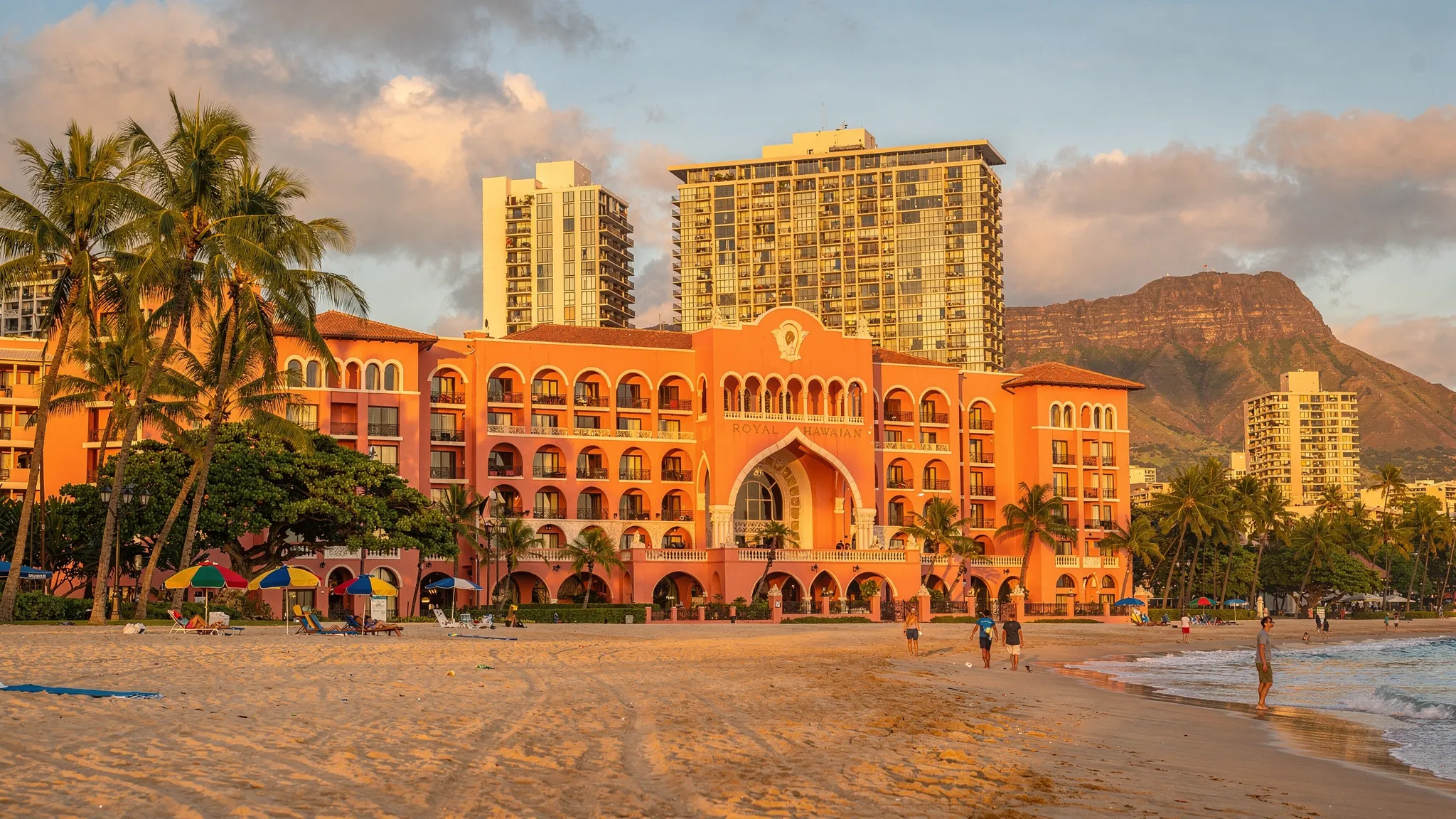
Some hotels announce themselves with height. The Royal Hawaiian Hotel announces itself with color.
Arrive in Waikiki after the airport drive, when the trade winds begin to thread through the palms and the noise of Honolulu softens into surfboards, crosswalk signals, and rolling suitcases, and the first sight of the Pink Palace feels almost improbable. Between glass towers, shopping arcades, beach umbrellas, and the blue sweep of the Pacific, there it is, coral-pink, low-slung, graceful, and completely certain of itself.
That is the secret of the Royal Hawaiian Hotel. It does not compete with Waikiki by being bigger. It became iconic by being unmistakable.
Its fame is often reduced to a nickname, the Pink Palace of the Pacific, but the building is more than a photogenic backdrop. It is a study in how architecture can shape memory. The hotel tells the story of Waikiki before the high-rise skyline, through the ocean-liner era, wartime disruption, jet-age tourism, and today’s return to heritage luxury. To understand why travelers still seek it out in 2026, you have to walk through it slowly, from the shaded driveway to the sand.
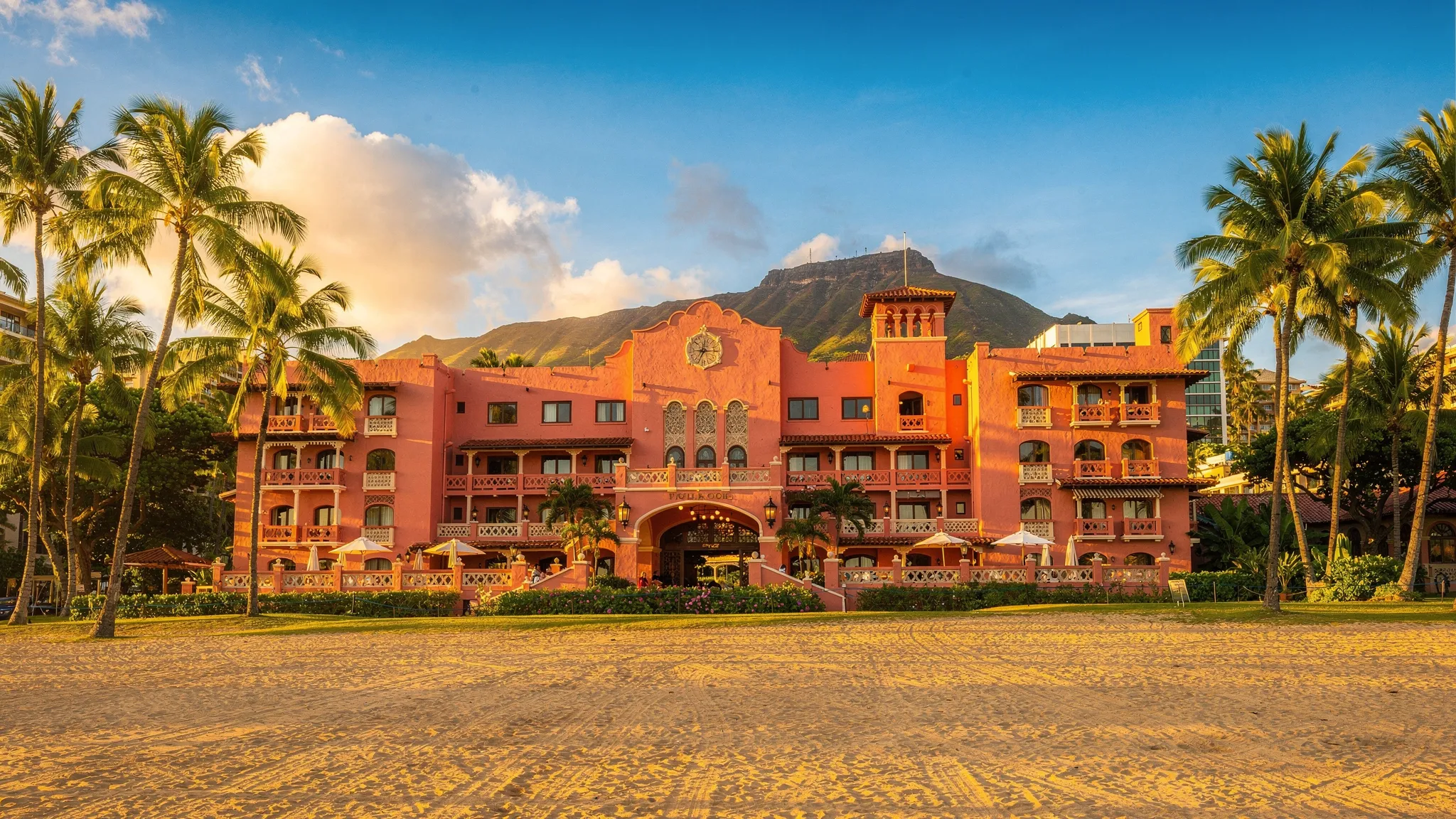
The Royal Hawaiian Hotel opened in 1927, when Waikiki was not yet the dense resort district travelers know today. The beachfront was more open, the rhythm of arrival was slower, and Hawaii’s visitor economy was tied closely to ocean travel. Guests came with trunks, linen suits, parasols, and time. A hotel did not merely offer a room. It created an entire sense of arrival.
The architects, Warren and Wetmore, were already associated with grand travel architecture, and their work at the Royal Hawaiian reflected that same belief: a hotel should create ceremony. But instead of importing a heavy European palace onto a tropical shore, they used a language of arches, courtyards, stucco, arcades, and garden transitions that could breathe in the climate.
The result was theatrical without feeling stiff. Pink stucco walls softened the sun. Arched openings framed moving palms. Corridors shifted between interior and exterior space. The hotel did not wall guests off from Hawaii’s climate. It choreographed their encounter with it.
This matters because Waikiki’s greatest luxury is not only oceanfront location. It is the feeling of stepping between city energy and sea air in a matter of seconds. The Royal Hawaiian Hotel made that transition part of its identity long before resort design became a global industry.
The land around the hotel sits within a deeply layered part of Waikiki. Long before luxury travelers arrived, this area was associated with Helumoa, a historic coconut grove connected to Hawaiian royalty. That context is important. The hotel did not invent the significance of the place. It entered a landscape that already carried cultural memory, ocean knowledge, leisure, and power.
In the 1920s, the Royal Hawaiian became part of a new chapter in that story. Ocean liners and tourism infrastructure made Hawaii more reachable for mainland travelers, and Waikiki began shifting from local shoreline and royal retreat into an international resort destination. The hotel’s pink facade became a signal, visible and memorable, a promise that the journey had ended somewhere glamorous.
Then came interruption. During World War II, the hotel’s leisure identity changed as Waikiki was absorbed into a very different rhythm. Like many major properties in Hawaii, the Royal Hawaiian served military needs before returning to civilian tourism in the postwar era. By the time air travel expanded, the hotel was no longer just new and fashionable. It had become part of Waikiki’s collective memory.
That transformation, from ocean-liner palace to wartime facility to postwar icon, gave the property depth. Newer towers could offer height, scale, and modern views, but the Royal Hawaiian had something less easily replicated: a timeline embedded in its walls.
Pink could have become a gimmick. Instead, at the Royal Hawaiian Hotel, it became an architectural signature.
Part of the reason is restraint. The color is memorable, but the building’s form is disciplined. The historic structure has a balanced composition, softened edges, shaded passages, and a garden-like approach that makes the pink feel atmospheric rather than loud. Against Waikiki’s intense palette, white surf, green palms, volcanic ridges, and blue water, the color settles into the landscape like sunset held in plaster.
It also photographs beautifully, which has helped the hotel stay relevant in the age of visual travel. But its appeal predates social media by generations. Guests remembered the color because it represented arrival, aspiration, and escape. Today, a traveler may discover it through a photo, but the deeper impression comes from moving through its spaces.
| Design layer | Original role | Why it still matters today |
|---|---|---|
| Coral-pink facade | Created immediate visual identity and resort drama | Makes the hotel instantly recognizable in a crowded beachfront market |
| Arches and arcades | Provided shade, rhythm, and a sense of ceremony | Creates a softer transition between indoor comfort and tropical outdoor life |
| Garden approach | Slowed arrival and framed the hotel as a retreat | Offers a pause from Kalakaua Avenue’s energy before reaching the beach |
| Low historic massing | Reflected an earlier Waikiki before dense towers | Gives guests a rare sense of old Waikiki scale and intimacy |
| Beachfront orientation | Connected the resort experience directly to the ocean | Keeps the hotel’s daily life centered on sand, surf, and sunset |
The strongest icons are usually simple enough to remember and layered enough to revisit. The Pink Palace has both qualities.
The experience begins before you see the water.
A good resort arrival is not only about check-in. It is about decompression. At the Royal Hawaiian, the approach has always been part of the performance. The city is close, but the hotel asks you to slow down. Palms filter the light. The pink exterior appears in fragments. You become aware of textures: stucco, tile, polished floors, old wood, soft upholstery, tropical greenery.
Inside, the historic atmosphere is not silent or museum-like. Waikiki is too alive for that. You hear luggage wheels, birds, distant laughter, staff greetings, and the muffled pulse of Kalakaua Avenue behind you. Then, as you move farther toward the ocean, the sound changes. The surf grows clearer. The air feels saltier. Sunlight becomes brighter.
This is where the hotel’s design intelligence becomes obvious. Many beachfront hotels deliver you directly into the spectacle. The Royal Hawaiian builds anticipation. It layers shade, corridor, garden, and open sky so the beach feels like a reveal.
When you finally reach the sand, the hotel’s pink walls behind you make Waikiki feel staged in the best sense. Diamond Head sits to the east. Catamarans move offshore. Surf lessons unfold in the shallows. Families shake sand from towels. Couples wait for sunset drinks. The Royal Hawaiian Hotel becomes both backdrop and participant, part of the scene rather than a sealed luxury box above it.
The Royal Hawaiian does not stand apart from Waikiki as a museum piece. It anchors one of the most walkable pockets in Honolulu.
Step out toward Kalakaua Avenue and the mood changes quickly. The air fills with storefront music, flower leis, coffee, sunscreen, and the soft shuffle of visitors moving between beach and dinner. The Royal Hawaiian Center sits nearby, giving guests immediate access to shopping, casual dining, cultural programming, and evening foot traffic. Kuhio Avenue, a few blocks inland, offers a different Waikiki rhythm with smaller restaurants, convenience stops, and a more everyday city feel.
Walk east and the beach opens toward Kuhio Beach, Kapiolani Park, and the long view of Diamond Head. Walk west and you move toward Fort DeRussy and a slightly broader stretch of sand. In either direction, the Royal Hawaiian’s central location means you can treat the hotel as a base rather than a destination you rarely leave.
If your trip centers on this exact beachfront pocket, you can compare availability for the Royal Hawaiian Hotel and review current rates, room terms, and booking options before you commit.
For travelers who value simplicity, that matters. Waikiki can be overwhelming because choices are dense and room categories often sound similar. A clear booking flow helps you focus on what affects your stay most: location, total price, cancellation flexibility, and the type of room experience you actually want.
The Royal Hawaiian Hotel’s challenge has always been balance. Preserve too much and the hotel risks feeling frozen. Modernize too aggressively and the magic disappears.
Its late-2000s restoration helped reposition the property for contemporary luxury travelers while keeping the historic personality visible. The goal was not to make the Pink Palace look new in a generic sense. It was to make it feel cared for, polished, and ready for a new era of guests who expect comfort, design, service, and digital convenience without losing the old-world atmosphere.
That balance reflects a larger travel trend. Many travelers are tired of anonymous luxury. They want hotels with a story, a sense of place, and public spaces that feel connected to their destination. The Royal Hawaiian benefits from that shift because its identity is not manufactured. It has been accumulating for nearly a century.
At the same time, modern relevance is practical. Today’s guests want fast reservations, transparent pricing, secure payments, and clear cancellation terms. The romance of a historic hotel is strongest when the logistics are smooth. Nobody wants a dreamy arrival after a confusing booking process.
That is where planning carefully pays off. The Pink Palace may be iconic, but your best stay still depends on matching the right room type, date, and rate to the trip you are actually taking.
The Royal Hawaiian is not the right answer for every Honolulu trip, which is exactly why it helps to understand its strengths.
It is best for travelers who want their hotel to be part of the destination’s emotional texture. If you only need a place to sleep between packed excursions, you may not fully use what makes the hotel special. But if you care about atmosphere, morning walks, architecture, beach access, and the pleasure of returning somewhere memorable at the end of the day, it becomes much more compelling.
| Traveler type | Why the Royal Hawaiian may fit | What to check before booking |
|---|---|---|
| First-time Waikiki visitors | Central beachfront location and a strong sense of place | Room view, total price, and cancellation window |
| Couples | Romantic historic atmosphere and walkable dining nearby | Noise expectations, bed type, and sunset access plans |
| Design-focused travelers | Distinct architecture with rare old Waikiki character | Historic wing versus newer room categories, where available |
| Short-stay travelers | Easy access to beach, shopping, restaurants, and taxis | Arrival time, check-in details, and luggage plans |
| Business travelers adding leisure time | Strong location for combining meetings with beach downtime | Wi-Fi needs, workspace setup, parking, and commute timing |
For many guests, the ideal stay is not about spending every hour on property. It is about using the hotel as a beautiful hinge between several Waikiki experiences: early surf, midmorning coffee, afternoon shopping, a sunset swim, and dinner within walking distance.
Iconic hotels attract demand, and Waikiki prices can shift quickly depending on season, events, flight patterns, and room availability. The smartest approach is to decide what matters before you begin comparing.
If the Royal Hawaiian Hotel is your dream stay, be honest about the room experience you want. A historic setting may matter more than a sweeping view. Or the view may be the entire point. Some travelers want to wake up close to the old architecture and garden atmosphere. Others want the most open ocean perspective they can find. Those are different trips, even at the same hotel.
Before confirming, review the details that most often affect value:
Searching through a clean booking platform can reduce the friction. InnRox is designed for travelers who want competitive hotel rates, final prices shown upfront, instant confirmation where available, secure payment, and a simple mobile-friendly reservation flow.
If your dates are flexible, compare weekday and weekend pricing. If your dates are fixed, compare room categories instead. Sometimes the best value is not the cheapest available room, but the room that prevents disappointment. At a hotel as atmospheric as the Royal Hawaiian, the wrong expectation can matter as much as the wrong price.
The Pink Palace is special, but Waikiki rewards comparison. A traveler focused on nightlife may want a different block. A family prioritizing room size may prefer another setup. A business traveler attending meetings elsewhere in Honolulu may need faster vehicle access over beachfront romance.
If you like the Royal Hawaiian’s central location but want to see a wider range of options, explore Waikiki Beach hotels and compare rates around the same neighborhood.
For travelers treating Oahu as a broader city-and-island base, searching Honolulu hotels can help surface stays beyond the immediate Waikiki beachfront.
And if your interest is specifically historic Waikiki hospitality, it can be worth comparing another landmark nearby, such as Moana Surfrider Waikiki, especially if dates or room categories make one property better suited to your plans.
The key is not to turn comparison into clutter. Decide your priorities first, then let price and terms guide the final choice.
The answer is not only age. Plenty of old hotels fade into the background. It is not only luxury either, since luxury changes with every generation. And it is not only the pink facade, although that is the image everyone remembers.
The Royal Hawaiian Hotel is iconic because it compresses Waikiki’s evolution into one architectural experience. It reflects the romance of early twentieth-century travel, the layered history of its setting, the glamour of beachfront leisure, the disruptions of wartime Hawaii, and the modern desire for hotels that feel rooted rather than interchangeable.
It also understands one of travel’s simplest truths: people remember how a place makes them feel. The Pink Palace makes arrival feel cinematic. It makes walking to the beach feel ceremonial. It makes a city resort district feel, for a moment, like a private memory.
That emotional clarity is rare. It is why travelers still stop to photograph the facade. It is why guests remember the color years later. And it is why, nearly a century after opening, the Royal Hawaiian remains one of the defining hotels of Waikiki.
Is the Royal Hawaiian Hotel the same as the Pink Palace? Yes. The Royal Hawaiian Hotel is widely known as the Pink Palace of the Pacific because of its distinctive coral-pink facade and long-standing role as a Waikiki landmark.
Why is the Royal Hawaiian Hotel pink? The color became part of the hotel’s identity from its early years, helping it stand out against Waikiki’s ocean, palms, and volcanic landscape. The pink exterior is now one of the most recognizable design features in Honolulu hospitality.
Is the Royal Hawaiian Hotel good for first-time visitors to Waikiki? Yes, especially for travelers who want a central beachfront base with history, atmosphere, and easy walking access to restaurants, shopping, surf lessons, and major Waikiki sights.
What should I check before booking the Royal Hawaiian Hotel? Confirm the room category, view wording, total price, cancellation policy, bedding, occupancy rules, and any pay-later or flexible options available for your dates.
Is the Royal Hawaiian Hotel more about history or luxury? It is both. The hotel’s appeal comes from the combination of historic architecture, beachfront location, polished hospitality, and a strong sense of place.
Can I stay nearby if the Royal Hawaiian is unavailable or above budget? Yes. Waikiki has many hotels within walking distance, so comparing nearby beachfront and central Honolulu options can help you find a stay that matches your budget and priorities.
A stay at the Royal Hawaiian Hotel is not just about booking a room near the beach. It is about choosing a hotel that carries the color, history, and rhythm of Waikiki in its walls.
When you are ready to plan, start with InnRox Travel for a faster, clearer hotel search. Compare competitive rates, review upfront pricing, look for flexible options where available, and book with instant confirmation when your room is available. For a landmark as beloved as the Pink Palace, clarity is part of the luxury.
Tags