

InnRox
Travel Experts
April 18, 2026
12 min read
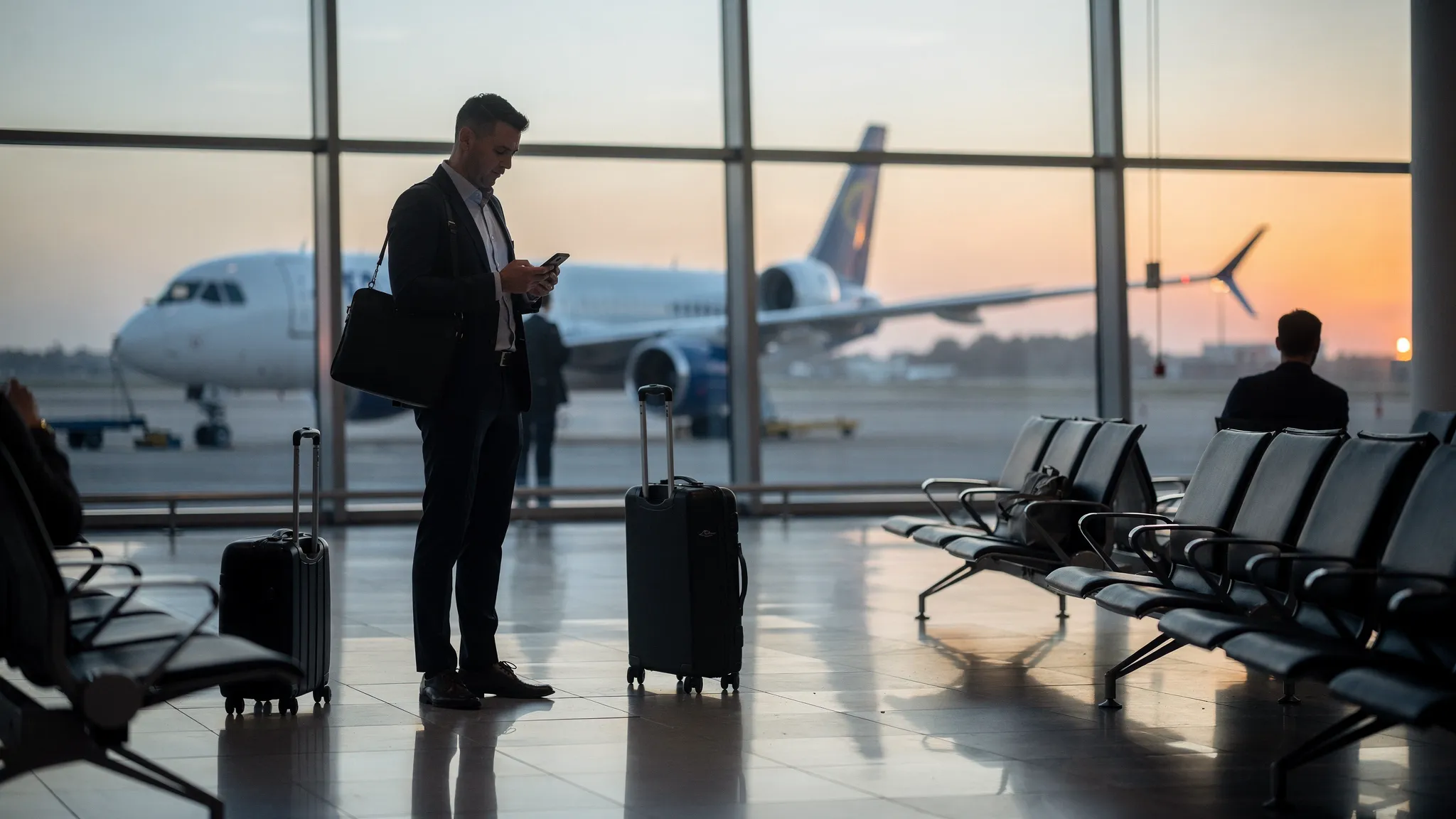
You get the email at 6:12 a.m., the kind that turns a quiet Tuesday into a sprint: “Client wants an in-person Thursday. Can you make it?”
The first impulse is to open a flight search, any flight search, and chase the lowest number on the screen. That is usually when a Priceline flight looks irresistible. But in business travel, a “deal” is never just the fare. It is the total cost of getting you to the meeting on time, with the right bag, and with enough control to survive the inevitable schedule change.
This guide is a traveler’s field note, written from the aisle seat and the hotel lobby, on when a Priceline flight is genuinely a deal and when it quietly becomes the most expensive choice you could make.
I learned this in Chicago, not in an airport.
It was the Loop at street level, where the morning smells like espresso and cold river air, and the city’s metal and glass can make you feel both tiny and sharpened. The meeting was at 9:00 a.m. near Wacker Drive. I had booked the lowest fare I could find, congratulated myself, and then paid for it in small, stinging increments.
The “deal” fare did not include the bag I needed for two days of client materials. Seat selection cost extra, so I ended up in a middle seat, arriving tense instead of ready. A schedule tweak from the airline meant a tighter connection, and the cheaper ticket gave me fewer options to adjust without fees. The price I saw was real, but incomplete.
A good flight deal is like a good hotel rate. The best ones feel calm. They do not ambush you later.
A discount is a lower number at checkout.
A deal is a lower total cost for the trip you actually have to take.
That sounds obvious until you are watching the fare jump every time you add what you assumed was “normal.” So before you buy, treat every fare like a draft. Your job is to turn it into a final, comparable total.
| Cost item | Why it changes the value | Quick way to estimate |
|---|---|---|
| Carry-on and checked bag fees | Some fares exclude what most travelers need | Add the bag you will actually bring, not the bag you wish you could bring |
| Seat selection | Comfort affects productivity, especially before meetings | Price your preferred seat, then decide if you can truly skip it |
| Change or cancellation terms | Flexibility is often the real value in business travel | Ask, “If this moves by 1 day, what will it cost?” |
| Connection risk | A “cheap” connection can be a missed meeting in disguise | Short layovers and last flight of the day increase risk |
| Arrival time | Landing at midnight can add rides, meals, and sleep loss | Assign a value to your time and energy |
A Priceline flight tends to be a deal when the fare lines up with your real constraints, not just your hopes. Here are the scenarios where it can genuinely shine.
This is the cleanest win. If you are flying with just a personal item, you do not care where you sit, and the meeting date is locked, the cheapest fare can actually be the cheapest trip.
Think of a one-night dash to Boston for a morning presentation, with nothing but a laptop sleeve and a charger. You do not need extra baggage, you do not need lounge time, and you mostly need a seat that moves.
Deals are safer on routes with many daily flights because disruption is less catastrophic. If there are multiple ways to get where you are going, a tighter fare can be worth the trade.
This is why certain corridors (big city pairs with high volume) feel easier to “deal hunt” on. Your risk is buffered by options.
Some low fares are truly low because fewer people want those times. If you can take the early departure or the midday lull and still arrive sane, you get the benefit without the penalty.
The trick is to be honest about what off-peak does to the rest of your day. If it forces you to buy extra meals, arrive too early (and pay to kill time), or lose sleep, it is not off-peak. It is off-balance.
If you can lock in a good hotel rate that allows free cancellation or pay-later, you can tolerate a bit more flight uncertainty. Not because you are careless, but because you have built a trip that can bend.
That is the part most deal hunters miss. Savings do not come only from the flight. They come from a travel plan that can absorb change without charging you for it.
The fares that hurt most are the ones that feel like a win at 6:12 a.m. and become a regret by lunch.
If you are carrying product samples, dress shoes, client gifts, or anything that cannot be “personal item only,” the fee math matters. The cheapest fare can become the most expensive option once you add a bag and the seat you need to function.
When you compare, compare the final number.
Some travelers book a low fare believing they can change it if needed, then discover the change costs as much as a new ticket. This is the most common deal illusion.
If the trip is for a wedding, a conference, or a family reunion, it might be stable. If it is for a client, a project, or a negotiation, it is often not.
A tight connection can look efficient until the first delay.
And the last flight of the day is not just a flight. It is a cliff edge. If you fall off it, you are not late, you are rebooked into tomorrow. If the reason you are traveling is time-sensitive, fragility makes “deal” a risky word.
Arriving exhausted is not neutral. It has a cost.
If you land too late to eat something real, you will buy overpriced airport snacks. If you land too early to check in, you will drift with your suitcase, then pay for coffee you do not want in a lobby that is not yours. If you land after midnight, rides can cost more, and sleep becomes the casualty.
These are not dramatic expenses. They are the quiet, untracked ones.
Here is a strange truth about the “deal” mindset. When you travel hard, you start noticing comfort in unlikely places.
It is not always the thread count. Sometimes it is the lamp by the bed, the warm cone of light over a desk, the way a well-lit lobby makes you breathe slower after a day of gates and delays. Hotels that get lighting right feel more expensive than they are because your nervous system finally unclenches.
If you have ever returned from a trip and tried to recreate that calm at home, you will understand why travelers end up browsing places like modern lighting collections after a particularly good stay. It is not about shopping, it is about bringing back a feeling.
The same principle applies to flights. The cheapest fare is only a deal if it delivers the version of you that you need to be when you arrive.
When flight terms are tight, your hotel becomes your shock absorber.
If your flight changes, you want lodging that can shift with you. If you arrive earlier than expected, you want a location that makes the extra hours feel like a bonus, not a burden. If you arrive late, you want check-in to feel like a soft landing.
This is where simple, transparent booking matters, especially when you are making decisions fast.
For a business-forward stay in downtown Chicago, you can start by checking rates and availability here:
https://innrox.com/hotel-search?direction=The+Langham+Chicago
The Loop rewards early mornings. Walk a few blocks and the city starts to sound like purpose: footsteps on stone, the thrum of trains, the quick exchange of street-level conversation. If your flight timing gives you an extra hour, Chicago can turn that hour into a reset, river air, a quiet coffee, a short walk that clears your head before you sit down to negotiate.
And if the flight timing takes something away, arriving late, arriving tense, the right hotel location and a smooth reservation process help you recover faster.
A different kind of business trip, the one that blends meetings with modern neighborhoods and walkable evenings, often points you toward London.
https://innrox.com/hotel-search?direction=Sea+Containers+London
South Bank at dusk is a soft counterweight to spreadsheets. The Thames moves like a dark ribbon. You hear buskers under bridges, the clipped rhythm of commuters, the low conversation spilling from restaurants when the air is just warm enough to make people linger outside. If your “deal” flight lands you at an odd hour, a neighborhood like this makes the in-between time feel intentional. You can walk, eat, recalibrate, and wake up feeling like you arrived for more than a meeting.
Then there is the long-haul reality, the trip where the airfare is so tempting you almost forget the physics of time zones.
https://innrox.com/hotel-search?direction=The+Fullerton+Hotel+Singapore
Singapore is the opposite of chaotic travel energy. Even when you arrive rumpled, the city meets you with order, clean lines, and warm humidity that smells faintly of rain and frangipani. A long-haul flight deal is only worth it if your first night helps you recover. When the hotel side is strong, sleep becomes part of the strategy, not an afterthought.
You do not need a spreadsheet to make better calls, but you do need a few hard rules.
A Priceline flight is a deal when it buys you certainty, or when your trip is resilient enough to handle uncertainty.
It is not a deal when it pushes cost into the shadows: bags, seats, change fees, missed connections, lost sleep, extra rides, meals you did not plan to buy. The best travelers are not the ones who always pay the least. They are the ones who pay for what they actually need.
If you want to save money without turning travel into a gamble, pair smart flight choices with hotel booking that stays simple: clear prices, fast reservations, and flexible options when they are available. That is how you keep the “deal” feeling all the way from boarding to check-in.
Is a Priceline flight always cheaper than booking directly? Not always. It can be cheaper in some cases, but the real comparison is the total trip cost after baggage, seat selection, and change terms.
How can I tell if a cheap flight is basic economy or more restrictive? Look closely at what is included (carry-on, seat selection, changes). If key items are excluded or heavily limited, the low fare may not be a deal for your needs.
What’s the biggest hidden cost on cheap flights? For many travelers it is baggage and inflexible change terms. Those two items can erase the savings fast, especially on short-notice or business travel.
How do I protect my trip if my flight might change? Use lodging with flexible cancellation or pay-later options where available, and choose a location that makes early or late arrivals less stressful.
If your flight search is about finding value, your hotel booking should be, too. InnRox Travel focuses on competitive rates, transparent prices shown upfront, instant confirmation, and a fast booking flow that works well when you are planning under pressure.
When you are ready to lock in the stay, search your destination on InnRox and choose the option that keeps your trip flexible and your budget honest.