

InnRox
Travel Experts
February 14, 2026
11 min read
The first time you notice it, it’s almost annoyingly subtle.
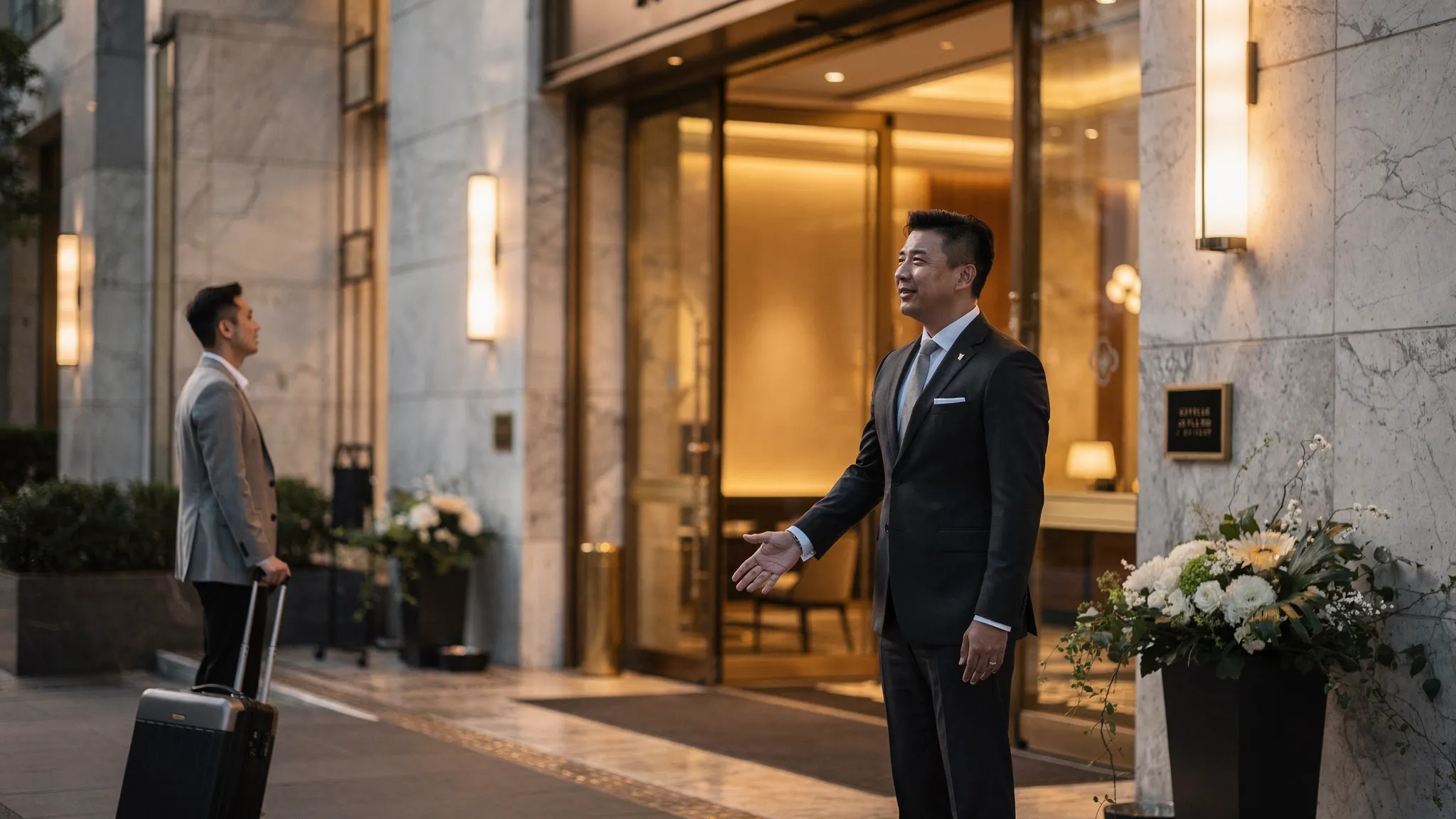
You step out of the car into a pocket of calm that feels physically separated from the city’s noise. Not silence exactly, more like a carefully tuned quiet. The air is cooler. The scent is clean, lightly floral, never loud. Someone is already there, not rushing you, not performing, simply present in a way that makes your shoulders drop half an inch.
That is the Mandarin Oriental effect in miniature: service that doesn’t chase your attention, it reorders it.
This isn’t a story about thread counts or marble types (although those exist in abundance). It’s about why, across destinations and decades, Mandarin Oriental tends to feel different in the moments that actually matter: arriving tired, asking for something slightly complicated, needing privacy, wanting to celebrate without spectacle, or trying to make a business trip feel human.
In most hotels, arrival is a transaction: name, card, signature, key. At Mandarin Oriental, arrival is an easing, a gradual handoff from the outside world to the hotel’s pace.
You’ll see it in the way staff stand, angled slightly toward you but not blocking your path. In the way questions are timed, one at a time, so you never feel interrogated. In the way your bags disappear and reappear in the room without fanfare.
The practical value here is real. When service is designed as a sequence, not a set of tasks, it reduces friction, especially after long flights.
A few traveler moves that fit this style:
Share your real arrival time (including delays) and any must-hit deadlines. This is the easiest way to let a great team be great.
Mention what “quiet” means to you: away from elevators, higher floor, courtyard, river, skyline. You’ll often get a better outcome than simply asking for “a good room.”
If you’re landing early, ask about what’s possible rather than demanding early check-in. The tone you set tends to be mirrored back.
And yes, the details are intentional. Many Mandarin Oriental lobbies feel less like a hall and more like a living room for people who hate living rooms: low voices, soft lighting, and a sense that the hotel would rather protect your mood than impress it.
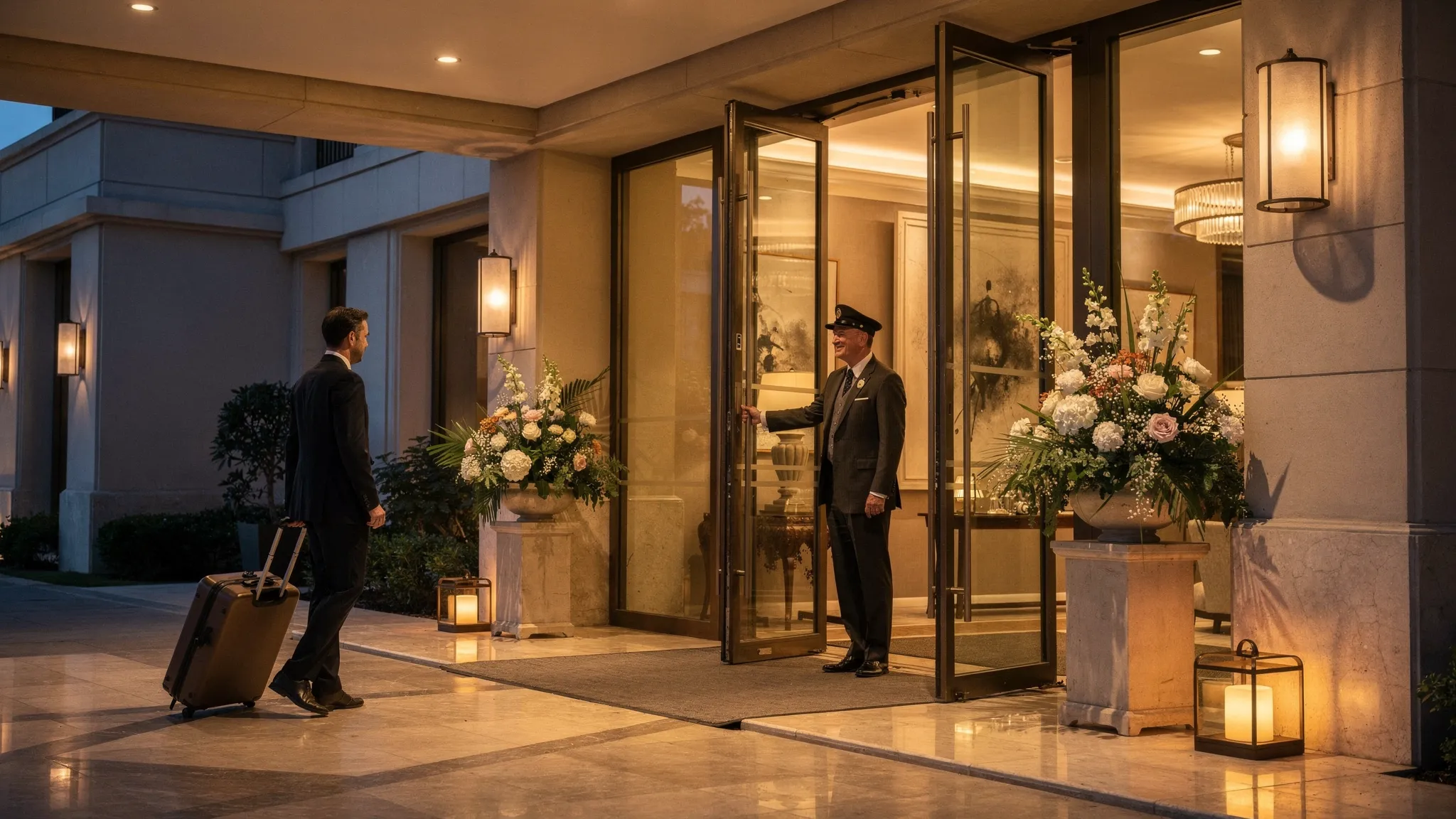
What separates good hospitality from great hospitality is not whether the staff can say yes, it’s whether they can say yes without making you feel like you asked.
At Mandarin Oriental, the best service often happens in the negative space.
You ask where to find a tailor because you have a meeting in the morning and your jacket came out of the suitcase like a paper fan. The answer is not just an address. It’s a question back, gently diagnostic: “How formal is the meeting?” Then, “Would you like it collected from your room?” It’s the sense that your problem has become theirs, and you can stop carrying it.
You mention, casually, that you’re trying to avoid heavy food after a late flight. The next day, breakfast recommendations arrive framed as options, not restrictions. You’re not being managed, you’re being understood.
That feeling, being understood without being managed, is the emotional core of why service here lands differently.
Luxury can be loud: logos, lobbies that sparkle, staff who hover. Mandarin Oriental’s version often reads as confident restraint.
Discretion shows up in practical ways:
Conversations that happen at a lower volume, even when the lobby is busy.
Staff who keep their distance until you look up.
Privacy that doesn’t require a “Do Not Disturb” sign to feel respected.
For business travelers, that discretion is not a vibe, it’s productivity. If you’re juggling calls across time zones, the ability to move through a hotel without being interrupted, upsold, or over-serviced is a competitive advantage.
For leisure travelers, it’s emotional comfort. You can celebrate, decompress, or disappear for a few hours, and the hotel treats that as a valid itinerary.
If you want to understand Mandarin Oriental’s service culture, Bangkok is a fitting place to feel it, not because it’s the most glamorous city in the portfolio, but because it’s a city that teaches you rhythm.
Bangkok doesn’t unfold in straight lines. It moves in loops and pauses: a longtail boat cutting the river, the hush inside a temple courtyard, the sudden scent of jasmine near a flower market, the way a street can be chaos and grace at the same time.
On the Chao Phraya, the air has texture. It carries grilled smoke, river humidity, and the metallic tang of boat engines. You return from the heat and the hotel meets you with water, shade, and an almost ceremonial calm. Not sterile calm, lived-in calm.
The most useful thing a luxury hotel can do in Bangkok is create contrast. The best Mandarin Oriental stays do exactly that.
If you want to check dates and see the final price upfront, you can find the hotel here:
Step outside afterward and aim your walk toward Bang Rak and Talat Noi, neighborhoods that reward unhurried wandering. You’ll pass old shophouses with peeling paint and delicate ironwork, espresso bars tucked into former garages, and roadside kitchens that smell like garlic, fish sauce, and char.
Go late afternoon when the light turns honey-colored and the river traffic thickens. Let the city be loud. Then come back and notice how quickly your nervous system recalibrates in the lobby.
This is where service philosophy becomes tangible: the hotel is not competing with Bangkok, it’s buffering it.
Most travelers can’t articulate what made a stay feel exceptional until days later. It’s rarely one big gesture. It’s usually ten small moments, executed with consistency.
Here’s a way to spot the pattern, and use it to your advantage when you travel.
| Micro-moment you notice | What it signals | How to make it work for you |
|---|---|---|
| You’re greeted without being stopped | Respect for your pace | Walk with purpose if you want privacy, pause if you want help |
| Staff ask one question at a time | Reduced decision fatigue | Be specific: “quiet room, late checkout, meeting at 9” |
| Recommendations are framed as choices | Service without control | Share preferences, not just requests (spicy, walkable, low noise) |
| Problems are “owned” quickly | Accountability | Explain the impact, not the emotion (e.g., “call in 10 minutes”) |
| There’s no pressure to perform luxury | Confidence | You can dress down and still be taken seriously |
The point isn’t that other hotels never do these things. It’s that Mandarin Oriental tends to do them reliably, which is what makes the experience feel calm instead of lucky.
In London, luxury often looks like access: proximity to Mayfair, Knightsbridge, Hyde Park’s breathing space. The most valuable thing a hotel can offer is not grandeur, it’s a controlled environment where your day doesn’t leak into your night.
The London version of the Mandarin Oriental feeling is sharper, more tailored. The city runs on schedules and understatement. You can feel it in the lobby’s pace: purposeful footsteps, quiet hellos, the sense that everyone has somewhere to be.
If Bangkok teaches you softness, London teaches you precision.
If you’re planning a trip and want a clean, uncluttered way to compare rates and cancellation options, here is the listing:
Mandarin Oriental Hyde Park, London
From there, the neighborhood does half the work. A morning walk along Hyde Park’s edge acts like a mental rinse. Knightsbridge’s streets feel polished, but slip a little farther and you’ll find small galleries, quiet cafés, and pockets where London becomes less of a headline and more of a habit.
For business travelers, this is where Mandarin Oriental’s service philosophy pays dividends. You’re not just sleeping near your meetings, you’re recovering between them.
Doha’s luxury is often described in superlatives, new, ambitious, architectural. What makes a stay memorable there is whether the hospitality can keep up with the scale without turning cold.
Mandarin Oriental’s approach fits Doha because it leans into polish while keeping the human layer intact. The city can feel bright and expansive, especially if you’re arriving from older, denser places. The best hotels add warmth: a slower cadence at the front desk, staff who help you navigate local etiquette without making you feel like an outsider, and a sense of calm when the midday heat makes everything feel slightly surreal.
If Doha is on your radar, you can check availability here:
Mandarin Oriental Doha
Around the property, build your time around contrast. Start early when the light is softer, explore on foot where possible, then retreat during the hottest hours. Let the hotel be the pause button, then head back into the city when it cools.
This is the kind of destination where the “invisible yes” matters: last-minute dinner plans, transportation timing, cultural questions you don’t want to guess at. Great service turns a high-design city into a comfortable one.
Plenty of hotels train for five-star standards. The difference you feel at Mandarin Oriental often comes from the idea that service is not only about correctness, it’s about emotional temperature.
A script can deliver politeness. A culture delivers calibration.
Calibration is noticing whether you want conversation or quiet.
Calibration is reading whether you’re celebrating or grieving, and treating both with dignity.
Calibration is understanding that the highest form of luxury is sometimes to do less.
That’s why the experience travels well across destinations. Bangkok’s warmth, London’s exactness, Doha’s contemporary pace, all of them can feel like chapters in the same language.
Mandarin Oriental properties tend to respond exceptionally well to clarity. If you want the stay to feel effortless, aim for information, not demands.
Name the purpose of the trip: anniversary, recovery, conference, first time in the city, short layover.
Share your non-negotiables: quiet, walk-in shower, firm bed, feather-free, late checkout, early breakfast.
Explain timing constraints: “I have a call at 7,” “I land at 6 am,” “I need to leave at 5.”
Then let the hotel do what it’s built to do: remove friction.
Also, use the concierge like a curator, not a search engine. Instead of “Where should I eat?” try:
“I want something local, not trendy, within a 15-minute ride.”
“I have one free hour near my meetings, what’s the best short walk?”
“I want a view, but I don’t want a scene.”
Those prompts invite a higher-quality answer.
The final morning of a great hotel stay has a particular feeling: you move more slowly than you meant to. The room has become a temporary version of your life, with fewer decisions and better sleep.
At checkout, the Mandarin Oriental style is consistent with the arrival: efficient, calm, not performative. If there’s a mistake, the best teams fix it without making you rehearse your case. If there’s a small gesture, it tends to be personal, not flashy.
And then you step outside.
Cities rush back in, taxis, humidity, gray skies, traffic, departures. The spell breaks. But if the stay was done well, you leave with a lasting impression that is hard to summarize and easy to crave: the feeling of being looked after without being watched.
Mandarin Oriental’s reputation didn’t appear overnight. The group’s story is often told as the joining of two legacies, one rooted in Hong Kong and one in Bangkok, which helped shape a service identity that blends formality with warmth. If you like the deeper background, Mandarin Oriental shares its own timeline on its official site.
For a broader lens on what luxury ratings try to measure, the Forbes Travel Guide standards overview is a useful reference point for why consistency, anticipation, and empathy matter as much as physical amenities.
Ultimately, that’s the simplest explanation for why service feels different here: Mandarin Oriental treats hospitality as craft, practiced daily, refined quietly, and delivered in the moments you’re most likely to remember.