

InnRox
Travel Experts
February 23, 2026
11 min read
You land in a new city with the same private question every frequent traveler learns to ask: is this the trip where the upgrade matters, or the trip where it’s just expensive square footage?
In 2026, luxury isn’t only marble and a rooftop view. The best luxury hotels feel like an invisible hand removing friction you didn’t realize you were carrying, the quiet choreography of timing, temperature, light, and human attention. When that choreography is right, the upgrade pays off in ways that show up in your body: shoulders drop, breathing slows, sleep deepens, mornings feel longer.
This is a story about three arrivals and three departures, and how to tell when “luxury” is actually a tool.
A decade ago, luxury leaned loud: bigger lobbies, flashier statements, amenities you photographed more than you used. In 2026, the shift is toward service philosophy, the operational choices that make a stay feel seamless.
The most valuable upgrades now tend to deliver a few specific outcomes:
Independent ratings have also nudged luxury hotels toward consistency, focusing more on service execution than spectacle. Forbes Travel Guide, for example, explicitly weights service standards heavily in its star ratings methodology.
If you’re curious how properties are evaluated, Forbes explains its approach here: Forbes Travel Guide Star Rating Standards.
Two paragraphs later, here’s the practical part: luxury is expensive when you buy it for symbols. It pays off when you buy it for outcomes.
So let’s travel the way most trips happen, from arrival to checkout.
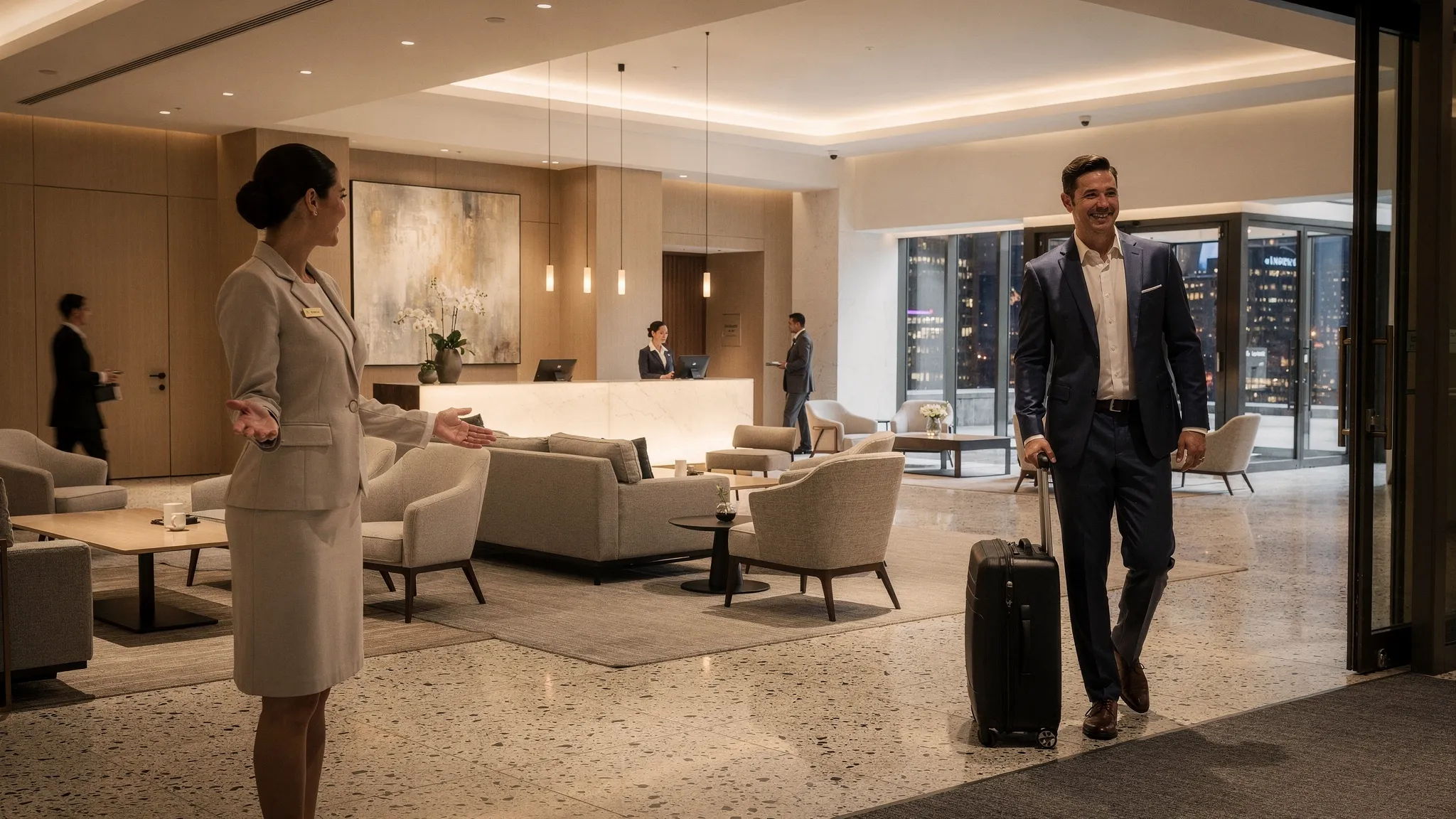
Tokyo has a particular kind of sonic density. Even when it’s calm, it’s humming: crosswalk melodies, train chimes, the soft scrape of shoes on polished station floors. The city is orderly, but never empty. When you arrive after a long flight, that constant precision can feel like a gentle pressure.
The first sign that a luxury upgrade is worth it in Tokyo is how quickly the hotel converts the city’s motion into stillness. Doors close with a soft seal. Hallway carpeting swallows footsteps. The air in the elevator is faintly scented, not floral, more like clean wood after rain.
You don’t need a palace, you need a reset.
A property that tends to suit this moment is one that prioritizes calm, efficient service and rooms designed for deep rest near major business and transit hubs.
Book luxury hotels in Tokyo on InnRox
The value of an upgrade here often shows up as time regained. If you’re in Tokyo for work, a smoother check-in and a quieter room can turn an exhausted evening into a functional one. If you’re here for pleasure, the upgrade pays off by protecting your first day from jet lag’s worst instincts.
Outside, Tokyo offers the opposite of quiet: seductive convenience. Step into Otemachi or Marunouchi and you’ll get wide sidewalks, clean lines of modern office towers, and the satisfying ritual of a coffee that arrives exactly as ordered. Move toward Ginza and the city becomes glossy, retail-lit, perfumed by department store basements where food is arranged like jewelry.
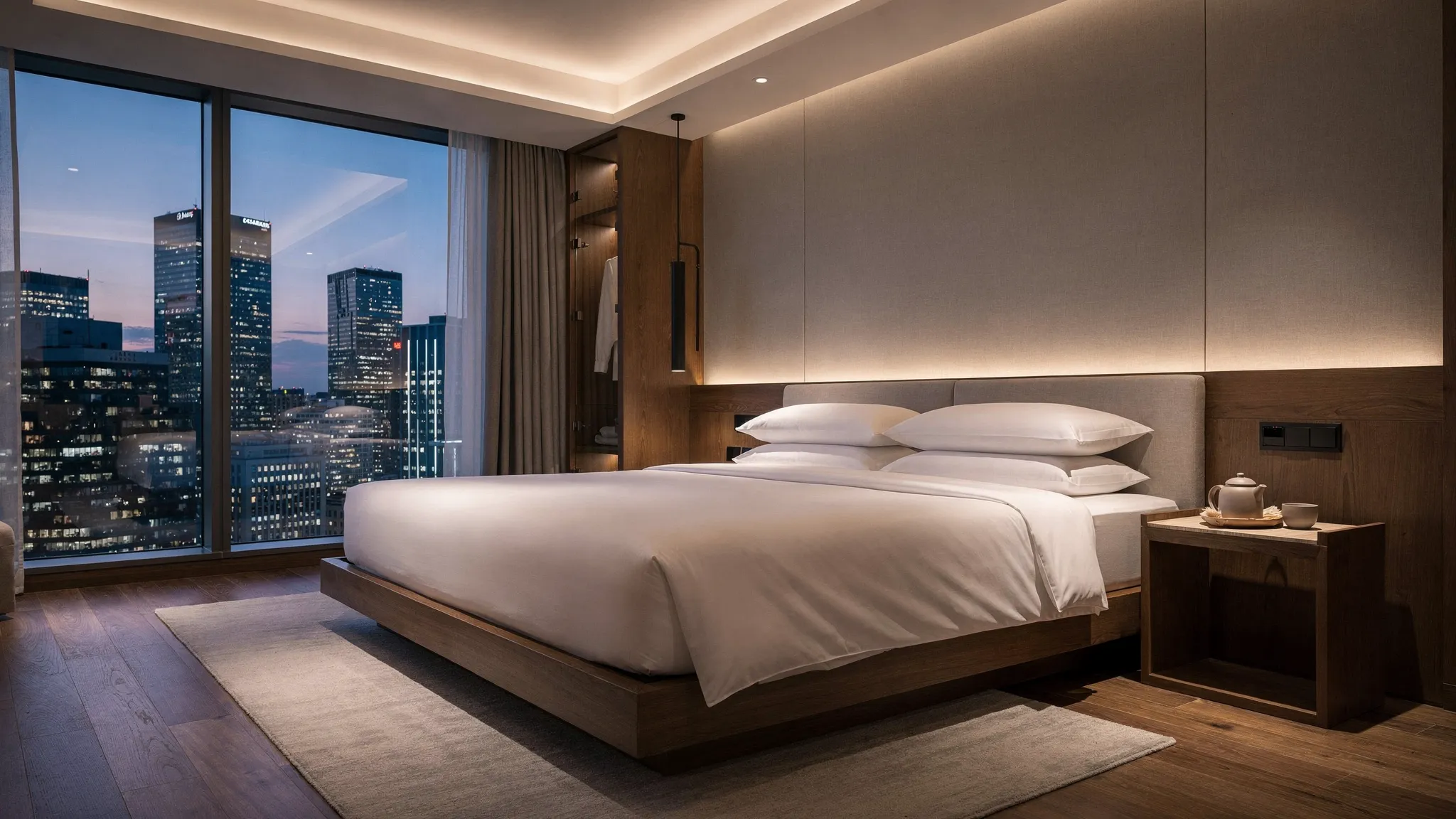
If you’re debating whether to upgrade, pay attention to what you’ll do in your room.
If you’ll only shower and leave, keep it simple. But if you’ll recover, work, or fight jet lag, the upgrade is often worth it for:
Luxury is easiest to justify when you translate it into outcomes. Here’s a simple way to evaluate the upgrade in 2026 without romanticizing it.
| Trip situation | Upgrade is usually worth it when… | Why it pays off | When to skip it |
|---|---|---|---|
| Red-eye arrival or major jet lag | Early check-in is likely, room is truly quiet | You buy back a day of function | You arrive mid-afternoon and won’t rest |
| Business trip with meetings | Lounge access or a room with a real work zone | You avoid working from the bed, save time on food | You’ll be out with clients all day |
| Short, celebratory stay | You’ll use the spa, view, or signature dining | You’re paying for memories and convenience | You plan to explore from morning to night |
| Traveling with family | Suites or connecting room options are available | Less friction, better sleep for everyone | Kids sleep anywhere and you won’t be in-room much |
| Highly walkable neighborhood | Hotel is positioned where you’ll spend your time | Less transit, more spontaneity | You’re sightseeing across the whole city |
The simplest rule: upgrade when you’re buying time or sleep. Skip it when you’re buying a logo.
London in 2026 feels like a city that knows how to hold opposites. You can step from a street of pale stone façades into a warm pub that smells like roasted malt and raincoats drying by the door. Black cabs slide past as if they own the choreography. The city’s oldness is not preserved in a museum way, it’s lived-in, working, occasionally sarcastic.
Here, luxury hotels earn their price when they become your calm headquarters in a city that can be logistically demanding. London is not difficult, but it is layered: neighborhoods have their own gravity, transit has its own rhythm, and the weather can change your mood by the hour.
The upgrade pays off when the hotel behaves like a quietly excellent operator. The doorman reads your pace. The front desk doesn’t narrate your stay, they execute it. Your room doesn’t feel themed, it feels intelligently composed: good light, honest materials, enough sound control that the city becomes a view, not a soundtrack.
If you want to stay central with a sense of modern luxury and high-touch service, you can start your search here.
Book luxury hotels in London on InnRox
What makes London upgrades worthwhile is rarely the chandelier. It’s the way luxury properties protect you from small London drains: waiting, standing, hesitating, getting wet, getting hungry at the wrong time.
Step outside and you can choose your London. Knightsbridge and Belgravia are polished, with museum days and elegant shopping streets. St James’s carries a clubland hush. Mayfair feels expensive even when you’re just walking through it. And if you want the city to feel less ceremonial, head to Marylebone for its village-like calm or take the tube east for galleries and restaurants that keep changing.
In London, upgrading makes the most sense when it reduces daily friction.
Think in practical terms:
If you’re traveling for business, luxury also buys a kind of psychological advantage: you can step into a meeting feeling composed instead of slightly rushed.
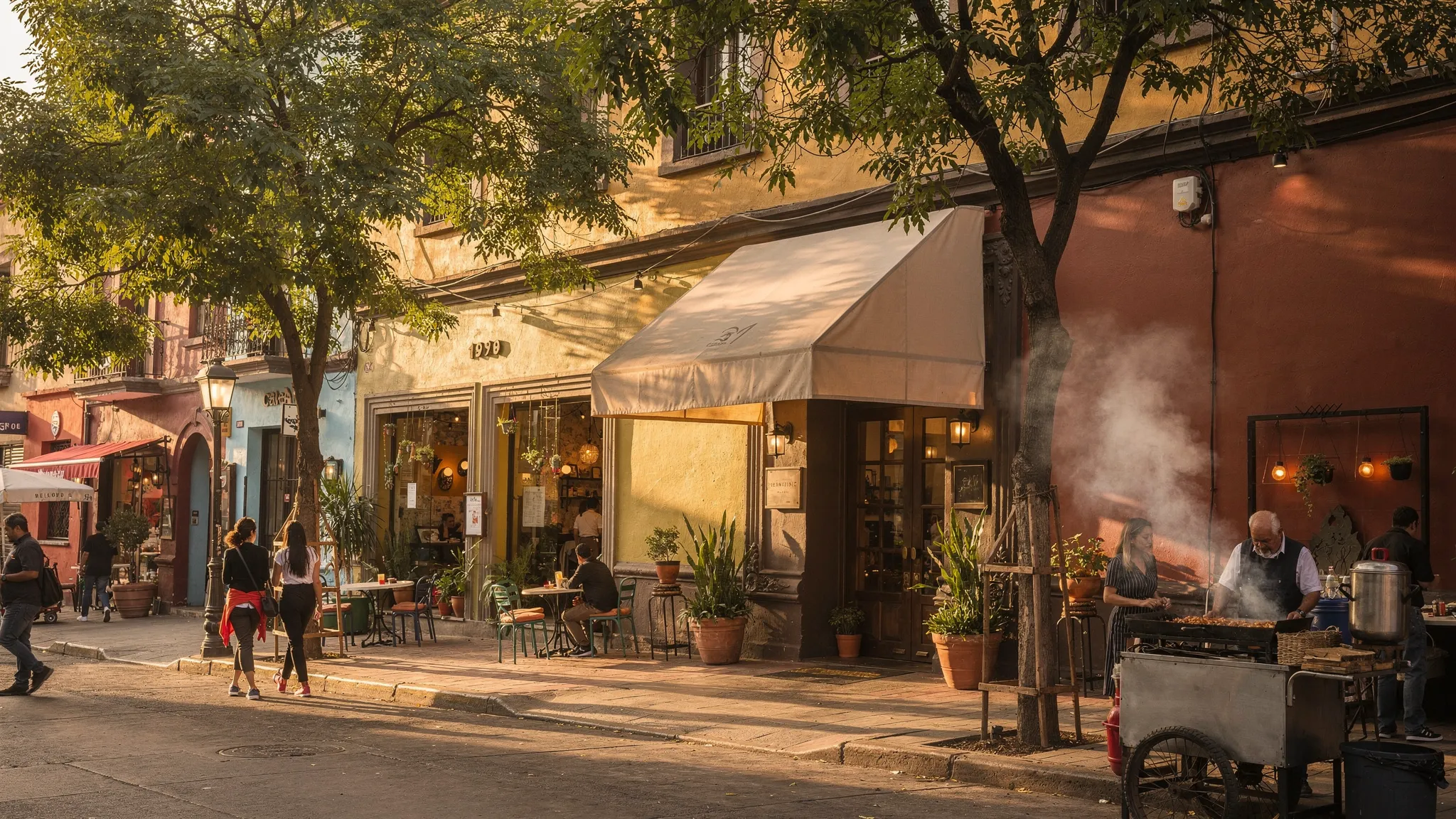
Mexico City doesn’t whisper. It breathes. You feel it in the jacaranda-lined streets when they’re in bloom, in the hiss of street food grills, in the way conversation fills restaurants late into the night. It’s a city of neighborhoods that behave like worlds: Polanco’s glossy calm, Roma and Condesa’s leafy cafés and artful storefronts, Centro’s historical weight.
In a city this alive, the best luxury hotels succeed when they create ease without removing you from the city’s texture. You want a lobby that feels like a threshold, not a fortress. You want staff who guide without overmanaging. You want a room that can hold stillness, then release you back into the city with energy.
A luxury stay can be particularly worth it here because it often comes bundled with the kinds of travel comforts that matter in big, dynamic cities: reliable transport help, strong security practices, and staff who can steer you toward experiences that match your taste.
Book luxury hotels in Mexico City on InnRox
When you step back outside, you can build your day around texture. In Polanco, mornings can start with a slow walk past high-end storefronts and bakeries that perfume the air with butter and sugar. In Roma, the city turns softer, more bohemian, with galleries tucked behind unassuming doors and parks that fill with joggers and dogs. At night, Mexico City’s dining scene becomes its own geography, a map drawn by reservations and recommendations.
Luxury pays off here when it gives you peace of mind that lets you explore more freely.
You’ll feel the difference if your hotel provides:
Storytelling aside, upgrades should be intentional. In 2026, the most reliable signals aren’t always the most obvious ones in photos.
Look for clues that the property is designed around flow:
If the entire luxury pitch is visual, you may be paying for drama, not ease.
Luxury guests in 2026 are often mixing purposes: a business trip with one free day, a romantic weekend with a few work calls, a family trip with one person needing quiet mornings.
The upgrade pays off when the hotel supports flexible rhythms, such as:
If you never use a spa, don’t pay for a spa story. If you always work from your room, pay for a room that makes that comfortable. If you travel to eat, prioritize properties with strong food and beverage programs or walkability to great neighborhoods.
Luxury should feel clear from the start, including the booking process. The simplest way to protect the “upgrade value” is to avoid surprises and friction, because that’s the opposite of what you’re paying for.
InnRox Travel is built around that idea: transparent terms, fast reservations, and straightforward booking without clutter. If your upgrade is meant to buy calm, your checkout flow should not add stress.
Explore luxury hotels worldwide on InnRox
The real test of a luxury upgrade isn’t the lobby photo, it’s your departure. You notice it when you check out without negotiating anything. When the hotel hands you your day back instead of taking it. When the car arrives on time. When you leave feeling oddly intact, not like someone returning from a trip, but like someone who lived well for a few days.
That’s when luxury pays off.
In 2026, the smartest upgrades aren’t about proving you’re a luxury traveler. They’re about choosing a hotel that understands what you needed before you had to ask, then delivering it quietly, consistently, and with enough warmth to make the efficiency feel human.