
Copyright © 2026 Innrox, Inc., an Innrox Group company. All rights reserved.

InnRox
Travel Experts
April 28, 2026
17 min read
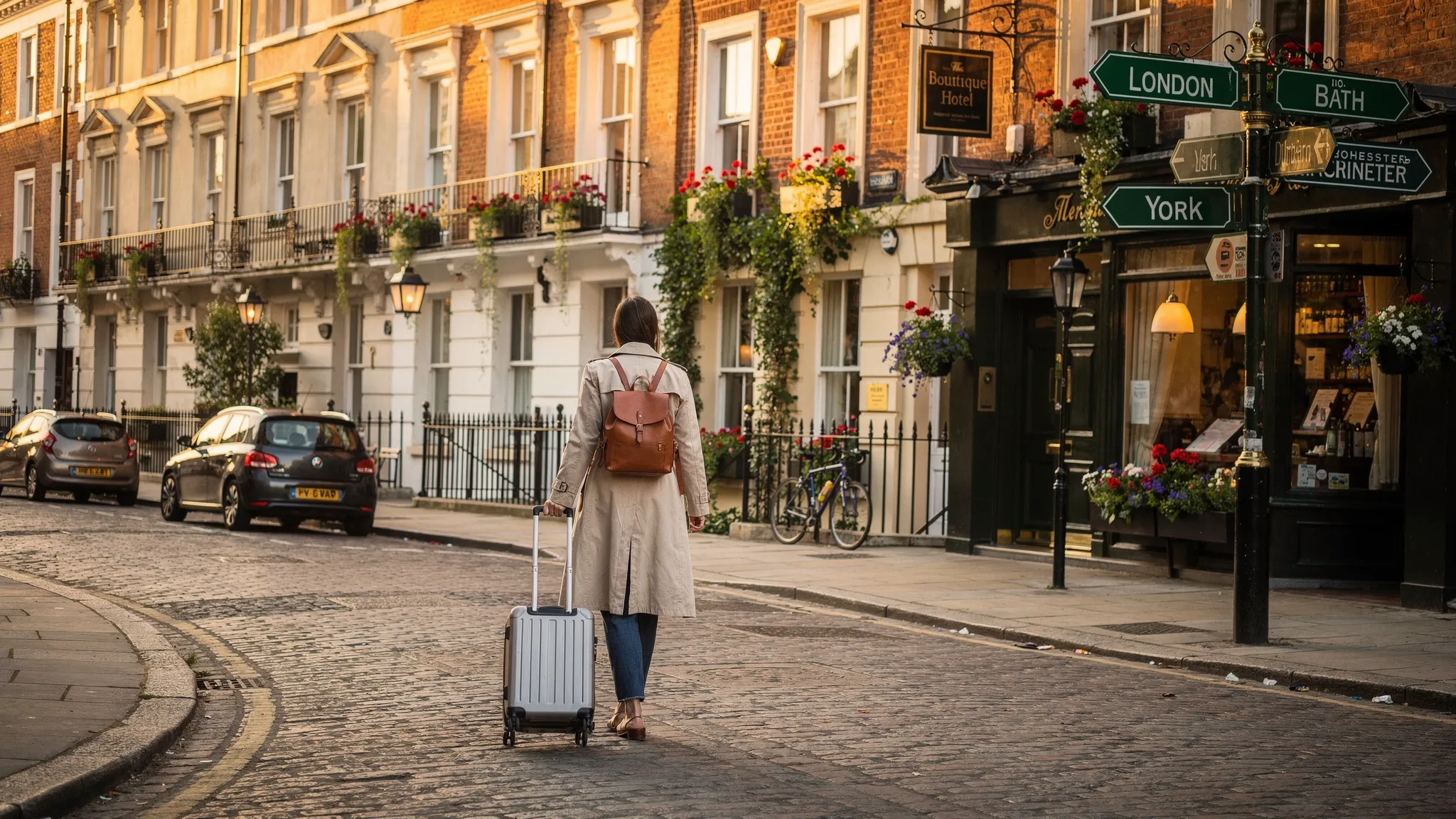
The first lesson England teaches is that distance is deceptive. A train can carry you from London’s glassy skyline to Bath’s honey-colored crescents in less time than it takes to cross some American cities in traffic. By evening, you can be listening to gulls in Brighton, walking medieval walls in York, or watching the Tyne bridges turn bronze in Newcastle light.
That is why choosing hotels in England as a first-timer is less about ticking off famous sights and more about choosing the right regional base. The hotel becomes your first neighborhood, your morning coffee route, your last-lit street after dinner. Pick well, and England unfolds in chapters instead of checklists.
This guide takes a hidden-gems and neighborhood-exploration approach. Rather than simply naming the biggest city in every region, it looks at where a first-time traveler can stay to feel the texture of a place: the side streets, station walks, markets, rivers, crescents, pubs, galleries, and quiet corners that make a trip linger long after checkout.

If you are searching for hotels England-wide, start with the kind of journey you want. London gives you scale and energy. Bath gives you elegance. York gives you history you can walk. Manchester gives you momentum. The Lake District gives you air, water, and space. Durham gives you a quieter kind of grandeur.
Use this table as a first filter, then read the regional stories below to understand how each base actually feels on the ground.
| Region | Best first-time base | Neighborhood feel | Good for | Hotel to compare |
|---|---|---|---|---|
| London | Covent Garden, Bloomsbury, South Bank | Walkable, theatrical, museum-rich | First arrivals, short stays, culture | The Resident Covent Garden |
| South East | Brighton or Oxford | Seaside lanes or university stone | Weekend breaks, coast, literary history | The Grand Brighton |
| South West | Bath | Georgian, slow-paced, beautiful at dusk | Romance, architecture, wellness | No 15 by GuestHouse Bath |
| East of England | Cambridge or Norwich | Cycling lanes, colleges, medieval streets | Gentle city breaks, history, river walks | University Arms Cambridge |
| West Midlands | Birmingham | Canals, restored civic buildings, food halls | Business trips, design, nightlife | The Grand Hotel Birmingham |
| East Midlands | Nottingham or Lincoln | Independent streets, castles, old markets | Value stays, history, local evenings | Harts Hotel Nottingham |
| North West | Manchester, Liverpool, or the Lakes | Industrial heritage, music, water, hills | City energy, football, scenery | The Midland Manchester |
| Yorkshire and the Humber | York | Medieval walls, tea rooms, railway grandeur | First-time history, walkability | The Grand York |
| North East | Durham or Newcastle | Cathedral heights, river bridges, coast nearby | Quieter culture, architecture, value | Hotel Indigo Durham |
A first evening in London can feel like entering a theater before the curtain rises. Taxis hiss over wet streets, pubs glow at the corners, cyclists slip past red buses, and somewhere behind a dark Georgian facade a dining room is filling with the low sound of conversation.
For first-timers, the best London hotel base is rarely the flashiest postcode. It is the area that lets you walk without constantly checking a map. Covent Garden works because it places you between theaters, the river, the National Gallery, Soho, and the British Museum. Bloomsbury is quieter, with garden squares, bookshops, and handsome streets that feel lived in rather than staged. South Bank gives you river views and easy strolling, especially if your itinerary leans toward museums, markets, and evening walks.
The trick is to stay close enough to the landmarks but not trapped inside them. A hotel around Covent Garden or Bloomsbury lets you spend the morning in a museum, return for a rest, then step back out for dinner without planning a full expedition. That matters when jet lag arrives at 4 p.m. and the city suddenly feels twice its size.
For a central first-time base, compare The Resident Covent Garden, especially if you want a clean, practical location near theaters and major walking routes.
London is also where transparent booking matters most. Event dates, school holidays, and weekend demand can change prices quickly, so look beyond the nightly rate and check the final total, cancellation terms, and whether pay-later options are available.
South East England is often underestimated by first-timers because it sits so close to London. But that closeness is its secret. You can leave the capital after breakfast and be smelling seaweed on Brighton’s pebbled beach or hearing bicycle bells echo between Oxford colleges by lunch.
Brighton is the more playful choice. Its streets climb away from the sea in layers of antique shops, cafes, record stores, tattoo studios, seafood counters, and Regency terraces. The Lanes are narrow and lively, with window displays that change from silver jewelry to vintage coats to pastries dusted in sugar. On the seafront, the air tastes of chips, salt, and rain even when the sun is out.
Oxford offers a different rhythm. The city is all spires, cloisters, college gates, and old pubs with low beams. Stay close to the historic center if you want to walk everywhere, but do not miss Jericho, just north of the core, where canals, independent restaurants, and neighborhood bars make the city feel less like a museum and more like a place that wakes up after the day-trippers leave.
If Brighton is calling, The Grand Brighton gives you the classic seafront experience, with Victorian presence and easy access to the promenade.
For first-timers, the South East works beautifully as a second stop after London. It gives you contrast without complicated logistics: coast or colleges, beach walks or bookshops, bright arcades or quiet courtyards.
Bath is the kind of city that changes color as the day moves. In the morning, its stone looks creamy and pale. By late afternoon, it deepens into gold. At night, the crescents and terraces seem to hold the last of the sun long after the sky has turned blue-black.
For many first-timers, Bath is the easiest introduction to South West England. It is compact, beautiful, and deeply atmospheric. The Roman Baths, the Royal Crescent, Pulteney Bridge, and the abbey are all walkable, but the better memory may be the quieter one: steam rising from spa water, the smell of roasted coffee on a side street, the sound of shoes on worn stone after dinner.
The South West can be ambitious if you try to do everything at once. Bristol, the Cotswolds, Devon, Cornwall, and Bath all compete for attention. If you only have two or three nights, base yourself in Bath and treat the rest as a reason to return. If you have longer, add a countryside stay or a coastal route later.
For a stay that matches Bath’s mix of Georgian elegance and modern boutique character, compare No 15 by GuestHouse Bath near Great Pulteney Street.
Bath also suits travelers who want their hotel to be part of the destination rather than a neutral room. Townhouse hotels, restored interiors, art-filled lounges, and spa-led stays all fit the city’s slower pace.
The East of England feels softer around the edges. Its skies are wide, its light is clear, and its best cities reward travelers who slow down. Cambridge is the obvious first-timer base, especially if you want a city that can be explored by foot, bicycle, or punt.
In Cambridge, the River Cam moves like a ribbon behind college gardens. Punts slide under bridges, willow branches touch the water, and bicycles lean in improbable numbers against railings. Stay near Parker’s Piece or the historic center and you can walk from breakfast to museums, college chapels, riverside pubs, and bookshops without needing to decode local transport.
The hotel scene here has leaned into thoughtful reinvention. Historic properties have been refreshed with contemporary interiors, while still keeping the mood of polished wood, patterned carpets, fireplaces, and old academic glamour.
For a landmark Cambridge stay, compare University Arms Cambridge, a hotel whose modern identity is tied closely to the city’s literary and collegiate atmosphere.
Norwich is the hidden-gem alternative. It has a Norman cathedral, an old market, independent shops, and lanes that feel less crowded than Cambridge in peak season. First-timers who like character over fame may find Norwich especially rewarding, with the Norfolk coast within reach for a longer itinerary.
Birmingham surprises people who arrive expecting only business blocks and shopping streets. Look more closely and the city becomes a study in reinvention: red-brick warehouses, canals, concert halls, Victorian arcades, glassy new districts, and one of England’s most interesting food scenes.
For business trip planners, Birmingham makes practical sense. It is central, well connected by rail, and strong for meetings, conferences, and short-notice bookings. For leisure travelers, it works best when you treat it as a neighborhood city rather than a landmark city. Walk the Jewellery Quarter for workshops, old cemeteries, cocktail bars, and brick facades. Follow the canals near Brindleyplace at dusk. Spend time around Colmore Row for grand banking architecture and polished dining rooms.
The Grand Hotel Birmingham is a useful symbol of the city’s modern positioning. After a major restoration, it reopened as part of the city’s renewed confidence in heritage hospitality, pairing ornate interiors with a sharper contemporary city-break feel.
Compare The Grand Hotel Birmingham if you want to stay close to the city’s business core, restaurants, and restored civic architecture.
The West Midlands also puts Stratford-upon-Avon, Warwick, and the Shropshire borders within reach. But for a first stay, Birmingham offers the strongest combination of transport, hotels, restaurants, and value.
The East Midlands is where first-timers can often find better value without losing character. It is less crowded than the classic England triangle of London, Bath, and York, yet it holds some of the country’s most satisfying city stays.
Nottingham is the livelier base. Its Lace Market has old industrial texture, with converted warehouses, red-brick streets, galleries, and independent places to eat. Around Hockley, the city turns youthful and creative, with cafes, bars, vintage shops, and late-night energy. The castle area gives the city its legend, but the neighborhoods give it its pulse.
For a calm base above the city, compare Harts Hotel Nottingham, especially if you want access to the center while staying slightly apart from the busiest streets.
Lincoln is more cinematic, though not in the celebrity sense. The climb up Steep Hill feels like walking through a physical timeline. At the top, the cathedral and castle dominate the skyline with a seriousness that makes modern life seem briefly temporary. It is a beautiful one- or two-night stop for travelers who like history without heavy crowds.
The East Midlands is also a strong region for travelers watching their budget. If London prices feel steep, adding Nottingham, Lincoln, or Stamford can stretch a trip while adding a very different kind of English texture.
The North West speaks in two voices. One is urban, fast, musical, and red-brick. The other is open water, stone walls, weather, and hills. First-timers usually choose between Manchester and the Lake District, though the best longer trip includes both.
Manchester is the practical city base. It has strong rail links, a major airport, serious restaurants, football culture, museums, music venues, and hotels that suit both business travelers and weekend visitors. The city’s atmosphere comes from its industrial past and creative present: old mills turned into apartments, canals lined with bars, tiled pubs, record shops, and a skyline that keeps changing.
The Midland Manchester remains one of the city’s classic railway-era hotels, close to central business districts, performance venues, and tram connections.
Compare The Midland Manchester if you want a central hotel with historic presence and practical access for meetings or city exploration.
Then there is the Lake District, where the day starts with mist over water and ends with boots by the door. It is England at its most elemental: slate, rain, sheep, fells, lakes, and fireplaces. For a first-timer, Windermere, Ambleside, or Ullswater make strong bases depending on whether you want convenience, walking, or a quieter lakeside mood.
If you are pairing city and nature, compare Another Place The Lake for a stay oriented around Ullswater’s water, hills, and slower pace.
York does not need to try very hard. The walls are still there. The Minster rises above the streets. The Shambles still narrows into a passage of leaning timber and shop windows. Trains arrive near the old city, and within minutes you can be walking into one of England’s most complete historic experiences.
For first-timers, York is almost perfect because it is compact and layered. Roman, Viking, medieval, Georgian, railway, and modern York sit close together. You can spend the morning on the walls, the afternoon in museums, and the evening in a pub where the windows fog from the warmth inside.
The area around the station is more useful than it first appears, especially for travelers carrying luggage or arriving late. The old city is close enough to walk, but you avoid dragging bags through the busiest medieval lanes.
For a grand railway-era stay, compare The Grand York, a strong choice if you want proximity to the station and the historic core.
Yorkshire also opens into a larger journey. Leeds brings shopping, dining, and nightlife. Harrogate adds spa-town elegance. Whitby gives you sea cliffs, abbey ruins, and smoked kippers. The Yorkshire Dales and North York Moors offer landscapes that feel far larger than the map suggests.
The North East is one of the most rewarding regions for travelers willing to go beyond the obvious first route. It feels distinct: warmer in conversation, harder-edged in landscape, and rich in stone, rivers, bridges, and coast.
Durham is the quieter first-timer base. Its cathedral and castle sit high above the River Wear, creating one of England’s most dramatic small-city skylines. The approach through winding streets is part of the experience. You hear students, church bells, gulls, and the soft rush of the river below the wooded banks.
A hotel in Durham lets you experience the city after day visitors have gone, when the lanes soften and the cathedral precinct feels almost private.
Compare Hotel Indigo Durham if you want a central stay in a historic setting with easy access to the cathedral area.
Newcastle is the more energetic choice. Stay near the Quayside or Grainger Town for bridges, restaurants, markets, and nightlife. The city has a handsome neoclassical core, a proud industrial history, and quick access to the Northumberland coast, where castles and beaches create one of England’s great under-sung day trips.
The most common mistake first-timers make is trying to see England as if it were a list of separate attractions. It travels better as a sequence of moods. Choose one major city, one historic city, and one slower landscape if you have a week. If you only have a long weekend, choose one region and go deeper.
Here is a simple way to decide:
| Trip length | Best regional strategy | Example route |
|---|---|---|
| 2 to 3 nights | Stay in one walkable city | London, Bath, York, Cambridge, or Manchester |
| 4 to 5 nights | Pair a gateway city with a smaller historic base | London and Bath, London and York, Manchester and the Lakes |
| 6 to 8 nights | Combine south and north by rail | London, Bath, York, Manchester |
| 9 nights or more | Add a landscape or coast | London, South West, Yorkshire, Lake District, North East |
If you are booking close to departure, prioritize hotels near stations or central walking districts. A slightly higher nightly rate can be worth it if it saves taxi costs, late-night transfers, and wasted time. If you are searching for better hotel deals, look for flexible cancellation where available, compare final prices rather than headline rates, and keep an eye on midweek stays in popular cities.
England’s hotel market changes by season, school holidays, events, football fixtures, conferences, and local festivals. A room that feels expensive on a Saturday may become reasonable on a Sunday or Monday. Likewise, business districts can be cheaper on weekends, while romantic heritage cities often climb sharply Friday to Sunday.
A few habits make booking easier:
InnRox is built for travelers who want a faster, clearer hotel search, with competitive rates, upfront pricing, instant confirmation, secure payments, and flexible options where available. That is especially helpful in England, where the right neighborhood can matter as much as the right city.
What is the best region in England for first-time visitors? London is the most common starting point, but the best first-time route often pairs London with Bath or York. If you prefer city energy, add Manchester. If you want scenery, add the Lake District or Northumberland coast.
Where should I stay in London on a first trip to England? Covent Garden, Bloomsbury, South Bank, and Marylebone are strong first-time areas because they are walkable, central, and well connected. They also make it easier to return to your hotel during the day.
Are hotels in England cheaper outside London? Often, yes. Cities such as Nottingham, Lincoln, Durham, and some parts of Birmingham can offer better value than central London, though prices still rise during events, weekends, and peak travel dates.
Is it better to stay near train stations in England? If you are visiting multiple regions, staying near a main station can save time and stress. This is especially useful in York, Manchester, Birmingham, Cambridge, and London.
How many regions of England should I visit in one week? Two or three is usually enough. A good first-timer plan is one major city, one historic city, and one slower destination such as the coast, countryside, or a spa town.
England rewards travelers who choose their base carefully. The right hotel does more than give you a bed. It shapes your first walk in the morning, your last view at night, and the neighborhood you remember when the trip is over.
When you are ready to compare hotels in England, use InnRox to search competitive rates, see transparent final prices, and book with instant confirmation. Start with the region that matches your travel mood, then choose the neighborhood that feels like the story you want to step into.
Tags