
Copyright © 2026 Innrox, Inc., an Innrox Group company. All rights reserved.

InnRox
Travel Experts
June 16, 2026
20 min read
The cheapest hotel I almost booked in Porto looked perfect at midnight. The map pin sat near the river, the photos glowed with tiled walls and soft white bedding, and the nightly rate was low enough to make me suspicious in the best possible way. Then I opened the map properly.
The hotel was not quite in the postcard district. It was up a steep climb, several blocks from the transit line I needed, and close enough to a nightlife street that the bargain began to wobble. The room rate was cheap. The stay, after taxis, late-night noise, and a paid breakfast I did not need, was not.
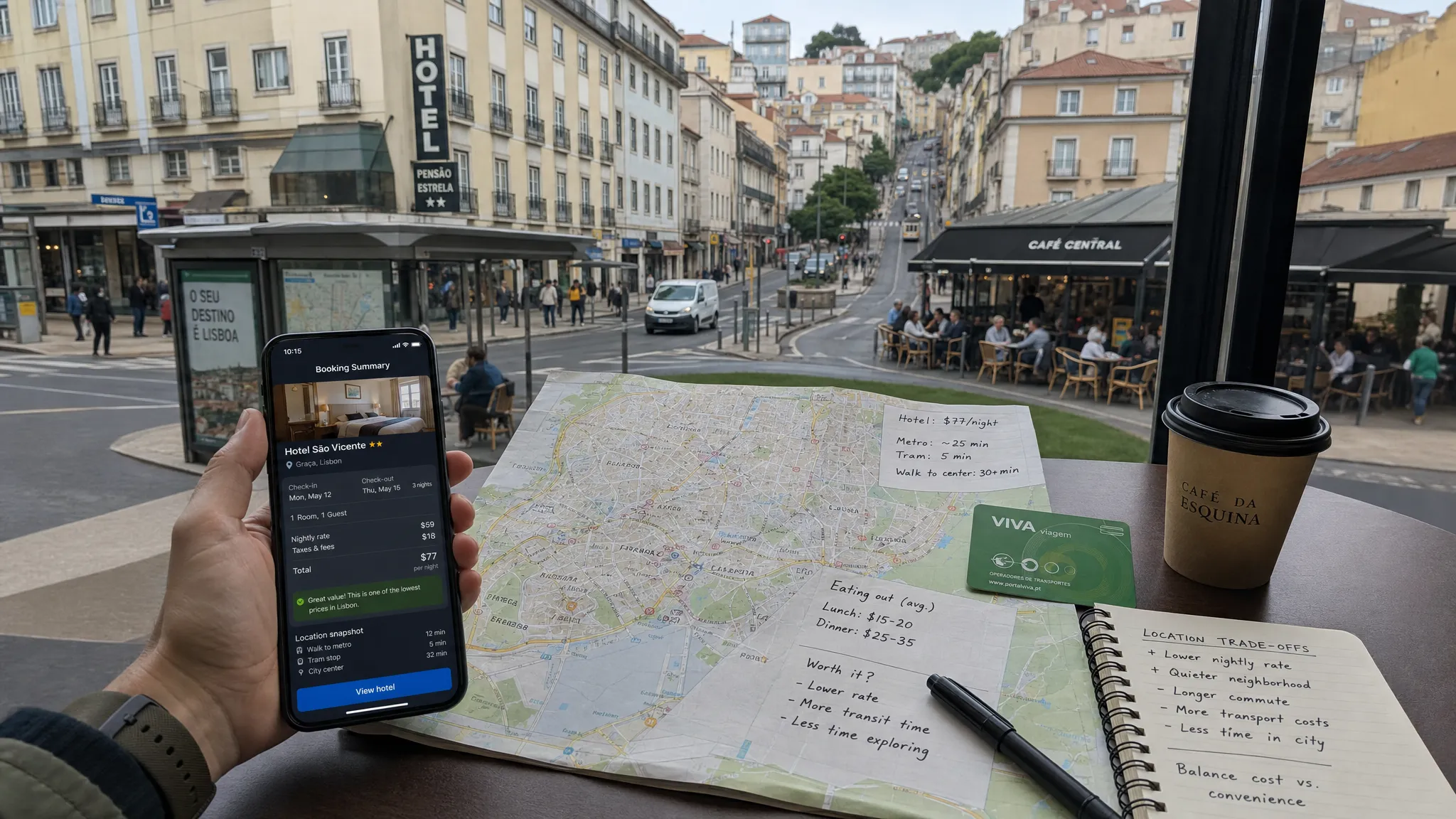
That is the quiet truth behind searching for hotels cheap but worth it. Smart travelers do not start by asking, “What is the lowest price?” They ask, “What will this hotel make easier, and what will it make harder?” The answer changes by city, neighborhood, season, and trip style.
This guide follows that question through three very different hotel decisions: a food-and-walking weekend in Porto, a heat-and-traffic puzzle in Bangkok, and an efficient city stay in Berlin. The destinations are different, but the booking logic is the same. A good cheap hotel protects your sleep, your time, your plans, and your final bill.
A cheap hotel becomes expensive when it sits in the wrong version of the city.
In Porto, the difference between staying near Ribeira, Bolhão, Cedofeita, Vila Nova de Gaia, or Campanhã is not just aesthetic. It changes how your days feel. Ribeira is atmospheric, steep, romantic, and often crowded. It works beautifully if you want river views, late dinners, and the pleasure of walking out into the old city before tour groups arrive. But a low rate there can hide small rooms, stairs, street noise, or paid views that are less dramatic than the photos suggest.
Bolhão and Trindade feel more practical. You trade some riverfront romance for better transit, easier airport access, and a more useful base for eating, shopping, and walking across the city. Cedofeita is often more local and calmer, better for travelers who want galleries, cafés, and quieter evenings. Gaia can be excellent for wine lodges and views back toward Porto, but crossing the river every day can become a hidden time cost if most of your plans are north of the Douro.
If you want a simple central base, compare options such as Moov Hotel Porto Centro with properties closer to the river. The point is not that one hotel type is always better. It is that a clean, no-fuss central hotel can beat a more photogenic stay if your trip depends on walking, transit, and easy meals.
For a more character-focused Porto stay, look at searches around The Editory House Ribeira Porto Hotel. A hotel in or near Ribeira can be worth paying more for if your trip is romantic, short, and built around atmosphere rather than efficiency.
The mistake is treating “central” as one category. In old cities, central can mean charming but steep, lively but loud, close to monuments but inconvenient for stations, or beautiful but surrounded by tourist-priced restaurants. Before booking, trace your real first day. Airport to hotel. Hotel to dinner. Dinner back to hotel after dark. Hotel to the station with luggage. If the route looks annoying on the map, the hotel is already charging you in time.
The nightly rate is only the first line of the story. The final cost includes fees, transport, meals, policies, and small frictions that rarely look dramatic until you add them together.
A traveler staying three nights in a slightly cheaper outer neighborhood may spend more on rides than they saved. A family may book a bargain room and then pay daily for breakfast because there is nowhere easy nearby. A business traveler may save on the room but lose an hour each morning crossing the city. A couple may pay for a “city view” that is really a partial view over rooftops.
Here is the first filter smart travelers use before trusting a low rate:
| Cost to check | Why it changes the deal | Smart traveler question |
|---|---|---|
| Local taxes and mandatory fees | They can raise the final bill even when the room rate looks low | Is the final price shown clearly before payment? |
| Parking | City-center parking can erase savings fast | Do I actually need a car in this city? |
| Breakfast | A cheap room can become mediocre value if breakfast is expensive and unavoidable | Are there good cafés nearby, or do I need hotel breakfast? |
| Airport transfers | Remote hotels can require taxis, trains, or late-night rides | What does arrival cost at my actual landing time? |
| Early check-in or late checkout | Red-eye flights often turn cheap rooms into waiting-room problems | Is flexibility included or charged separately? |
| Resort, amenity, or service fees | Some properties add charges for facilities you may not use | Are any mandatory charges listed in the terms? |
| Room upgrades | Vague views and higher floors can be weak value | Does the upgrade change comfort, space, or location meaningfully? |
| Cancellation terms | Nonrefundable deals are cheaper until plans shift | Is the discount worth losing flexibility? |
This is where transparent booking matters. If the final price, payment terms, cancellation policy, and included extras are clear before you reserve, you can compare hotels like a traveler instead of guessing like a gambler.
Travelers often overpay because they book the hotel that matches the fantasy version of the trip. The romantic hotel above the old square. The beach resort even when most plans are in the city. The business hotel near the airport when meetings are downtown. The famous luxury district when the best meals are elsewhere.
In Porto, a food-focused traveler might do better near Bolhão than directly on the river. Morning markets, bakeries, casual lunch counters, and transit access can matter more than a view you only see for ten minutes. A honeymooner, on the other hand, may happily pay for the mood of Ribeira or Gaia because the hotel is part of the experience.
The same logic applies almost everywhere. If your trip is about nightlife, pay attention to the route home at 1 a.m. If it is about museums, check morning walking distances. If it is a family trip, look for elevators, room size, nearby groceries, and easy transit. If it is a business trip, measure the commute to your first meeting, not the distance to the landmark on the postcard.
A cheap hotel is worth it when the location reduces the number of decisions you have to make each day. It is not worth it when every outing begins with a negotiation: taxi or train, walk or ride, breakfast here or somewhere better, leave early or risk being late.
Hotel categories matter less than travelers think, but the tradeoffs matter more.
A budget hotel can be excellent value if it is clean, well located, and honest about room size. A boutique hotel can feel memorable, but charm sometimes comes with stairs, older plumbing, smaller rooms, or more street noise. A business hotel may not feel soulful, yet it can be the smartest choice for short stays because it usually prioritizes predictable check-in, transit access, work surfaces, and practical breakfasts. Luxury can be worth it when service, space, spa access, or location truly changes the trip. It is weak value when you only use the room to sleep.
| Hotel style | Best for | Where travelers overpay |
|---|---|---|
| Budget city hotel | Short stays, solo travelers, practical sightseeing | Paying extra for a weak location just because the room looks newer |
| Boutique hotel | Couples, food trips, neighborhood exploration | Mistaking small and stylish for comfortable and quiet |
| Business hotel | Work trips, late arrivals, transit-heavy itineraries | Booking far from the actual meeting area to save a little |
| Aparthotel | Families, longer stays, travelers who want simple meals | Ignoring cleaning fees, deposits, or transit distance |
| Resort-style hotel | Relaxation trips where you use the facilities | Paying resort-style costs on a city-focused itinerary |
| Classic luxury hotel | Special occasions, service-driven stays, high-comfort trips | Paying for prestige when location or room category is average |
The best-value hotel is rarely the cheapest in every column. It is the one where you are not paying for things you will not use, and not saving money on things you badly need.
Bangkok teaches hotel bookers humility. A room can be inexpensive, stylish, and technically central, yet still be wrong if it strands you in traffic or forces you into long rides during the hottest part of the day.
Imagine landing after a long flight, stepping into humid evening air, and heading toward a hotel chosen because the price was too good to ignore. The room is fine. The neighborhood is interesting. But the nearest train station is not quite close enough with luggage, taxis crawl at dinner time, and the temple or food market you wanted is on the other side of the city. Suddenly, the low nightly rate is competing with heat, time, and transport friction.
Bangkok is not one hotel market. Sukhumvit works well for nightlife, shopping, restaurants, and elevated train access, especially if you choose near a useful station rather than a random side street. Silom and Sathorn can make sense for business travelers and visitors who want a balance of offices, dining, and transit. The Riverside can feel calmer and more romantic, but it may add boat, taxi, or shuttle planning. The Old City is atmospheric for temples and heritage sights, though transit can be less straightforward depending on the exact location. Chinatown is thrilling for food travelers, but noise and late-night street energy are part of the bargain.
For travelers who want a practical Sukhumvit base, searches such as ibis Styles Bangkok Sukhumvit 4 can help anchor the comparison. The essential question is whether the hotel connects easily to the way you will actually move around Bangkok.
If you are considering the river and Silom side of the city, compare options around Centre Point Silom. That side can be useful when your plans involve river transport, old-city sightseeing, or a more mixed business-and-leisure schedule.
The hidden costs in Bangkok are often not dramatic line items. They are repeated small choices. Taxi instead of train because it is too hot. Paid hotel breakfast because you do not want to walk in the morning humidity. Early check-in because your flight landed before sunrise. A view upgrade that sounds glamorous but matters less than being near transit. A rooftop drink minimum that turns “just one evening out” into a premium experience.

Bangkok also shows why “best area” depends on the traveler. A couple on a slow, romantic trip may value the Riverside more than train convenience. A solo food traveler may prefer Chinatown or Silom even with more noise. A business traveler should choose based on meeting locations and peak-hour movement, not nightlife lists. A family may care most about room size, pool access, and easy routes back for midday rest.
Cheap becomes worth it when the hotel works with the city’s rhythm. In Bangkok, that usually means respecting heat, traffic, station access, and your arrival time.
Upgrades are where cheap hotel bookings often lose their discipline. A low base rate gets you in the door, then the booking page offers breakfast, better views, flexible cancellation, larger rooms, club access, airport transfers, or late checkout. Some are smart. Some are just polished ways to raise the bill.
A good upgrade changes comfort, time, or certainty. A larger room can be worth it for families, longer stays, or work trips. Breakfast can be worth it when the hotel is far from good morning options, when you have early meetings, or when feeding children quickly matters. Flexible cancellation can be worth far more than the discount on nonrefundable rates if your flights, work schedule, or weather risk might shift. Late checkout can be excellent value after an overnight flight or before an evening departure.
Weak upgrades are usually vague. “City view” can mean a sliver between buildings. “High floor” may not solve street noise if windows are poor. Spa access may be limited by time slots, age rules, or extra charges. A minibar package rarely beats buying snacks nearby. Parking packages are only useful if you truly need a car, and in many walkable cities the better choice is not to rent one at all.
Before paying more, ask one question: “Will this upgrade change what I can do?” If the answer is yes, it may be value. If the answer is only “it sounds nicer,” keep the money for dinner, transit, or a better location.
Berlin is a city where travelers often book too literally. First-timers see Mitte and assume it is the only sensible base. It can be, especially for classic sightseeing, government visits, museums, and short stays. But Berlin’s value often lives in the relationship between neighborhood and transit, not just in distance to the center.
Mitte gives convenience and recognizable landmarks, but prices can rise around events, holidays, and peak weekends. Alexanderplatz is practical for transit, though not every traveler loves its scale and atmosphere. Friedrichshain and Kreuzberg can offer a more local evening rhythm, with restaurants, bars, galleries, and late-night energy, but some streets are noisy. Charlottenburg can feel calmer and more polished, useful for shopping, business, and travelers who prefer a less hectic base. Areas near the main station can be efficient for rail arrivals and one-night stays, but the immediate surroundings may feel more functional than charming.
For a transit-focused Berlin stay, compare hotels such as Motel One Berlin-Alexanderplatz. A hotel near a major transport hub can be worth more than a prettier room farther out if your schedule includes several neighborhoods.
For travelers arriving by rail or planning meetings across the city, searches around Hotel AMANO Grand Central can help frame the value of staying close to Berlin’s main station area. The practical benefit is not romance. It is fewer transfers, easier departures, and less friction with luggage.
Berlin’s hidden costs are quieter than in resort destinations. Breakfast is a common one. If a hotel charges separately and the neighborhood has good bakeries, skipping it may improve both budget and experience. Parking is another. A cheap hotel rate becomes less persuasive if you pay daily garage fees for a car you rarely use. Event surges matter too. Trade fairs, concerts, major exhibitions, and holiday markets can reshape prices by neighborhood, sometimes making a normally reasonable hotel look strangely expensive.
There is also the nightlife tax, even when it is not listed on the bill. A hotel above a lively street may be perfect for travelers who plan to join the scene. It is poor value for anyone who needs sleep before a conference. A quieter hotel three transit stops away can be cheaper and better, as long as the route home is simple.
Cheap is seasonal. A hotel that is good value in February can be overpriced in June. A quiet neighborhood in shoulder season can become crowded during festivals. A beach hotel can look affordable before you realize the weather, water temperature, or local closures do not match the trip you imagined.
In Porto, spring and autumn often balance atmosphere and comfort better than the busiest summer weeks. Summer can still be wonderful, but central rooms may feel smaller, hotter, and noisier when the city is full. In Bangkok, dry-season demand can lift rates in popular areas, while rainy periods may offer better deals for travelers who are flexible and realistic about afternoon storms. In Berlin, weekdays and weekends behave differently depending on events. A business-heavy district may drop on weekends, while nightlife or cultural areas may rise.
Seasonality also affects which hotel category is worth it. In hot or rainy months, a better-located hotel can save you from extra rides. In cold months, proximity to transit matters more. During peak event weeks, free cancellation or pay-later options where available can protect you from locking into the wrong plan too early. During low season, a modest upgrade to a better neighborhood may cost less than expected and deliver a much better stay.
Smart travelers compare not only the hotel, but the hotel in that specific week.
When the booking page fills with options, use a simple sequence. It keeps you from being distracted by photos, discounts, and labels that sound better than they function.
First, choose the neighborhood based on your itinerary. Not the most famous area, not the cheapest outer district, and not the place someone loved on a completely different trip. Match the hotel to your first arrival, your main activities, your evening plans, and your departure.
Second, compare the final price. Look for taxes, fees, breakfast, parking, deposits, cancellation terms, and payment timing. If the final price is not clear, the cheap rate is not trustworthy enough yet.
Third, read room details skeptically. Check bed type, room size, window information, elevator access, air conditioning, noise comments, and whether the photos show the exact room category or only the best rooms in the property.
Fourth, test transportation. A hotel that looks close on a map may require hills, transfers, traffic, or expensive rides. Search the route at the time of day you will actually travel. Airport arrival at noon is not the same as arrival at midnight.
Fifth, price the upgrades against your real plans. Pay for flexibility, space, breakfast, or late checkout when they solve a real problem. Skip vague prestige upgrades that do not improve the trip.
Sixth, consider the emotional cost. This sounds soft, but it is practical. A cheap hotel that makes you dread returning at night is bad value. A simple room in the right area can feel generous because it lets the city work around you.
The most common waste is paying for convenience in the wrong place. A hotel can be expensive because it is near an attraction you will visit once, while a better-value neighborhood near restaurants and transit would improve every day of the trip.
Another common waste is paying for hotel breakfast automatically. In food cities like Porto, Bangkok, Berlin, Mexico City, or Istanbul, breakfast outside the hotel can be cheaper and more memorable if the neighborhood makes it easy. But the reverse is also true. If you are staying near an airport, traveling with children, or starting early for business, included breakfast can be a bargain.
Parking is the third trap. Travelers often keep a rental car for the whole stay because they need it for one day. In dense cities, that can mean paying for parking while also using transit or taxis. Sometimes the better move is to rent later, return earlier, or choose a hotel based on transit instead.
The fourth waste is the half-useful luxury upgrade. If you arrive late, leave early, and spend all day outside, a premium room may not matter. If the hotel is the trip, as with a resort, wellness weekend, or special occasion, the upgrade may be central to the experience. Value depends on use.
A good hotel platform should reduce uncertainty, not add noise. When comparing stays on InnRox, travelers can look for competitive hotel rates, clear terms, upfront final pricing, real-time availability, and instant confirmation. Flexible options such as free cancellation or pay-later deals may be available depending on the property and rate.
That matters because smart hotel booking is not about chasing the lowest number. It is about seeing the real terms before you make a decision. A simple booking flow, secure payment, and clear policies help you focus on the real comparison: neighborhood, total cost, room fit, and trip purpose.
If you are still deciding where to stay, start broad with a destination search such as Porto hotels, Bangkok hotels, or Berlin hotels. Then narrow by the area that makes your itinerary easier, not just the rate that looks best at first glance.
The best cheap hotel is not the one with the loudest discount. It is the one you barely have to think about once you arrive.
What makes a cheap hotel actually worth it? A cheap hotel is worth it when the low rate does not create higher costs elsewhere. Check location, transport, breakfast, taxes, fees, cancellation terms, room size, and noise before deciding.
Should I always book the cheapest hotel in the city center? Not always. A central hotel can be great value if it saves time and transport costs, but tourist-heavy streets may bring noise, smaller rooms, and overpriced restaurants. Compare the exact street, not just the district name.
When is it better to stay outside the main tourist area? Staying outside the main tourist area can be smarter if transit is easy, the neighborhood has good food, and your plans are spread across the city. It is risky when late-night transport is limited or daily rides erase the savings.
Are hotel breakfast upgrades worth paying for? They are worth it for early departures, business trips, families, airport stays, or neighborhoods without good morning options. In strong food neighborhoods, local cafés may offer better value and a more memorable experience.
Which hotel fees should I check before booking? Check local taxes, mandatory service or amenity fees, parking, breakfast, early check-in, late checkout, resort fees, deposits, transfer costs, and cancellation penalties. The final price matters more than the displayed nightly rate.
Are boutique hotels better value than luxury hotels? Sometimes. Boutique hotels can offer atmosphere and neighborhood character at a lower price, but they may have smaller rooms or more noise. Luxury hotels are better value when you will use the service, space, facilities, or location.
How far in advance should I book hotels cheap but worth it? It depends on season and destination. Book earlier for major events, holidays, peak summer, and business-heavy cities. If your plans may change, prioritize flexible terms where available instead of chasing the lowest nonrefundable rate.
Before you reserve the lowest rate, pause long enough to price the whole stay: the neighborhood, the meals, the transfers, the upgrades, and the small inconveniences. That is where real hotel value lives.
Use InnRox to compare clear hotel options, check final prices upfront, and book with fewer surprises. Cheap is good. Cheap, well located, transparent, and easy to live with is better.
Tags