


InnRox
Travel Experts
March 5, 2026
10 min read
It was still dark when my calendar invite hit: “Singapore, in person. 48 hours.” The kind of message that turns a quiet Monday into a logistics sprint. Not because the meetings are hard to schedule, but because the sky is. Seats are finite, schedules are unforgiving, and the price of getting there can change while you’re still deciding whether you need a carry-on or a checked bag.
In that first hour, before coffee, I did what most travelers do when they’re trying to move fast: I opened a flight search, the same way millions of people do after typing “expedia flight” into a browser. And I faced the decision that quietly controls the whole budget.
Do you lock the plane ticket first, or do you secure the hotel and build everything around it?
For certain trips, especially business-heavy city stays like Singapore, booking air first is not just convenient, it is often the move that saves the most.
Hotel pricing can be dynamic, but hotel supply is elastic in a way flights simply are not. If your preferred property fills up, you can often shift by a few blocks, pick a different brand tier, or trade a view for a better rate.
Flights do not give you that many levers. On a long-haul route, there may be only a handful of nonstop options per day, and every cabin has a limited number of seats at each fare level. Once those cheaper fare buckets are gone, they rarely return.
That is the hidden reason “book air first” can matter: it is the hardest inventory to replace without paying a penalty.
Singapore is a great case study because it behaves like a “magnet city” for work. Regional HQs, finance, shipping, tech, and conferences keep demand steady year-round. When your travel dates are tied to a meeting, a pitch, or an exhibition hall opening, your flight is the immovable piece.
When I travel for work, I treat the flight like the spine of the trip. Once it is set, everything else becomes a smart optimization problem: neighborhood, walking time, cancellation terms, and how much quiet you can buy near the city’s hum.
The meeting time was fixed. The arrival window was not. That difference matters.
If you can land at 6:00 am instead of 10:00 pm, you may gain a working day without paying for an extra night. If you can return on a late flight, you can compress the trip and reduce hotel nights.
So before looking at hotels, I looked at:
That last point is the quiet savings many travelers miss. A cheaper hotel rate does not help if your flight timing forces you to book two extra nights.
If you are trying to decide quickly, here are the scenarios where air-first planning is most likely to protect your budget.
| Scenario | Why flights should come first | What to do next |
|---|---|---|
| Fixed meeting dates, low flexibility | You cannot shift days to chase a better fare | Lock the best schedule, then optimize hotel neighborhood and terms |
| Long-haul routes with limited nonstop options | Fewer comparable alternatives if prices jump | Prioritize the flight that protects rest and productivity |
| Peak business weeks and major conventions | Fare buckets disappear quickly when demand spikes | Book air first, then hunt hotel deals with free cancellation |
| Multi-city itineraries | One flight change can break the whole chain | Lock the “keystone” segment, then fill in the rest |
| Short-notice travel | You are competing with last-minute demand | Book air immediately, then use hotel flexibility to save |
Notice what is not on that list: “because the hotel is cheaper.” Air-first savings are usually about avoiding forced compromises later.
Once the flight was confirmed, the hotel search became calmer, almost architectural. Singapore is a city that feels engineered: glass and steel rising from tropical heat, streets that are clean enough to reflect neon, and neighborhoods that switch personalities by the block.
With flight times locked, I could choose a base based on how I wanted the city to support the trip.
And because business trips rarely go exactly to plan, I cared about terms as much as location: transparent pricing, clear cancellation rules, and a booking flow that does not add friction when you are trying to move fast.
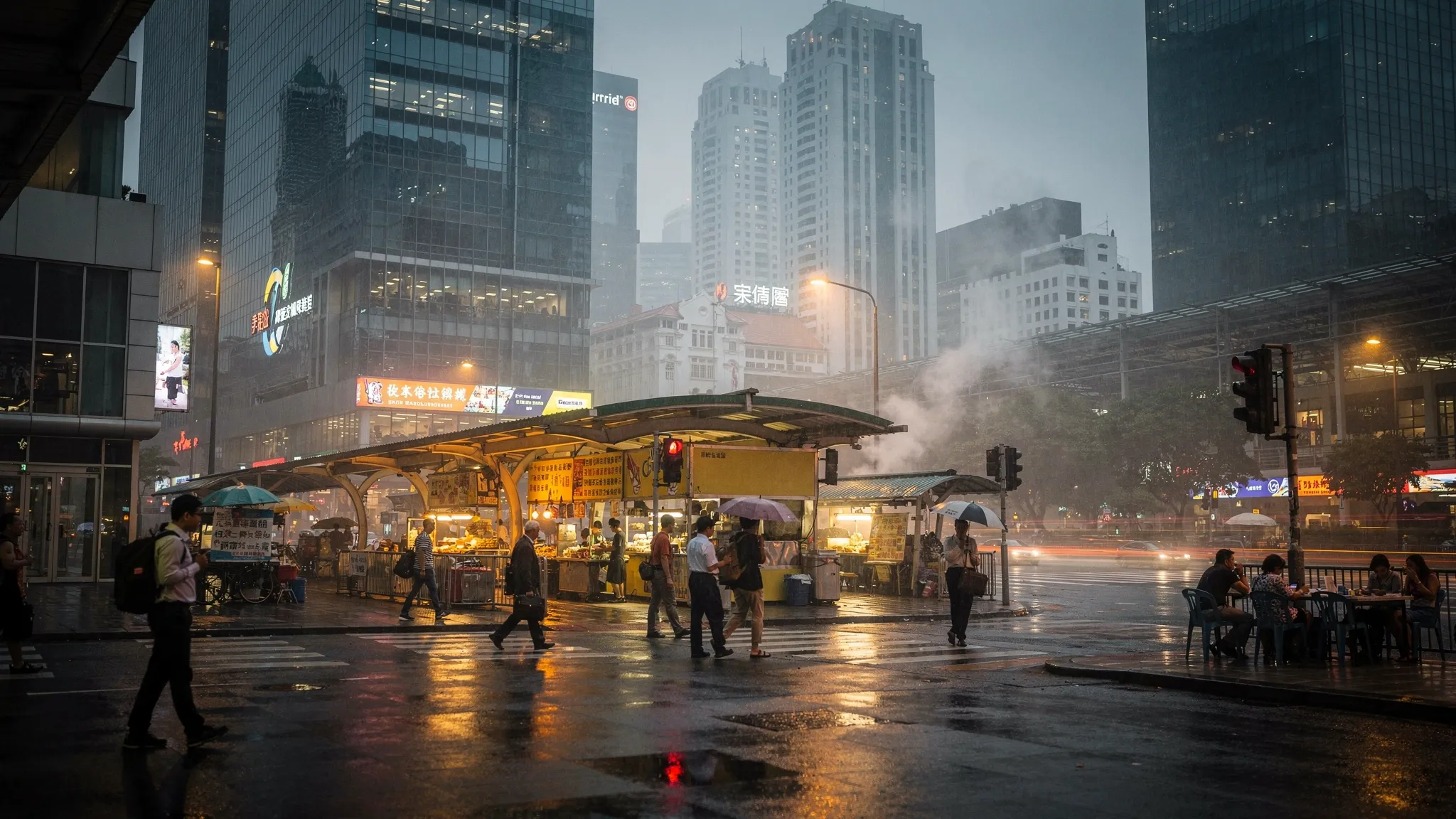
When your flight is locked, you can shop hotels like a strategist: pick the neighborhood that reduces taxi time, choose the comfort level that protects your sleep, and use flexible terms to keep options open.
If you want a modern Singapore stay that feels rooted in the city’s maritime and trading identity, start with The Clan Hotel Singapore. The atmosphere leans quietly upscale, the kind of place where the lobby feels like a pause button after a day of meetings and humidity. https://innrox.com/hotel-search?direction=The+Clan+Hotel+Singapore
For a base that sits close to the pulse of the CBD and makes it easy to move between business and food, consider Oasia Hotel Downtown, Singapore by Far East Hospitality. You want a property that makes “quick return to the room” realistic between sessions, not aspirational. https://innrox.com/hotel-search?direction=Oasia+Hotel+Downtown+Singapore+by+Far+East+Hospitality
If your meetings bounce around City Hall, Bugis, and the shopping corridors, Carlton Hotel Singapore can be a practical anchor. It is the kind of placement that helps you keep mornings predictable, even when your schedule is not. https://innrox.com/hotel-search?direction=Carlton+Hotel+Singapore
Once flights are purchased, travelers often treat the rest like cleanup. But the real savings are usually in the second pass, when you can make hotel choices based on reality instead of guesswork.
Here is what changed for me the moment the airfare was locked:
First, I could stop overpaying for “just in case” hotel nights. With exact arrival and departure times, I booked the nights I needed, not the nights my anxiety suggested.
Second, I could choose a neighborhood for productivity, not vibes alone. In Singapore, a 20-minute difference in commute can decide whether you eat a proper dinner or end up with a packet snack under fluorescent light.
Third, I could take advantage of the hotel market’s flexibility: free cancellation and pay-later options where available. That kept the trip adaptable without leaving me exposed on the most volatile cost: the flight.
Air-first is powerful, but not universal. There are trips where the hotel is the true constraint.
You might consider securing the hotel first if:
In those cases, the hotel is the “immovable piece,” and the flight becomes the flexible one.
The key is not a universal rule. It is correctly identifying which inventory is most likely to force you into expensive compromises later.
When you are stuck between tabs, use this quick framework.
If you answer “yes” to two or more, book air first.
If you answer “yes” to two or more, consider hotel first.
Even if you book air first, you can keep the rest flexible.
Look for:
The tricky thing about airfare is not finding one price, it is tracking how fast that price moves while you are still deciding. If you travel often, even simple automation can help you monitor patterns, reminders, and approval flows so you are not constantly restarting the same search spiral.
For teams that want to operationalize that kind of travel tracking, an AI-focused partner like Impulse Lab can help build practical automations and custom tools that turn repetitive planning into a lightweight system.
You do not need a complicated setup to benefit. Even a basic routine, consistent check times, saved traveler preferences, and a clear “book or wait” threshold, can reduce last-minute panic spending.
What I remember from that trip is not the spreadsheet math. It is the feeling of stepping into the evening heat and hearing the city’s layers at once: the hush of hotel air-conditioning, the bright clatter of plates from a hawker center, the soft rush of trains underground.
Booking air first did not just protect the budget. It protected the shape of the trip.
Instead of choosing a hotel based on uncertainty, I chose it based on lived constraints: where I needed to be in the morning, how I wanted to decompress at night, and how much of Singapore I could realistically touch between meetings.
If you are starting from a flight search and wondering when it is smarter to commit early, use this as your guiding idea: book first what is hardest to replace. For many city trips, especially business travel, that is the seat in the sky. Then you can shop the hotel market for value, clarity, and terms that match how real travel actually behaves.
That is when the savings feel less like a coupon and more like control.