
InnRox
Travel Experts
April 7, 2026
11 min read
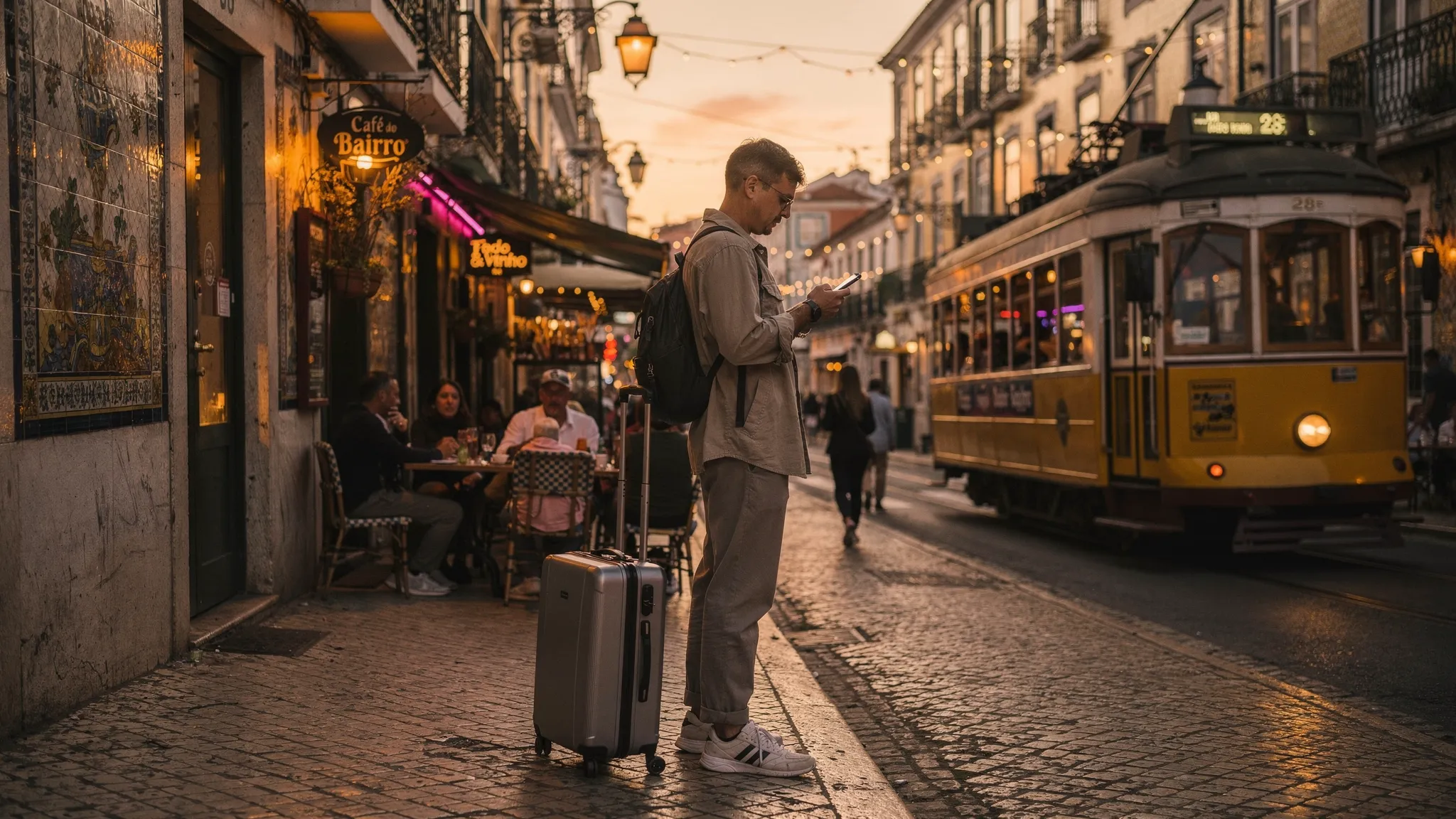
At 9:47 p.m. in Lisbon, the light turns honeyed even after the sun is gone. Trams still clatter, the air smells like grilled fish and sweet custard, and every alley in Alfama seems to hold a different kind of music. I was leaning against a tiled wall with my suitcase handle digging into my palm when my phone flashed a promise that felt too good to ignore:
“72% OFF. Was $312. Now $89.”
It was the kind of discount hotels banner that makes your brain stop doing math. You imagine the lobby, the rooftop view, the extra €200 you “saved” converting into tomorrow’s seafood lunch and a day trip to Sintra.
Then the skeptical part of your travel brain speaks up, quietly at first: 72% off compared to what, exactly? The question sounds boring, but it can be the difference between landing a real deal and paying for a fake markdown dressed up in red.
This is a story about learning to spot the difference, not from a spreadsheet at home, but by walking through Lisbon neighborhood by neighborhood and watching how prices change when you change one detail at a time.
I started in Baixa, where the streets are straight and confident. Hotel façades here are tidy, symmetrical, designed for arrivals that happen on schedule. In the windows, you see polished stone, quiet bars, and signage that whispers “business friendly” without saying it.
Baixa is where fake markdowns often look most convincing. Demand is steady. Photos are easy to stage. A listing can slap on a high “was” price and get away with it because the neighborhood already feels expensive.
So I ran a simple experiment: I searched the same dates, then I changed only one thing at a time.
By the time I’d crossed into Chiado, where bookstores and cafés spill warmth onto the sidewalk, I’d learned a truth that experienced deal hunters know in their bones:
A real hotel deal is rarely just a lower number. It is the same stay on the same terms for less.
Fake markdowns thrive on “reference price” psychology: if you see a higher anchor first, the lower number feels like a win even before you understand what you are buying.
On top of that, the travel industry has been under growing scrutiny for fee transparency, especially around so-called “drip pricing” (when mandatory costs appear late in checkout). Consumer protection agencies have been paying more attention to this pattern across industries.
If you want the policy context, the U.S. Federal Trade Commission has discussed junk fees and pricing practices that can mislead consumers in its consumer guidance and announcements (a starting point is the FTC’s topic hub on junk fees).
Even when a platform is not breaking rules, the effect on travelers is the same: the biggest “discount” on the screen is not always the biggest savings in your wallet.
The practical takeaway is simple: your job is to verify the comparison. The good news is you can do it quickly once you know what to look for.
In Lisbon, you can feel the city change under your feet. The pavement shifts, the hills begin, the air gets cooler in the shadow of older buildings. Price works the same way: it changes with small shifts in conditions.
Here is the method I used, refined into a quick routine you can run anywhere.
This is the most common source of “fake” discounts that are not technically fake. A “Deluxe River View” is not the same product as a “Standard Courtyard.” A refundable rate is not the same as a prepaid, no-change rate.
Before you believe the markdown, verify:
If any of these differ, the percentage is noise.
Walking up toward Graça, I watched locals carry groceries up staircases that look impossible. Hotels do something similar with terms: they carry risk up the hill by shifting it onto you.
A deal can look huge because the cheaper rate is:
None of these are “bad.” But they are different products. A “discount” that exists only because you gave up flexibility is not the same as a discount on a flexible stay.
The city has small costs that add up: a pastry here, a metro ticket there, a little cover charge at a fado house. Hotel pricing can hide bigger versions of the same idea.
Look for:
A “cheap” rate that becomes average after mandatory fees is a classic fake markdown experience.
“Only 1 room left” can be true. It can also be irrelevant. Scarcity messaging is designed to push you to buy before you verify.
Treat urgency as a prompt to double-check terms, not as evidence of a deal.
Here is what changed my own booking behavior: once you understand the city, you stop shopping only by price and stars. You shop by what the location saves you in time, money, and stress.
In Lisbon:
A “discount” that puts you far away from what you came to do can be a false economy.
Use this table like a mental filter. None of these signals are perfect alone, but patterns matter.
| Signal | More likely a real deal | More likely a fake markdown |
|---|---|---|
| Comparison basis | Same room, same dates, same terms | Different room or terms hidden behind the same hotel name |
| Price transparency | Total price is clear early | Mandatory costs appear late or are unclear |
| Cancellation policy | Discount still exists on refundable rates | “Deal” only exists on non-refundable or prepaid |
| Messaging | Calm, informational | Heavy urgency, flashing percentages, countdown framing |
| Value alignment | Location fits your itinerary | Location forces extra spend and time |
At this point in the night, my search results had become a map. Not just of hotels, but of how the city sells itself.
Alfama listings leaned into romance and texture: stone walls, tiny balconies, narrow streets where you hear footsteps and distant guitar.
Parque das Nações leaned into efficiency: broad walkways, modern glass, predictable transit, conference-friendly routines.
The area around Sete Rios and the northern corridors leaned into practicality: easier arrivals, larger properties, straightforward logistics.
That is when the deal-hunting question becomes more sophisticated than “how low can the price go?” It becomes: Is this price low for what this specific neighborhood stay usually costs on these specific terms?
If you want to start with a classic Alfama base that prioritizes atmosphere and walkability, you can check rates and availability for Memmo Alfama Hotel.
Alfama is where you will feel Lisbon in your bones, but it is also where you should be honest about what you are buying. Hills matter. Steps matter. Noise can be part of the charm or a deal-breaker depending on your sleep.
A real “discount” in Alfama is often about timing (midweek, shoulder season, shorter lead time) rather than a dramatic slash. If the discount requires you to accept a no-change policy, ask yourself whether your itinerary is actually locked.
If your trip is more schedule-driven, especially for meetings, events, or short-notice planning, Parque das Nações can feel like a different Lisbon: cleaner lines, quieter nights, and easy movement. A good starting point to compare dates is MYRIAD by SANA Hotels.
Neighborhood value shows up fast here. You may spend less time crossing the city for morning commitments, and that time has a monetary value even if it does not appear on the booking page.
This is also where “fake markdown” tricks tend to involve add-ons (breakfast, parking) rather than flashy base-rate slashes. When you are near business districts or event venues, you should verify what is included, then compare the total.
For a more traditional full-service stay that often fits longer business trips or travelers who want predictable amenities, you can also compare options like Corinthia Lisbon.
The point is not that one of these is “the best.” The point is that each neighborhood produces a different kind of deal, and the best discount hotels are usually the ones where price and place match what you actually came to do.
Later that night, I sat in a small miradouro, the city spread out like a warm circuit board, and wrote a checklist in my notes app. It is the same checklist I use now whenever I see a dramatic percentage.
This is how you turn deal hunting from impulse to strategy, without taking the joy out of travel.
When you are scanning for discount hotels, clutter is not just annoying, it is risky. The more distractions on a page, the easier it is to miss the one line that changes everything (a non-refundable tag, a payment rule, a fee note).
InnRox is built around a simpler idea: show competitive hotel rates with transparent terms and a fast booking flow, so you can focus on the stay rather than fight the interface.
That matters most when you are booking on the move, the way many trips happen now: one hand on your bag, one eye on the last train time, and a phone screen doing its best to make you decide too fast.
The next morning, Lisbon sounded different. Less nightlife, more coffee cups, more rolling shutters, more footsteps that had somewhere to be.
The deal I ended up choosing did not come with fireworks. No screaming percentage. No dramatic “was” price that made me feel like I’d beaten the system. It was quieter than that.
It was the same room on the same terms for less than comparable options in a neighborhood that matched my plan for the day.
That is the real definition of a deal.
And once you start thinking that way, “discount hotels” stops being a game of chasing red numbers and becomes what it should have been all along: a way to travel better, for less, without surprises.