

InnRox
Travel Experts
May 24, 2026
20 min read
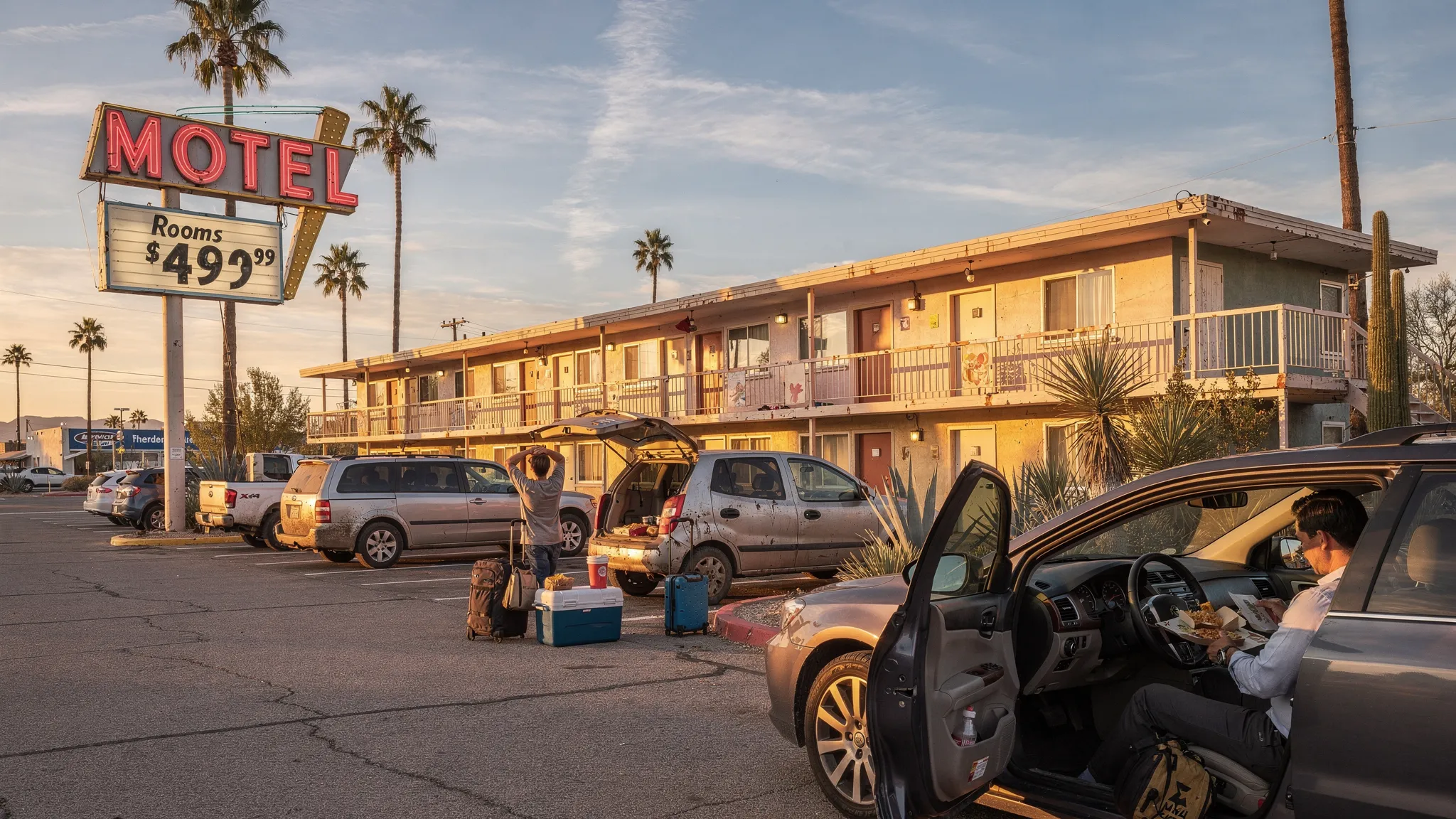
The first clue is usually the parking lot. A row of pickups with out-of-state plates, one family unloading a cooler, a business traveler eating takeout in the driver’s seat, and a glowing sign promising a rate that looks almost too good to question. Cheap motels in the USA still have a particular romance, especially along interstates, old highways, beach roads, and national park gateways. They suggest motion, flexibility, and the simple pleasure of not spending half your travel budget on a bed you will use for seven hours.
But the cheapest motel is not always the cheapest stay.
A $69 room outside Orlando can become less attractive when the theme park parking, rideshare costs, and breakfast for four are added. A bargain room outside New York can cost you an hour each way and a late-night train headache. A low rate near the Las Vegas Strip can be swallowed by resort-style fees and weekend pricing. And an old roadside motel in Albuquerque might be a smarter, richer experience than a forgettable chain hotel, if you choose the right stretch of town.
The trick is not to avoid cheap motels. It is to understand when they do what they were designed to do, and when a slightly more expensive hotel, better neighborhood, or more flexible booking term actually saves money.
The phrase “cheap motels USA” covers everything from clean, practical roadside stops to tired properties charging too much because they sit near a stadium, beach, airport, or national park entrance. The nightly rate is only the first line of the story.
A motel saves money when your trip is simple: you have a car, you need easy parking, you are not relying on hotel amenities, and the location does not add transportation costs. It works beautifully for road trips, short business stops, early departures, late arrivals, family budget travel, and travelers who value function over atmosphere.
A motel stops saving money when location becomes the product. In cities where parking is expensive, transit is complicated, or attractions are clustered in one walkable zone, paying less to sleep farther away can mean paying more to move around. That is why a cheap motel outside the center of Boston, Los Angeles, Chicago, San Francisco, or New York may be a good deal for one traveler and a costly mistake for another.
The clearest way to compare is to price the full day, not the room.
| Stay choice | Looks cheaper because | Can become expensive because | Best for |
|---|---|---|---|
| Interstate motel | Low nightly rate, easy parking, simple access | Limited food nearby, older rooms, noise, pet or deposit fees | Road trips, one-night stops, drivers |
| Airport motel | Lower rate than downtown, close to flights | Shuttle gaps, rideshare costs, early check-in fees, isolated dining | Early flights, late arrivals, short layovers |
| Suburban motel | Free or cheaper parking, larger rooms | Long commutes, tolls, fuel, lost time | Families with cars, budget business trips |
| Downtown budget hotel | Higher nightly rate | Parking, destination fees, smaller rooms | Walkable city breaks, business meetings, nightlife |
| Resort-area cheap room | Promotional rate | Resort fees, parking, breakfast, attraction transport | Travelers who read the terms carefully |
The best value is rarely the lowest number on the first screen. It is the stay with the lowest friction.
In Central Florida, the cheap motel is practically part of the landscape. Along stretches of Kissimmee, International Drive, and roads leading toward theme parks, neon signs and palm trees make budget lodging feel easy. For families, this can be a lifesaver. A modest room with parking and a nearby diner can make more sense than a polished resort when the real purpose of the trip is to leave early, return exhausted, and sleep.
Yet Orlando is also one of the easiest places to misread value. A motel that is “near the parks” may still require a rental car, daily theme park parking, paid shuttles, or long rideshares during surge times. If breakfast is not included, four people buying coffee, juice, and something quick before a park day can erase part of the savings before 9 a.m.
The comparison is not motel vs luxury resort. It is motel plus transport plus food vs a better-located hotel with practical inclusions. Families should ask whether they will cook, whether the room has enough space for luggage and strollers, whether parking is included, and whether shuttle times match the way they actually travel. A free shuttle that leaves too late for rope drop, or returns before the fireworks, may not be a real benefit.
For Orlando travelers comparing affordable hotel-style stays near the theme park corridors, a search for Rosen Inn International Orlando can be a useful starting point for understanding how location, room type, and booking terms affect the total cost.
A family that plans full park days may not need a pool complex, spa, or premium view. But they may benefit from a predictable location, straightforward parking, and clear cancellation terms. In Orlando, the upgrade most worth paying for is often not a fancier room. It is a shorter, simpler morning.
Couples, meanwhile, should be honest about atmosphere. A cheap roadside room can save money, but it may not feel like a romantic escape after a long park day. For a couple taking a short weekend, paying slightly more for walkability to restaurants or a quieter property may buy more than comfort. It buys energy.
Las Vegas is the American masterclass in misleading hotel math. Rooms can appear astonishingly cheap on slow nights, especially midweek. Then the final cost changes shape. Mandatory resort-style fees, parking, taxes, and weekend surges can turn a low advertised rate into a total that feels nothing like a budget win.
This does not mean Las Vegas is bad for deal hunters. It means you need to compare hotels by final trip style. If your plan is to walk the Strip, eat casually, and spend little time in the room, a central hotel with a higher base rate may be better than a cheaper property that forces repeated rideshares. If you are driving in, parking policy matters as much as room category. If you are attending a conference, distance from the venue can determine whether a cheap room costs you money in taxis and time.
The mistake many travelers make is paying for a room category that does not change the trip. A “city view” or higher-floor upgrade can feel exciting at booking, but if you will be out until midnight and leaving early, it may be money spent on ten minutes of window time. In Vegas, upgrades are worth considering when they reduce daily friction: shorter walks, quieter towers, better work space for business travelers, or a room type that genuinely improves sleep.
For a more modest Vegas base away from the most obvious resort pricing psychology, compare searches like Ellis Island Hotel Las Vegas against larger Strip properties by looking beyond the initial rate.
The Vegas lesson applies across the country: whenever a hotel market is driven by entertainment, conventions, or nightlife, the cheapest room can be designed to get your attention rather than protect your budget. Always check whether fees are mandatory, whether parking is separate, and whether the location matches the nights you actually want to have.
Seasonality matters here in a different way than at beach towns. A Tuesday in August and a Saturday during a major event can feel like different cities. If your dates are flexible, moving a stay by one night can sometimes matter more than changing properties.
Los Angeles tempts budget travelers with endless motel signs: Hollywood Boulevard, Koreatown edges, LAX corridors, the Valley, East Hollywood, Long Beach, Inglewood, and beach-adjacent strips where the Pacific feels close on the map but not always easy in real life. The city is a lesson in geography. A cheap motel in the wrong place may not be unsafe or unpleasant, but it may place you on the wrong side of your own itinerary.
If you want beaches, a cheap inland motel can mean paying in parking fees, fuel, and slow cross-town drives. If you want museums, restaurants, and nightlife, a room near the airport may leave you stranded in traffic. If you are visiting for business, staying close to meetings can be more valuable than saving $40 per night and losing two hours a day.
This is where hotel category matters. A classic roadside motel can be fine for drivers doing one or two focused stops. A boutique or modern urban hotel may be better for travelers who want to walk to dinner, use rideshares less often, or feel connected to a neighborhood. Luxury in Los Angeles is often about location and calm, not chandeliers. Modern luxury may mean soundproofing, reliable valet logistics, a good bed, and not needing to cross the city after dinner.
Travelers considering a more neighborhood-based Los Angeles stay can compare options such as The LINE Hotel Los Angeles with cheaper motel corridors to see whether walkability and reduced transport make the higher rate more sensible.
The area choice should follow the trip. Stay west if your days revolve around Santa Monica, Venice, Malibu, or coastal meetings. Consider Hollywood or West Hollywood for nightlife and first-time sightseeing, but watch parking and noise. Look at Koreatown or Downtown if food, transit, and central access matter, though parking policies vary. Choose LAX only when flight convenience outweighs atmosphere.
The common overpay in Los Angeles is the “almost convenient” location. It looks central because the map is zoomed out, but it still requires expensive movement every day. A cheaper room that creates two daily rideshares is no longer cheap.
Some motels are cheap because they are basic. Others are valuable because they understand where they are. Albuquerque, especially along old Route 66, shows why the American motel should not be dismissed as merely budget lodging. Here, low-slung buildings, vintage signs, desert light, and courtyard layouts tell a travel story that a sealed downtown tower cannot.
This is where a motel can beat a standard hotel, not only on price but on atmosphere. If you are driving through New Mexico, parking outside your room, walking to a local breakfast spot, and feeling the old highway rhythm may be exactly the point. A downtown business hotel might offer more services, but if your trip is about the road, design, and local texture, the right motel can feel more memorable.
Still, not every retro sign means good value. Travelers should separate charm from deferred maintenance. Check recent room photos, look for clear cancellation terms, compare whether breakfast is included, and read the parking and deposit policy. A historic-style property may be worth paying more for if it is well maintained and well located. A tired motel charging high seasonal rates because of a festival or balloon event may not be.
For travelers drawn to the Route 66 side of the city, El Vado Motel Albuquerque is the kind of search that helps compare nostalgic motel character against conventional hotel pricing.
Albuquerque also shows how seasonality can change the value equation. During major events, especially when visitor demand clusters around certain weeks, motel rates can rise sharply. At that point, the question becomes whether you are paying for character, convenience, or scarcity. If it is only scarcity, expand the map and compare neighborhoods.
For short stays, Old Town access may be worth more than a lower rate farther east. For road trippers, interstate access may matter more than walkability. For food-focused travelers, staying near local dining corridors can save both time and rideshare costs. In the Southwest, a good motel is often the one that matches your route, not the one with the most amenities.
In dense Northeast cities, cheap motels often live beyond the experience travelers came for. The room may be affordable, the parking may be easier, and the map may suggest the city is close. But tunnels, bridges, tolls, train schedules, and late-night transfers can turn savings into stress.
This is especially true for New York. A budget room far outside Manhattan can make sense if you are visiting relatives nearby, driving through, or attending an event in that specific area. But if your days are in Midtown, Brooklyn, Lower Manhattan, or the theater district, the cost of commuting, the time lost, and the fatigue of returning late can outweigh the rate difference.
A compact hotel in a walkable area may look expensive per square foot but cheaper per hour of usable trip time. Business travelers should value predictability: a shorter commute, reliable morning transport, and a quiet room can be more important than saving a small amount on the nightly rate. Couples on a weekend trip should also consider mood. A long ride back to a motel after dinner can flatten the pleasure of the evening.
For travelers weighing location over room size, searches like citizenM New York Times Square can help frame the comparison between central convenience and cheaper outer-area lodging.
The same logic applies around Boston, Washington, D.C., Philadelphia, and parts of New Jersey. Suburban motels are excellent when your trip is suburban. They are weaker when your trip is urban. If you are parking a car and using it daily, they may save money. If you are paying for trains, rideshares, tolls, and time, the savings need to be much larger to be real.
In these markets, the upgrade worth paying for is often location. Not a bigger room, not a skyline view, not a minibar, but the ability to leave the hotel and immediately be where your trip begins.
Motels can be refreshingly simple, but they are not immune to add-ons. The most common costs are not always hidden in a dishonest way. They are underestimated because travelers focus on the nightly rate and skim the rest.
| Cost to check | Why it matters | When it hurts most |
|---|---|---|
| Parking | Can be free at many roadside motels, costly in cities or beach areas | Urban stays, airport zones, event weekends |
| Local taxes | Added at checkout and varies by city, county, and state | Long stays, high-rate destinations |
| Resort or amenity fees | Sometimes mandatory even if you do not use amenities | Las Vegas, beach towns, resort corridors |
| Breakfast | A cheap room without breakfast may cost more for families | Theme park trips, road trips with kids |
| Pet fees | Budget motels may allow pets but charge nightly or per stay | Road trips with dogs |
| Deposit or incidental hold | Temporary card holds can affect available funds | Budget travelers, debit card users |
| Early check-in or late checkout | Useful but often priced separately | Red-eye flights, conferences, weddings |
| Shuttle limitations | “Airport shuttle” may not run 24 hours or may require booking | Early flights, late arrivals |
| Cancellation terms | Cheaper prepaid rates may be inflexible | Weather-prone trips, uncertain schedules |
The biggest booking pitfall is assuming that a motel’s simplicity means every practical need is included. Sometimes it is. Sometimes the savings are real because parking is easy, breakfast is included, and the room is close to the highway. Other times, the rate is low because the property knows you will pay elsewhere.
A good habit is to calculate three totals: room only, room plus known fees, and room plus daily behavior. The third number is the most honest. It includes where you will eat, how you will move, whether you will park, and how much time the location consumes.
Cheap motels work best when the stay is functional and the car is part of the plan. If you are driving from Nashville to St. Louis, stopping outside Dallas, visiting family in suburban Phoenix, or sleeping near a trailhead before an early hike, a clean motel with straightforward parking can be exactly right.
They are also smart for travelers who will not use hotel amenities. There is no reason to pay for a lobby bar, room service, spa access, or rooftop pool if you are arriving late and leaving before sunrise. In those cases, the best room is the one that is clean, safe, quiet enough, easy to access, and clearly priced.
A motel is usually a strong choice when:
This is also where pay-later or flexible cancellation can be worth more than a small prepaid discount. Road trips change. Weather shifts. Meetings move. A nonrefundable cheap motel rate can become expensive if you have to abandon it.
The more a trip depends on place, the less a cheap motel automatically makes sense. City breaks, romantic weekends, convention travel, nightlife trips, and first-time visits often reward a better location. A hotel that costs more but lets you walk, rest between activities, skip a rental car, or avoid repeated rideshares may be the cheaper decision in practice.
This does not mean choosing luxury. Often the sweet spot is a well-located budget hotel, a small boutique property, or a practical business hotel. Classic luxury is worth paying for when service, quiet, and amenities are central to the trip. Modern luxury is worth paying for when it removes friction: fast check-in, strong soundproofing, flexible work space, reliable transport access, and policies that are clear before you arrive.
The weakest upgrade is usually cosmetic. A vague “better view,” a slightly larger room you will barely use, or a premium floor without meaningful benefits can be less valuable than breakfast, parking, or a location that saves 30 minutes twice a day.
For families, space and food access usually beat style. For couples, atmosphere and walkability may beat square footage. For business travelers, predictability beats charm. For solo travelers, neighborhood comfort after dark may be worth more than any rate difference.
Start with your trip type, not your budget. Budget matters, of course, but a motel that fits the wrong trip becomes frustrating even if it is inexpensive.
For a road trip, prioritize highway access, parking, check-in hours, cancellation rules, and recent cleanliness feedback. For a city stay, prioritize transit, walkability, late-night return options, and parking costs. For an airport stay, confirm shuttle hours and whether the property is close to the terminal you need. For a beach or national park stay, check seasonal pricing, access fees, and whether the location saves you time at peak hours.
Then compare the motel against one better-located hotel, not against every property in the city. This keeps the decision practical. If the motel saves $45 but costs $55 in transport and makes your day harder, it loses. If it saves $90, includes parking, and sits near the route you are driving, it wins.
Finally, read the room description like a contract. Look for the bed type, smoking policy, deposit, taxes, fees, cancellation deadline, breakfast terms, and whether the rate is prepaid. Marketing language is designed to feel warm. Booking terms are where the real value lives.
If you are still unsure, use this rule: choose a cheap motel when it supports the natural movement of your trip. Avoid it when it fights your itinerary.
A motel outside town supports a road trip. It may fight a walkable food weekend. An airport motel supports a 6 a.m. flight. It may fight a romantic night out. A suburban motel supports a family visit with a car. It may fight a downtown conference. A vintage motel supports a Route 66 journey. It may fight a traveler who needs business services and quiet work space.
Value is not austerity. Value is alignment.
The best cheap motels in the USA are not necessarily the lowest-priced ones. They are the ones that let you spend money on the trip itself instead of wasting it on preventable friction.
Are cheap motels in the USA safe to book? Many are perfectly suitable, especially for road trips and short stays, but safety depends on location, upkeep, recent guest feedback, lighting, parking layout, and clear policies. Compare neighborhoods as carefully as rates.
When is a cheap motel better than a hotel? A cheap motel is often better when you have a car, need easy parking, are staying briefly, and do not plan to use amenities. It is especially practical for highway stops, suburban visits, and early departures.
When should I avoid booking the cheapest motel? Avoid the cheapest option when it adds major transport costs, sits far from your actual plans, has unclear fees, or forces you into inconvenient commutes. In big cities, location can matter more than nightly rate.
What hidden fees should I check before booking a motel? Check taxes, parking, resort or amenity fees, pet charges, deposit holds, breakfast pricing, early check-in, late checkout, shuttle limitations, and cancellation terms before confirming.
Are motel upgrades worth it? They are worth it when they improve sleep, space, parking, flexibility, or location. They are usually not worth it when they only offer a vague view, minor room-size increase, or benefits you will not use.
How does seasonality affect cheap motel prices? Motel prices can rise sharply during beach season, national park peaks, college events, festivals, conventions, and holiday weekends. A motel that is cheap midweek may be expensive on a Saturday or during a major local event.
Cheap motels can be a smart way to travel across the USA, but only when the final cost is clear. Before you book, compare the room rate with parking, taxes, cancellation terms, transport, breakfast, and the time you will spend getting around.
InnRox is built for travelers who want straightforward hotel booking without clutter. Search competitive rates worldwide, review transparent terms, see final pricing upfront, and confirm quickly when the right deal appears. Start your next stay at InnRox and choose the hotel or motel that saves money after check-in, not just before it.