

InnRox
Travel Experts
March 2, 2026
10 min read
You can feel the difference before you even see it.
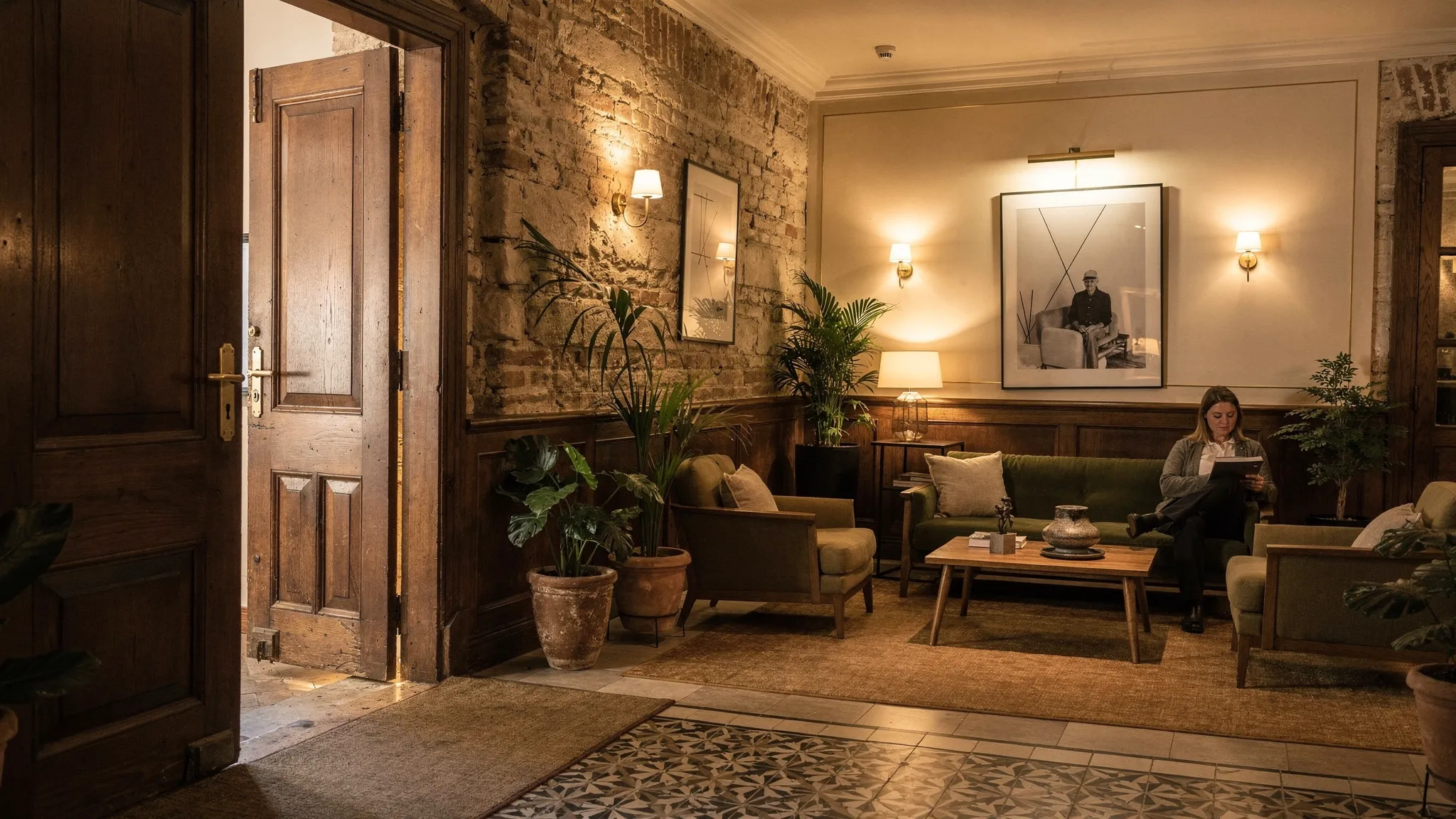
It’s in the way a heavy door closes with a soft, confident hush. In the faint smell of oiled walnut in a lobby that used to be something else, a bank, a warehouse, a townhouse, a workshop. In the way the lighting is warm but deliberate, like someone sketched it first.
That is the quiet promise of boutique hotels: design with a point of view, not a generic checklist. The problem is that “design-forward” too often gets priced like a luxury category, even when the building was simply repurposed well and styled with taste.
So this is a walking guide, not through monuments, but through the kinds of streets where you learn how to get the boutique feeling without paying boutique premiums. We’ll move neighborhood by neighborhood, paying attention to what architects and hoteliers leave behind on purpose: materials, proportions, acoustics, the way a room is laid out for real life. And we’ll translate those cues into booking decisions that keep your budget intact.
A lot of travelers assume boutique pricing is driven by “better.” In reality, the rate often reflects three things that have nothing to do with how your stay feels.
First: postcode gravity. Two identical buildings, one on a famous shopping street, one five blocks farther where locals actually live, can diverge wildly in nightly rate.
Second: room scarcity. Boutique properties are often small by definition. Fewer rooms means less flexibility in pricing and more frequent sell-outs that spike last-minute rates.
Third: story markup. If a hotel’s narrative is doing the heavy lifting (icon status, social media fame, a lobby that functions like a stage), you may pay for the story more than the sleep.
The good news is that design itself is not the expensive part. The most satisfying boutique hotels tend to be the ones where design is integrated into the bones of the building, not layered on as a trend.
Here’s what to watch for.
| Design signal (usually worth paying for) | What it feels like in real life | “Looks expensive, isn’t” signal | What it often means |
|---|---|---|---|
| Adaptive reuse with original elements | Quiet solidity, real materials, better proportions | Trendy decor on a standard box | Most of the budget went to styling, not comfort |
| Thoughtful lighting plan | Calm evenings, flattering mirrors, less “office” glare | One dramatic fixture, harsh overheads | Photos first, experience second |
| Acoustic decisions | Sleep that feels deeper, fewer hallway surprises | “Lively” lobby next to rooms | Noise transfer is likely |
| Local craft or material palette | A sense of place you can’t copy-paste | Generic “boutique” palette | Could be interchangeable with any city |
Now, let’s walk.
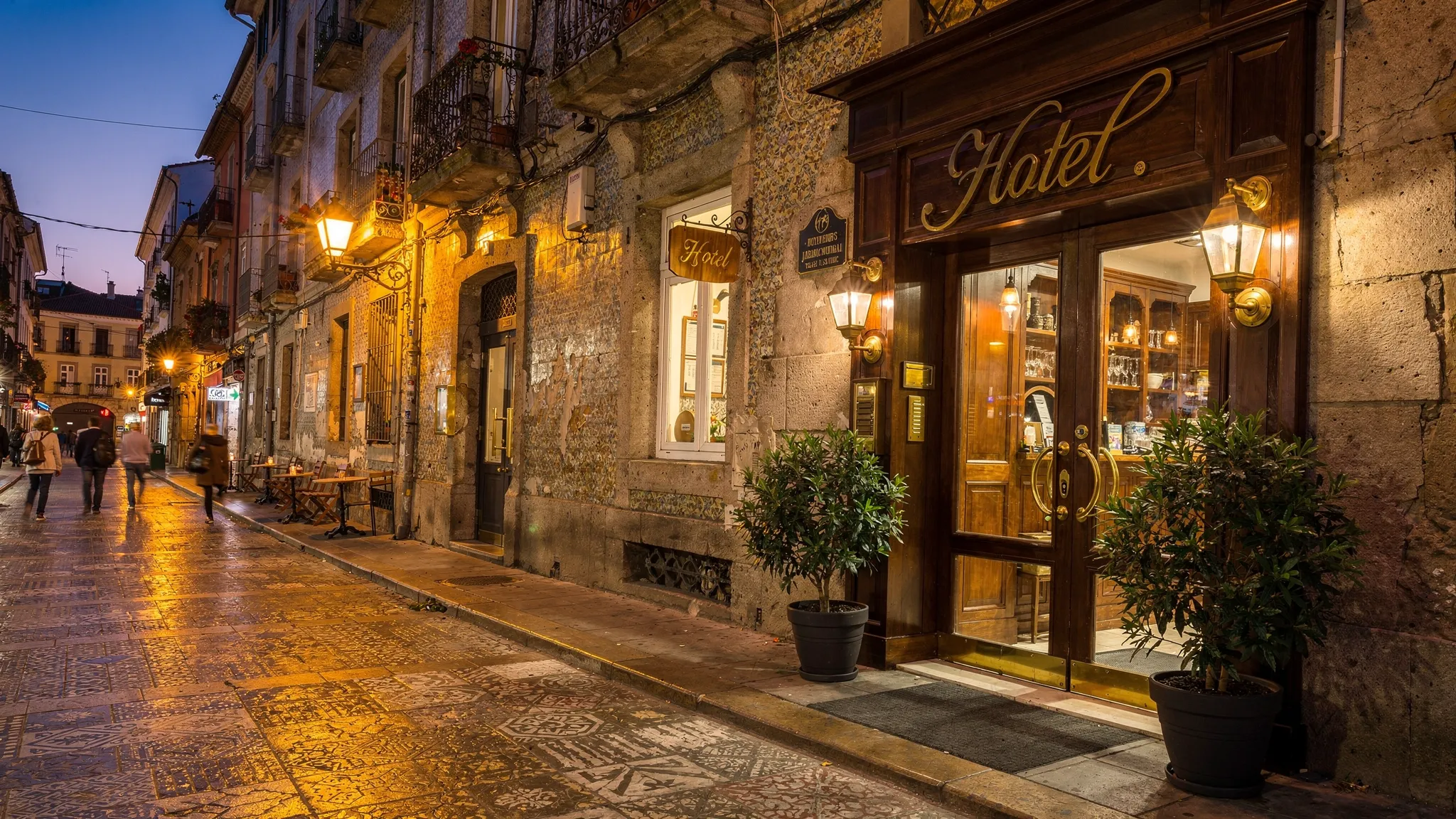
Start in Lisbon at the edge of the river, where the light is almost theatrical. The pavements are patterned like waves, and buildings wear azulejos the way other cities wear billboards. In neighborhoods like Cais do Sodré, Chiado, and Bairro Alto, architecture isn’t a backdrop, it’s the main character.
Lisbon is also a masterclass in the difference between historic and expensive for the sake of it. When a building has genuine texture, stone staircases polished by decades of footsteps, iron balconies with imperfect curves, the hotel doesn’t need to overcompensate with luxury theatrics. The best value hides in properties that respect the building’s age and let the city supply the glamour.
A practical trick here: choose the room category like a local. If you’ll spend mornings in cafés and evenings walking miradouros, you can trade “largest room” for “best location and best sleep.” In Lisbon, that often means prioritizing sound insulation and good windows over square footage.
If you want a design-forward base near the river and nightlife without drifting into price-for-hype territory, you can start by checking options like LX Boutique Hotel Lisbon.
Lisbon’s boutique sweet spot is often a building that feels slightly narrow and vertical, with a stairwell that hints at its previous life. The design win is not “more,” it’s “right”: the tilework echoed in textiles, a restrained color palette that lets the city’s blue-white glow do the work.
Once you’re outside, walk north until the streets tilt upward and the air changes. It smells like espresso and warm stone. You’ll hear tram wheels complain at corners. This is why you don’t need to overpay for a hotel that tries to be the city. Lisbon already is.
La Condesa in Mexico City is a lesson in humane urbanism. Streets bend gently. Trees throw shade like architecture. Art Deco buildings hold their corners with rounded confidence, and even a simple morning walk feels composed.
This is the kind of neighborhood where boutique design should not be loud. The best properties here typically lean into what the area already offers: courtyards, breezeways, and indoor-outdoor transitions that make you slow down. Paying more only makes sense when the hotel’s design decisions actually change your comfort, like better acoustic separation, calmer airflow, or rooms arranged around quiet inner space rather than the street.
To avoid overpaying in CDMX, time matters. Rates can jump during major events and peak weekends, but design-forward stays often soften in shoulder periods when the city is still vibrant, just less compressed.
If you’re looking for a stay aligned with the neighborhood’s modernist spirit, start your search with something like Hotel Carlota Mexico City.
Then use the neighborhood itself as your filter: is your hotel near Parque México or Parque España? If yes, you’ve already bought yourself a better trip. You’ll spend less time in transit, more time in cafés and galleries, and you won’t feel the pressure to “use” your hotel enough to justify the price.
Design tip you can apply anywhere: look for hotels that treat shade as a feature. In warmer cities, good design is often about thermal comfort and light control, not maximal décor.
Copenhagen can look expensive at first glance because the aesthetic is so clean it reads as premium. But Danish design, at its best, isn’t about flashy objects, it’s about precision: the angle of a chair, the softness of a lamp’s glow, the way wood grain calms a room.
In the Latin Quarter and around the central streets, you’ll find boutique hotels that understand the city’s design language without turning it into a museum. The value move in Copenhagen is to avoid paying extra for “Nordic” as a marketing adjective and instead pay for what the Nordics actually excel at: comfort that’s quietly engineered.
Here, the biggest overpay trap is a room that photographs like a catalog but functions like a shoebox. So when you compare rates, scan for the practical signals: where is the desk placed, is there enough clearance around the bed, do the lights look layered rather than singular.
A solid starting point for this style of stay is Hotel SP34 Copenhagen.
Now step back outside. Copenhagen’s streets are an extension of the interior aesthetic: bicycles clicking over cobblestones, clean storefront typography, bakeries that smell like butter and cardamom. When the city itself is designed this well, you can book a boutique hotel for its calm, not its spectacle.
If you want proof that boutique doesn’t have to mean precious, walk Fulton Market in Chicago. It’s a neighborhood with industrial DNA, the kind of place where brick and steel feel honest, and where new restaurants and hotels often move into old structures with enough character to do half the design work for free.
In a district like this, “design-forward” usually means adaptive reuse: keeping the bones and upgrading everything that matters for modern travelers, lighting, sound, showers that actually recover after a long day, and lobbies that work like living rooms for business travel.
This is also where not overpaying becomes strategic. Fulton Market can surge during conferences and busy weekdays. If your schedule is flexible, arriving a day earlier or extending into the weekend can change the price dramatically while keeping the same neighborhood energy.
For a boutique-leaning stay in this area, you might begin with The Hoxton Chicago.
Then let the neighborhood do what it does best: dinner that turns into a walk, a quick coffee that turns into a meeting, a morning that feels productive because you can step out and immediately be in the city’s current pulse.
Neighborhood walks are romantic, but the actual win happens when you translate atmosphere into choices.
The simplest way to avoid overpaying for boutique hotels is to book for the experience you’ll actually use. If you’re a dawn-to-dinner explorer, you don’t need a suite that demands you stay inside. If you’re traveling for work, you do need a room that supports sleep and focus, even if the lobby is less theatrical.
A helpful mental model is to separate structural design from decor design. Structural design is expensive to change, and it’s what improves your stay: windows, insulation, layout, lighting, materials. Decor design is easy to swap, and it’s what improves photos.
When you’re comparing options, prioritize value levers that don’t show up in a single hero image:
That’s also where a streamlined booking flow helps. When you’re evaluating multiple boutique options, you want clarity fast: final price upfront, real-time availability, and confirmation that lands in your inbox while you’re still in trip-planning mode.
A boutique stay feels less boutique the moment logistics get stressful, especially if you travel with a dog and have to double-check policies at every step.
If you want an easy way to browse dog-welcoming stays and destinations (especially around 2026 travel planning), this curated resource is genuinely useful: dog-friendly hotels.
Even if you don’t read Dutch fluently, the structure can still spark ideas for routes and regions where pet-friendly travel is treated as normal, not exceptional.
The best boutique hotels don’t beg for attention. They hold it.
If you want design-forward without overpaying, follow the architecture. Choose neighborhoods where the city is already doing the aesthetic heavy lifting. Look for buildings with a previous life, and hotels that respect it rather than covering it up. Pay for comfort decisions you can feel at midnight, not décor decisions you’ll forget by breakfast.
And when you’re ready to book, keep it simple: transparent terms, fast confirmation, and the flexibility to pivot when travel does what it always does, surprises you.