

InnRox
Travel Experts
March 3, 2026
10 min read
Boston can feel like a city built for the hurried, until you reach the water and everything slows down. The air changes first, cooler and a little briny, carrying that clean, tidal smell that makes your shoulders drop. Then you notice the rhythm underfoot: dock planks, brick, granite, a soft thrum from ferries and harbor traffic that turns the whole edge of downtown into a moving soundtrack.
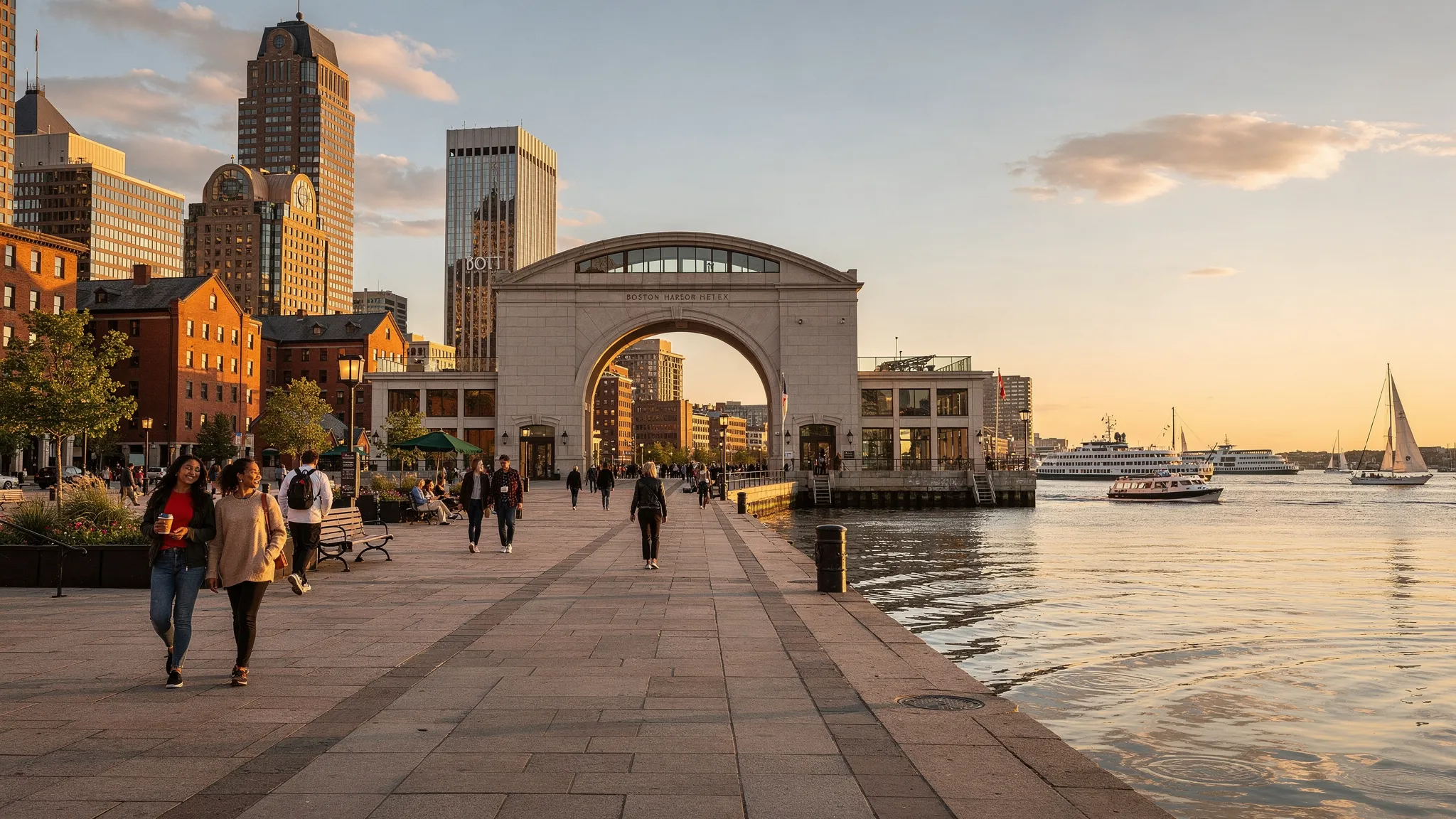
If you like to travel by walking (not just for exercise, but for discovery), the waterfront is where Boston quietly shows off. And at Rowes Wharf, the Boston Harbor Hotel sits right at the seam between city streets and open water, the kind of place where the first “plan” of the day can simply be: step outside, pick a direction, follow the harbor.
Rowes Wharf is not loud. It is polished, yes, but also surprisingly calm for being so central. To one side you have the Financial District’s neat geometry and purposeful pace. To the other, the harbor opens wide and reflective, with gulls cutting arcs over the water and boats sliding past like they have nowhere urgent to be.
For walkers, that contrast matters. The best walking cities let you change moods block by block. Here, you can start your morning among suits and coffee lines, then in minutes be watching the wind ruffle the water, with the skyline behind you and the horizon ahead.
The most useful thing about staying on the waterfront is not just the view, it is how many Boston “chapters” begin within a short, satisfying stroll. The historic core, the Greenway, the North End, the Seaport’s newer edges, even small, easily missed corners that feel local rather than landmarked.
Even if you did not know the name, you would recognize the place: a grand waterfront presence at Rowes Wharf, where arrivals and departures have a sense of ceremony. It is the sort of hotel that feels anchored to the harbor, not simply near it.
Inside, the tone is city-luxury with a maritime pulse just outside the door. What matters most for a walking-first stay is the immediate access: you are positioned to do Boston the way it was meant to be done, in loops and detours, with plenty of excuses to stop.
https://innrox.com/hotel-search?direction=Boston+Harbor+Hotel
Start by treating the hotel like a compass point. Each time you return, the harbor tells you what time it is, bright and glassy in the morning, wind-streaked at midday, then turning slate-blue as evening settles.
And because this is a city that rewards returning to the same corner at different hours, a waterfront base makes repetition feel like variety.
Boston is famous for its history, but it is the scale that makes it lovable. Neighborhoods do not sprawl, they connect. Streets curve, views open unexpectedly, and the city keeps offering small “micro-destinations” that make you forget you are covering miles.
Below is a loop you can do in full, or break into mini-walks between coffee, lunch, and an afternoon reset. Times are intentionally approximate because the point is not speed, it is permission to linger.
| Segment | What you’ll notice | Approx. walk time (one way) |
|---|---|---|
| Rowes Wharf to the Harborwalk stretch nearby | Water, ferries, the city’s edge softening | 5 to 15 minutes |
| Harborwalk toward the Aquarium area | Sea air, harbor views, people watching | 15 to 25 minutes |
| Greenway stroll (downtown edge) | Gardens, public art, a calmer corridor through the city | 10 to 20 minutes |
| Into the North End | Espresso aromas, tight streets, old brick, family-run rhythm | 15 to 25 minutes |
| Back via downtown lanes | Granite, old doorways, glimpses of modern glass | 15 to 30 minutes |
| Optional extension into Seaport and Fort Point | Wide sidewalks, contemporary architecture, harbor angles | 20 to 35 minutes |
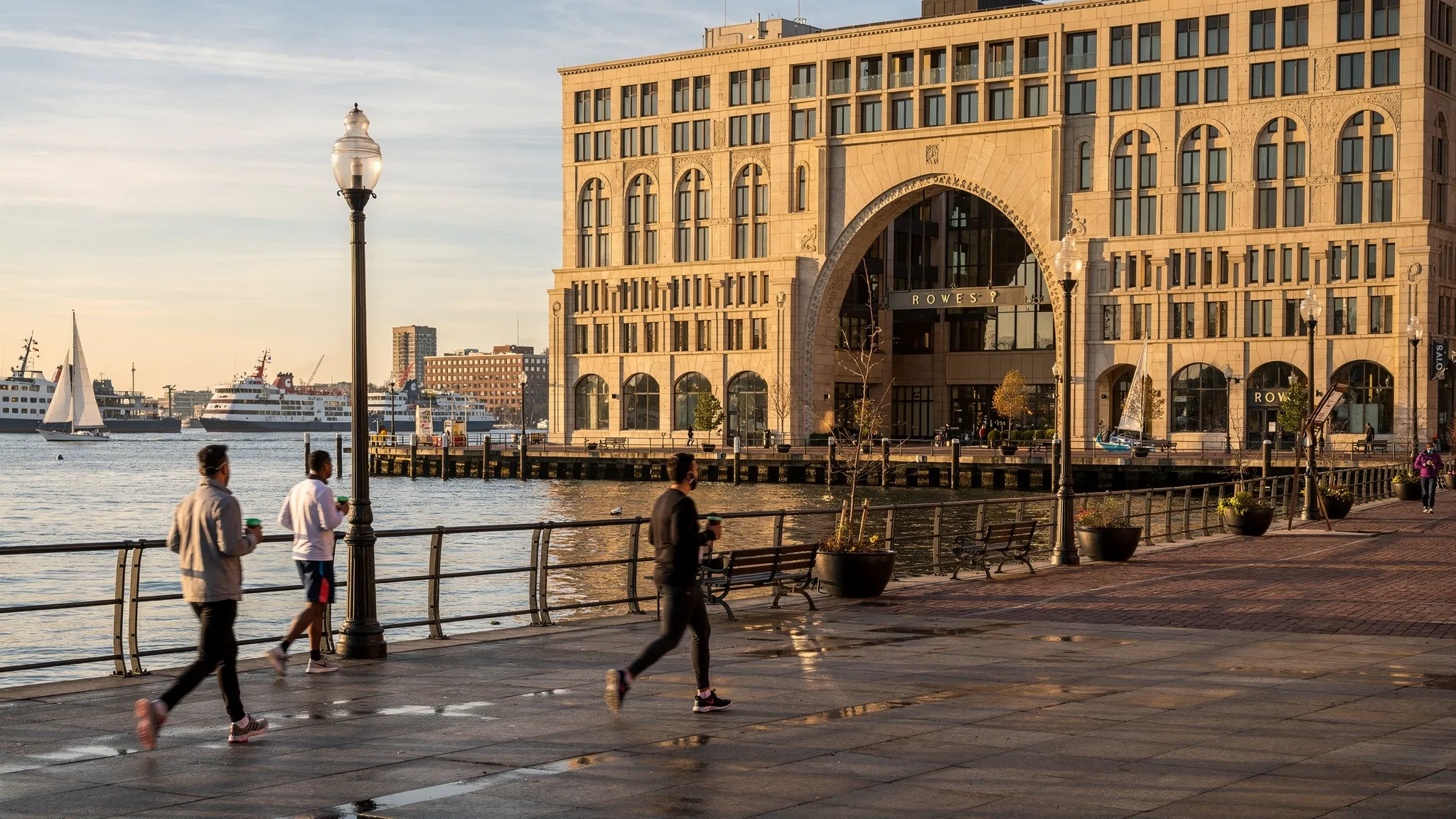
Step outside early, when the harbor is still in that “just set up” mood. You will hear the slap of water against the seawall and the low engine note of boats heading out. Walk with no destination for the first ten minutes. Let the waterfront do what it does best, clear your mind and set your pace.
At this hour, even the most photographed parts of Boston feel personal. You will pass commuters, a few runners, maybe a couple taking a quiet photo with the skyline behind them. The city feels like it belongs to whoever bothered to get up.
Boston’s downtown can feel dense, but it offers these calm corridors that act like pressure valves. The Greenway is one of them, a linear pause button where you can walk without negotiating traffic every few steps.
What makes it good for walkers is the way it invites detours. You can drift toward a garden section, stop for five minutes, then rejoin your line without feeling like you “lost time.” It is a gentle way to move through the city, especially if you are balancing sightseeing with a real need to decompress.
As you approach the North End, the sensory palette changes. Streets narrow. The brick gets older. The air picks up a mix of roasted coffee, garlic, and warm bread, depending on which corner you turn.
This is one of Boston’s best neighborhoods to explore without an agenda. The “hidden gem” move here is to stop chasing the obvious and start looking for small signals: a handwritten menu in a window, a line of locals outside a bakery, a tiny park where people are eating something wrapped in paper, leaning into a patch of sun.
If you are traveling with someone, this is where conversations get good. You are walking slowly, deciding things in real time, sharing bites, noticing details. It is city travel at human speed.
Boston’s charm often lives between famous stops. After lunch, head back through downtown lanes rather than the broadest streets. Look for old stonework, unexpected courtyards, and the quiet drama of historic doorways set into heavy masonry.
These blocks carry the feeling of a working city. People are not performing “vacation,” they are living. That is the energy walkers tend to crave, the sense that you are not just collecting highlights, you are borrowing a day in someone else’s home.
If the North End is Boston’s older heartbeat, the Seaport is its newer, shinier pulse. Wider sidewalks, contemporary buildings, and big sky views make it a satisfying place to walk as the day cools down.
The best part is the light. Around sunset, glass and water start reflecting each other, and the city looks more cinematic without trying. It is an easy stroll, and if your feet are tired, it is also the kind of neighborhood where you can keep your pace slow and still feel like you are “doing something.”
A walker’s city is not measured by how many attractions it has, but by how often you say, “Let’s go one more block.” Around the waterfront and downtown, Boston offers plenty of those moments.
Look for:
The trick is to treat these as destinations, not downtime. A good bench can be as memorable as a museum when the harbor breeze is doing exactly what you hoped it would.
Boston is compact, but it is not flat in the way some visitors expect. Surfaces change quickly: brick, cobblestone, patched pavement, smooth promenades. The weather can also flip fast near the water, especially in shoulder seasons.
A few walker-first habits make the stay noticeably better:
If you like travel rituals that support recovery (a stretch routine, a small self-care kit, or simply items that help you feel grounded after a long day on your feet), you might enjoy browsing holistic lifestyle essentials from Jascotee before your trip.
The more you walk, the more you realize the real luxury is not a packed schedule, it is a body that still feels good at 8 p.m., when the city looks its best.
A waterfront hotel can tempt you into turning every window view into an itinerary. Resist that. Boston is better when you leave space for spontaneous turns.
Try this approach instead: pick one “anchor” each day, then let the rest be walking. The anchor could be a neighborhood craving (North End espresso), a mood (sunset harbor light), or a simple intention (find three quiet corners). Everything else can happen on the way.
When you stay at the harbor, the city’s best experiences arrange themselves into natural loops. You go out, you wander, you return. And each return feels different because the water keeps changing.
Is the Boston Harbor Hotel area good for walking? Yes. Rowes Wharf sits right on the waterfront, with easy access to pedestrian-friendly routes that connect downtown, the harbor edge, and nearby neighborhoods.
How far can you walk from Rowes Wharf without needing transit? Many of Boston’s most walkable areas are reachable in 15 to 35 minutes, depending on pace and how often you stop. The city is compact, and wandering is part of the point.
What’s the best season for a waterfront walking trip in Boston? Late spring through early fall is ideal for comfortable harbor walks, but early winter can also be beautiful if you pack layers and enjoy quieter streets.
Is the Seaport walk worth it if you prefer historic Boston? Yes. The Seaport offers a contrasting, modern waterfront experience, especially great at sunset, and it pairs well with older neighborhoods in the same day.
Can I find flexible cancellation options when booking? Often, yes. Many hotels offer free cancellation or pay-later options on select rates, but terms vary by property and date, so it’s important to review the conditions before confirming.
If your ideal Boston trip is measured in steps, not checklists, a waterfront stay makes the city feel both larger and easier at the same time. You can start every day with harbor air, build your own loops through downtown and nearby neighborhoods, then return to the water when your feet want a softer pace.
To check availability and compare rate options for the Boston Harbor Hotel with clear terms and a fast booking flow, use InnRox Travel and keep your planning as simple as your walk: choose dates, confirm, go. Click here to start: https://innrox.com/hotel-search?direction=Boston+Harbor+Hotel