
Copyright © 2026 Innrox, Inc., an Innrox Group company. All rights reserved.

InnRox
Travel Experts
April 13, 2026
12 min read
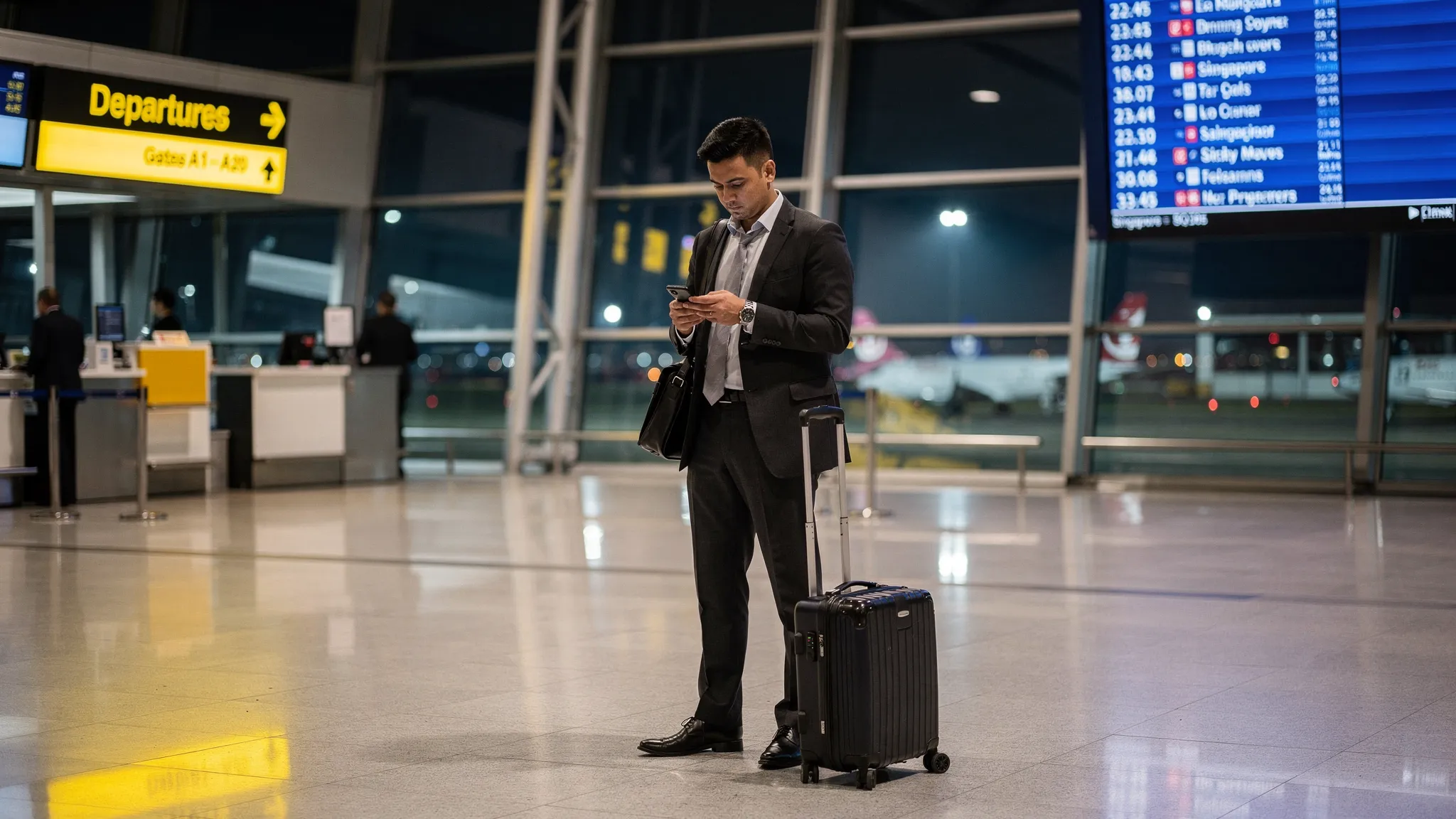
The email landed at 9:14 p.m. on a Tuesday: a last minute invitation to pitch in Singapore, forty eight hours away. The kind of business travel that feels glamorous only in the first ten seconds, before you remember the real puzzle is logistics: a flight you can change, luggage you cannot risk checking, and a seat that lets you arrive sharp instead of folded.
So you do what most people do when time is tight. You grab your phone, type booking com flight, and start scanning options while the rest of the city winds down for the night.
This is where the cheapest fare can become the most expensive mistake. Not because the fare is “bad,” but because the fine print around baggage fees, seat selection, and change rules can turn a simple round trip into a stack of add ons you never planned for.
Below is a story driven guide to reading those rules like a frequent traveler, with a Singapore business trip as the backdrop. You will leave knowing what to check before you pay, what screenshots to save, and how to protect your schedule when meetings move.
Leisure travel forgives small inconveniences. A vacation can absorb a surprise bag fee with a shrug and a sunset. A business trip rarely can.
On work travel, your timeline is fixed to other people’s calendars. The airport is not a vibe, it is a deadline. If you land late, you miss the breakfast briefing. If your carry on gets gate checked, you lose the laptop adapter you need to present. If your seat assignment changes, you spend the first hour of the flight negotiating for a power outlet like it is a scarce resource.
Singapore magnifies this reality in a particular way. It is a city built on velocity: finance towers that light up before sunrise, trade flows that never really pause, and meetings that start on time because the trains do. When your destination runs that efficiently, you feel every friction point in the journey.
The first thing to understand when you book a flight through a platform is that baggage policy is set by the airline and the fare type, not by the website you used to pay. The platform shows you a summary, but the airline enforces the rule at the airport.
That matters because baggage fees tend to show up in three predictable moments:
On many routes, especially with lower priced fare families, “carry on included” can mean:
If you travel for work, the personal item only trap is the most common. A laptop backpack might pass, but a slim roller might not. The difference is often one line of text.
Ask yourself, realistically, what you are bringing:
If any answer is “yes,” the cheapest fare that excludes a cabin bag is rarely the cheapest trip.
Here is a simple table you can use to pressure test the fare you are looking at.
| Baggage detail to verify | Where confusion happens | Low stress move before booking |
|---|---|---|
| Personal item vs cabin bag | “Carry on” is used loosely in summaries | Look for exact allowance: 1 personal item, 1 cabin bag, or both |
| Cabin bag size and weight | Dimensions can be smaller than your usual roller | Compare to your bag’s label, or measure once and save it in notes |
| Checked bag allowance | Some fares include zero checked bags by default | Add the bag during booking if you know you need it |
| Fees for adding later | Prices can rise closer to departure | If unsure, price it now so you know your worst case |
| Gate check risk | Full flights push bags to the hold | Pack essentials (meds, chargers, one shirt) in your personal item |
When you are booking in a hurry, you want receipts that answer questions fast later.
After you book, keep:
If a fee dispute ever appears, clarity wins time.
Some fares include a seat assignment upfront. Others treat seat selection as an upgrade. And some assign a seat only at check in, which can be fine for solo leisure travel and less fine when you need to arrive functioning.
For a flight you will work on, seat selection is not vanity. It is a productivity decision.
If you are crossing multiple time zones, a seat that supports sleep can be the difference between a crisp pitch and a foggy one.
Some “lowest” fares limit where you can sit, or prevent changes even if you pay later. Others allow you to buy a seat, but only from a restricted set.
The practical move is to treat seat selection like baggage: price it early. If the fare is cheap but the seat you want is expensive, you can compare apples to apples with the next fare tier.
A business trip is a living thing. The meeting moves. The client adds a dinner. The presentation slot shifts. Your flight is suddenly not a flight, it is a flexible tool.
When people search booking com flight, the biggest pain point is usually this: “If I need to change it, do I handle it with the platform or the airline?”
The honest answer is: it depends on the ticket and how it was issued. But you can reduce risk by checking three items before you buy.
Many low fares are changeable only with restrictions (fees, fare difference, limited windows) and some are essentially locked.
Look for language like:
If your itinerary involves the United States, the U.S. Department of Transportation has a rule requiring airlines to allow a free cancellation within 24 hours of booking for flights booked at least seven days before departure (or to offer a 24 hour hold), when booked directly with the airline. How it applies can vary by airline and channel, so it is worth reading the airline’s policy carefully.
You can start with the DOT’s overview here: U.S. Department of Transportation, Aviation Consumer Protection.
There is a big difference between:
In many jurisdictions, airline initiated changes can trigger rebooking options or refunds depending on circumstances.
If you are flying within, to, or from the EU on an EU carrier, EU passenger rights may apply. The official EU overview is here: Your Europe, Air passenger rights.
No matter where you booked, get the airline’s booking reference and check the trip on the airline site. Confirm your name spelling, passport details (if required), and the status of your seats and bags.
It is also where you will usually see schedule changes first.
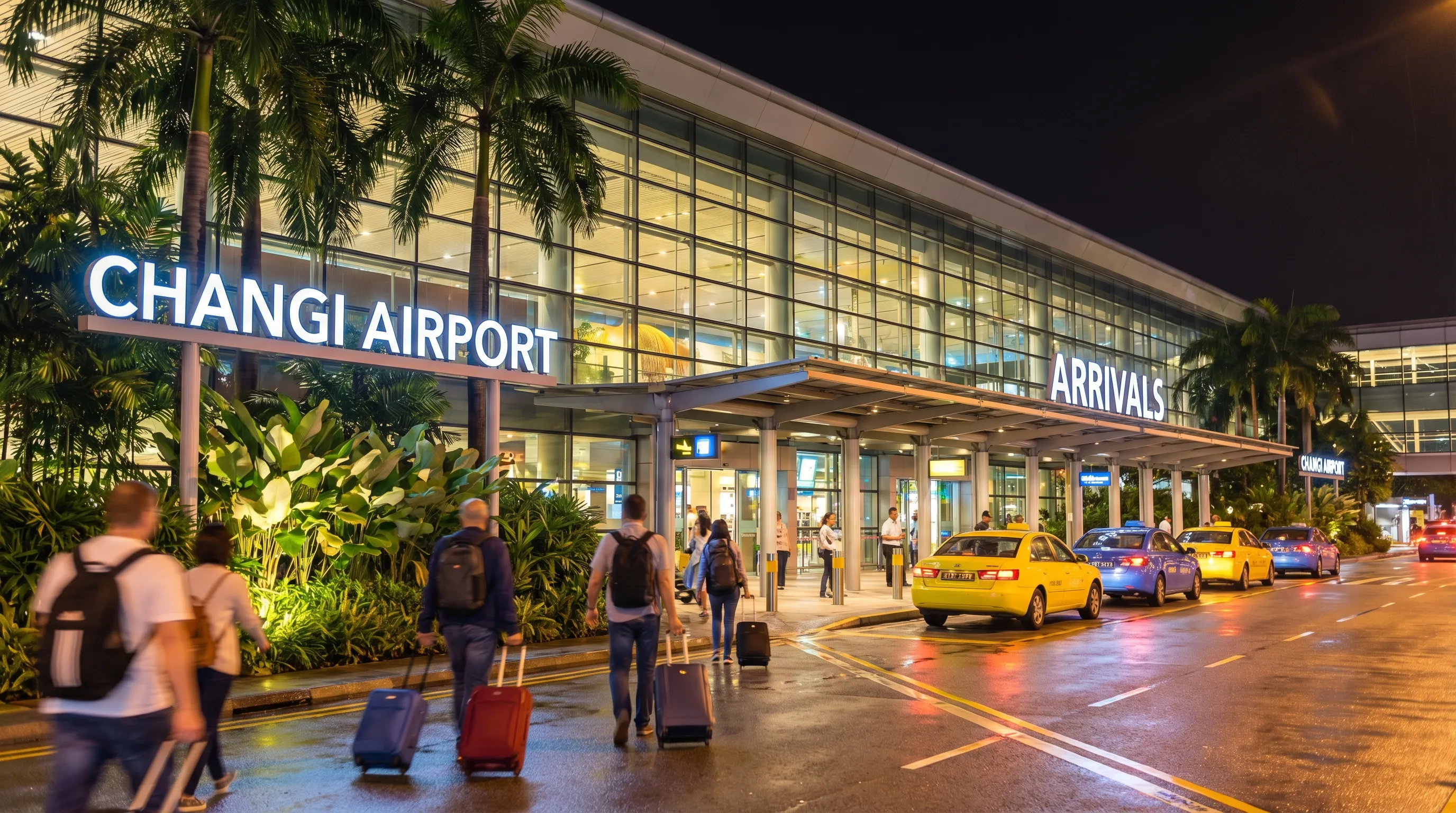
When your flight finally drops through the clouds, Singapore appears like a circuit board laid gently beside water. The runways are precise, the taxiways glow, and Changi feels less like an airport and more like a carefully engineered city district.
Outside, the air has weight and fragrance. You catch hints of rain on warm pavement, the clean bite of air conditioning spilling from sliding doors, and the faint sweetness of bakeries in transit corridors. Everything moves quickly, but not frantically.
That is why choosing the right base matters. In a city where the economy runs on meetings, conventions, and regional headquarters, your hotel is not just where you sleep. It is where you rehearse, reset, and step into the day with an extra margin of calm.
If you want to compare business friendly stays in the civic and financial core, start here:
https://innrox.com/hotel-search?direction=The+Fullerton+Hotel+Singapore
If your meetings cluster around Marina Bay and you want a polished, central launch point for mornings that start early, browse options here:
https://innrox.com/hotel-search?direction=Pan+Pacific+Singapore
If your priority is access to the Orchard corridor (useful for quick dining, shopping for essentials, and straightforward transport links), explore:
https://innrox.com/hotel-search?direction=Hilton+Singapore+Orchard
Singapore’s business identity is not abstract. You feel it in the geography.
In the CBD, the streets are composed and vertical. Glass towers hold entire ecosystems of finance, law, logistics, and technology. In the early morning, you hear the steady rhythm of shoes on pavement and the soft chime of pedestrian crossings. Coffee shops move fast, orders are precise, and conversations happen in concise bursts before elevators close.
Then you step toward the river and the mood changes. The air carries a faint briny edge. Outdoor seating fills with small groups reviewing decks on tablets, and you catch the scent of grilled seafood drifting from nearby dining lanes. A ten minute walk can take you from high stakes boardroom energy to waterside calm.
This is the underrated advantage of choosing a well placed hotel for a short business trip: you can recover time without “trying.” You can return for a quick reset, swap shoes, take a call somewhere quiet, then head back out.
When you search booking com flight again for the next trip, use this quick checklist before you confirm payment.
Make sure you can answer, confidently:
Confirm:
Clarify:

Does “booking com flight” include baggage in the price? Baggage inclusion depends on the airline and fare type. Always verify whether the fare includes a personal item only or also a cabin bag, plus size and weight limits.
Why is seat selection sometimes extra? Many fare types treat seat selection as an optional add on, especially the cheapest tiers. You may get a random seat at check in unless you pay to choose earlier.
Can I change a flight after booking it on a platform? Often yes, but the ability and cost depend on the fare rules and who issued the ticket. Get the airline record locator and check the booking on the airline’s site to see your options.
What should I save after booking to avoid disputes? Save a screenshot of baggage and seat inclusions at purchase, keep confirmation emails, and note the airline confirmation code so you can pull the booking directly.
What is the fastest way to avoid surprise fees? Compare total cost, not base fare. Add baggage and the seat you actually want in your head (or at checkout) before deciding which fare is truly best.
Flights can be rule heavy. Your hotel booking does not have to be.
InnRox Travel is built for travelers who value clear pricing, fast reservations, and straightforward terms, with competitive hotel rates worldwide, no hidden fees shown later, and instant confirmation on real time availability.
When your flight is already a moving target, keeping your stay simple helps the whole trip feel under control. Browse your destination and lock in a hotel that matches your schedule at InnRox.
Tags