
Copyright © 2026 Innrox, Inc., an Innrox Group company. All rights reserved.


InnRox
Travel Experts
June 3, 2026
16 min read
The question usually appears at the happiest, most dangerous moment of trip planning: the flights look affordable, the hotel photos glow, and one checkout button promises to make the whole journey simple. If you are trying to book flight and hotel together, the bundled price can feel like a shortcut to certainty.
But travel rarely happens inside a checkout box. It happens at 11:40 p.m. outside an airport terminal, when the last convenient train has already left. It happens on a steep street in Madeira with a suitcase that suddenly feels heavier than it did at home. It happens in Istanbul, when the hotel looked central on a map, but the bridge traffic turns every dinner plan into a negotiation.
The right answer is not that packages are always cheaper or that separate bookings are always smarter. The better question is this: does your destination reward simplicity, or does it punish inflexibility? Geography, neighborhood choice, seasonality, and hidden costs decide whether booking together saves money or quietly costs more.
Booking flight and hotel together can work well when your trip has fixed dates, one destination, predictable airport transfers, and a hotel area where most travelers would reasonably stay. Separate bookings usually win when the hotel location matters more than the flight discount, when you need cancellation flexibility, or when the destination has very different neighborhoods with very different travel experiences.
Think of a bundle as a convenient preset. Sometimes the preset is perfect. Sometimes it gives you the wrong room in the wrong neighborhood at the wrong arrival time.
| Trip situation | Usually better option | Why it matters |
|---|---|---|
| One-resort beach vacation with fixed dates | Book together | Flight times and hotel location are often aligned around leisure travel |
| Business trip with meetings in a specific district | Book separately | Location, cancellation, and arrival time often matter more than headline price |
| Short city break of 2 or 3 nights | Often separately | A poor neighborhood choice can waste a large share of the trip |
| Last-minute weekend getaway | Compare both | Bundles may hide discounts, but separate hotel deals may be clearer |
| Multi-city trip or split stay | Separately | Bundles can make changes harder and reduce neighborhood control |
| Family trip with baggage and breakfast needs | Compare total cost | Bags, seats, breakfast, and transfers can outweigh the package discount |
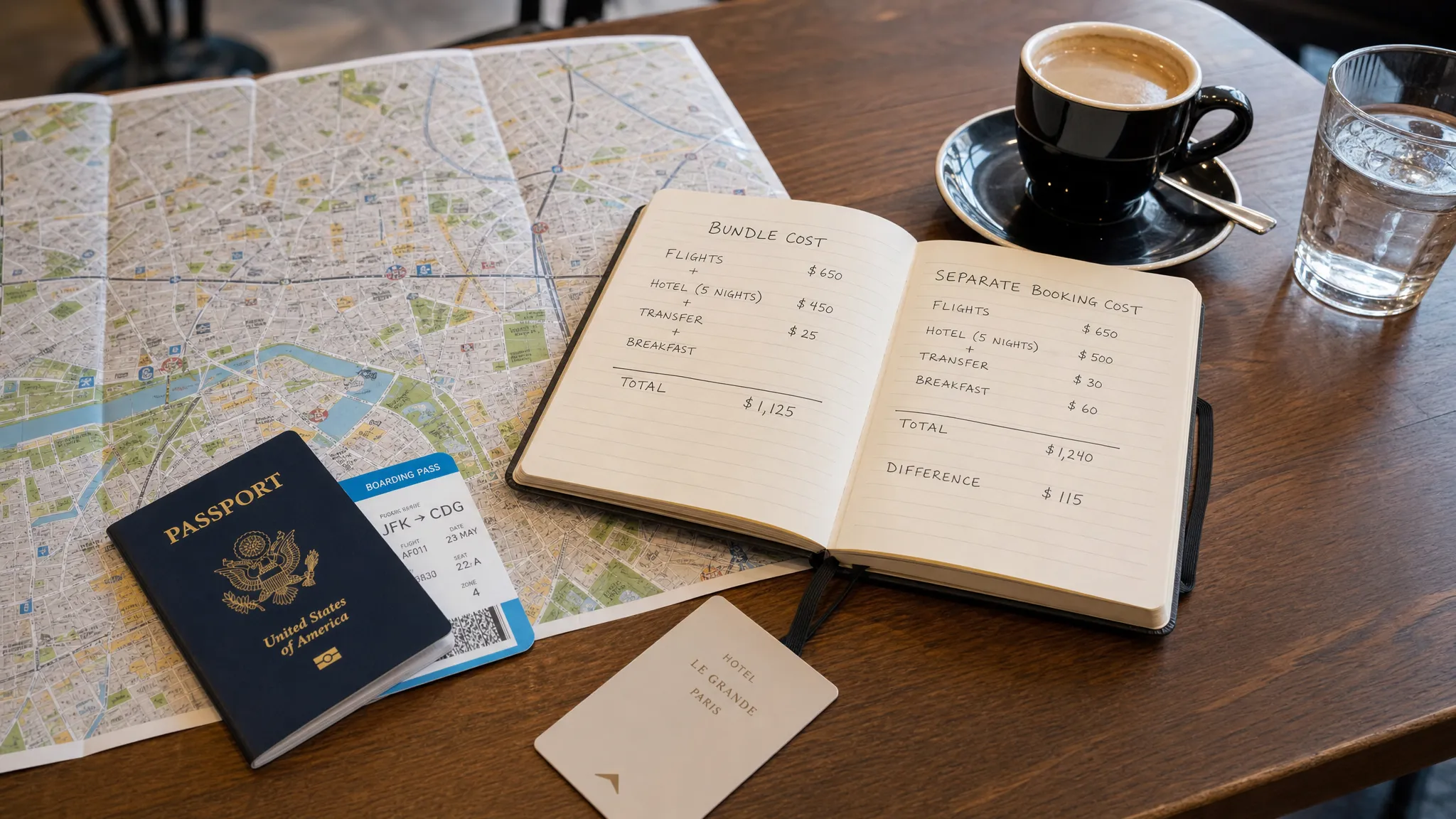
The mistake is comparing the bundle price against the hotel nightly rate alone. You need to compare the full lived cost of the trip, including bags, seats, airport transport, breakfast, parking, taxes, check-in timing, cancellation rules, and the value of being in the right area.
Reykjavík is a good place to learn this lesson because the city feels compact, but Iceland is not a compact travel experience. Keflavík International Airport sits outside the capital, and many travelers use Reykjavík as a base for nature-heavy day trips. A hotel that looks slightly cheaper outside the center may add transfer friction, parking decisions, and early-morning pickup complications.
If your flight lands late and your first full day starts before sunrise for a glacier, lagoon, or south coast tour, the hotel location becomes part of the itinerary. A package may look cheaper if it drops you into a generic hotel zone, but if every pickup, dinner, and return route becomes more awkward, the savings start leaking away.
For travelers focused on walkability, restaurants, and tour pickup convenience, central Reykjavík hotels are often easier to justify than a lower nightly rate farther out. Compare central options such as Hotel Borg by Keahotels, Fosshotel Reykjavík, or Canopy by Hilton Reykjavik City Centre against any flight-and-hotel bundle that does not clearly specify room type, cancellation terms, and exact location.
The key comparison in Reykjavík is not luxury versus cheap. It is central convenience versus logistical drag. A premium hotel may be worth it if it saves taxi rides, protects sleep, and puts you near restaurants after long days outdoors. A cheaper hotel may be fine if you rent a car and plan to spend little time in town, but then parking costs and winter driving conditions become part of the real price.
Seasonality changes the answer. Summer brings long daylight, higher demand, and expensive central rooms. Winter can make bundles more tempting because flight and hotel demand softens outside holiday and aurora peaks. But winter also increases the importance of arrival time, weather flexibility, and cancellation terms. A nonrefundable package can feel efficient until a storm reshapes your first day.
The best case for booking flight and hotel together is a destination where most travelers share the same basic pattern: fly in, stay in one area, relax, fly out. Madeira often fits that mold, especially for travelers who want a soft landing in Funchal, ocean views, warm evenings, and a hotel that functions as part of the trip rather than just a bed.
Madeira’s geography is dramatic. The island rises sharply from the Atlantic, and the difference between a convenient hotel and an inconvenient one can be measured in steep roads, taxi fares, and how willing you are to rent a car. A bundle centered around Funchal may be practical for a first visit because restaurants, promenades, tour pickups, and airport transfers are easier to organize.
If you are comparing hotels in Funchal, look at properties such as Savoy Palace Madeira, The Vine Hotel Madeira, or Reid's Palace, A Belmond Hotel, Madeira and ask whether the bundle gives you a comparable location and room category, not just a lower total number.
This is where the classic comparison matters: resort comfort versus city flexibility. A resort-style hotel can be worth paying more for if you plan to use the pool, breakfast, terraces, spa areas, and ocean-facing downtime. A city hotel can be better value if your days revolve around levada walks, food markets, cable cars, and dinners outside the property.
The hidden costs in Madeira are rarely dramatic one by one, but they accumulate. Airport transfers, rental car parking, breakfast pricing, spa access limitations, and paid room views can change the value equation. A sea-view upgrade may sound essential, but if your itinerary has you leaving early for hikes and returning after sunset, you may be paying for a view you barely use.
Booking together works best here when the package includes a hotel you would have chosen anyway, in an area that fits your travel style, with flight times that do not waste the first or last night. It works poorly when the bundle locks you into a location that requires taxis for every dinner or a room type that is cheaper because it faces the least appealing side of the property.
Istanbul is the opposite kind of test. The city is not one destination as much as several overlapping travel experiences connected by hills, water, ferries, bridges, metro lines, and traffic that can humble even confident planners. A bundled trip may look tidy, but the wrong neighborhood can redefine the whole stay.
Sultanahmet puts first-time visitors close to major sights, which is convenient for short cultural trips. Karaköy and Galata feel more layered for travelers who want cafés, ferries, nightlife, and easy movement between old and new Istanbul. Nişantaşı suits shopping, polished restaurants, and a more residential upscale rhythm. Airport-area hotels can be practical for a layover or early departure, but they are rarely a good base for feeling the city.
For Istanbul, compare possible stays such as Pera Palace Hotel, Sura Hagia Sophia Hotel, or The Marmara Taksim by neighborhood first, then by price. The right area depends on whether your trip is about monuments, food, ferries, business meetings, nightlife, or a short stopover.
Here, separate bookings often protect the trip because you can match the hotel to your actual plan. A romantic weekend might justify a atmospheric boutique or historic hotel near evening walks and restaurants. A business traveler may prefer a modern hotel closer to meeting locations and reliable transit. A family may prioritize larger rooms, breakfast clarity, and easy taxi access over charm.
Hidden costs in Istanbul often come from movement. A cheaper hotel across the wrong stretch of city can cost more in taxis, lost time, and late arrivals. Airport choice matters too, since travel time from the airport to your hotel can vary widely depending on traffic, time of day, and which side of the city you choose. If a package does not make the airport, transfer, and neighborhood logic obvious, separate booking gives you more control.
This is where travelers commonly overpay for marketing language. “City view” may not mean a view you will remember. “Central” may mean central to a district you do not plan to use. “Near attractions” may be true on a map but tiring on foot if hills, traffic, or crowded streets slow you down. Separate hotel shopping gives you the chance to test those claims against your actual itinerary.
The bundled checkout usually makes one number visible. The trip makes many numbers visible later. That is why you should compare the total cost of travel, not just the initial package price.
| Cost category | What to check before booking | Why it can change the answer |
|---|---|---|
| Flight extras | Checked bags, seat selection, carry-on rules, schedule changes | A cheap bundled fare can become less cheap once the family sits together and bags are added |
| Hotel extras | Breakfast, city taxes, service charges, minibar rules, early check-in | A low room rate can rise at the front desk or during the stay |
| Location costs | Airport transfers, taxis, parking, transit passes, time lost | The wrong neighborhood can erase the savings from a cheaper bundle |
| Flexibility costs | Cancellation deadline, change fees, prepaid terms, refund rules | Separate bookings may be safer when plans are uncertain |
| Upgrade traps | View category, club access, spa access, premium room wording | Some upgrades improve the trip, while others mainly improve the listing photo |
The biggest trap is the first and last night. A flight that arrives at midnight makes the first hotel night less valuable. A flight that departs at 6 a.m. may force an expensive taxi or an airport hotel. If the package price looks good because of awkward flight times, the discount may be payment for inconvenience.
Breakfast is another quiet swing factor. In a city with bakeries, cafés, and markets outside the door, hotel breakfast may not be worth the upgrade. In a resort area, business district, airport zone, or family trip with early starts, included breakfast can save both money and decision fatigue. The value depends on where you sleep.
Parking is similar. A hotel outside the center may look affordable until nightly parking appears. A central hotel may look expensive until you realize you do not need a car at all. This is why location and transport should be calculated together, not separately.
Before you decide whether to book flight and hotel together or separately, run a quick side-by-side comparison. You do not need a spreadsheet, but you do need to resist the first attractive total.
This method works because it compares experiences, not just prices. A bundle that saves $80 but puts you 35 minutes from everything you came to do is not a bargain on a two-night trip. A bundle that saves $300 on a weeklong resort stay with good flight times may be excellent.
Premium upgrades are not automatically wasteful. They are just often misunderstood. The question is whether the upgrade changes how you will actually use the trip.
A room upgrade is usually worth considering when it improves sleep, space, or daily rhythm. Families may benefit from a larger room more than a better view. Business travelers may value late checkout, a quieter floor, or breakfast more than a decorative suite category. Couples on a resort trip may genuinely enjoy a sea view if they plan slow mornings and evenings on the balcony.
On the other hand, the classic “view” upgrade can be one of the weakest uses of money in dense cities. If you are out all day, returning tired, and leaving early, a higher floor or partial view may not matter. The same goes for lounge access if your itinerary is built around local restaurants, or spa access if treatments and facilities are not actually included.
The strongest premium spend is often location. Paying more to stay in the right neighborhood can reduce transport costs, protect energy, and make spontaneous travel possible. That is especially true for short stays, where time is the scarcest resource.
The same destination can produce different answers for different travelers. A couple, a conference attendee, and a family may all fly into the same airport and make completely different hotel decisions.
| Traveler type | Best booking approach | What to prioritize |
|---|---|---|
| Business traveler | Usually separate | Meeting location, cancellation, invoice clarity, early breakfast, reliable transport |
| Romantic city break | Usually separate | Walkable neighborhood, atmosphere, restaurants, late checkout, room comfort |
| Family vacation | Compare both | Baggage, room size, breakfast, transfer simplicity, cancellation terms |
| Resort relaxation | Often together | Flight schedule, hotel amenities, transfer ease, meal plan value |
| Short-notice trip | Compare both | Instant confirmation, final price clarity, flexible cancellation where available |
| Multi-city itinerary | Separate | Split stays, changing neighborhoods, different hotel styles by city |
Business travel is where separate bookings often earn their keep. A cheaper package can become expensive if it places you far from meetings, adds commute uncertainty, or lacks the flexibility to adjust dates. For business trips, the best hotel is rarely the prettiest listing. It is the one that protects time.
Romantic trips are more nuanced. A bundle can work for a fly-and-flop island stay, but city romance depends heavily on neighborhood texture. The right street, restaurant scene, and evening walk can matter more than a room category. In that case, separate hotel selection gives the trip its personality.
Families should be suspicious of prices that do not show the full seating, baggage, breakfast, and room-size reality. A bundle may save money, but only if the flight rules and hotel setup fit how families actually travel. Paying slightly more for a clearer hotel policy can be cheaper than improvising after arrival.
If uncertainty is low, booking together can be smart. A fixed beach week, a familiar city, a simple airport transfer, and a hotel you would choose anyway are all good signs. The bundle is doing what it should do: reducing friction without reducing your control.
If uncertainty is high, book separately. New city, tight schedule, complex neighborhoods, uncertain meeting locations, possible date changes, unclear room types, or late-night arrival all make flexibility more valuable. In those cases, the hotel is not just one part of the trip. It is the decision that determines how the trip feels.
The smartest travelers are not loyal to one method. They are loyal to the full cost. They test the package against reality: the map, the transfer, the neighborhood, the first night, the last morning, the fees, and the kind of trip they actually want.
Is it cheaper to book flight and hotel together? It can be cheaper for simple leisure trips, resort stays, and fixed-date vacations. It is not always cheaper after adding baggage, seat selection, transfers, breakfast, taxes, and the cost of a less convenient hotel location.
When should I book flight and hotel separately? Book separately when neighborhood choice is important, your plans may change, you are traveling for business, you want a specific hotel, or the package does not clearly show room type, fees, and cancellation terms.
Are flight and hotel packages good for city breaks? They can be, but city breaks are sensitive to location. For a two- or three-night stay, a cheaper hotel far from your main plans can waste time and money. Always compare the bundle hotel against hotels in the neighborhood you actually want.
What hidden costs should I check before booking a bundle? Check baggage, seat selection, airport transfers, breakfast, parking, tourist or city taxes, mandatory service charges, early check-in, late checkout, resort-style access fees, and cancellation rules.
Are hotel upgrades worth it when booking separately? Sometimes. Upgrades are worth it when they improve sleep, space, location, or daily convenience. They are often less valuable when they only promise a vague view, a slightly higher floor, or amenities you will not use.
Whether you bundle or book separately, the hotel decision deserves its own comparison. InnRox helps travelers focus on clear rates, transparent terms, fast reservations, and practical hotel choices without unnecessary clutter.
Use InnRox to compare hotels by destination, neighborhood, and total value before you commit. Look for final pricing upfront, instant confirmation, flexible options where available, and the stay that fits your real trip, not just the lowest number on the first screen.
Tags