

InnRox
Travel Experts
January 31, 2026
10 min read
Choosing the best places to stay is less about picking a “nice hotel” and more about picking the right five to ten blocks.
Stay in the wrong area and even a luxury property can feel inconvenient, loud, or disconnected. Stay in the right area and a modest room can turn into a perfect trip, because you walk more, spend less time commuting, and stumble into the kind of moments you remember for years.
Use this to match your travel style to the neighborhood first, then choose the hotel.
| Trip style | Best area type | Why it works | What to prioritize in the hotel |
|---|---|---|---|
| First-time city break | Central, landmark-adjacent | Easy orientation, shorter transit | 24/7 check-in, strong soundproofing |
| Business trip | Financial district, major stations | Early meetings, predictable logistics | Fast check-in, desk space, reliable Wi-Fi info |
| Food-focused weekend | Market districts, restaurant corridors | You can dine without long rides | Late check-in, walkability, quieter rooms |
| Nightlife | Entertainment zones, but one street back | Fun nearby, sleep still possible | Higher-floor rooms, good reviews on noise |
| History + museums | Old town, riverfront, cultural quarters | You can “time travel” on foot | Heritage buildings, elevator info, AC details |
| Family | Park-adjacent, residential edges | Space and calmer evenings | Bigger rooms, breakfast, elevator, laundry nearby |
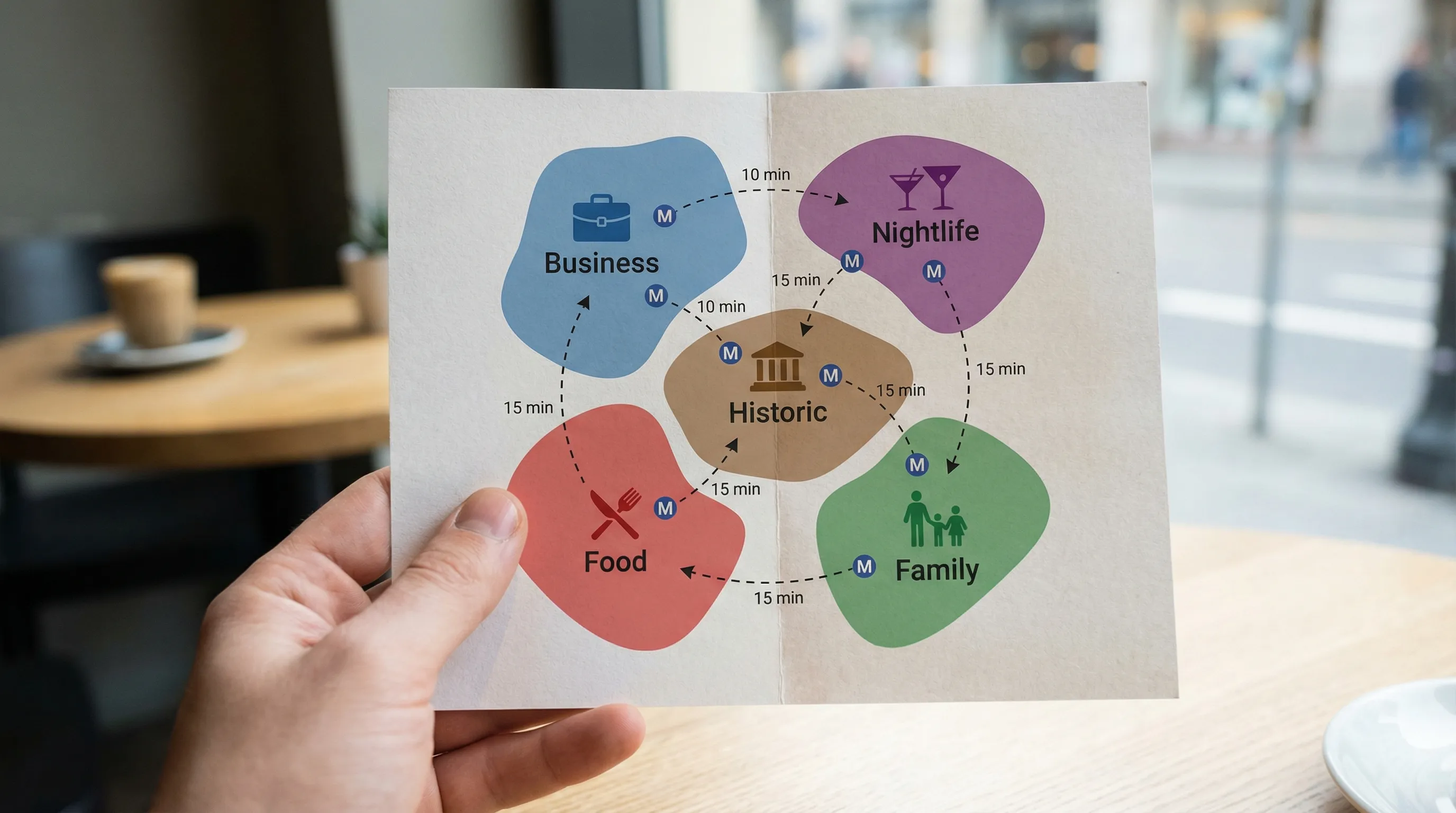
Before you fall in love with a lobby photo, run this quick neighborhood check:
New York rewards neighborhood thinking. A few subway stops can mean a totally different trip.
Midtown is the practical choice when you want the city to be simple: major lines intersect, shows are close, and you can reach almost anywhere quickly.
Story you can feel on the sidewalks: walk past Rockefeller Center and you are moving through a corridor that helped define 20th century American ambition, from Art Deco skyscrapers to TV studios.
Hotel picks to look up (and why they fit):
(For film reference on The Plaza’s role in Home Alone 2, see the Plaza Hotel overview.)
If you want New York’s oldest street patterns and some breathing room, Lower Manhattan delivers: cobblestone blocks, harbor views, and easy access to Brooklyn.
Historical note: this is where the city’s early trade routes and immigration stories meet modern finance. A sunrise walk along the water can feel surprisingly quiet for NYC.
Hotel picks to look up:
Williamsburg is for travelers who want New York to feel current: small venues, galleries, and an endless rotation of new restaurants.
A real NYC legend nearby: the Chelsea Hotel in Manhattan is the famous musician and writer magnet (Bob Dylan, Patti Smith, and many more). You do not have to sleep there to feel the era, but it’s the kind of story that explains why New York lodging has always been part of the culture, not just a place to crash.
(Background on the Chelsea’s cultural history: Chelsea Hotel.)
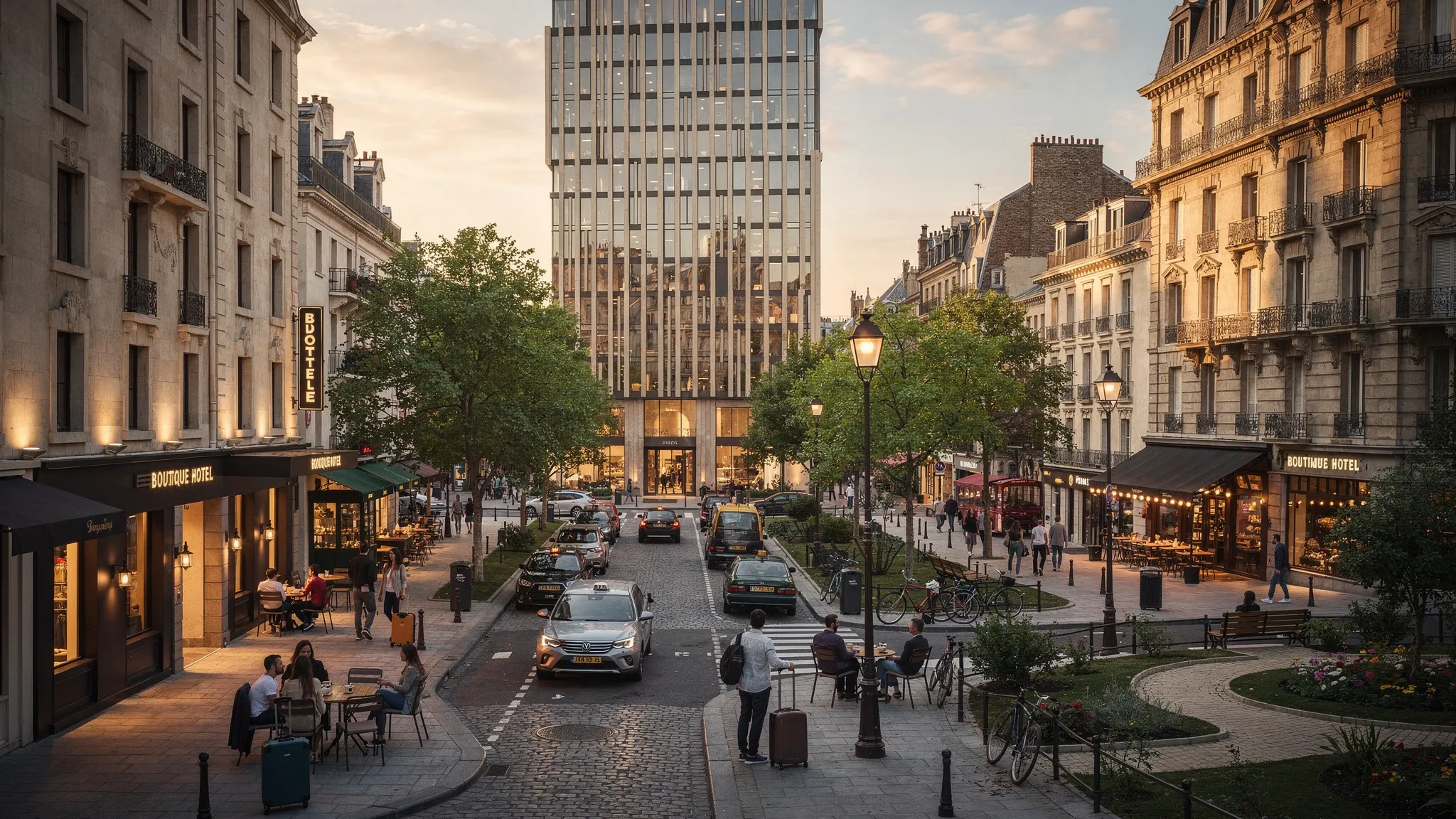
Paris is a city where the setting does half the work. Pick the wrong base and you will spend your days crossing town. Pick the right one and Paris starts happening around you.
Le Marais is one of the best places to stay if you want to spend your time walking, browsing, and snacking your way through the day. It’s central without feeling like a “tourist zone,” and the streets reward aimless wandering.
Historical texture: medieval lanes sit beside grand private mansions (hôtels particuliers). The neighborhood’s layered history is part of the appeal.
Hotel picks to look up:
If you picture Paris as bookshops, café tables, and museum afternoons, Saint-Germain is your stage.
Story to bring with you: this area is bound up with Paris’s literary and philosophical identity. Even a simple morning walk can feel like stepping into a scene.
Hotel picks to look up:
For a practical Paris base (especially for short stays), Opéra and the 8th give you major boulevards, department stores, and straightforward transit.
Iconic hotel lore: the Ritz Paris is one of the city’s most storied addresses, associated with Ernest Hemingway and Coco Chanel. Even if you do not stay there, having your hotel nearby puts you in a part of Paris where “grand hotel” history is very real.
(Quick historical context: Hôtel Ritz Paris.)
Tokyo is safe, clean, and efficient, but huge. Your district choice determines whether you glide through the city or constantly transfer lines.
Shinjuku is one of the easiest bases if you want maximum reach. It’s busy, but it’s built for moving people, which is exactly what visitors need.
Hotel story that became a mood: the Park Hyatt Tokyo is closely associated with Lost in Translation (2003), and for many travelers it symbolizes that quiet, high-rise Tokyo feeling above the city’s buzz.
(Reference: Park Hyatt Tokyo.)
If your trip is meetings plus great meals, Ginza and the Tokyo Station area are hard to beat. You get a refined atmosphere, strong transport links, and some of the city’s best department store food halls.
Hotel picks to look up:
Asakusa is for travelers who want the older visual rhythm of Tokyo: lantern-lit streets, river walks, and mornings that feel less hurried.
Historical value: you can build an entire day around Senso-ji and the surrounding streets, and still return to a quieter base at night.
London stays are won or lost on commute time. Neighborhood choice is your biggest lever.
If your plan involves theater, live music, or late dinners, Covent Garden and Soho keep you close enough to walk home.
Hotel history worth knowing: The Savoy helped define London’s idea of luxury and was famous early on for modern comforts (like electric lighting). The area’s hospitality culture has deep roots.
(Background: The Savoy Hotel.)
For finance and corporate trips, these districts reduce friction. On weekends they can feel quieter, which is either a bonus or a drawback depending on your trip style.
Hotel picks to look up:
South Bank is a strong “all-rounder” base: walkable, scenic, and easy to connect to central London.
Why it works: you can do Tate Modern, the river, and food markets without feeling like you are constantly commuting.
New Orleans has neighborhoods with distinct personalities. Pick the one that matches your evenings.
If it’s your first visit, the French Quarter is the classic base. You can wake up and be inside the city’s signature architecture and street life instantly.
Historical value: this is one of the most intact historic urban cores in the United States, with a blend of French, Spanish, Caribbean, and American influences.
The Warehouse District is for travelers who want great restaurants and a more contemporary feel, while staying close to the Quarter.
Hotel story with local flavor: Hotel Monteleone (at the Quarter edge) is famous for its rotating Carousel Bar and its long association with writers and journalists passing through town. Even a single drink there feels like tapping into the city’s storytelling tradition.
(Background: Hotel Monteleone.)
If your ideal New Orleans morning is slow and leafy, the Garden District is the move. You trade late-night convenience for a calmer base that feels residential.
Once you have your area, the rest is execution: choose the property that fits your schedule and your risk tolerance (especially for short-notice travel).
InnRox Travel is built for travelers who want value and clarity, with competitive hotel rates, no hidden fees (final price upfront), and instant confirmation on real-time availability. You can also look for free cancellation and pay-later options where available, which is particularly useful for business trips and unpredictable itineraries.
Explore your shortlist on InnRox here: InnRox hotel deals
If you already have a specific property in mind from the stories above, search by the hotel name plus neighborhood (for example, “Park Hyatt Tokyo Shinjuku” or “Hotel Monteleone French Quarter”) to zero in quickly.
For flexible planning, start here and filter for cancellation-friendly rates where offered: Book a stay on InnRox
Before you confirm, reread your own itinerary and ask: “Where will I be at 9 a.m., 2 p.m., and 10 p.m. most days?” The best places to stay are the ones that make those three moments easy.
If you want a fast, straightforward booking flow with transparent pricing, build your stay around the right neighborhood and lock it in when the rate looks right: Find your next hotel on InnRox